Black Stud Earrings Gold Settings: The Ultimate Buying Guide
Discover how to choose the perfect black stud earrings in gold settings. Our guide covers onyx vs. diamond, gold purity, and secure backings.

The Allure of Black and Gold: A Study in Contrast
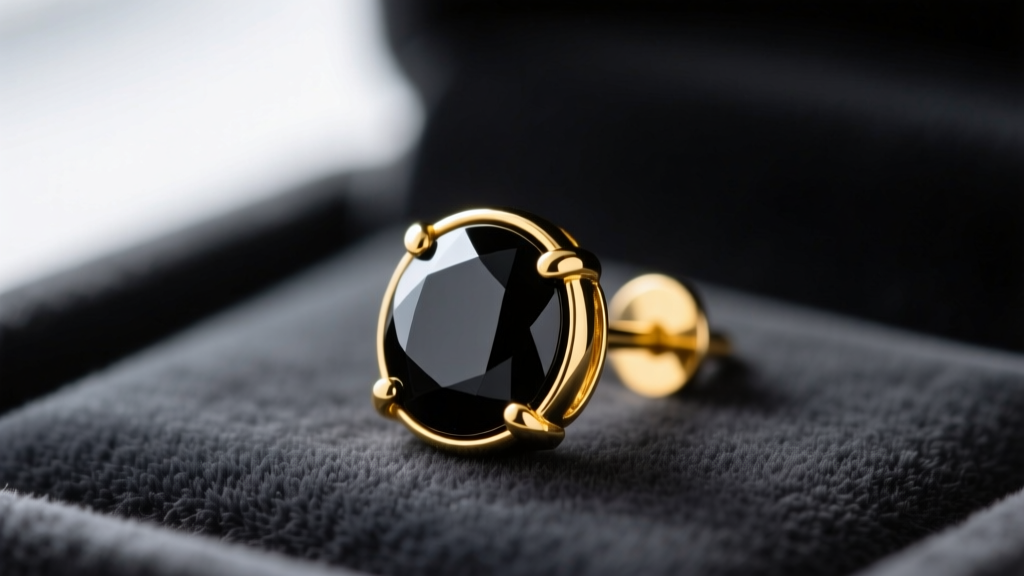
When it comes to building a versatile, sophisticated jewelry wardrobe, few combinations command attention quite like black stud earrings in gold settings. The stark, light-absorbing depth of black gemstones paired with the warm, reflective luster of gold creates a visual tension that is both modern and timeless. As we navigate the jewelry market in 2026, the demand for high-contrast, minimalist pieces has surged, pushing jewelers to innovate with new setting techniques and material pairings.
However, not all black studs are created equal. The market is flooded with misidentified gemstones, poorly soldered posts, and fragile settings that fail within months of daily wear. Whether you are eyeing a classic black onyx cabochon or a faceted black diamond, understanding the metallurgy, gemology, and structural mechanics of your earrings is essential. This comprehensive buying guide will decode the specifics of black stud earrings gold settings, ensuring your investment is as durable as it is striking.
Decoding the "Black": Gemstone Material Breakdown
The term "black gemstone" is an umbrella category that encompasses vastly different materials, each with unique hardness ratings, optical properties, and vulnerability profiles. According to the Gemological Institute of America (GIA), accurate identification is the first step in determining an earring's longevity.
1. Black Onyx (Chalcedony)
True black onyx is incredibly rare in nature. The vast majority of black onyx on the market is actually gray or white chalcedony that has been treated. The traditional, GIA-recognized treatment involves soaking the porous agate in a sugar solution and then boiling it in sulfuric acid, which carbonizes the sugar and turns the stone a permanent, deep black. Onyx sits at a 6.5 to 7 on the Mohs hardness scale, making it susceptible to scratching if knocked against hard surfaces. It is almost exclusively cut as a smooth cabochon to highlight its glassy luster.
2. Black Diamonds (Treated vs. Natural)
Natural black diamonds (carbonado) are opaque, heavily included, and extremely rare. Most commercial black diamond studs are actually heavily included, low-clarity white diamonds that have been subjected to irradiation and high-temperature annealing. While diamonds are a 10 on the Mohs scale, the dense network of inclusions (graphite and sulfides) that give treated black diamonds their color can create structural weak points, making them brittle if subjected to heavy pressure during the setting process.
3. Black Spinel
Often historically confused with ruby or black diamond, black spinel is a single-refractive gemstone that boasts a Mohs hardness of 8. It takes a brilliant polish and offers a more affordable, highly durable alternative to black diamond. Its deep, ink-black color is natural and does not require treatment.
4. Vitreous Enamel vs. Epoxy
For a pure, opaque black without a gemstone, enamel is the standard. High-end jewelers use vitreous enamel (finely ground glass fused to gold at temperatures exceeding 1,400°F). Mass-market brands often use cold epoxy enamel (a type of resin), which will yellow, chip, and degrade when exposed to perfumes, lotions, and UV light over time.
| Material | Mohs Hardness | Avg. Price (6mm Pair) | Primary Durability Risk |
|---|---|---|---|
| Black Onyx | 6.5 - 7.0 | $80 - $250 | Surface scratching, chipping on edges |
| Treated Black Diamond | 10 (Brittle) | $300 - $900 | Fracturing along inclusion lines |
| Black Spinel | 8.0 | $150 - $400 | Very low; excellent for daily wear |
| Vitreous Enamel | N/A (Glass) | $200 - $600 | Shattering upon impact |
Gold Purity and Alloy Composition: 14k vs. 18k
The gold setting is not just a frame; it is the structural foundation of the earring. The purity of the gold dictates both the color contrast against the black stone and the physical durability of the prongs or bezel.
The Case for 14k Yellow Gold (58.5% Pure Gold)
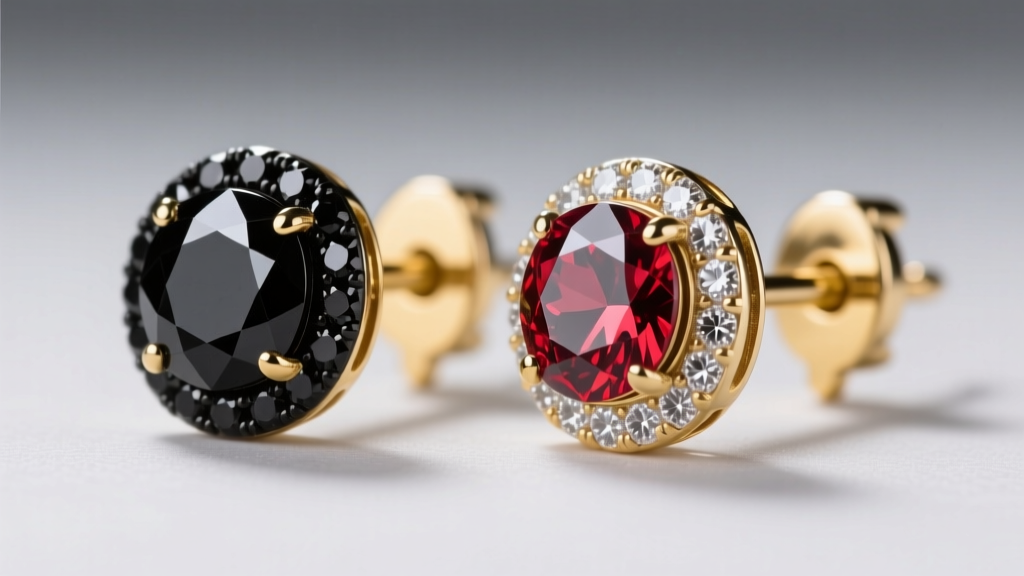
14k gold is alloyed with copper, silver, and zinc. Because it contains nearly 42% alloy metals, it is significantly stiffer and more resistant to bending than higher-purity golds. If you are purchasing black stud earrings with delicate prong settings (like a 4-prong black diamond stud), 14k gold is the superior choice. The prongs will maintain their tension over years of wear, reducing the risk of losing the stone. The color is a softer, more muted yellow.
The Case for 18k Yellow Gold (75% Pure Gold)
18k gold offers that rich, buttery, deep yellow hue that creates the most dramatic and luxurious contrast against black onyx or spinel. However, its higher pure gold content makes it softer. For 18k gold, bezel settings are highly recommended. A bezel wraps a continuous rim of gold around the gemstone's girdle, eliminating the need for stiff prongs while protecting the vulnerable edges of stones like onyx from chipping. Furthermore, as noted by The London Assay Office, 18k gold is generally more hypoallergenic, as it contains fewer reactive alloy metals like copper or nickel.
Setting Mechanics and Hidden Failure Points
When evaluating black stud earrings gold settings, you must look past the gemstone and inspect how the stone is secured to the metal cup, and how the cup is attached to the post.
Glue vs. Mechanical Settings
A common failure mode in lower-priced black onyx and enamel studs is the reliance on two-part epoxy glue to secure a flat-backed cabochon into a gold cup. Over time, exposure to hot water, skincare acids (like glycolic or salicylic acid), and body oils will break down the epoxy bond, causing the stone to pop out and get lost. Always opt for mechanical settings—either a bezel where the gold is physically pushed over the stone, or a prong setting where the metal grips the stone's girdle.
Post Soldering: Laser vs. Torch
The post (the wire that goes through your ear) is soldered to the back of the setting cup. Cheap manufacturing uses a soft lead-free solder that can melt or snap if the earring is dropped or snagged on a towel. High-end manufacturers use laser welding to fuse the post directly to the gold cup, creating a seamless, high-tensile bond that will not snap under normal stress.
Post Gauge and Backing Hardware: Preventing the "Droop"
Black gemstones, particularly onyx and spinel, are denser and heavier than many transparent stones of the same visual size. A standard 6mm black onyx cabochon carries enough weight to cause a thin earring post to droop forward on the earlobe, ruining the aesthetic profile.
- Standard 20-Gauge (0.81mm): Suitable only for lightweight, petite 3mm to 4mm black studs.
- Heavy-Duty 18-Gauge (1.02mm): The mandatory standard for 6mm to 8mm black onyx or black diamond studs. The extra 0.21mm in thickness provides the necessary rigidity to keep the earring sitting flush and parallel to the earlobe.
Upgrading Your Backings
Standard "butterfly" friction backs rely on a tiny metal scroll that eventually wears out, losing its grip on the post groove. For heavy black gold studs, upgrade to La Pousette backings or screw-backs. La Pousette backs feature a mechanical locking mechanism (similar to a watch clasp) that physically clicks into a grooved post, making it virtually impossible for the earring to fall off, even if the backing is snagged on a sweater or hairbrush.
Sizing and Face Shape Proportions
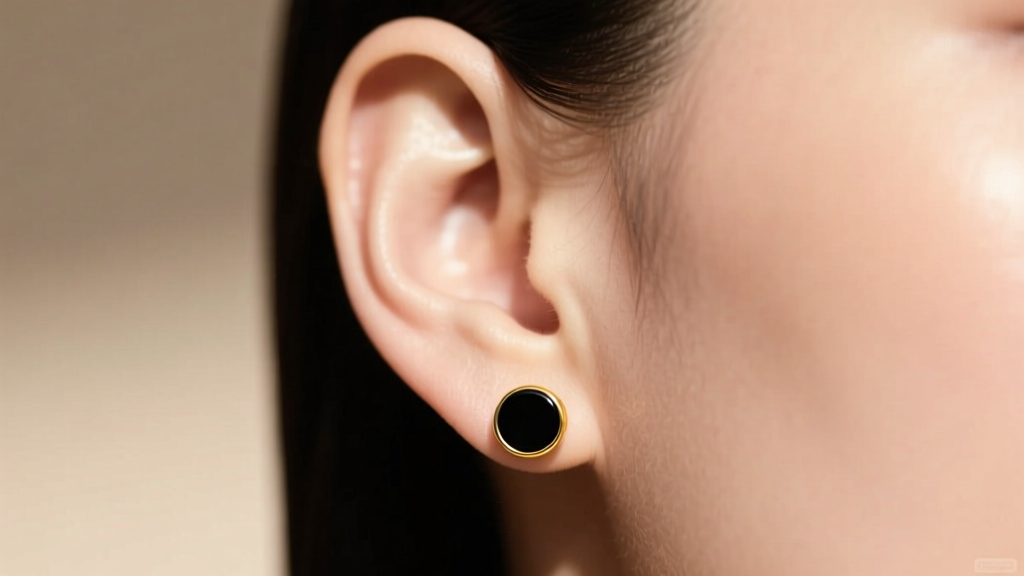
Because black absorbs light rather than reflecting it, black studs tend to look visually smaller on the ear than diamond or white pearl studs of the exact same millimeter width. Keep this optical illusion in mind when selecting your size:
"When styling high-contrast black and gold jewelry, the negative space around the stone is just as important as the stone itself. A bezel setting adds a crucial 1mm to 1.5mm of gold framing, which amplifies the visual footprint of a black gemstone." — Contemporary Jewelry Design Principles, 2025
- 4mm - 5mm (The Minimalist): Ideal for second or third lobe piercings, or for those with very petite facial features who want a subtle, everyday dark accent.
- 6mm - 7mm (The Standard): The most versatile size for primary lobe piercings. Provides excellent presence without overwhelming the earlobe.
- 8mm - 10mm (The Statement): Best suited for larger earlobes or those seeking a bold, architectural look. Ensure these are set in 18-gauge posts with locking backings to support the weight.
Care and Maintenance Protocols
Maintaining the sharp contrast between the black stone and the gold setting requires specific care routines. Never place black onyx or enamel earrings in an ultrasonic cleaner. The high-frequency vibrations can cause internal fracturing in treated stones and will shatter vitreous enamel. Furthermore, the harsh chemical baths often used alongside ultrasonics can strip the polished finish off gold alloys.
Instead, clean your black stud earrings using a few drops of mild, phosphate-free dish soap in lukewarm water. Use a baby-hair brush or a very soft microfiber cloth to gently wipe the surface of the stone and the gold bezel. Dry immediately with a lint-free cloth to prevent water spots from dulling the high-polish gold rim. Store them in a soft pouch separate from harder gemstones like diamonds or sapphires to prevent the gold and the onyx from sustaining micro-scratches.
Final Buying Checklist
Before finalizing your purchase of black stud earrings in gold settings, verify the following specifications with the jeweler:
- Is the black stone mechanically set (bezel/prong) rather than glued?
- Is the post thickness at least 18-gauge for stones 6mm and larger?
- Is the gold purity (14k or 18k) clearly hallmarked on the post or backing?
- Are the backings upgraded to locking mechanisms to support the stone's density?
By prioritizing structural integrity and material authenticity over mere aesthetics, you ensure that your black and gold earrings remain a staple of your wardrobe for decades to come.


