How to Fix and Maintain Delicate Wire Flower Earrings
Learn how to troubleshoot, clean, and repair delicate wire flower earrings. Expert tips on fixing warped petals, tarnish, and ear wire irritation.

The Unique Anatomy of Wire-Wrapped Floral Jewelry
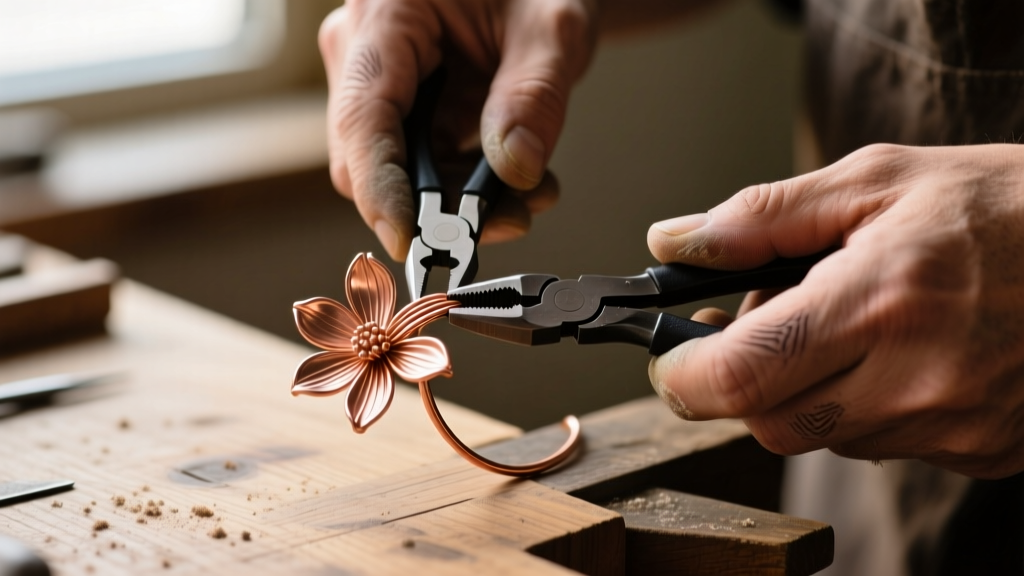
Wire flower earrings are a celebrated staple of artisan jewelry, prized for their intricate, organic shapes and lightweight wearability. However, their delicate nature makes them uniquely susceptible to structural and cosmetic issues. Unlike solid cast metals, wire-wrapped jewelry relies on the tension, temper, and gauge of the metal to maintain its form. To effectively troubleshoot these pieces, one must first understand their anatomy. A standard floral earring typically utilizes a thicker structural wire (usually 20-gauge to 22-gauge in a half-hard temper) for the stems and ear hooks, and a much finer wrapping wire (26-gauge to 28-gauge in a dead-soft temper) to bind the petals and secure gemstone beads. When these components fail, it is rarely due to a defect in the metal itself, but rather a mismatch between the wire temper and the structural demands of the design. According to metallurgy guides from Rio Grande, dead-soft wire is excellent for tight wrapping but lacks the memory required to hold a petal shape against the friction of daily wear. Recognizing this distinction is the first step in diagnosing and repairing your favorite floral pieces.
Troubleshooting Structural Failures: Warped Petals and Loose Wraps
The most common complaint among wearers of wire flower earrings is the gradual warping of petals or the unspooling of delicate wire wraps. This usually occurs when the earrings snag on clothing or are stored improperly, applying lateral pressure that exceeds the yield strength of the wire.
Reshaping Bent Wire Without Marring the Metal
When a petal bends out of shape, the instinct is to bend it back with your fingers or standard metal pliers. This is a critical mistake. Fingers lack the precision to apply even pressure, often resulting in a jagged, kinked wire rather than a smooth curve. Standard steel chain-nose pliers will leave permanent tool marks and scratches on soft metals like copper or fine silver. To fix a warped petal, you must use nylon jaw pliers. Place the bent section of the wire between the nylon jaws and apply gentle, incremental pressure. If the wire has become too brittle from repeated bending (a process known as work hardening), attempting to force it back into shape will cause it to snap. In professional settings, a jeweler would anneal the wire with a micro-torch to soften it, but for at-home repairs, it is safer to gently massage the curve over a rounded mandrel or the smooth handle of a wooden tool.
Securing Loose 28-Gauge Wraps
If the fine wire binding your floral components begins to unspool, do not simply try to wrap it tighter by hand. The wire has likely stretched and lost its tension. Using a pair of fine-tipped tweezers, gently pull the loose end taut against the core wire. Apply a microscopic drop of jeweler's epoxy or a specialized cyanoacrylate adhesive (avoid standard superglue, which leaves a cloudy white residue) to the underside of the wrap. Press the wire down with a wooden toothpick to hold it in place while the adhesive cures. Once dry, use flush cutters to trim any excess wire, ensuring the cut is perfectly flush to prevent snagging.
Material Reactions: Tackling Tarnish and Patina Loss
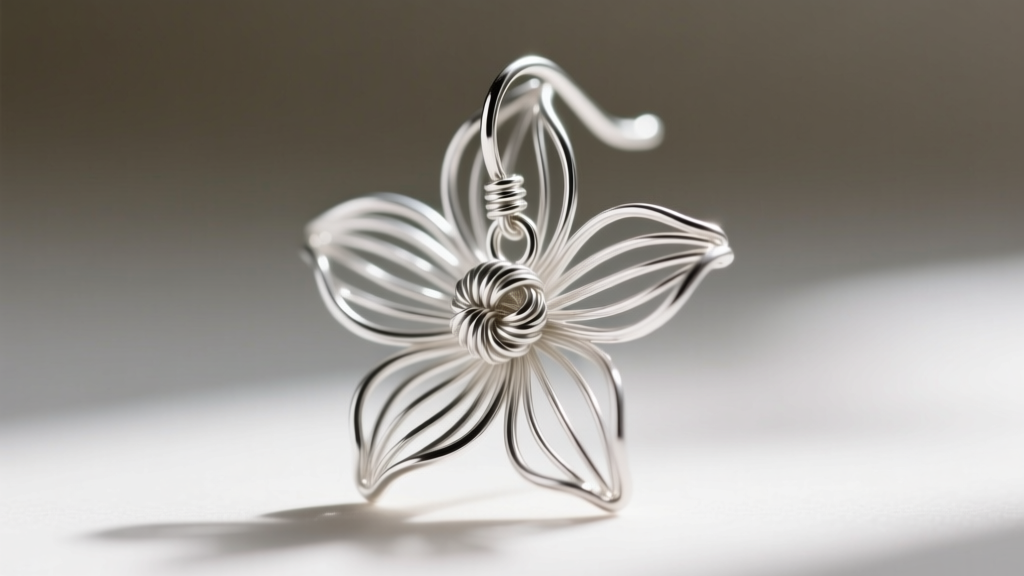
Wire flower earrings are frequently crafted from reactive metals like copper, brass, and sterling silver to achieve specific colors and keep costs accessible. However, these metals oxidize when exposed to the sulfur compounds in human sweat and atmospheric humidity. Cleaning them requires a nuanced approach, as aggressive polishing can strip away intentional oxidized patinas that give the wire-wrapped flowers their depth and antique appeal.
| Wire Material | Tarnish Rate | Hypoallergenic? | Best Cleaning Method |
|---|---|---|---|
| Raw Copper | Very High | No | Lemon juice and salt bath (avoid gemstones) |
| Sterling Silver | Moderate | Mostly | Aluminum foil and baking soda electrochemical bath |
| Gold-Filled | Very Low | Yes | Mild dish soap and warm water with a soft brush |
| Craft Wire (Tinned) | Low (until scratched) | No (contains copper core) | Dry microfiber cloth only; avoid liquids |
The Aluminum Foil and Baking Soda Method
For sterling silver wire flowers that have turned black, the aluminum foil method is highly effective and requires zero abrasive scrubbing. Line a glass bowl with aluminum foil (shiny side up). Place the earrings in the bowl and sprinkle a generous tablespoon of baking soda over them. Pour boiling water into the bowl until the earrings are submerged. An electrochemical reaction will occur, transferring the sulfur from the silver to the aluminum foil. After two minutes, remove the earrings with a plastic spoon, rinse thoroughly with distilled water, and pat dry. Warning: Never use this method if your wire flowers are centered with porous gemstones like turquoise, pearls, or opals. The Gemological Institute of America explicitly warns that alkaline solutions and extreme heat will permanently damage the luster and structural integrity of organic and porous gems.
Ear Wire Discomfort: Solving the "Poke" and Allergy Issues
Even the most beautifully crafted wire flower earring is unwearable if the ear wire causes pain or contact dermatitis. French hooks, the most common finding used in wire-wrapping, are notorious for causing two distinct problems: physical poking and chemical irritation.
Filing and Smoothing French Hooks
When wire is cut to form an ear hook, the resulting edge is often razor-sharp. Over time, this sharp edge can scratch the delicate skin inside the ear piercing or catch on hair. To troubleshoot this, secure the earring in a vise lined with felt, or hold it firmly on a padded surface. Use a fine-cut needle file to gently round off the sharp tip of the wire. Filing creates microscopic scratches, so you must follow up by sanding the tip with 600-grit sandpaper, then 1200-grit sandpaper, and finally burnishing it with a treated jewelry polishing cloth. The end of the wire should feel completely smooth, almost like a rounded bead, when you run it across your fingernail.
Upgrading to Hypoallergenic Findings
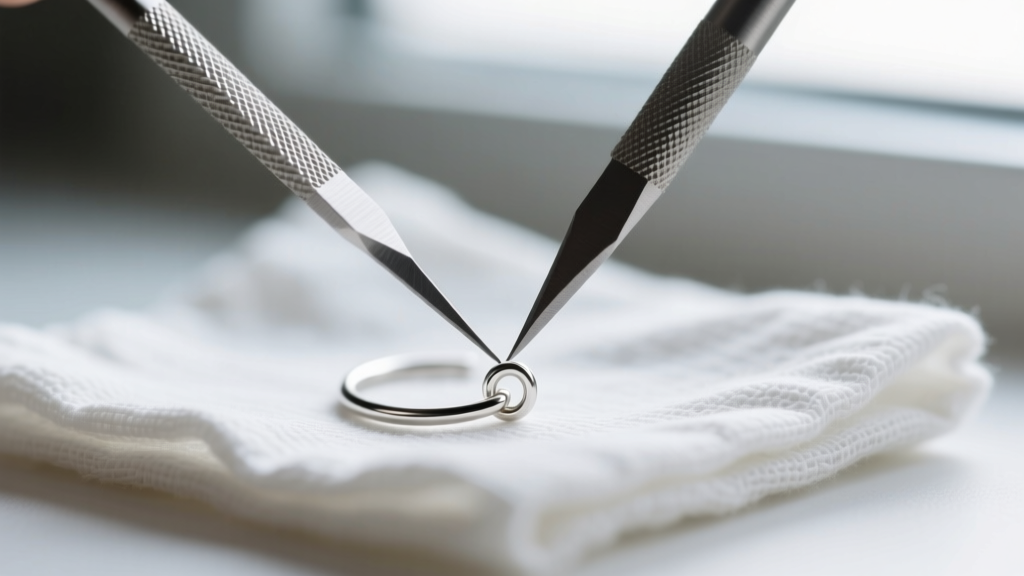
If your earlobes become red, itchy, or flaky after wearing wire flower earrings, you are likely experiencing allergic contact dermatitis. According to the American Academy of Dermatology, nickel is the most common culprit, frequently found as an alloy in cheap craft wires and mass-produced earring findings. If the floral body of the earring is made from a reactive metal but you love the design, you can surgically swap out the ear wire. Using a pair of chain-nose pliers, gently open the wrapped loop connecting the flower to the hook. Discard the original wire and attach a high-quality niobium or implant-grade titanium ear hook. Niobium is entirely nickel-free and can be anodized in a variety of colors to match the aesthetic of your floral wire work, providing a permanent solution to skin irritation without sacrificing the handmade look.
Preventative Storage to Prevent Crushing
The leading cause of irreversible damage to wire flower earrings is improper storage. Tossing them into a standard jewelry box where they are crushed under heavier items will bend the structural wire beyond simple repair. To preserve their three-dimensional shape, store wire flower earrings in a compartmentalized tray where each piece has its own dedicated space. Alternatively, hang them from a slotted jewelry display stand. If you must travel with them, place each earring inside a rigid, hollow container—such as a clean pill bottle or a specialized hard-shell travel case—surrounded by a soft cotton ball to prevent them from shifting and snagging during transit.
When to Seek Professional Jewelry Repair
While many troubleshooting steps can be performed at home, certain failures require the intervention of a professional jeweler. If a structural 20-gauge stem wire has snapped cleanly, soldering is required to rejoin it. Attempting to glue a broken structural wire will result in a weak bond that will fail the moment the earring is worn. Additionally, if the wire wrapping has severely degraded, or if the metal has become heavily work-hardened and brittle, a professional can safely disassemble the piece, anneal the metal, and re-wrap the floral components without destroying the original design. Recognizing the limits of DIY repair ensures that your delicate wire flower earrings remain a cherished part of your collection for years to come.