How to Style and Secure Bugadi Earrings Gold Pieces
Learn how to properly wear, secure, and style traditional bugadi earrings gold designs on your upper cartilage with our expert step-by-step guide.

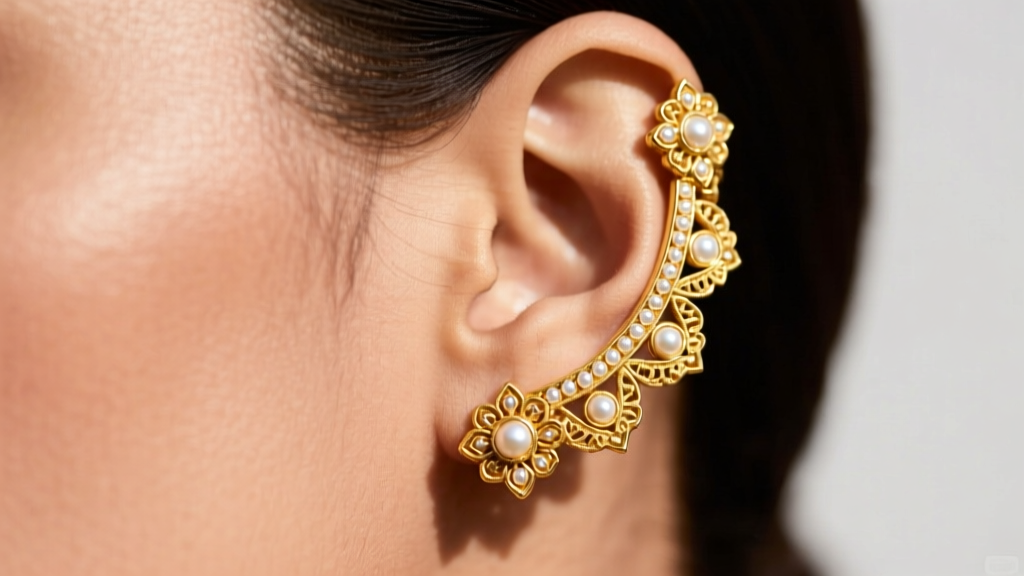
The bugadi (also referred to as a bugri or upper ear cuff) is a masterpiece of traditional Indian jewelry, designed to adorn the upper helix of the ear without the need for a cartilage piercing. Historically worn by dancers and royalty in South India, these ornate pieces have evolved into a global statement of heritage and high fashion. However, because they rely on tension or mechanical clasps rather than a pierced hole, knowing how to properly fit and secure them is essential. In this comprehensive guide, we break down the metallurgy, mechanics, and styling of bugadi earrings gold designs, ensuring your heirloom or contemporary piece stays safely in place from morning until night.
The Anatomy and Metallurgy of a Gold Bugadi
Before attempting to wear a bugadi, it is crucial to understand the materials involved. Traditional temple jewelry bugadis are typically crafted in 22-karat gold. While 22K gold (91.6% pure) offers that rich, unmistakable yellow hue and holds immense cultural and investment value, it is inherently soft. According to the Victoria and Albert Museum's extensive jewelry archives, traditional Indian goldsmiths often had to engineer thicker bands to compensate for the softness of high-karat gold.
If you are purchasing a modern bugadi meant for daily wear or heavy tension gripping, jewelers will often use 18-karat (75% pure) or 14-karat gold for the structural clip mechanism, while reserving 22K gold for the decorative face. This hybrid approach ensures the tension band does not warp or lose its grip over time.
Understanding Helix Thickness
The average human ear helix ranges from 3mm to 5mm in thickness. A properly fitted gold bugadi must be calibrated to your specific cartilage gauge. If the gap is too wide, the earring will slip; if it is too narrow, it will restrict blood flow, cause pain, and eventually warp the gold band.
Step-by-Step Guide: How to Wear a Non-Pierced Bugadi
Securing a non-pierced ear cuff requires a clean surface and precise alignment. Follow these steps to ensure a comfortable, all-day hold.
- Prep the Cartilage: Wash your ear with a gentle, oil-free cleanser. Natural sebum (skin oils) and hair products create a slippery surface that causes gold cuffs to slide down the ear. Dry the helix completely.
- Locate the Thinnest Point: Feel the upper edge of your helix. You are looking for the thinnest ridge of cartilage, usually about an inch below the very top of the ear.
- Slide and Rotate: Gently open the tension band (or unscrew the back). Slide the bugadi over the thinnest part of the helix. Once it is on the ear, rotate it slightly downward so it rests on a slightly thicker, more secure part of the cartilage.
- Secure the Mechanism: If using a tension clip, press firmly until you hear or feel a subtle click. If using a screw-back, tighten it until it is snug, but never overtighten, as this will bend the gold threading.
- The 'Shake Test': Gently shake your head side to side. The bugadi should not shift. If it moves, remove it and adjust the tension band using a jewelry mandrel or take it to a professional jeweler for calibration.
Securing Mechanisms: Tension vs. Screw-Back
When shopping for bugadi earrings gold designs, you will encounter different backing mechanisms. Here is a technical comparison to help you choose the right fit for your lifestyle.
| Mechanism Type | Best Gold Karat | Security Level | Pros & Cons |
|---|---|---|---|
| Spring Tension Clip | 18K or 14K | High | Easy to put on; can lose tension over years if made in soft 22K gold. |
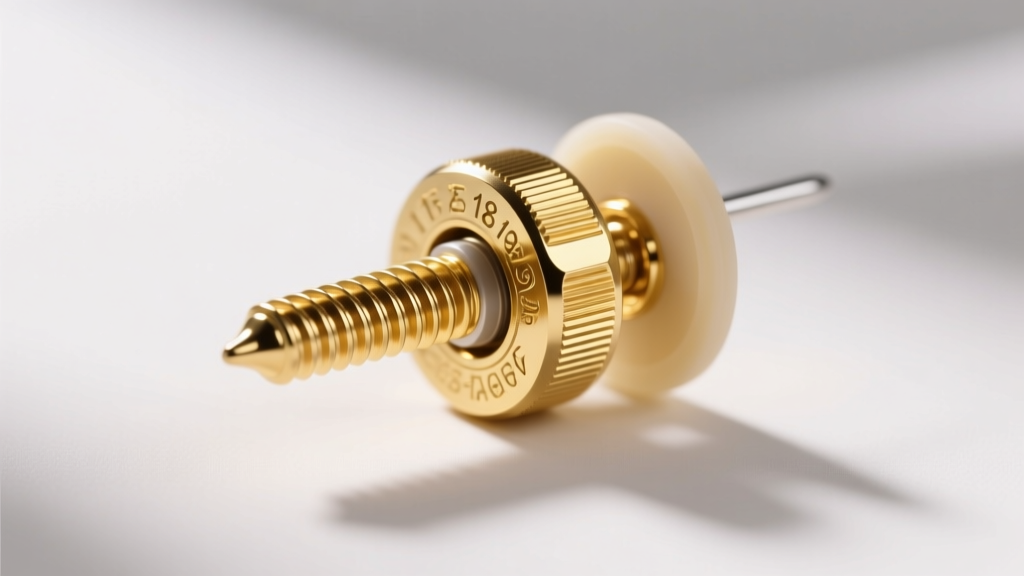
| Screw-Back with Silicone Pad | 22K or 18K | Maximum | Customizable tightness; silicone prevents slipping. Threading can strip if forced. |
| Adjustable Cuff (Pliers-set) | 22K | Medium | Seamless look; requires a jeweler to bend it to your exact ear shape. Hard to share. |
Styling Your Bugadi: Traditional vs. Contemporary Fusion
As we move through 2026, the styling of heritage jewelry has shifted toward intentional juxtaposition. You no longer need a full bridal lehenga to justify wearing a gold bugadi. Here is how to style them for different aesthetics.
The Heritage Stack (Bridal & Festive)
For traditional events, pair a heavy, Kundan-set 22K gold bugadi with a matching jhumka (bell-shaped earring) in the lobe. To bridge the gap between the lobe and the helix, use a delicate gold chain (known as a sahara) that hooks from the bugadi down to the hair or the lobe earring. This not only looks regal but provides an extra layer of physical security against dropping the piece.
The Modern Minimalist Stack
For contemporary styling, opt for a sleek, unembellished 14K or 18K gold bugadi band. Stack it with a small diamond or gold huggie in the lobe and a tiny tragus stud. Keep the hair in a sleek, pulled-back bun or a sharp bob to ensure the architectural lines of the ear stack are fully visible.
Care and Maintenance for Gold and Gemstones
Bugadis often feature intricate stone settings, such as Polki (uncut diamonds) or Kundan (glass or gemstones set in gold foil). Cleaning these requires vastly different protocols than cleaning plain gold.
Expert Warning: Never submerge a Kundan-set bugadi in water or ultrasonic cleaners. The moisture will degrade the natural lac and gold foil used to hold the stones, causing them to fall out or turn black.
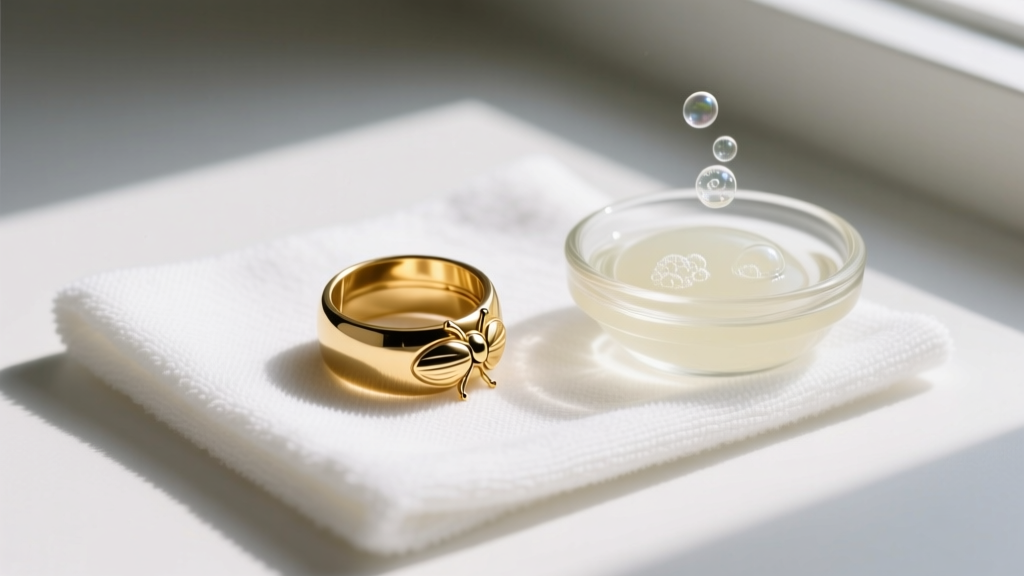
For plain gold or diamond-set bugadis, the Gemological Institute of America (GIA) recommends a simple solution of warm water and a few drops of mild, ammonia-free dish soap. Use a baby-soft toothbrush to gently sweep away skin cells and hairspray buildup from the tension hinges. Always dry the piece completely with a lint-free microfiber cloth before storing it in an airtight anti-tarnish pouch.
Troubleshooting Common Fit Issues
Even with the perfect technique, you may encounter fit issues. Here is how to troubleshoot them like a professional jeweler.
- The Bugadi Pinches After an Hour: This means the tension is too high, or the inner diameter is too small for your cartilage thickness. A jeweler can use a ring mandrel and a rawhide mallet to gently expand the inner curve by a fraction of a millimeter.
- The Cuff Slides Down the Ear: Your helix may be too thin for a standard tension clip. Switch to a screw-back mechanism with a medical-grade silicone pad, which increases friction without requiring painful compression.
- The Gold Looks Dull or Scratched: 22K gold scratches easily due to its purity. Avoid storing your bugadi loose in a jewelry box where it can rub against diamond rings or harder metals. Wrap it individually in acid-free tissue paper.
Mastering the art of wearing a bugadi transforms it from a daunting antique into a versatile, everyday statement piece. By understanding the metallurgy of your gold, respecting the mechanics of the clasp, and maintaining a clean gripping surface, you can wear your heritage jewelry with absolute confidence and security.


