The Anatomy of a Dangly Earring: Weight, Gauge, and Piercing Health
Discover the engineering behind the perfect dangly earring. We analyze weight distribution, gauge stress, and material grades to protect your piercings.

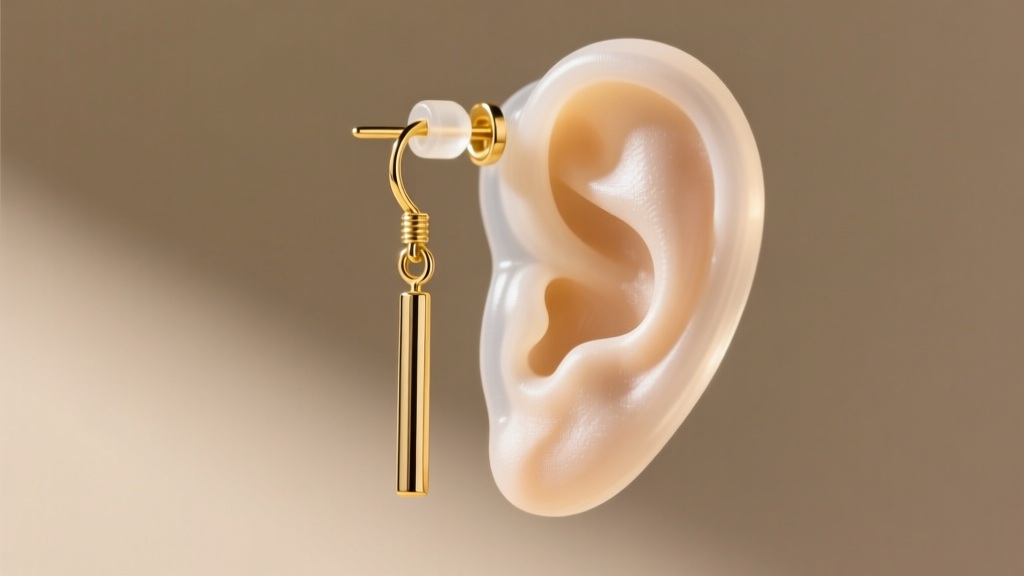
The Biomechanics of the Dangly Earring
The colloquial dangly earring—technically classified in jewelry design as a kinetic drop or articulated dangle—relies on pendulum physics to achieve its signature movement. While visually striking, this kinetic energy transfers directly into the fistula (the piercing channel). When the head moves, the center of gravity of a long earring lags behind, creating rotational torque. Torque is calculated as Force multiplied by Distance; therefore, the longer the drop, the exponentially higher the shear stress applied to the earlobe tissue.
According to guidelines established by the Association of Professional Piercers (APP), continuous micro-trauma from heavy, swinging jewelry can lead to fistula elongation, colloquially known as the "cheese-cutter effect." Understanding the structural engineering behind your jewelry is not just an aesthetic choice; it is a matter of long-term tissue preservation.
Gauge Thickness and Shear Stress Limits
Standard earlobe piercings are typically performed at 20-gauge (0.81mm) or 18-gauge (1.02mm). However, these gauges were originally standardized for static studs, not dynamic loads. When a heavy dangly earring swings, the localized pressure on the bottom of the piercing channel can exceed the tensile strength of the skin's collagen matrix.
Below is a structural load table detailing the maximum recommended weights for standard lobe gauges. Note: Kinetic weight limits account for the pendulum effect during normal walking and head movement.
| Gauge Size | Diameter (mm) | Max Static Weight | Max Kinetic Weight | Tissue Risk Level |
|---|---|---|---|---|
| 22G | 0.64mm | 1.5 grams | 0.5 grams | High (Tearing) |
| 20G | 0.81mm | 3.0 grams | 1.0 grams | Moderate-High |
| 18G | 1.02mm | 6.0 grams | 2.5 grams | Moderate |
| 16G | 1.29mm | 12.0 grams | 5.0 grams | Low (Optimal) |
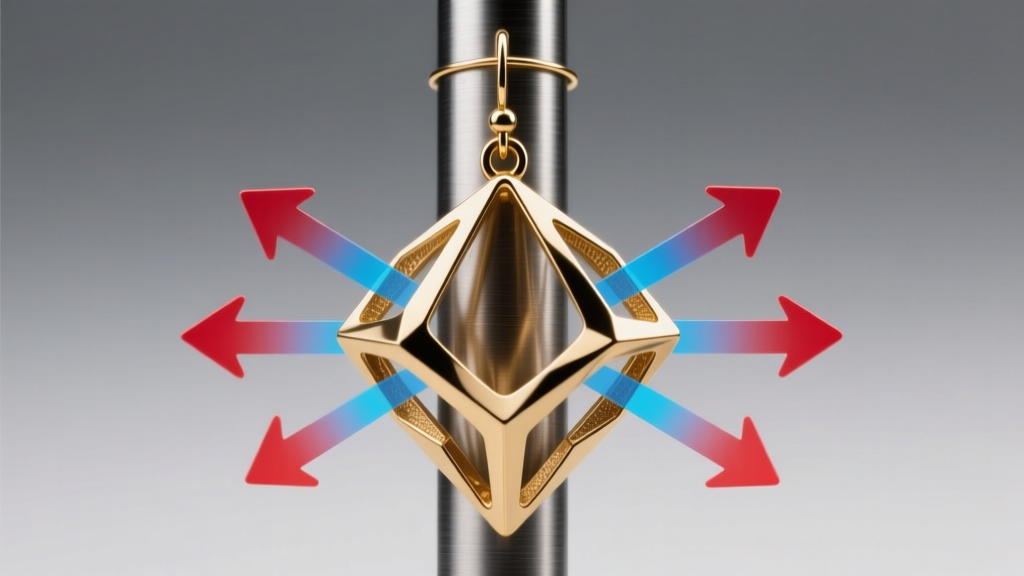
For any dangly earring exceeding 5 grams, professional piercers and dermatologists strongly recommend upsizing the piercing to 16G or 14G to distribute the shear force across a wider surface area of the fistula base.
Material Fatigue and Structural Failure Points
The integrity of a dangle relies entirely on its connection points. The most common failure mode in articulated earrings is the jump ring—the small loop connecting the post to the drop.
Soldered vs. Unsoldered Jump Rings
An unsoldered jump ring has a microscopic seam. Under the repetitive kinetic loading of a swinging earring, this seam will eventually undergo work hardening and snap, resulting in lost jewelry. High-end artisan jewelers will always use laser-soldered or continuous (welded) jump rings for drops exceeding 3 grams. If you are commissioning a custom dangly earring, explicitly request soldered connection points.
Alloy Selection and Tensile Strength
- Grade 23 Titanium (ASTM F136): The gold standard for the post. It offers immense tensile strength and is completely nickel-free, preventing contact dermatitis in stressed fistulas.
- 14k / 18k Gold: Excellent for the decorative drop, but pure 24k gold is too soft for the structural post or jump rings. Ensure the alloy is mixed with silver or copper for rigidity.
- Brass and Bronze: Often used in budget statement pieces. These base metals are prone to oxidation and possess lower yield strengths, making them prone to bending under heavy kinetic loads.
Mitigating Lobe Elongation: An Expert Framework
If you refuse to compromise on the size and weight of your favorite statement pieces, you must implement external support systems to bypass the fistula's load-bearing limits. Research published in dermatological journals regarding auricular trauma highlights that external load distribution is key to preventing irreversible lobe splitting.
"Earlobe elongation from heavy jewelry is a progressive mechanical trauma. Once the collagen bed is stretched beyond its elastic limit, surgical intervention is the only corrective measure." — American Academy of Dermatology
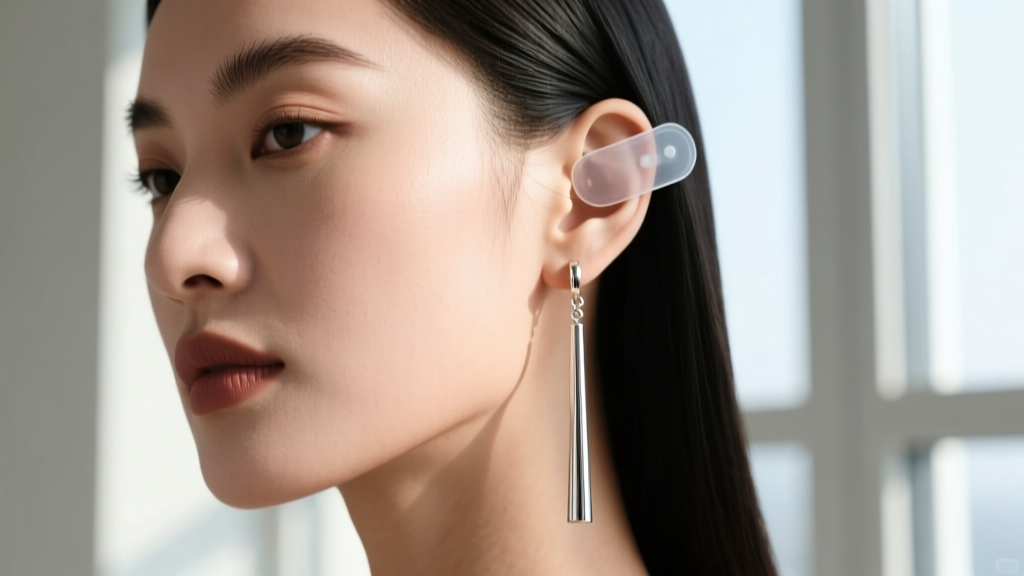
1. Silicone Earlobe Patches
Products like Blomdahl Earlobe Supports or generic medical-grade silicone patches adhere to the back of the earlobe. They feature a wider surface area that absorbs the downward drag of the earring, transferring the weight to the skin's surface rather than the delicate fistula channel.
2. O-Ring Stabilizers
Slipping a small, 3mm silicone O-ring over the earring post before securing the backing acts as a shock absorber. It reduces the micro-movements and rotational torque that cause the most tissue damage.
3. Upgrading the Backing System
Standard "butterfly" friction backs are entirely unsuitable for heavy danglers. The friction grip degrades over time, and the narrow backing concentrates pressure into a single point on the back of the lobe. Upgrade to La Pousette locking clutches or screw-back systems, which feature wider, flat-backed plates that distribute the earring's resting weight evenly across the posterior earlobe.
Sourcing and Pricing: What to Expect
In the current market, structurally sound, artisan-crafted dangly earrings command a premium due to the labor-intensive nature of soldering and precision casting. Expect to pay between $85 and $250 for a pair of high-quality, lightweight titanium or 14k gold articulated drops from independent jewelers. Mass-produced fashion jewelry in the $20–$40 range almost universally relies on unsoldered jump rings and thin 22-gauge wires, guaranteeing both structural failure and long-term piercing damage. Invest in the engineering, and your piercings will last a lifetime.


