Black & White Earrings: Material Properties & Care Guide
Compare metals, stones, and enamels in black & white earrings. Discover durability, care tips, and material grades for high-contrast jewelry.

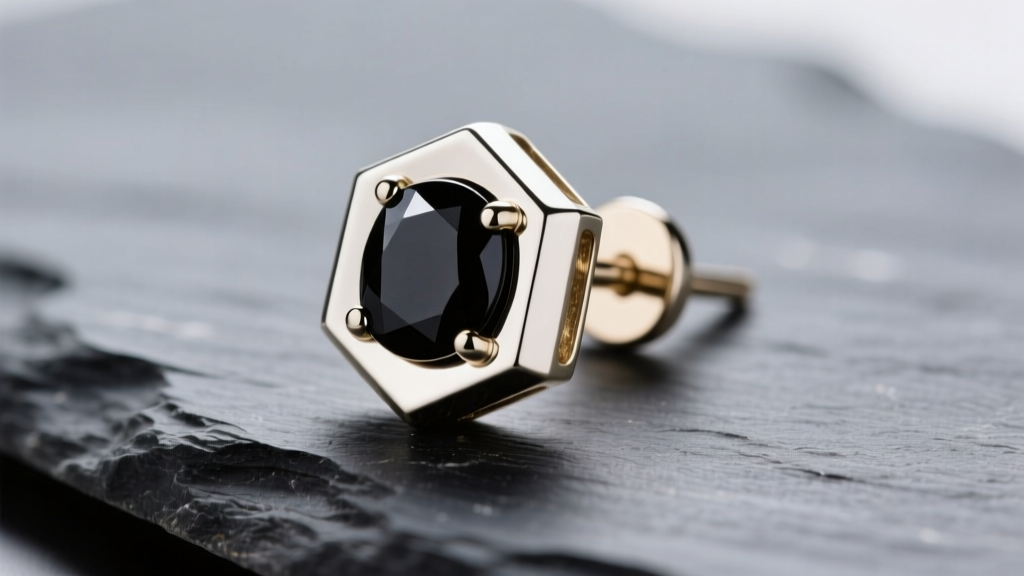
The stark visual impact of black & white earrings relies entirely on the interplay of light absorption and reflection. However, achieving this high-contrast aesthetic requires combining materials with vastly different chemical properties, hardness scales, and structural vulnerabilities. As a jewelry metallurgist and gemologist, I evaluate these pieces not just for their monochrome beauty, but for their long-term wearability. This guide dissects the exact material grades, failure modes, and maintenance protocols required to keep two-tone ear jewelry pristine.
The Metallurgy of Contrast: White Metals vs. Black Finishes
The foundation of most high-end black & white earrings relies on pairing a naturally white or rhodium-plated base metal with a darkened finish. Understanding the alloy composition is critical for predicting how the earrings will age against the skin's natural pH and environmental friction.
White Gold Alloys and Rhodium Plating
White gold is not naturally white; it is an alloy of yellow gold and white metals. In 14k white gold (58.5% pure gold), the remaining 41.5% typically consists of nickel, palladium, or silver. For earrings, 14k is often preferred over 18k for structural components like posts and clasps because the higher alloy content increases tensile strength, reducing the risk of bending. However, both require a flash of rhodium plating to achieve a bright white luster. This plating is generally 0.75 to 1.5 microns thick on earrings, which experience less friction than rings, allowing the white finish to last several years before requiring re-plating.
Platinum 950: The Premium White Base
Platinum 950 (95% platinum, 5% ruthenium or iridium) is naturally white and will never require rhodium plating. Its density makes it ideal for securing heavy black gemstone inlays. However, platinum develops a 'patina'—a micro-scratched, matte surface—over time. While some collectors prize this, it will slightly dull the reflective contrast against glossy black stones.
Black Rhodium and Ruthenium Plating
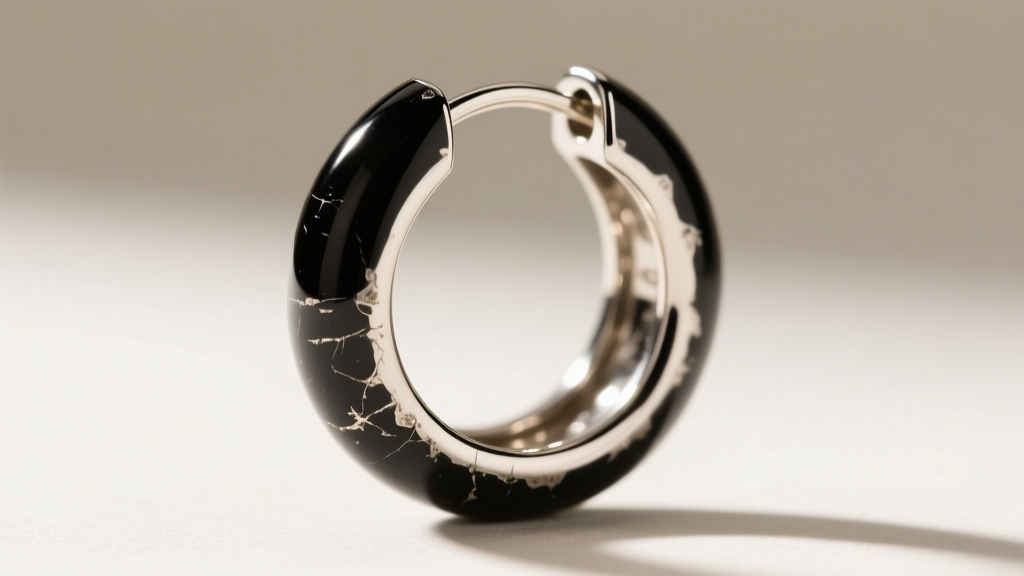
When you see 'black gold' earrings, you are almost always looking at white gold plated with black rhodium (a mixture of rhodium and tin sulfate) or ruthenium. This dark plating is stunning but represents the primary failure point in black & white earrings. Black rhodium is softer than standard bright rhodium and is highly susceptible to wear from cosmetic chemicals. If you are purchasing black-plated hoops or huggies, expect to have them re-plated every 12 to 18 months, as the inner curvature will inevitably reveal the bright white gold base beneath.
Gemstones and Inlays: Hardness and Porosity
The dark and light focal points in monochrome earrings are typically achieved through specific gemstones or vitreous enamels. The Mohs hardness scale and material porosity dictate how these elements survive daily wear.
Black Onyx vs. Black Spinel
Black onyx is the most common dark material in affordable to mid-range black & white earrings. According to GIA's comprehensive guide to Onyx, natural black onyx is exceedingly rare; the market is dominated by gray chalcedony that has been treated with a sugar solution and sulfuric acid to carbonize the sugars, turning it permanently black. With a Mohs hardness of 6.5 to 7, onyx is durable but possesses a conchoidal fracture, meaning it can chip or crack if dropped on a hard tile floor.
For superior durability, high-end designers use black spinel. Spinel is a natural, untreated gemstone with a Mohs hardness of 8, making it highly resistant to scratching. It lacks the cleavage planes that make other stones vulnerable to impact, making it the ultimate choice for black & white drop earrings that swing and collide.
Mother of Pearl vs. White Enamel
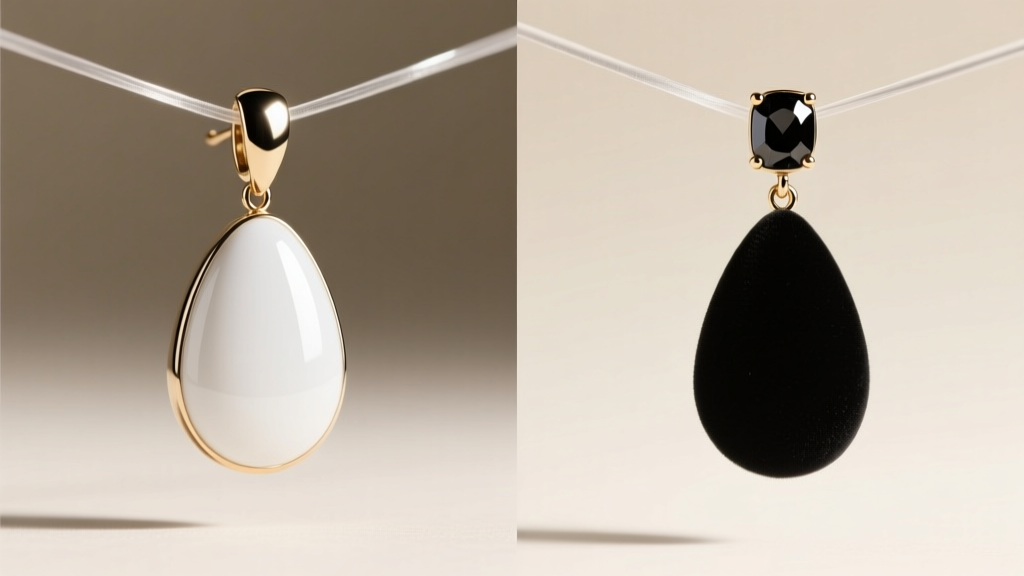
For the white contrast, designers choose between organic and synthetic materials. Mother of pearl (nacre) offers a stunning, iridescent white. However, as noted in GIA's Pearl Quality Factors, nacre is primarily calcium carbonate, which ranks a mere 2.5 to 4.5 on the Mohs scale. It is highly porous and will permanently etch or dissolve if exposed to the acids in perfume, hairspray, or even heavy perspiration.
White vitreous enamel, conversely, is essentially fused glass (silica and flux) fired at temperatures exceeding 1400°F. It is completely impervious to cosmetics and acids. The trade-off is impact resistance: while enamel won't etch, a sharp knock against a marble countertop can cause the glass to shatter or craze, separating it from the metal cloisons.
Material Durability & Failure Modes Comparison
To make an informed purchasing decision, reference this matrix of common materials used in high-contrast ear jewelry. Understanding these failure modes will dictate which style suits your lifestyle.
| Material | Mohs Hardness | Primary Vulnerability | Common Failure Mode | Recommended Cleaning |
|---|---|---|---|---|
| 14k White Gold | 3.5 - 4.0 | Rhodium wear | Yellowing at high-friction edges | Ultrasonic safe, mild soap |
| Black Rhodium | 4.5 - 5.0 | Chemical erosion | Flaking from contact with lotions | Damp microfiber cloth only |
| Black Onyx | 6.5 - 7.0 | Blunt force impact | Chipping at the girdle or bezel edge | Warm soapy water, soft brush |
| Mother of Pearl | 2.5 - 4.5 | Acid / Chemical | Loss of luster, surface pitting | Dry wipe; never submerge |
| White Enamel | 5.0 - 6.0 | Thermal shock / Impact | Crazing or shattering of glass | Soft cloth; NO ultrasonic |
| Black Spinel | 8.0 | Extreme pressure | Scratching adjacent softer metals | Ultrasonic and steam safe |
Gauge Sizes and Structural Integrity in Two-Tone Designs
Black & white earrings often feature heavy geometric designs, large onyx cabochons, or dense enamel work. This added weight drastically changes the structural requirements for the earring post and backing.
The Physics of Earlobe Stress
Standard lobe piercings are typically done at 20-gauge (0.81mm) or 18-gauge (1.02mm). If a heavy black onyx and white gold drop earring utilizes a thin 20-gauge post, the fulcrum effect will cause the post to bend downward, stretching the piercing hole over time. For any black & white earring exceeding 8 grams in total weight, the post must be engineered at 16-gauge (1.29mm) or 14-gauge (1.63mm).
Backing Mechanisms
Standard butterfly friction backs are insufficient for heavy two-tone pieces. The small surface area of the backing will dig into the neck, and the earring will tilt forward, ruining the visual alignment of the black and white inlays. Look for designs that utilize Omega-backs, lever-backs, or specialized silicone support discs (like the Bling Guard) to distribute the weight across a wider area of the earlobe.
Advanced Care Protocols for High-Contrast Jewelry
Maintaining the sharp visual divide between black and white materials requires a nuanced approach to cleaning. The methods that safely clean white gold can destroy black inlays.
- Avoid Ultrasonic Cleaners for Mixed Materials: While ultrasonic waves are excellent for removing sebum from white gold prongs, the high-frequency vibrations can easily fracture black onyx or shatter white enamel. Furthermore, as GIA's overview on Black Diamonds notes, if your earrings feature fracture-filled black diamonds, ultrasonic cleaners can boil out the fillers, leaving the stones looking cloudy and gray.
- The Cosmetics Rule: Always apply hairspray, perfume, and skincare before putting on black & white earrings. The alcohol and volatile organic compounds (VOCs) in cosmetics will rapidly degrade black rhodium plating and strip the natural oils from mother of pearl.
- Targeted Polishing: If the white gold sections tarnish or lose their luster, use a treated polishing cloth (like a Sunshine cloth) strictly on the metal. Do not rub the cloth over black onyx or spinel, as the mild abrasives in the cloth can create micro-scratches on the polished surface of the dark stones, giving them a cloudy appearance.
"The true test of a master jeweler is not just in setting contrasting stones, but in engineering the bezel walls to account for the different thermal expansion rates of black onyx and white gold, preventing the stone from popping out during temperature changes." — Master Bench Jeweler
Final Verdict on Material Selection
When investing in black & white earrings, prioritize material permanence over temporary trends. If you want a piece that requires zero maintenance and will last a lifetime, seek out Platinum 950 paired with natural Black Spinel and white vitreous enamel. If you prefer the warmth and lighter weight of gold, 14k white gold with black onyx is an excellent choice, provided you accept the inevitable need to re-plate the black rhodium accents every few years. By understanding the metallurgy and gemology behind the contrast, you can curate a monochrome collection that remains as structurally sound as it is visually striking.


