Styling an Earring on the Left: The Ultimate Buying Guide
Discover how to choose, size, and style an earring on the left ear. Our buying guide covers gauges, materials, and asymmetrical styling tips.


The Evolution of the Single Left Ear Aesthetic
Historically, wearing an earring on the left carried specific cultural subtexts, most notably the outdated "left is right, right is wrong" coding of the 1980s and 90s. However, as we navigate the fashion landscape of 2026, the single earring on the left has been entirely reclaimed. It is no longer a secret signal, but rather a bold, intentional exercise in asymmetrical styling and gender-fluid fashion. Whether you are a man embracing a minimalist statement piece or a woman curating an intricate ear constellation, dedicating your left ear to jewelry requires a distinct approach to buying, sizing, and maintenance.
When you only wear jewelry on one side of your face, that single ear becomes a focal point. The margin for error in sizing, material quality, and stylistic cohesion shrinks significantly. This comprehensive buying guide will walk you through the exact specifications, material grades, and styling frameworks you need to curate the perfect left-ear aesthetic.
Facial Mapping: Why Choose the Left Ear?
Before purchasing your jewelry, consider the anatomy of your face and your daily styling habits. Asymmetry in jewelry should complement your natural features, not fight them. Most individuals have a dominant hair part. If you part your hair on the right side, your left ear is naturally exposed, making it the ideal canvas for a curated jewelry look. Conversely, if you frequently tuck your hair behind your left ear, a constellation of helix and lobe pieces will catch the light beautifully.
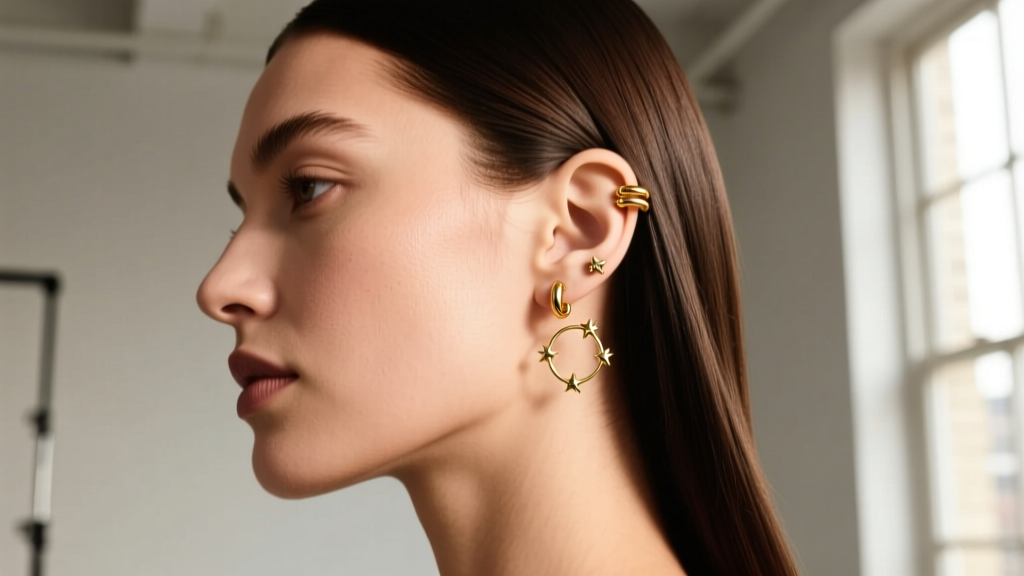
Furthermore, facial symmetry plays a role. Studies in aesthetic mapping suggest that the left side of the face is often perceived as more emotionally expressive and visually dominant in portraits. By placing a statement earring on the left, you draw the observer's eye to this expressive side, creating a striking, memorable silhouette. When shopping for a single-ear look, prioritize pieces that balance the visual weight of your jawline and cheekbone.
Technical Specifications: Gauges, Sizing, and Fit
The most common mistake buyers make when curating a single ear is ignoring gauge sizes and post lengths. Because all attention will be on this one ear, ill-fitting jewelry (such as a hoop that sits too far from the cartilage or a labret post that pokes out too far) will be immediately noticeable. Below is a technical framework for sizing your left-ear purchases.
| Piercing Placement | Standard Gauge | Ideal Hoop Diameter | Threadless Post Length |
|---|---|---|---|
| Standard Lobe | 18g - 16g | 10mm - 12mm | 6mm - 8mm |
| Helix / Outer Cartilage | 16g | 8mm - 10mm | 5mm - 6.5mm |
| Conch | 14g - 16g | 12mm - 14mm | 6mm - 8mm |
| Tragus | 16g | 6mm - 8mm | 5mm - 6mm |
| Flat | 16g | N/A (Studs preferred) | 5mm - 6.5mm |
Pro-Tip for Single-Ear Wear: Opt for threadless (push-pin) jewelry rather than internally threaded pieces. Threadless ends, secured by a slight bend in the pin, offer superior tension and are significantly less likely to fall out unnoticed—a critical factor when you are only wearing jewelry on one side and might not catch a fallen backing in your mirror.
Material Grades: Protecting Your Cartilage
When your left ear is the sole focus, you cannot afford downtime caused by contact dermatitis or allergic reactions. The Association of Professional Piercers (APP) strictly recommends specific implant-grade materials for long-term wear, especially in cartilage piercings which are prone to irritation bumps.
- ASTM F136 Titanium: The gold standard for sensitive ears. It is entirely nickel-free, lightweight, and can be anodized to create deep blacks, golds, and blues without using surface plating that can chip.
- Solid 14k or 18k Gold: Ensure it is alloyed for biocompatibility. Avoid white gold that is alloyed with nickel; instead, seek out palladium-white gold. Never wear gold-plated or vermeil jewelry in cartilage piercings, as the friction of daily wear will strip the plating, exposing base metals to your bloodstream.
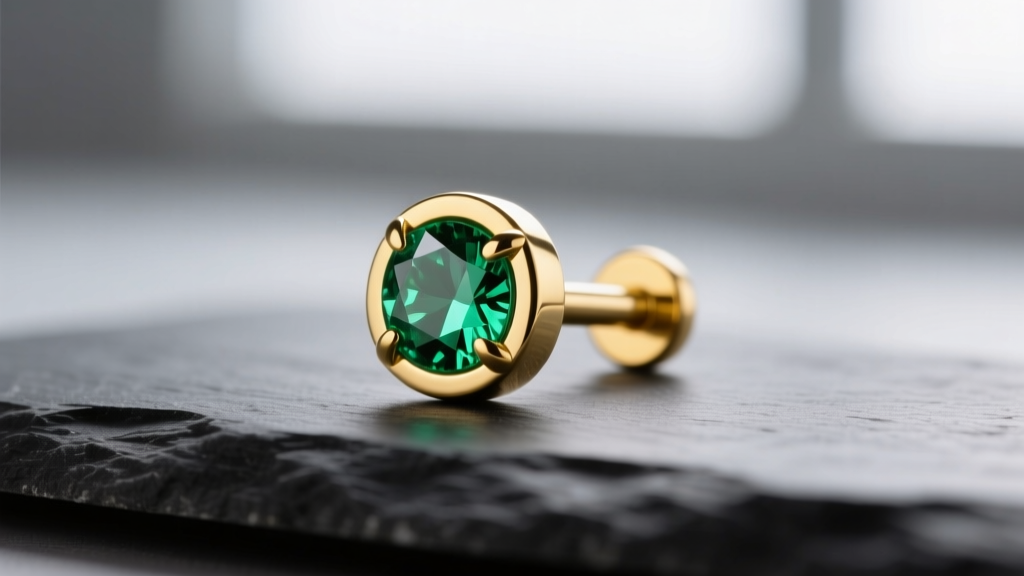
- Gemstone Quality: If your left-ear statement involves diamonds or colored stones, verify the cut and setting. According to the Gemological Institute of America (GIA), bezel or prong settings in solid gold offer the best light return and security for daily-wear ear curation.
Curating the Constellation: Styles for the Left Ear
Styling an earring on the left is about creating a cohesive narrative. In 2026, the trend has shifted away from chaotic, mismatched "ear parties" toward intentional, thematic curation. Here is how to build your look based on your personal aesthetic.
The Minimalist Architect
This style relies on geometric precision and negative space. Pair a sleek, 16-gauge titanium seamless hoop in the upper lobe with a simple, bezel-set diamond threadless stud in the helix. The key here is matching the metal finish exactly. If you choose a brushed titanium finish for the hoop, ensure the stud's backing and setting share that same matte texture. This creates a sophisticated, quiet-luxury vibe that works exceptionally well for professional environments.
The Romantic Asymmetrical
For a softer, more expressive look, incorporate drop elements and chains. An ear chain connecting a helix stud to a lobe huggie creates a beautiful drape that catches the light when you turn your head. When buying chains for the left ear, look for adjustable lobster-clasp connectors that allow you to customize the drape length to your specific ear anatomy, ensuring the chain doesn't pull uncomfortably on the cartilage.
The Bold Statement
If you are wearing only a single earring in the left lobe and leaving the rest of the ear bare, the piece must command attention. Look for oversized huggies (12mm-14mm diameter) with intricate pavé detailing, or a sculptural, solid gold drop earring that mimics the line of your jaw. Because the piece is heavy, ensure the clasp is a secure clicker-hinge mechanism rather than a standard butterfly back, which can droop under the weight of a statement piece.
Troubleshooting Common Single-Ear Issues
Wearing jewelry exclusively on one side introduces unique physical challenges, primarily related to sleep and friction.
- Sleep Compression: If you sleep on your left side, cartilage piercings can become irritated or migrate due to constant pressure. Invest in a specialized travel pillow with a hollow center, or switch to a silk pillowcase to reduce friction and moisture buildup around your jewelry.
- Visual Imbalance: Sometimes, a heavy left-ear curation can make the face look visually "pulled" to one side. Counteract this by ensuring your hairstyle adds slight volume to the right side of your head, balancing the visual weight of the metal and gems on the left.
- Cleaning Routines: Because all your jewelry is concentrated in one area, a single infection can compromise your entire look. Cleanse the area daily with sterile saline spray (0.9% sodium chloride, no additives) and avoid harsh chemical soaps that can degrade gemstone settings over time.
Pricing Tiers and Brand Recommendations
Investing in a curated left ear requires understanding where to allocate your budget. Here is a breakdown of trusted brands across different price points for 2026.
- Entry-Level ($40 - $120): Brands like Mejuri and Gorjana offer excellent solid 14k gold huggies and simple studs. While great for lobes, be cautious with their cartilage-specific posts, as they may not offer the precise millimeter sizing needed for a perfect helix fit.
- Mid-Tier ($150 - $350): Maria Tash and Buddha Jewelry Organics excel in this space. They offer highly specific post lengths (down to the millimeter) and exquisite diamond settings that are perfect for building a high-quality constellation without venturing into bespoke pricing.
- High-End / Bespoke ($400 - $1,500+): BVLA and LeRoi are the pinnacle of body jewelry. Their threadless ends feature precision-cut gemstones and unparalleled metal finishing. Buying a single, spectacular BVLA conch stud for the left ear is often more impactful than buying five pieces of lower-tier jewelry.
"The single earring on the left is no longer about rebellion; it is about extreme intentionality. When you strip away the symmetry of matching sets, every millimeter of gold, every facet of a gemstone, and every gauge of titanium must be chosen with absolute purpose."
Ultimately, styling an earring on the left is a masterclass in personal branding. By prioritizing implant-grade materials, understanding the micro-measurements of your unique ear anatomy, and embracing the power of asymmetry, you can transform your left ear into a captivating, standalone work of art.


