How to Clean and Care for Sterling Silver Door Knocker Earrings
Learn expert techniques to clean, polish, and store sterling silver door knocker earrings to prevent tarnish and maintain their bold, vintage shine.

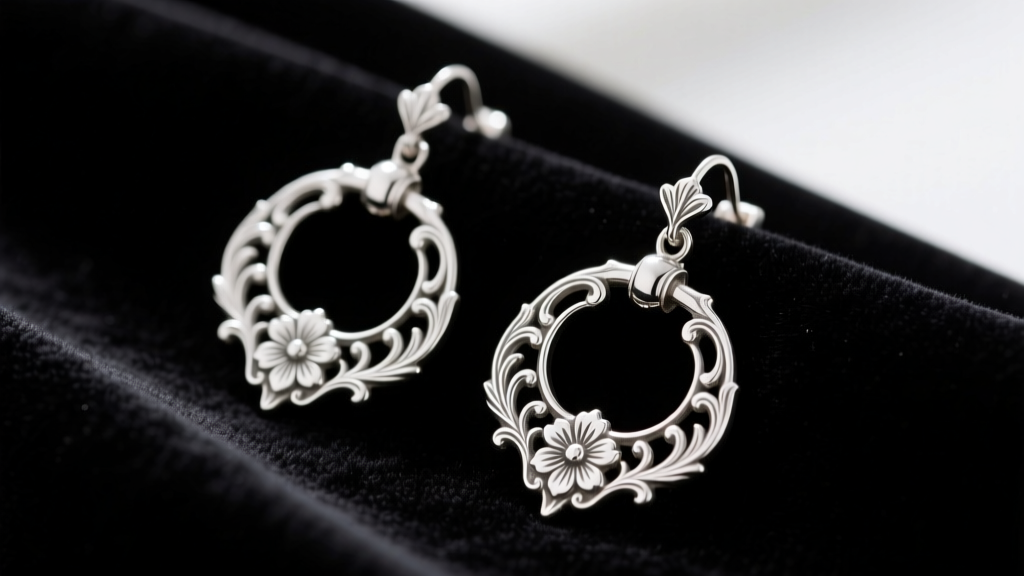
Sterling silver door knocker earrings are a bold, iconic statement piece. Characterized by their thick, hinged, U-shaped design that mimics a traditional door knocker, these earrings offer a striking vintage aesthetic that dominates the jawline. However, their substantial surface area, heavy weight (often ranging from 15 to 30 grams per earring), and intricate high-relief engravings make them uniquely susceptible to rapid tarnishing, sebum buildup, and clasp fatigue.
If you want to maintain the brilliant shine and structural integrity of your sterling silver door knocker earrings, you need a specialized care routine. Generic jewelry wipes are not enough for heavy, textured silver. This comprehensive guide details the exact chemical, mechanical, and storage protocols required to keep your 925 silver door knockers looking pristine for decades.
The Anatomy of Tarnish on Heavy Silver Jewelry
To properly care for sterling silver door knocker earrings, you must first understand why they tarnish. Pure silver is highly resistant to oxidation, but it is too soft for heavy jewelry. Therefore, sterling silver is an alloy composed of 92.5% pure silver and 7.5% base metals, almost always copper. According to the Gemological Institute of America (GIA), it is this copper content that reacts with sulfur compounds in the environment, human sweat, and cosmetics to form silver sulfide—the dark, dull layer we recognize as tarnish.
Door knocker earrings face an accelerated tarnishing process for three specific reasons:
- High Skin Contact: Their hinged, hoop-like structure rests directly against the neck and jawline, constantly absorbing skin oils, lotions, and perfume.
- Surface Area and Crevices: The wide, flat face and deep vintage engravings trap microscopic debris and moisture, creating localized micro-climates where oxidation thrives.
- Weight and Friction: The heavy weight causes the earrings to swing and rub against the earlobe, generating microscopic friction that can wear away protective anti-tarnish coatings over time.
Essential Cleaning Supplies for 925 Silver
Before beginning any maintenance, gather the correct materials. Using abrasive or highly acidic household cleaners can permanently scratch the silver or strip away intentional oxidized detailing (patina) in the engravings.
| Supply Category | Recommended (Safe) | Avoid (Damaging) |
|---|---|---|
| Cleansers | Phosphate-free mild dish soap, Baking soda (sodium bicarbonate) | Toothpaste (contains abrasive silica), Bleach, Ammonia |
| Polishing Tools | Microfiber cloths, Impregnated silver polishing cloths, Baby toothbrush | Paper towels (wood fibers scratch silver), Steel wool, Hard-bristle brushes |
| Chemical Baths | Aluminum foil, Boiling water, Sodium bicarbonate | Commercial silver dip solutions (thiourea-based dips strip silver over time) |
Step-by-Step Deep Cleaning Method
For heavily tarnished sterling silver door knocker earrings, mechanical polishing alone will not reach the deep crevices of the design. Instead, we utilize an electrochemical reduction process that reverses the tarnish without removing any base silver.
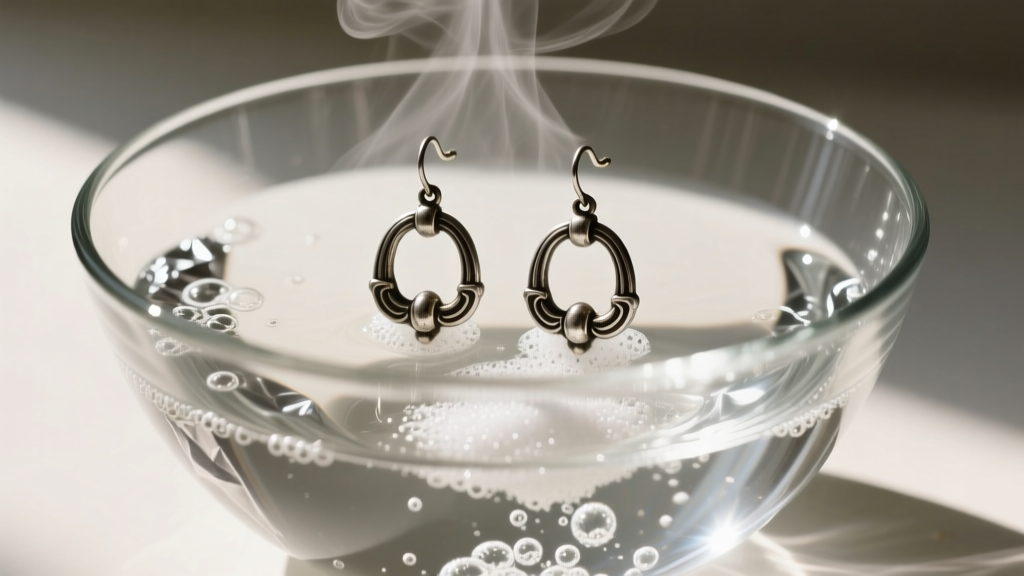
The Aluminum Foil and Baking Soda Bath
This method relies on a galvanic reaction. When silver sulfide touches aluminum in an electrolyte solution (baking soda and hot water), the sulfur atoms are transferred from the silver to the aluminum, leaving the pure silver behind.
- Prepare the Vessel: Line a glass or ceramic bowl with aluminum foil, shiny side up. (Never use a metal bowl, as it will interfere with the ion exchange).
- Create the Electrolyte: Add 2 tablespoons of baking soda to the bowl. Pour 2 cups of boiling water over the baking soda and stir until dissolved. The mixture will fizz aggressively.
- Submerge the Earrings: Using wooden or plastic tongs, lower your sterling silver door knocker earrings into the solution. Ensure they are physically touching the aluminum foil. This physical contact is mandatory for the electron transfer to occur.
- Monitor the Reaction: Leave the earrings in the bath for 3 to 5 minutes. You will likely notice a faint sulfur (rotten egg) smell—this is the sulfide leaving the silver.
- Rinse and Dry: Remove the earrings, rinse them thoroughly under lukewarm running water to halt the chemical reaction, and pat them completely dry with a microfiber cloth. Moisture left in the hinge will cause immediate re-tarnishing.
Detailing the High-Relief Crevices
Even after the chemical bath, dirt and hardened sebum may remain lodged in the deep engravings of the door knocker design. Dip a soft-bristled baby toothbrush or a wooden dental pick into a solution of warm water and a single drop of mild dish soap. Gently agitate the bristles inside the grooves. Wooden picks are preferred over metal needles, as metal will easily gouge the relatively soft 925 silver alloy.
Hinge and Clasp Maintenance Framework
The most common point of failure on heavy door knocker earrings is the hinge and the omega-back clasp. The sheer weight of the earring (often exceeding 20g) places continuous torque on the hinge barrel. Over time, skin oils and environmental dust create a thick sludge inside the hinge, causing it to stiffen or snap.
The Hinge Lubrication Protocol:
- Once a month, apply a microscopic drop of food-grade mineral oil or specialized jewelry hinge oil to the hinge pin.
- Work the hinge back and forth 10 to 15 times to distribute the oil and break up internal debris.
- Use a cotton swab to wipe away all excess oil. Leaving excess oil will attract dust, creating a grinding paste that will eventually wear down the metal pin.
- Inspect the omega clip or snap-back closure. If it no longer clicks securely, the tension wire has stretched. A professional jeweler can easily re-tension this with specialized pliers in under five minutes.
Maintenance Schedule and Storage Best Practices
Consistent, low-effort maintenance prevents the need for aggressive deep cleaning. The Jewelers of America recommends establishing a routine based on wear frequency. Furthermore, proper storage is your first line of defense against atmospheric sulfur.
The Care Calendar
- After Every Wear: Wipe the earrings down with a dry, untreated microfiber cloth to remove skin oils and perfume before putting them away.
- Weekly: Buff the high-polish areas with an impregnated silver polishing cloth. Do not use this cloth on intentionally oxidized (blackened) recessed areas, or you will strip the contrast.
- Bi-Annually: Perform the aluminum foil and baking soda deep clean, followed by a hinge lubrication check.
Strategic Storage
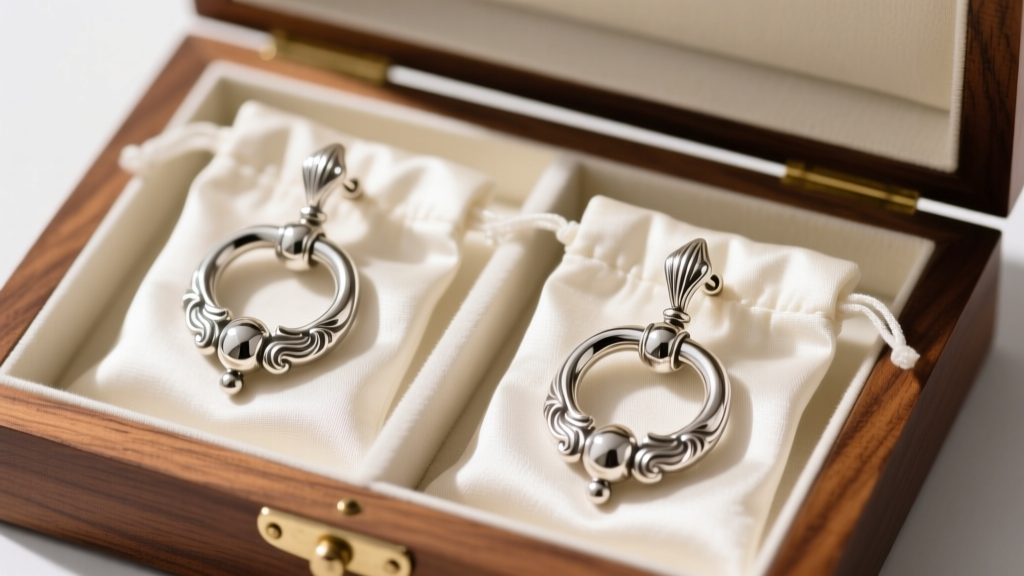
Never store sterling silver door knocker earrings loose in a humid bathroom or a standard wooden jewelry box, as wood glues and varnishes off-gas sulfur compounds. Store them in an airtight ziplock bag with a 3M anti-tarnish strip, or wrap them individually in Pacific Silvercloth. Ensure the heavy earrings are laid flat; hanging them can warp the hinge pin over time due to gravity.
Troubleshooting Common Silver Issues
Even with meticulous care, vintage and heavy silver pieces can develop specific issues that require expert troubleshooting.
Pitting and Black Spots
If you notice tiny, permanent black pits on the surface of your door knockers that will not polish out, this is not standard tarnish. This is pitting corrosion, often caused by prolonged exposure to chlorine (from swimming pools) or harsh household bleach. Chlorine reacts with the copper alloy to form copper chloride, which permanently eats away at the metal matrix. Pitting cannot be cleaned; it must be buffed out by a professional jeweler using a motorized polishing wheel, which will slightly reduce the earring's overall thickness.
Patina vs. Tarnish
Many vintage sterling silver door knocker earrings feature intentional oxidation. Jewelers use liver of sulfur to blacken the recessed engravings, making the high-relief silver pop. This is called patina. When cleaning, you must distinguish between unwanted surface tarnish (which is usually yellowish-brown and dulls the high points) and intentional patina (which is jet black and sits only in the grooves). The aluminum foil bath is generally safe for deep patina, but aggressive rubbing with a silver dip or polishing cloth will strip the black contrast, leaving the earring looking flat and washed out.
Final Thoughts on Silver Longevity
Sterling silver door knocker earrings are an investment in bold, architectural style. By understanding the metallurgical realities of the 925 alloy and implementing a targeted cleaning and storage framework, you eliminate the frustration of constant tarnishing. Treat the hinges with respect, avoid abrasive shortcuts like toothpaste, and rely on the electrochemical power of the baking soda bath to safely restore your pieces. For more information on verifying the authenticity and hallmarking of your heavy silver pieces, consult the London Assay Office's guide to silver hallmarks. With the right care, your door knockers will remain a striking, high-shine staple in your jewelry rotation for a lifetime.


