Padlock Earrings Buying Guide: Styles, Metals & Fit
Expert buying guide for padlock earrings: compare metal grades, gauge sizes, weight limits, and styling tips for safe lobe and cartilage wear.

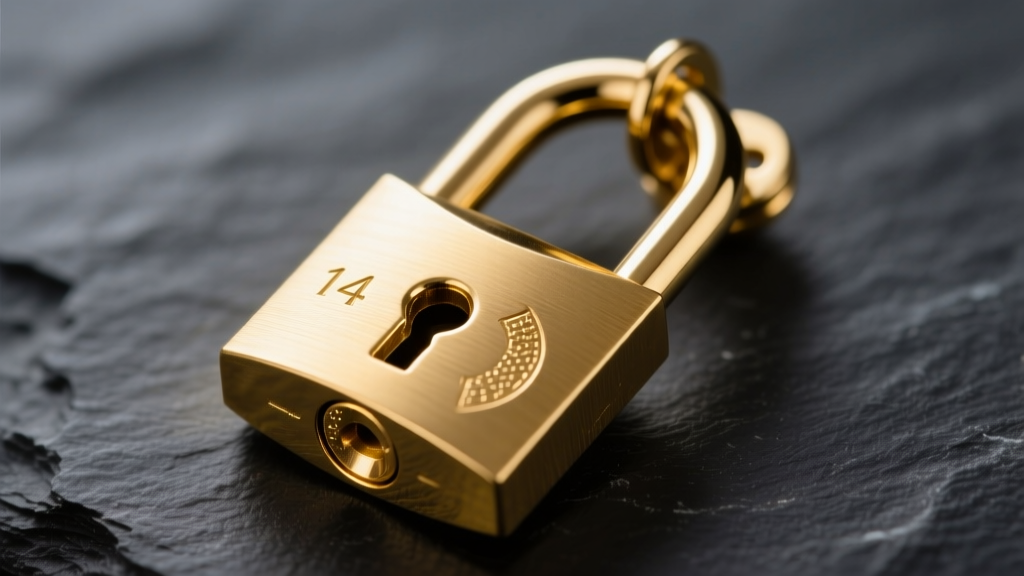
Hardware-inspired jewelry has firmly cemented its place in modern accessorizing, and padlock earrings sit right at the intersection of industrial edge and fine jewelry craftsmanship. Whether you are drawn to the punk-rock heritage of the motif or the high-fashion interpretations seen on recent runways, buying the right padlock earring requires more than just an eye for aesthetics. Because of their unique geometry and potential weight distribution issues, selecting the wrong pair can lead to stretched piercings, allergic reactions, or broken hinges.
This comprehensive buying guide breaks down the metallurgy, biomechanics, and sizing specifics you need to know before investing in padlock earrings for your lobes or cartilage.
The Anatomy of Padlock Earrings: Decorative vs. Functional
When shopping for padlock earrings, the first distinction to make is whether the hardware is decorative (cast-solid) or functional (featuring moving parts).
- Cast-Solid (Decorative): These are molded as a single piece of metal. The shackle (the U-shaped loop) is permanently fused to the rectangular body. They are significantly more durable, lighter, and lack the crevices where sebum and debris can accumulate.
- Functional Hardware: These feature a working shackle that opens and closes via a tiny internal spring or hinge mechanism, often secured by a microscopic key or push-pin. While highly appealing for their interactive nature, functional padlocks are heavier and prone to mechanical failure if the hinge is subjected to lateral pressure.
"If you are buying functional padlock earrings for a cartilage piercing like a helix or conch, always ensure the shackle locks securely. A loose shackle can catch on hair or clothing, leading to severe cartilage trauma." — Master Jeweler & Piercing Specialist
Metallurgy & Skin Safety: What the Labels Really Mean
The hardware motif often tricks consumers into accepting lower-grade metals, assuming that "industrial" means "surgical steel." However, when it comes to body jewelry, metal purity is non-negotiable. According to the Association of Professional Piercers (APP), initial and long-term jewelry must meet strict biocompatibility standards.
The Safe List
- Implant-Grade Titanium (ASTM F136): The gold standard for sensitive ears and fresh piercings. It is entirely nickel-free, lightweight, and can be anodized or PVD-coated to achieve matte black or gold tones without flaking.
- Solid 14k or 18k Gold: Excellent for long-term wear, provided it is nickel-free and alloyed with silver or copper. Avoid gold-plated brass, as the plating will eventually wear off inside the keyhole crevices, exposing reactive base metals.
- Niobium: A highly reactive, hypoallergenic metal that is slightly heavier than titanium but completely safe for those with severe metal sensitivities.
Metals to Avoid
Steer clear of 316L "Surgical" Stainless Steel for padlock earrings. Despite the medical-sounding name, 316L steel contains up to 10% nickel. Because padlock earrings often sit flush against the skin and trap heat and moisture in their keyhole engravings, nickel leaching is highly likely, resulting in contact dermatitis.
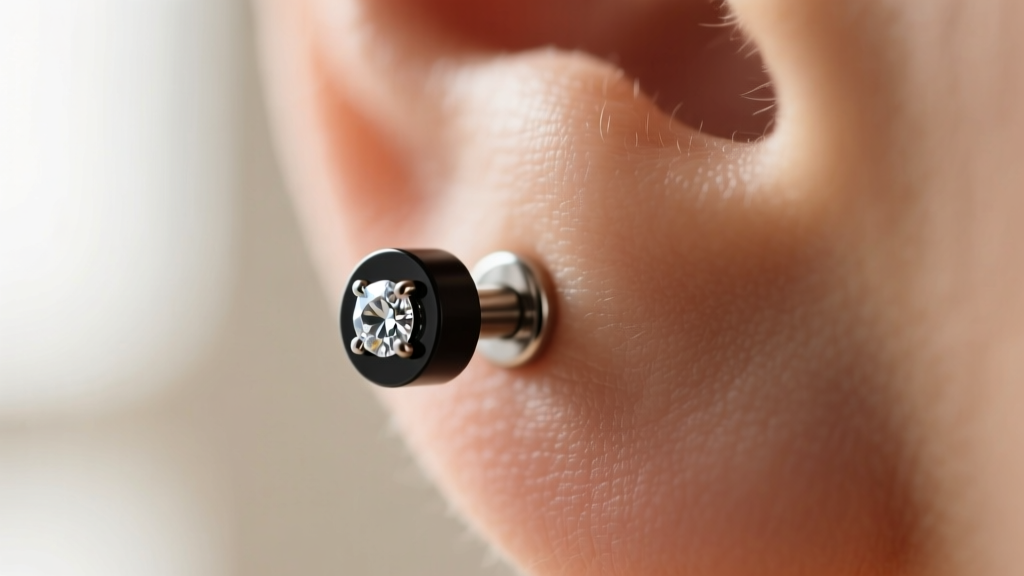
Biomechanics: Gauge, Weight, and the "Cheese Cutter" Effect
Padlocks are inherently dense. A solid brass or steel padlock earring can easily weigh between 4 to 8 grams per piece. If this weight is suspended on a standard 20-gauge (0.8mm) wire, you risk the cheese cutter effect—a phenomenon where the thin wire slowly migrates through the tissue, thinning your earlobe and eventually tearing through.
To prevent this, you must match the post thickness to the weight of the padlock body:
| Padlock Weight | Minimum Post Gauge | Post Thickness (mm) | Recommended Placement |
|---|---|---|---|
| Lightweight (Under 2g) | 20g or 18g | 0.8mm - 1.0mm | Standard Lobe, Upper Lobe |
| Mid-Weight (2g - 5g) | 16g | 1.2mm | Thickened Lobe, Helix |
| Heavy (Over 5g) | 14g or 12g | 1.6mm - 2.0mm | Stretched Lobes, Conch |
If you desire a heavy, oversized padlock earring but your lobes are only pierced at a standard 20g, look for designs that incorporate a flat-back disc or a wide decorative front face that rests against the skin to distribute the weight over a larger surface area, rather than relying solely on the post.
Placement Guide: Where to Wear Padlock Earrings
The versatility of the padlock motif allows it to be adapted across various piercing placements, each requiring a specific structural design.
1. The Standard Lobe (Studs & Dangles)
For standard lobes, opt for padlock studs with a secure butterfly backing or a flat-back labret post. If choosing a dangle padlock, ensure the jump ring connecting the padlock to the post is soldered shut; otherwise, the heavy padlock will pull the jump ring open over time, causing you to lose the earring.
2. The Helix & Flat (Cartilage Studs)
Cartilage piercings are typically done at 16g (1.2mm) or 14g (1.6mm). Padlock earrings designed for the helix should feature a threaded or press-fit flat-back post. Avoid hinged shackles in cartilage placements, as the pressure from sleeping on your side can bend the shackle or force the locking mechanism to pop open.
3. The Huggie & Hoop Integration
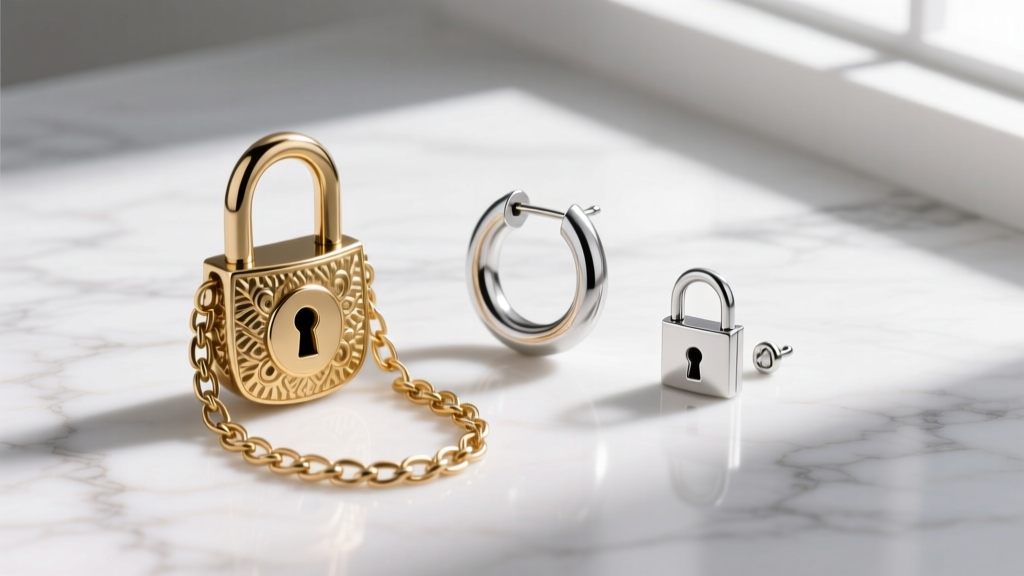
A major trend in 2026 is the padlock huggie—a small, tight-fitting hoop that features a miniature padlock as the clasp closure. These are excellent for second or third lobe piercings. Ensure the clasp has a satisfying "click" and does not rely on friction alone to stay closed.
Price Tiers & The Brand Landscape
Understanding the market tiers will help you identify whether you are paying for brand markup, material quality, or mechanical complexity.
- Fashion / Fast Jewelry ($15 - $45): Usually made from zinc alloys or brass with thin gold or rhodium plating. Expect decorative, cast-solid designs. High risk of tarnishing and skin irritation. Suitable only for occasional, short-term wear.
- Mid-Tier / Independent Jewelers ($60 - $180): The sweet spot for quality. You will find solid 925 sterling silver, PVD-coated titanium, and 10k/14k gold-filled options. Many independent piercers stock these, ensuring the posts are internally threaded and body-safe.
- Fine & Luxury ($300 - $1,500+): Solid 18k gold, platinum, and ethically sourced diamond pavé. Brands in this tier often engineer functional, micro-mechanical shackles that operate smoothly and last generations. The Gemological Institute of America (GIA) notes that luxury hardware jewelry often utilizes advanced alloying techniques to maintain structural rigidity without sacrificing karat purity.
Care & Maintenance for Intricate Hardware
The intricate keyholes, shackle hinges, and engraved serial numbers on padlock earrings make them magnets for soap scum, dead skin cells, and environmental dust. Neglecting maintenance will cause functional shackles to seize and metals to degrade.
- Ultrasonic Cleaning: For solid gold or titanium padlocks without gemstones, an ultrasonic jewelry cleaner for 3 minutes will dislodge debris from the microscopic keyhole crevices.
- Soft Brushing: If your padlock features pave diamonds or delicate enamel, skip the ultrasonic. Use a baby toothbrush dipped in warm water and a drop of mild, phosphate-free dish soap to gently scrub the shackle hinges.
- Lubricating Functional Hinges: If a working shackle becomes stiff, do not force it. Apply a microscopic drop of mineral oil to the hinge pin, work it back and forth, and wipe away the excess with a microfiber cloth. Never use WD-40 or harsh chemical lubricants on body jewelry.
- Drying: Always dry your padlock earrings completely with a lint-free cloth before storing them. Moisture trapped inside the locking mechanism of a steel or silver earring will cause rapid, localized oxidation.
By prioritizing implant-grade metals, respecting the biomechanics of your piercings, and maintaining the intricate hardware, your padlock earrings will remain a secure, striking staple in your jewelry rotation for years to come.


