Victorian Mourning Earrings: The 2026 Dark Academia Revival
Explore the 2026 revival of Victorian mourning earrings. Learn to identify Whitby jet, vulcanite, and hairwork, plus modern styling and wearability tips.

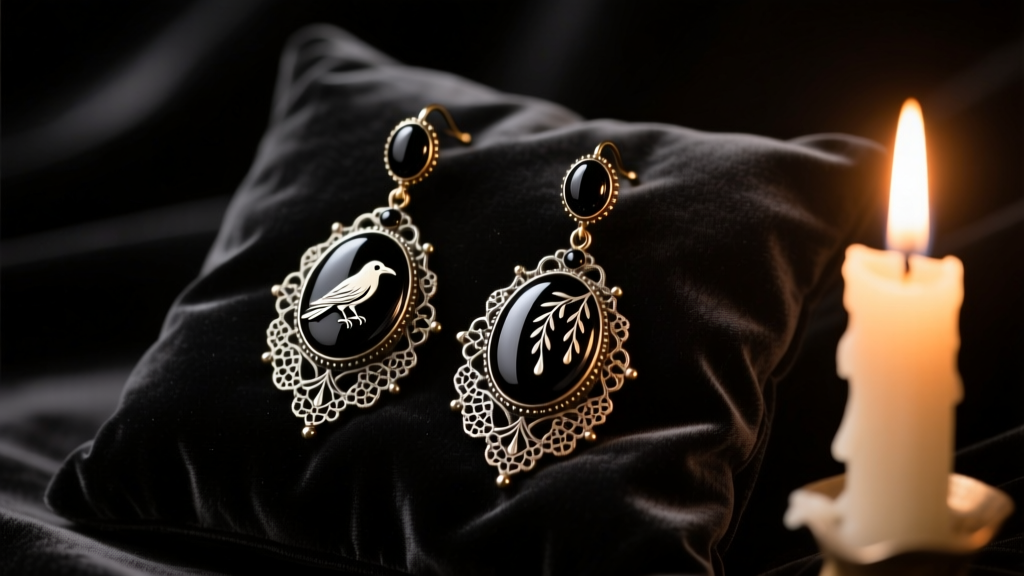
The fascination with mortality and memory has never truly left the jewelry world, but in 2026, Victorian mourning earrings have transcended their status as mere antique curiosities. Driven by the explosive growth of the Dark Academia aesthetic, neo-gothic fashion revivals, and a broader cultural shift toward sentimental, slow-fashion accessories, these somber artifacts are experiencing a massive renaissance. Originally popularized after Queen Victoria entered her lifelong mourning period for Prince Albert in 1861, these earrings were once strict symbols of grief. Today, they are masterclasses in texture, history, and macabre elegance.
However, integrating 19th-century mourning jewelry into a modern wardrobe requires more than just an appreciation for the macabre. It demands an understanding of historical materials, the structural challenges of antique findings, and the nuances of authentic sourcing. Whether you are a collector hunting for genuine Whitby jet or a stylist looking for the perfect avant-garde drop, this guide decodes the intricate world of Victorian mourning earrings.
The Anatomy of Grief: Decoding 19th-Century Materials
To the untrained eye, all black Victorian jewelry looks identical. But to a jewelry historian, the material dictates the value, the care requirements, and the historical accuracy of the piece. According to the Victoria and Albert Museum, the strict etiquette of the Victorian era required mourners to wear non-reflective, matte black materials during the "first mourning" period. This led to the widespread use of several distinct organic and synthetic materials.
Whitby Jet vs. French Jet
Whitby Jet is the holy grail of mourning jewelry. Sourced from the cliffs of Whitby in North Yorkshire, it is not a stone, but a fossilized wood (from the ancient Araucaria tree). It is incredibly lightweight, warm to the touch, and carves beautifully into intricate cameos and floral motifs. French Jet, conversely, is a misnomer; it is actually black glass. It is heavier, cold to the touch, and often faceted to mimic gemstones like garnet or onyx.
Vulcanite and Gutta-Percha
As the middle class sought affordable alternatives to jet, Vulcanite (hardened rubber) and Gutta-Percha (a natural latex derived from Malaysian trees) became wildly popular. Vulcanite was molded into heavy, bold geometric drops, while gutta-percha was often used for more delicate, carved floral designs.
Material Identification and 2026 Market Value
Identifying these materials is critical, as the price gap between genuine Whitby jet and mass-produced black glass is substantial. Here is a practical framework for identifying and valuing antique mourning earrings in today's market.
| Material | Composition | Identification Test | 2026 Avg. Price (Pair) |
|---|---|---|---|
| Whitby Jet | Fossilized Wood | Leaves a brown mark on unglazed porcelain; warm to touch; smells like coal when heated. | $250 - $850 |
| French Jet | Black Glass | Cold to touch; heavy; produces a high-pitched 'clink' when tapped against glass. | $80 - $200 |
| Vulcanite | Hardened Rubber | Smells faintly of sulfur when rubbed vigorously; often fades to a dusty brown over time. | $150 - $400 |
| Bog Oak | Fossilized Oak | Visible wood grain under a 10x loupe; lightweight; matte finish. | $120 - $350 |
Hairwork and Enamel: The Intimate Art of Remembrance
Beyond carved black materials, the most deeply personal Victorian mourning earrings incorporated the physical remains of the deceased. Hairwork jewelry reached its zenith in the 1860s. Artisans would take locks of hair from the departed, boil and treat them, and weave them into intricate, rope-like patterns or flat, braided palettes encased behind beveled glass or rock crystal in gold or pinchbeck fittings.
Another hallmark of the era is black enamel on gold. Following the 1854 Hallmarking Act, which allowed for lower karat golds (9k, 12k, and 15k) to be legally hallmarked, jewelers could produce more affordable mourning pieces. These earrings often featured black enamel borders with inscriptions like "In Memory Of" or motifs of weeping willows and urns. According to Lang Antiques University, pieces with intact, original hairwork and legible enamel inscriptions command a 30% to 50% premium among serious collectors in 2026 due to their undeniable provenance and emotional resonance.
Modern Wearability: Converting Antique Findings
The greatest hurdle to wearing Victorian mourning earrings today is the hardware. 19th-century earrings were not designed for modern, active lifestyles, nor were they built for the standardized piercing gauges we use today.
The Gauge and Weight Dilemma
Most antique drop earrings feature original shepherd hooks or early screw-back mechanisms. The wire used in the 1800s was often hand-drawn and irregular, frequently measuring between 16-gauge (1.2mm)14-gauge (1.6mm). Forcing these thick, often oxidized wires through a modern standard 20-gauge (0.8mm) or 18-gauge (1.0mm) lobe piercing can cause micro-tears, irritation, and allergic reactions due to the unknown metallurgical composition of antique alloys.
Furthermore, while Whitby jet is exceptionally light, French jet (glass) and heavy gold hairwork lockets can cause severe lobe stretching over time.
The Conversion Solution
To make these pieces wearable without destroying their historical integrity, master jewelers use laser welding to attach modern posts.
- Material: Opt for ASTM F136 implant-grade titanium or 18k white gold posts. Titanium is hypoallergenic and rigid enough to support heavy drops without bending.
- Gauge: Request a 20-gauge or 18-gauge post to ensure compatibility with modern piercings.
- Support: For heavy French jet or glass drops, always pair the earrings with silicone lobe support patches (like Bling Guards) to distribute the weight and prevent the earlobe from drooping or tearing.
Sourcing Authentic Pieces vs. Contemporary Homages
If you are hunting for genuine Victorian mourning earrings, provenance is everything. Reputable antique dealers like 1stDibs and specialized Etsy vetted sellers are prime hunting grounds. Always request a video of the piece undergoing a thermal conductivity test (touching it to the cheek to test for the warmth of jet vs. the coldness of glass) or asking for high-resolution macro photos of the clasps and hinges, which should show appropriate age wear and patina.
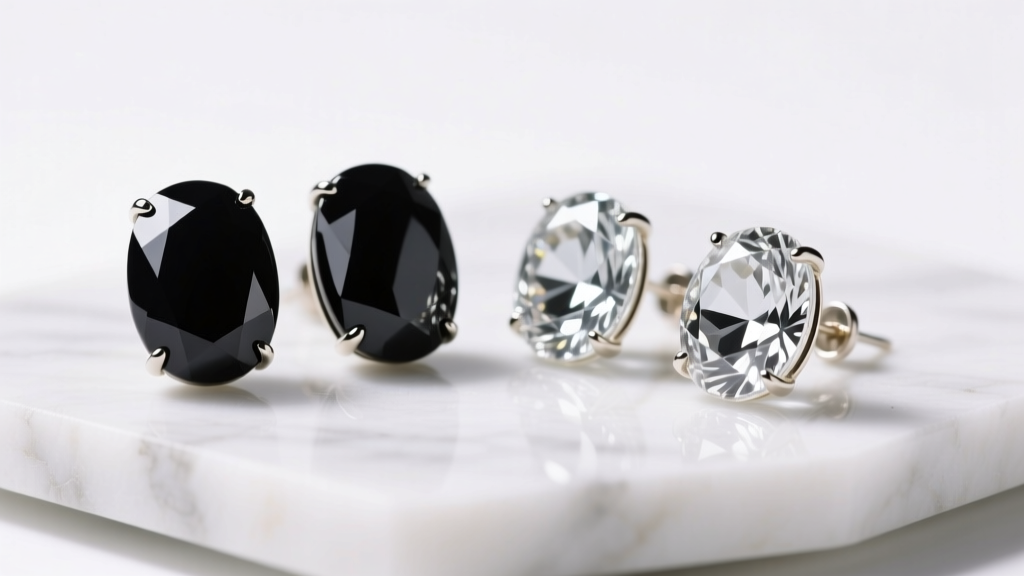
However, if the fragility of 150-year-old vulcanite or the ethical complexities of antique hairwork give you pause, the 2026 jewelry market offers incredible neo-Victorian homages. Contemporary artisan brands are utilizing matte black rhodium plating over recycled sterling silver, laser-carved black onyx, and ethically sourced black diamonds to recreate the silhouette of mourning earrings with modern durability and 20-gauge standard posts.
Styling the Macabre: Beyond the Halloween Cliché
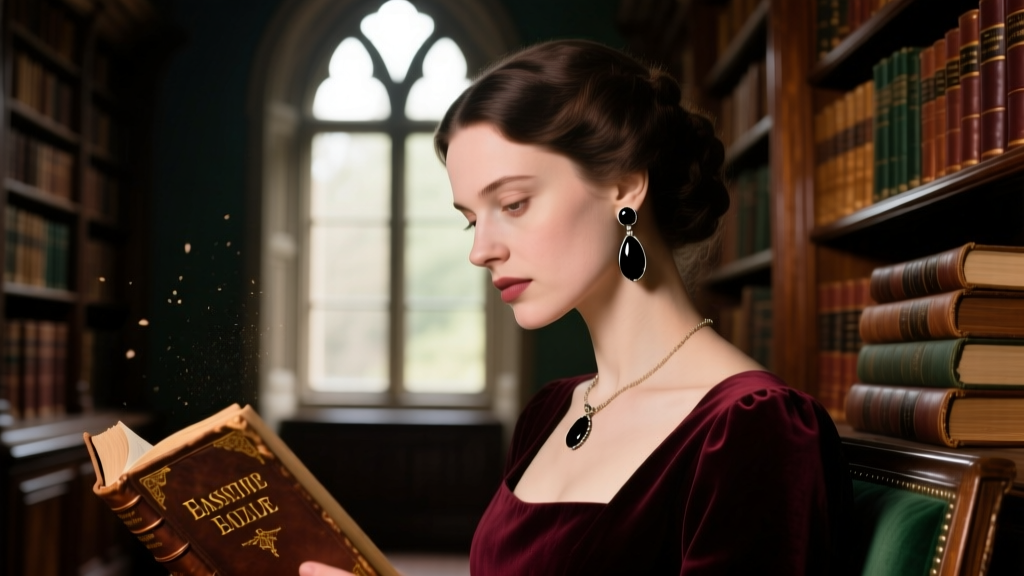
The key to styling Victorian mourning earrings in 2026 is contrast and intentionality. Avoid pairing them with literal Victorian costume replicas unless you are attending a specific historical event. Instead, lean into the Dark Academia or avant-garde minimalist aesthetics.
"The power of a mourning earring lies in its gravity. It anchors an outfit. Pair a delicate, carved jet drop with a crisp, oversized white poplin shirt and a structured blazer. The stark contrast between the somber, historical artifact and sharp, modern tailoring creates an incredibly sophisticated tension." — Elara Vance, Editorial Stylist
For evening wear, a bold pair of black enamel and gold hairwork-style drops (recreated with black spinel) serves as a striking alternative to traditional diamond studs, offering a conversation-starting focal point that is rich in history, texture, and unapologetic romance.


