The Gay Earring Code: History, Meaning & 2026 Style Guide
Explore the history of the gay earring code, from 1980s right-ear signaling to 2026 queer jewelry trends, gauge sizes, and materials.


Decoding the Myth: What Was the Gay Earring Code?
Before the advent of digital dating apps, Pride flags in suburban neighborhoods, or mainstream LGBTQ+ representation, queer communities relied on a complex lexicon of sartorial signaling to identify one another. Among the most enduring pieces of this covert language was the gay earring code. Predominantly active from the 1970s through the early 1990s, the colloquial rule was simple but heavily policed by mainstream society: "Left is right, and right is wrong." A single earring in the left ear signaled heterosexuality, while a single earring in the right ear was a quiet, deliberate nod to homosexuality.
This phenomenon did not exist in a vacuum. It was a direct parallel to the hanky code and the subtle use of Oscar Wilde's green carnation. For queer men living in eras where homosexuality was criminalized or heavily stigmatized, the right-ear piercing offered a plausible deniability. It was a rebellion hidden in plain sight, allowing community members to spot each other in hostile environments like rural towns or conservative corporate offices. However, to truly understand this cultural artifact, we must look past the sociology and examine the actual jewelry that facilitated this silent communication.
The Technical Anatomy of 1980s Queer Signaling Jewelry
The earrings used to broadcast the gay earring code were rarely high-end luxury pieces; they were accessible, utilitarian, and often technically flawed by modern body modification standards. In the 1980s, the primary method of acquiring a piercing was the mall kiosk piercing gun. These spring-loaded devices forced blunt studs through the tissue, causing significant trauma and blowout.
Metallurgy and Gauge Standards of the Era
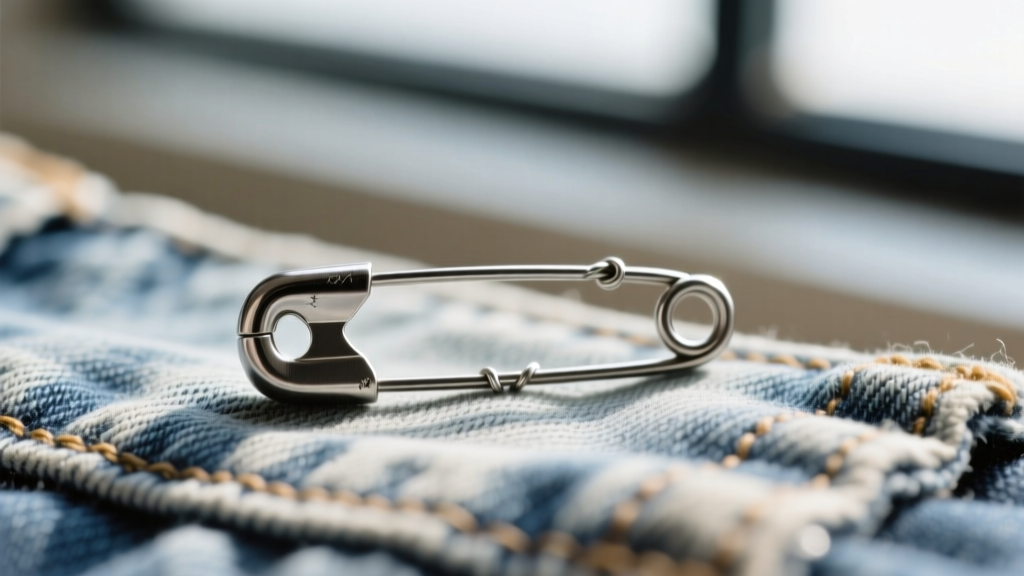
The standard jewelry used in these mall kiosks was typically 20-gauge (0.81mm) or 18-gauge (1.02mm). The materials were overwhelmingly marketed as "surgical steel," but in reality, they were often low-grade 316L stainless steel or mystery alloys containing high levels of nickel. This led to widespread contact dermatitis and localized infections, a common rite of passage for queer youth experimenting with their presentation. For those in the punk and queer-core scenes who rejected commercial mall culture, the jewelry of choice was the safety pin. Standard safety pins are crafted from drawn steel wire, typically ranging from 16-gauge (1.29mm) to 14-gauge (1.60mm), requiring a thicker, more painful initial puncture but offering a distinct, anti-establishment aesthetic.
| Era | Primary Style | Typical Gauge | Material Composition | Insertion Method |
|---|---|---|---|---|
| 1970s | Single Silver Hoop / Stud | 18g - 16g | Sterling Silver, Low-Grade Steel | Needle (Professional or DIY) |
| 1980s | Mall Kiosk Stud / Safety Pin | 20g (Stud) / 14g (Pin) | Nickel Alloys, 316L Steel | Piercing Gun, Safety Pin |
| 1990s | Cartilage Hoops / Plugs | 16g - 00g | Acrylic, Wood, Surgical Steel | Hollow Needle, Taper |
| 2026 | Curated Threadless Clusters | 18g - 14g | ASTM F136 Titanium, Niobium | Hollow Needle (APP Certified) |
The Breakdown of Binary Codes
By the late 1990s and early 2000s, the gay earring code began to collapse. The mainstreaming of hip-hop culture, pop-punk aesthetics, and boyband fashion normalized bilateral ear piercings—and even right-ear piercings—for heterosexual men. Celebrities like Will Smith and David Beckham sported diamond studs and hoops without regard for the historical "rules." As the binary code lost its exclusivity, it also lost its utility as a reliable signaling mechanism. The right ear was no longer a queer sanctuary; it was simply a fashion choice. This cultural dilution forced the LGBTQ+ community to evolve its visual language, moving away from single-ear binary markers toward more complex, intentional presentations.
Queer Signaling in 2026: Beyond the Single Hoop
In 2026, queer signaling in jewelry is less about which ear is pierced and entirely about how the ear is curated. The modern "code" relies on intentionality, high-end body modification standards, and subtle color theory. According to the Association of Professional Piercers (APP), the contemporary standard for body jewelry is implant-grade titanium, a far cry from the nickel-heavy alloys of the 1980s.
Modern Markers of Queer Identity
Today's queer jewelry enthusiasts utilize advanced jewelry mechanics and specific aesthetic choices to signal identity to those "in the know." Here is how the modern code operates:
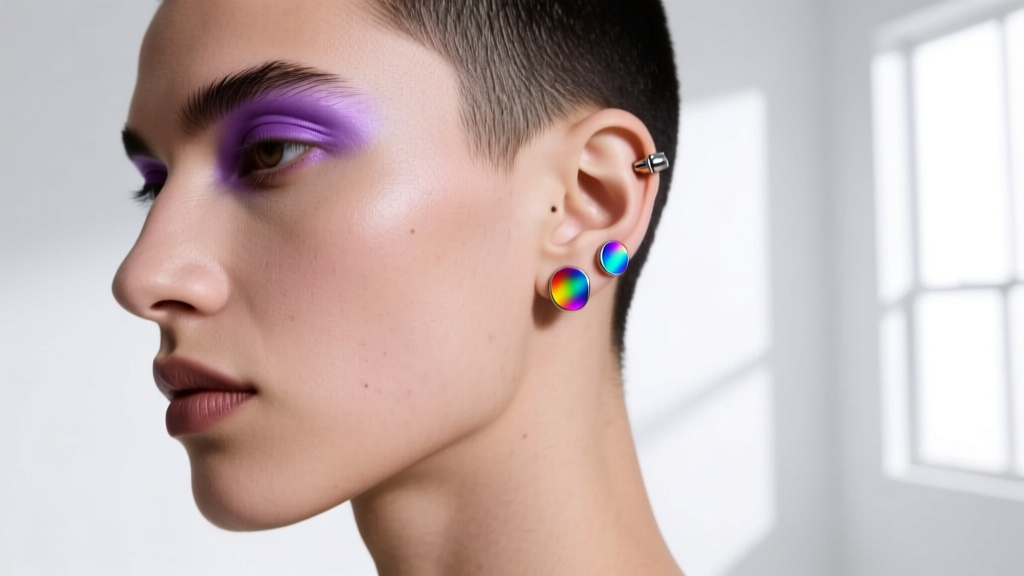
- Anodized Titanium Colors: Because ASTM F136 titanium can be anodized using electrical voltage to create vibrant, non-toxic oxide layers, specific colors have become subtle flags. Lavender, bisexuality-flag hues (pink, purple, blue), and trans-flag pastels are frequently used in threadless ends to signal identity without relying on overt rainbow motifs.
- The Curated Ear Project: A meticulously planned constellation of piercings—often combining lobes, flats, rooks, and daiths—signals a dedication to body modification culture, which has deep, intersecting roots with queer and alternative communities.
- Threadless Mechanics: Brands like Neometal and BVLA utilize threadless, push-pin jewelry. This allows for seamless, gemstone-forward presentations without the bulky external threading of the past. Opting for high-end, custom-ordered threadless ends signals a deep integration into modern piercing culture.
- Asymmetry as Aesthetic: While the strict "right ear" rule is dead, deliberate, heavy asymmetry (e.g., a fully curated left ear with a single, striking lobe piece on the right) remains a popular nod to the historical code, recontextualized as high fashion.
Sourcing and Gauging: A Buyer's Technical Guide
If you are looking to honor the history of queer signaling while adhering to 2026 safety and aesthetic standards, you must prioritize material integrity and precise gauging. Never use piercing guns, and avoid "surgical steel" if you have any nickel sensitivity.
"Implant-grade titanium (ASTM F136 or F1295) is the undisputed gold standard for initial piercings and long-term wear. It contains zero nickel and is biocompatible, ensuring the tissue remains healthy enough to support heavy, curated jewelry setups."
— Association of Professional Piercers (APP) Material Guidelines
Understanding Gauge and Threading
When sourcing jewelry for a curated ear, you must match the exact gauge of your piercing to avoid the "cheese-cutter effect," where heavy jewelry migrates through the tissue. Standard high-quality lobe piercings are typically done at 16-gauge (1.2mm) or 14-gauge (1.6mm) by professional piercers, unlike the flimsy 20-gauge mall piercings of the past. For cartilage (helix, flat, rook), 16-gauge is the industry standard. Always opt for internally threaded or threadless jewelry to prevent tissue tearing during insertion. The gay earring code may be a relic of a bygone era, but the queer community's dedication to self-expression through the art of body modification remains as vibrant, technical, and revolutionary as ever.