Budget Earring Display Racks: Value & Durability Guide
Compare budget earring display racks by material, durability, and price. Find the best value stands for studs, hoops, and heavy dangles in your collection.

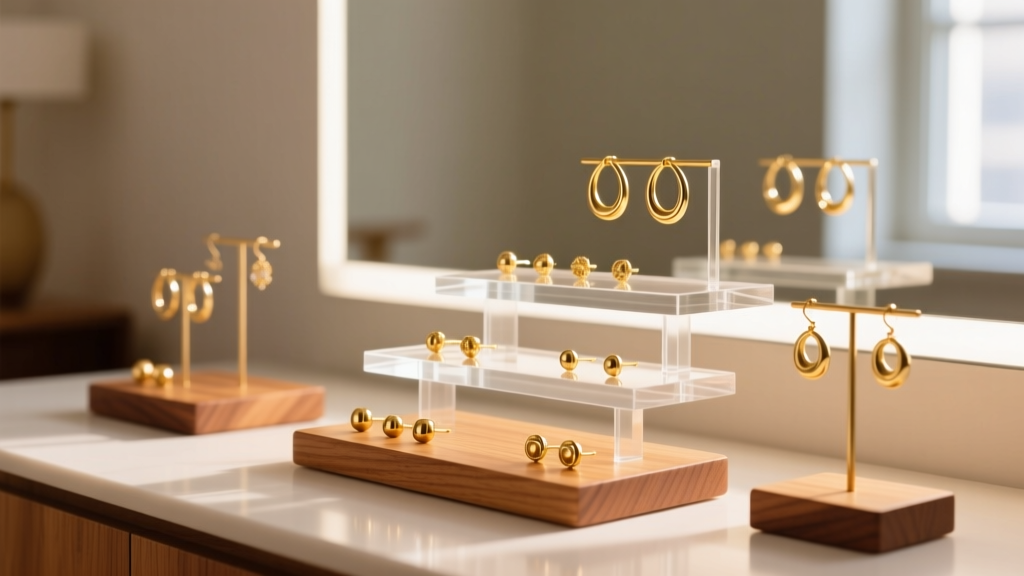
Building a curated earring collection is an investment in personal style, but how you store those pieces dictates their longevity. When shopping for earring display racks, the market is flooded with ultra-cheap options that promise organization but often deliver hidden costs. As a jewelry style guide, we frequently see collectors ruin expensive gold vermeil hoops or sterling silver drops simply by storing them on reactive, poorly constructed budget racks.
This comprehensive value assessment breaks down the material science, structural integrity, and true ROI of budget-friendly earring storage. We will help you navigate the difference between a $12 rack that will tarnish your jewelry and a $25 rack that offers premium-grade preservation.
The Hidden Costs of "Budget" Jewelry Storage
When evaluating budget earring display racks, the sticker price is only half the equation. The true cost includes the potential degradation of your jewelry. Cheap manufacturing shortcuts introduce chemical and physical risks to your collection.
- Chemical Off-Gassing: Low-tier display racks often use MDF (Medium-Density Fiberboard) bound with urea-formaldehyde resins, or cheap PVC plastics. These materials off-gas volatile organic compounds (VOCs) and sulfur compounds, which accelerate the oxidation of silver and the tarnishing of brass. According to the GIA Jewelry Care Guidelines, keeping jewelry away from reactive chemicals and sulfur-rich environments is paramount for preventing silver sulfide formation (black tarnish).
- Micro-Scratching: Unpolished laser-cut edges on cheap acrylic or rough, uncoated wire on metal racks act like sandpaper. Every time you slide a 14k gold-plated huggie hoop onto the rack, you risk stripping the delicate gold layer.
- Structural Warping: Thin materials bow under the weight of heavy statement earrings, causing the rack to tip over and scatter your collection across hard surfaces, leading to bent posts and lost gemstones.
Material Breakdown: Assessing True Value
To find genuine value, you must look past the aesthetic and examine the raw materials. Here is how the most common budget materials stack up in 2026.
Acrylic (PMMA) vs. Polystyrene (PS)
Many budget transparent racks are marketed as "acrylic" but are actually made from Polystyrene (PS). PS is brittle, prone to snapping under lateral stress, and yellows rapidly when exposed to UV light. True value lies in Cast PMMA (Polymethyl Methacrylate). Cast acrylic is UV-stable, highly impact-resistant, and can be polished to a glass-like finish.
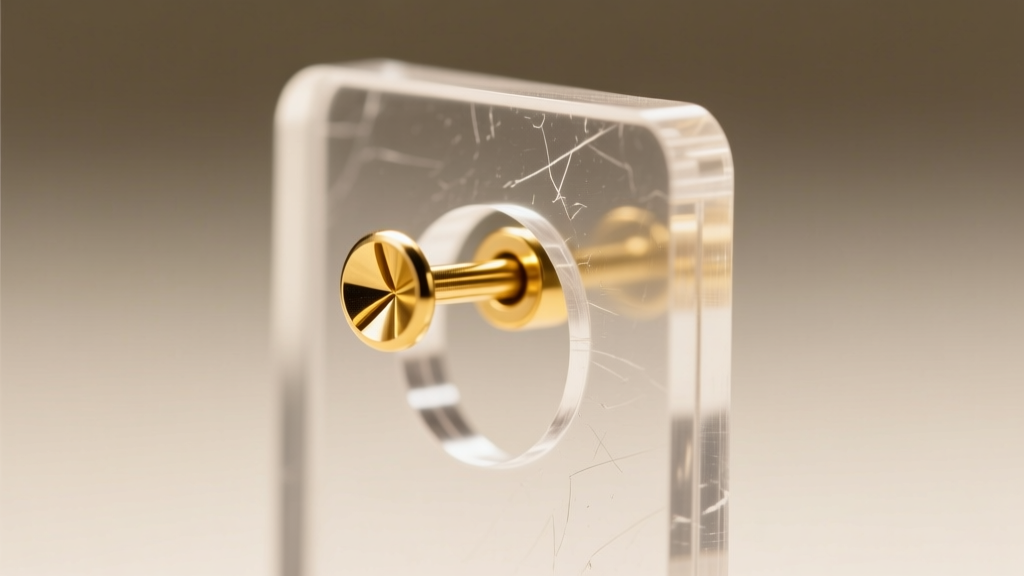
Pro-Tip: Check the thickness. A 2mm acrylic sheet will crack when a heavy brass hoop is removed at an angle. Always look for a minimum of 4mm thickness for the main structural panels and hole-bearing surfaces to ensure the kerf (the width of the laser cut) leaves enough material to support a 1.2mm earring post without stress fractures.
MDF vs. Solid Bamboo vs. Sealed Hardwoods
Wooden earring display racks offer a warm, organic aesthetic, but the wood type dictates its safety for your jewelry.
- MDF (Avoid): As mentioned, the glues used in MDF are highly acidic and off-gas continuously. Never store bare silver or copper on unsealed MDF.
- Bamboo (Conditional): Bamboo is technically a grass and is naturally more acidic than hardwoods. It is a great budget option only if it has been properly sealed with a water-based polyurethane finish.
- Sealed Walnut/Oak (Best Value): While slightly more expensive, a sealed hardwood rack provides a neutral pH environment, ensuring zero chemical transfer to your earrings.
Powder-Coated Steel vs. Bare Wire
Wire grid racks are popular for their high capacity. However, bare iron or low-grade steel wire will rust in humid environments (like a bathroom vanity) and transfer iron oxide directly onto your earring hooks. Always verify that the metal rack features a thermoset powder coating rather than a cheap liquid paint dip. Powder coating creates a non-reactive, durable skin that protects both the rack and your jewelry.
Earring Type Compatibility Matrix
Not all earring display racks are created equal, and neither are earrings. A rack that perfectly stores lightweight studs might be a disaster for heavy chandelier drops. Use this matrix to match your collection to the right rack profile.
| Earring Style | Weight & Profile | Ideal Rack Requirement | Budget Rack Risk Factor |
|---|---|---|---|
| Standard Studs | Lightweight, short 10mm posts | Flat acrylic or wood panels with 1.2mm holes | Holes tearing if acrylic is under 3mm thick |
| Huggies & Small Hoops | Medium weight, requires hanging | Horizontal dowels or thick wire grids (min 4mm) | Wire grids scratching gold vermeil finishes |
| Drop & Dangle Earrings | Variable weight, elongated profile | Tiered stands with 3+ inches of vertical clearance | Bottom tier tangling; base tipping from top-heavy weight |
| Ear Cuffs & Climbers | Lightweight, irregular shapes | Felt-lined trays or specialized slotted acrylic inserts | Falling through standard holes; getting lost or crushed |
Real-World Failure Modes & Troubleshooting
When testing dozens of budget earring display racks over the past year, we documented several common failure modes. Here is how to spot a bad design before you buy.
The "Top-Heavy Snap"
Many budget T-bar style hanging racks use a thin, weighted base to save on shipping costs. When you load the top tier with heavy gemstone drops or thick brass hoops, the center of gravity shifts upward. A slight bump to the table sends the rack crashing down. The Fix: Look for racks with a trapezoidal or wide-A-frame base design, which naturally lowers the center of gravity and distributes weight outward.
Tarnish Transfer
If you notice your silver fishhook wires turning black or developing a greenish hue after sitting on a rack for a few weeks, the rack material is the culprit.
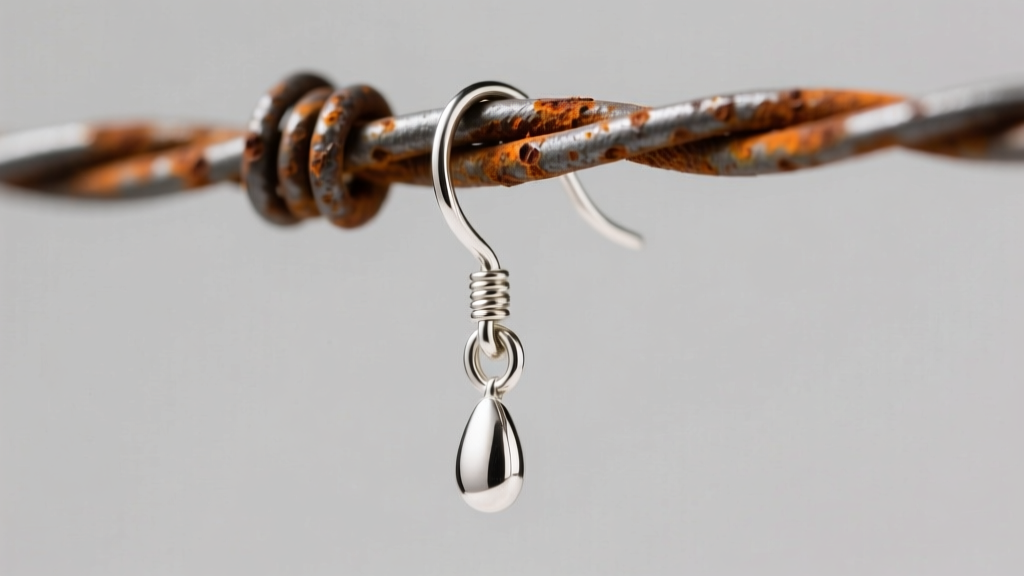
This is incredibly common with unsealed bamboo or raw copper/brass display trees. To salvage the situation, you must move the jewelry to an airtight, anti-tarnish environment immediately. For a comprehensive look at preventing environmental damage, the Fire Mountain Gems Storage Guide highly recommends utilizing anti-tarnish strips in conjunction with non-reactive display materials.
Pricing Tiers: Where to Spend and Where to Save
To maximize your budget, you need to know which price brackets offer genuine value and which are simply cheap traps.
Under $15: The Danger Zone
Racks in this tier are almost exclusively made from thin polystyrene, unsealed MDF, or flimsy, uncoated wire. While they may look fine in product photos, they are prone to warping, snapping, and off-gassing. Verdict: Avoid unless you are storing low-value, stainless steel fashion jewelry.
$15 to $35: The Value Sweet Spot
This is where the best ROI lives. In this bracket, you can find 4mm cast acrylic organizers with flame-polished edges, powder-coated steel wire grids with silicone-dipped tips, and properly sealed bamboo stands. These racks offer 90% of the durability of high-end boutique displays at a fraction of the cost. Verdict: Highly recommended for everyday collectors and small Etsy sellers.
$35 to $60: The Collector's Investment
Stepping into this tier introduces premium materials like solid walnut, velvet-lined drawers integrated into the display, and modular, stackable acrylic systems with brass hardware. If your collection features high-karat gold, raw gemstones, or heirloom pieces, the extra investment ensures a chemically neutral, structurally sound environment. Verdict: Worth it for fine jewelry preservation.
The Verdict on Budget Earring Display Racks
True value in jewelry storage is not about finding the absolute lowest price; it is about finding the intersection of material safety, structural integrity, and aesthetic functionality. By prioritizing cast acrylic over polystyrene, demanding powder-coated metals, and avoiding unsealed MDF, you can find budget earring display racks that protect your collection while beautifully showcasing your personal style. Remember, a $20 rack that preserves a $100 pair of gold hoops is a massive win, while a $10 rack that ruins them is a total loss.


