Best Value Earrings for Men With One Earring: A Buyer Guide
Discover the best value earrings for men with one earring. Compare titanium, gold, and steel options, gauge sizes, and pricing tiers.

The Economics of the Single Earring Trend
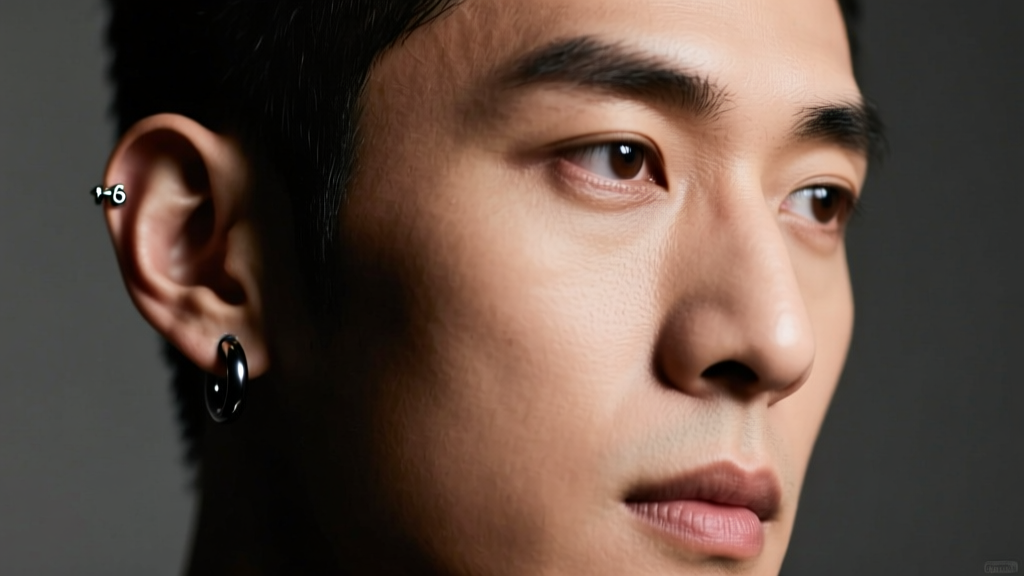
The aesthetic of men with one earring has firmly transitioned from a niche subculture signal to a mainstream staple of modern menswear. Whether it is a subtle diamond stud, a sleek titanium huggie, or a minimalist seamless hoop, the single earring acts as a focal point of personal style. However, because you are only wearing one piece, it takes the absolute brunt of daily wear, shower exposure, sleep friction, and environmental elements. This makes the 'budget and value' conversation entirely different than buying a multi-pack of fast-fashion accessories.
When assessing value for a single earring, we must look beyond the initial price tag and calculate the Cost Per Wear (CPW) alongside the risk of piercing irritation. A $25 surgical steel stud that causes contact dermatitis and forces you to take it out after three months has a terrible CPW and compromises your piercing health. Conversely, a $250 solid 14k gold threadless stud worn daily for five years costs roughly $0.13 per day, making it a superior financial and stylistic investment. In this guide, we break down the exact material grades, gauge specifications, and closure mechanisms that dictate the true value of men's single earrings.
Material Tier List: Where Your Money Actually Goes
The foundation of earring value lies in the metallurgy. Men's skin can be highly reactive to cheap alloys, especially when subjected to sweat and grooming products. Below is a data-driven breakdown of the most common materials used in men's earrings, assessed for longevity, biocompatibility, and market pricing.
| Material Grade | Average Price Range | Biocompatibility | Longevity & Value Verdict |
|---|---|---|---|
| 316L Surgical Steel | $15 - $35 | Low (Contains Nickel) | Poor. High risk of allergic reaction. Tarnishes over time. Best avoided for daily wear. |
| ASTM F-136 Titanium | $35 - $85 | Excellent (Hypoallergenic) | Outstanding. The ultimate budget-to-value winner. Will not tarnish, rust, or irritate. |
| 14k Solid Gold | $150 - $350 | High (If Nickel-Free) | Great. A lifetime investment. Holds intrinsic value and resists daily wear and tear. |
| 18k Solid Gold | $250 - $500+ | Very High | Good, but softer than 14k. More prone to scratching if worn in active environments. |
| Platinum (950) | $400 - $800+ | Exceptional | Niche. Extremely durable and heavy, but the premium price rarely justifies the visual difference from white gold for most buyers. |
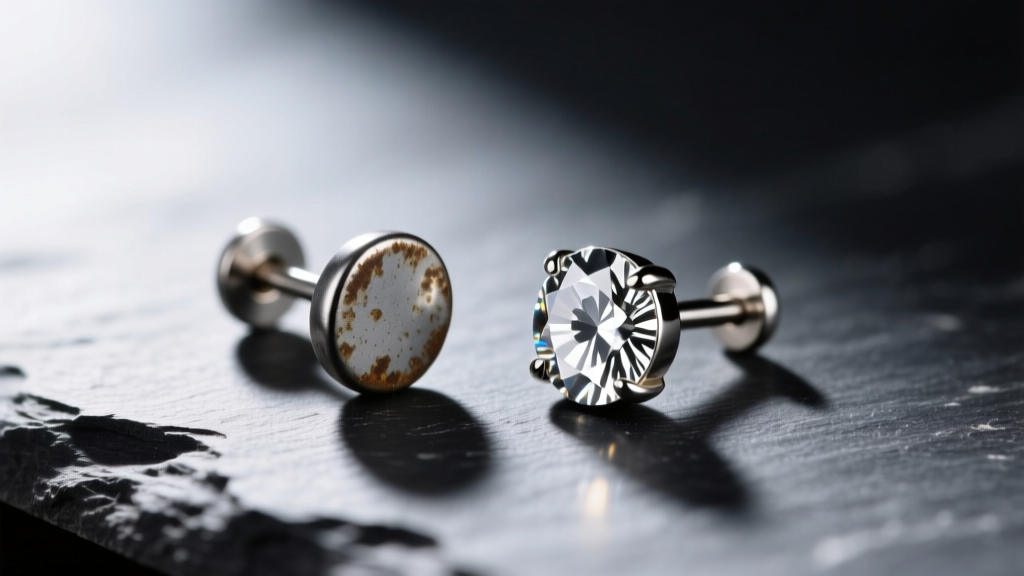
For the vast majority of men, ASTM F-136 Implant-Grade Titanium represents the peak value proposition. According to the Association of Professional Piercers (APP), implant-grade titanium is the gold standard for biocompatibility, completely eliminating the nickel exposure that plagues cheaper 'surgical steel' options. If your budget is under $100, do not compromise on this material.
Gauge Science: Avoiding Costly Piercing Mistakes
A massive hidden cost in men's jewelry is buying the wrong gauge size, leading to discomfort, the 'cheese-cutter effect,' and eventual tearing of the earlobe. The gauge refers to the thickness of the metal post or wire. Men who get their ears pierced in professional studios typically receive a 16-gauge (1.2mm) or 14-gauge (1.6mm) needle, whereas mall kiosks and piercing guns often use 20-gauge (0.8mm) or 18-gauge (1.0mm) studs.
The Gauge Matching Framework
- 20G (0.8mm) & 18G (1.0mm): Standard for commercial fashion earrings and gun piercings. If you have a professional 16G piercing, forcing an 18G earring in will cause the piercing channel to shrink, making it painful to re-insert your thicker jewelry later.
- 16G (1.2mm): The industry standard for professional lobe and cartilage piercings. Most high-end men's hoops and huggies are manufactured in this size to provide structural integrity without being overly heavy.
- 14G (1.6mm): Common for men who have slightly stretched their lobes or prefer a bolder, heavier industrial aesthetic.
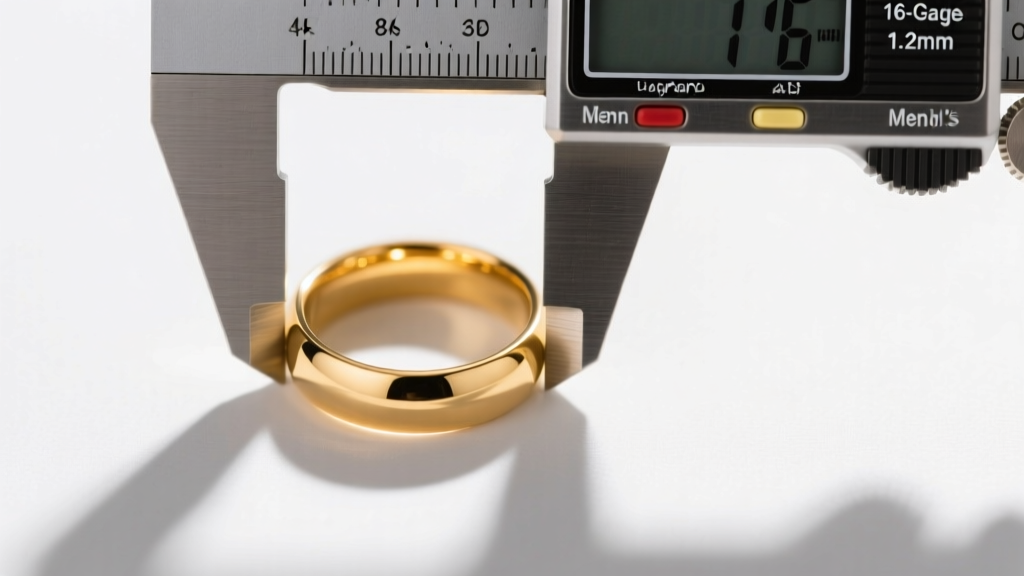
If you are investing in a premium single earring, you must verify your exact gauge. Buying a $300 gold hoop in 18G for a 16G piercing is a total waste of capital, as the thin wire will shift constantly, irritating the fistula and potentially causing migration or tearing.
Closure Mechanisms: The Hidden Cost of Loss
The most catastrophic failure mode for men with one earring is simply losing it. Friction backs (the standard 'butterfly' push-backs) are notoriously unreliable. They degrade over time, lose their tension, and frequently fall off in the shower, during workouts, or while changing shirts. Losing a $400 diamond stud because of a $0.05 friction back is the ultimate failure of value assessment.
High-Value Closure Types to Demand
When budgeting for a premium single earring, allocate your funds toward secure closure mechanisms:
- Threadless Push-Pins: Pioneered by brands like Neometal, this system uses a slightly bent pin that snaps securely into a hollow post. It requires a specific pulling technique to remove, making it virtually impossible to lose during daily activities.
- Internally Threaded: The screw threads are on the post, not the backing. This prevents tissue damage during insertion and offers a much tighter, more secure fit than external threading.
- Hinged Segment Rings (Clickers): For hoops and huggies, a high-quality hinged clicker with a precise 'snap' closure ensures the ring stays perfectly circular and secure, unlike seamless rings that can easily be pulled open by a towel or hoodie.
2026 Brand Value Breakdown: Where to Buy
The men's jewelry market has matured significantly, offering distinct tiers of value depending on your budget and material requirements. Here is how the current market leaders stack up for the single-earring demographic:
Tier 1: The Accessible Baseline ($30 - $80)
Brands like Vitaly and Miansai offer excellent entry points. While you must carefully check their material descriptions to ensure you are getting PVD-coated titanium or solid steel rather than plated brass, their minimalist designs are perfect for men testing the single earring look without a massive financial commitment.
Tier 2: The Studio Standard ($80 - $200)
For guaranteed ASTM F-136 titanium and secure threadless mechanisms, buying directly from high-end piercing studios or specialized online retailers like Neometal or BVLA (Body Vision Los Angeles) is the smartest move. You are paying for medical-grade metallurgy and precision CNC machining, ensuring the earring will literally outlive you.
Tier 3: The Fine Jewelry Investment ($250 - $1,000+)
If you are stepping into solid 14k/18k gold or lab-grown diamonds, brands like Mejuri and Maria Tash offer exceptional craftsmanship. The Gemological Institute of America (GIA) notes that the rise of high-quality lab-grown diamonds has drastically shifted the value proposition in men's fine jewelry, allowing buyers to secure a brilliant, flawless single diamond stud for a fraction of the historical cost of mined stones. This makes the luxury tier more accessible than ever for the modern man.
The Verdict: Building a High-Value Single Earring Wardrobe
Embracing the single earring trend is an exercise in intentional styling. Because the piece stands alone, it demands quality over quantity. The ultimate value play for men with one earring is an ASTM F-136 titanium or 14k solid gold threadless stud or hinged clicker, sized perfectly to your 16G or 14G piercing. By avoiding cheap alloys, prioritizing secure closures, and understanding the economics of cost-per-wear, you transform a simple accessory into a permanent, reliable fixture of your personal aesthetic.


