How to Buy Half a Carat Diamond Earrings: Step-by-Step
Learn how to choose half a carat diamond earrings with our step-by-step guide covering cut, setting styles, clarity grades, and 2026 pricing.

The Everyday Luxury Staple: A Strategic Buying Guide
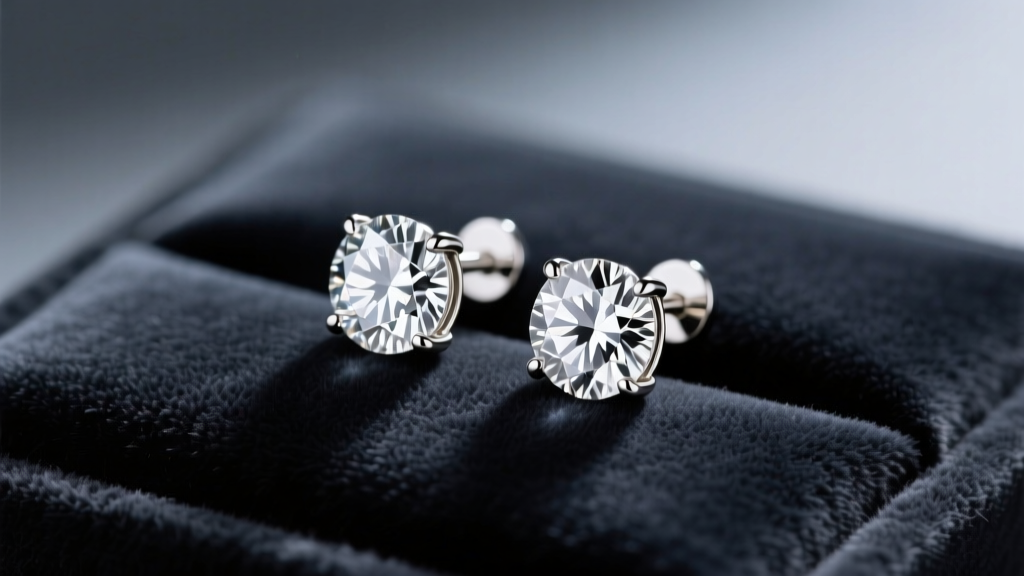
Half a carat diamond earrings represent the ultimate intersection of everyday wearability and undeniable luxury. They are large enough to catch the light from across a room, yet understated enough to wear to the gym, the office, or a black-tie event. However, the diamond market is fraught with confusing terminology, misleading carat weights, and pricing traps that can easily cost you hundreds of dollars. In 2026, with the market split between high-quality natural stones and increasingly flawless lab-grown alternatives, knowing exactly what to look for is more critical than ever.
This step-by-step guide will walk you through the exact specifications, measurements, and setting styles you need to evaluate when purchasing half carat diamond studs. We will strip away the marketing fluff and focus on the gemological data that actually matters.
Step 1: Decode the Carat Weight Confusion (TW vs. Each)
The single biggest point of confusion for first-time buyers is the definition of 'half a carat.' In the jewelry industry, 0.50 carat diamond earrings almost always refers to Carat Total Weight (CTW). This means you are getting two diamonds that weigh 0.25 carats each, summing up to a total of 0.50 carats.
If you are looking for a 0.50 carat diamond in each ear, you need to search for '1.00 carat total weight' earrings. Here is the exact millimeter breakdown you should expect when evaluating 0.50 CTW studs (0.25 ct each):
- Round Brilliant Cut: Approximately 4.1mm in diameter per ear.
- Princess Cut (Square): Approximately 3.6mm x 3.6mm per ear.
- Cushion Cut: Approximately 3.8mm x 3.8mm per ear.
Always ask the jeweler for the exact millimeter measurements of the stones. If a pair of round studs marketed as 0.50 CTW measures only 3.8mm, the diamonds are likely cut too deep, hiding weight in the pavilion (the bottom of the stone) and sacrificing visible size and brilliance.
Step 2: Select the Ideal Cut for Sub-Carat Stones
When dealing with smaller diamonds (under 0.50 carats per stone), cut quality is the absolute most important of the 4Cs. A 4.1mm diamond has a very small face-up surface area. If the cut is poor, the stone will look like a dull piece of glass. According to the GIA Diamond Buying Guide, light return is what gives a diamond its fire and scintillation.
The Rule for 0.25ct Stones: Never compromise on cut to pay for higher color or clarity. You should only accept a GIA 'Excellent' or AGS 'Ideal' cut grade. The American Gem Society Cut Scale emphasizes that precise facet alignment is what allows small stones to punch above their weight class in terms of brilliance. Avoid 'Very Good' or 'Good' cut grades entirely for stud earrings, as the lack of optimal light return will make the earrings look lifeless in dim lighting.
Step 3: Choose the Right Setting for Maximum Illusion
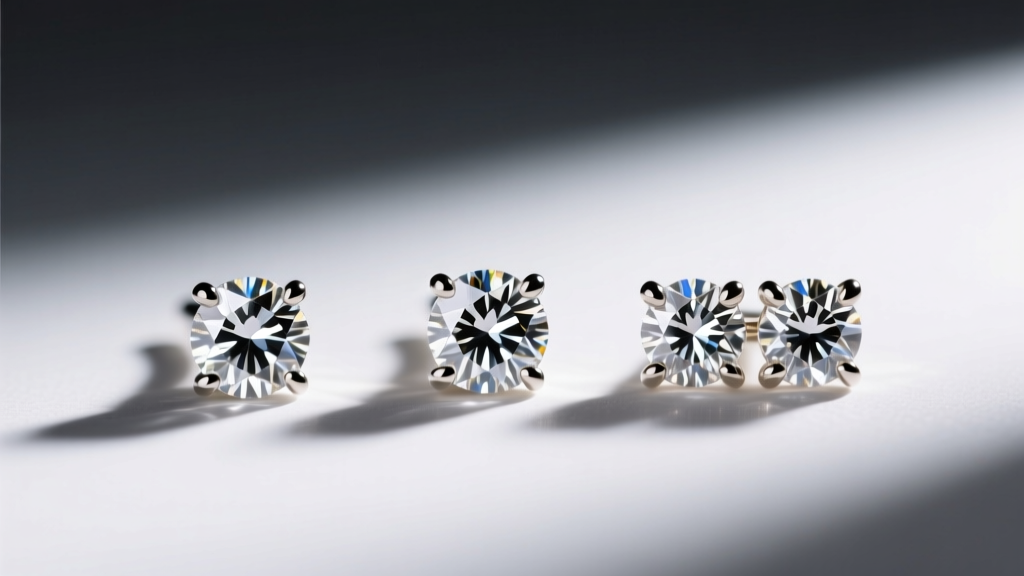
The setting you choose dictates both the security of your diamonds and how large they appear to the naked eye. At the 4.1mm size threshold, the metalwork plays a massive role in visual impact.
Setting Style Comparison Chart
| Setting Style | Prong Count | Visual Impact | Security & Fit |
|---|---|---|---|
| Martini | 3 Prongs | Maximizes visible diamond area; makes stones look slightly larger. | Center of gravity is high; can cause 'drooping' on thin earlobes. |
| Crown / Halo Basket | 4 to 6 Prongs | The wide metal base creates an optical illusion, adding 10-15% perceived size. | Excellent security; sits very flush and stable against the lobe. |
| Classic Basket | 4 Prongs | Traditional look; metal is visible from the side profile. | Highly secure; slightly heavier, requiring a sturdy earlobe. |
| Bezel | N/A (Metal Rim) | Modern, sleek, but reduces the visible diamond face by ~10%. | The most secure option; snag-proof for active lifestyles. |
Expert Recommendation: For 0.50 CTW (4.1mm) studs, the Crown setting is generally the best choice. The wider base prevents the dreaded 'earring droop' where the diamond tilts forward, and the extra metal reflection enhances the overall sparkle of the smaller stones.
Step 4: Dial in Color and Clarity (The 0.50 CTW Sweet Spot)
This is where you can save hundreds of dollars. The jewelry industry often pushes consumers toward Colorless (D-F) and Flawless (VVS) grades, but these are massive overkill for half carat total weight earrings.
The Clarity Reality Check
In a 0.25 carat diamond, inclusions are microscopic. Even a trained gemologist will struggle to identify SI1 (Slightly Included) characteristics without a 10x jeweler's loupe. Because the stones are viewed from a distance (on your ears, not held up to someone's eye like an engagement ring), SI1 or even eye-clean SI2 is the smartest financial choice. The sparkle of an Excellent cut will completely mask minor carbon spots or feathers.
The Color Sweet Spot
Once a diamond is set in white gold or platinum, the metal reflects into the stone, altering its perceived color. Furthermore, color differences in stones under 5mm are nearly imperceptible to the untrained eye.
- Platinum / White Gold Settings: Target G or H color. These are 'Near Colorless' and will face up completely white once set, saving you 20% to 30% compared to a D color stone.
- Yellow Gold / Rose Gold Settings: You can comfortably drop down to I or J color. The warm tones of the metal will mask any faint yellow tint in the diamond, allowing you to reallocate your budget toward a better cut or a heavier gold setting.
Step 5: Navigate the 2026 Lab-Grown vs. Natural Market
The diamond landscape has shifted dramatically. Lab-grown diamonds are chemically, physically, and optically identical to mined diamonds, but their pricing structures have decoupled. When buying 0.50 CTW studs, understanding the current market premiums is essential for your wallet.
2026 Pricing Benchmark Table (0.50 CTW / G Color / VS2 Clarity)
| Diamond Origin | Average Retail Price Range | Resale Value Expectation | Best For... |
|---|---|---|---|
| Natural (Mined) | $850 - $1,400 | 30% - 50% of purchase price | Buyers who value rarity, tradition, and long-term asset retention. |
| Lab-Grown (CVD/HPHT) | $250 - $450 | Negligible (Near $0) | Buyers who want maximum size/quality for a strict budget, or everyday 'beater' studs. |
Pro-Tip: If you choose lab-grown, you can easily afford to upgrade to VVS clarity and D color for the same price as a natural SI1/G stone. While unnecessary for the naked eye, it provides peace of mind and ensures absolute optical purity.
Step 6: Secure the Backing (Don't Skip This Step)
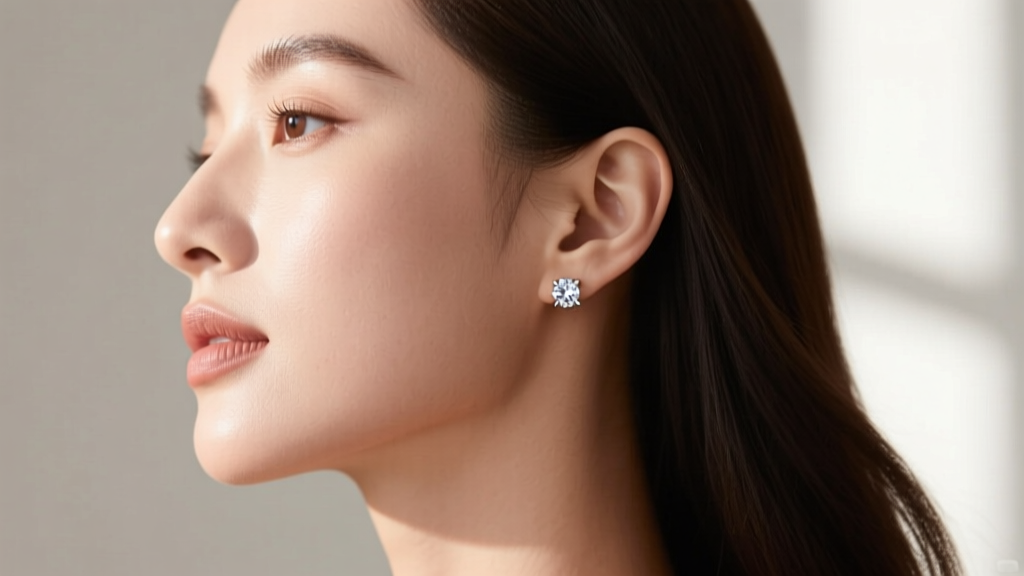
You have selected the perfect 4.1mm diamonds in a secure crown setting. Do not ruin the investment by relying on cheap, standard friction backs (often called 'butterfly' backs). The tension on the metal loops of friction backs degrades over time, leading to lost earrings.
Consider upgrading to one of these secure alternatives:
- La Pousette (Locking) Backs: These operate like a camera lens cap. You push them onto a specially notched post, and internal springs lock them into place. They require a specific squeeze to remove, making them virtually impossible to lose during sleep or exercise.
- Screw Backs: The post is threaded, and the back screws on. While highly secure, they can be tedious to put on, and cross-threading can permanently damage the post. They are best for children or individuals with limited dexterity who don't remove their earrings daily.
- Heavyweight Friction Backs (Jumbo): If you must use friction backs, ensure they are solid 14k or 18k gold 'jumbo' backs with a wide base. The wider base provides better support for the earring head, preventing drooping on the lobe.
Final Checklist Before You Checkout
Before you finalize your purchase of half a carat diamond earrings, verify these five data points with your jeweler:
- Total Weight vs. Each: Confirm the stones are 0.25ct each (0.50 CTW).
- Millimeter Size: Ensure round stones measure ~4.1mm to avoid deep, poorly cut diamonds.
- Cut Grade: Demand GIA Excellent or AGS Ideal. Do not settle for less.
- Setting Stability: Opt for a Crown or Basket setting to prevent lobe drooping.
- Security Backs: Upgrade to La Pousette locking backs for lifelong security.
By focusing on optical performance (cut) and structural integrity (settings and backs) rather than overpaying for microscopic clarity grades, you will secure a pair of diamond studs that deliver maximum brilliance and lifelong durability.


