Buying Earrings: Resin Types & Hardware Guide 2026
Learn what to look for when buying earrings. Resin types, safe metal hardware integration, weight limits, and 2026 pricing for artisan pieces.

The Evolution of Resin in Modern Ear Adornments
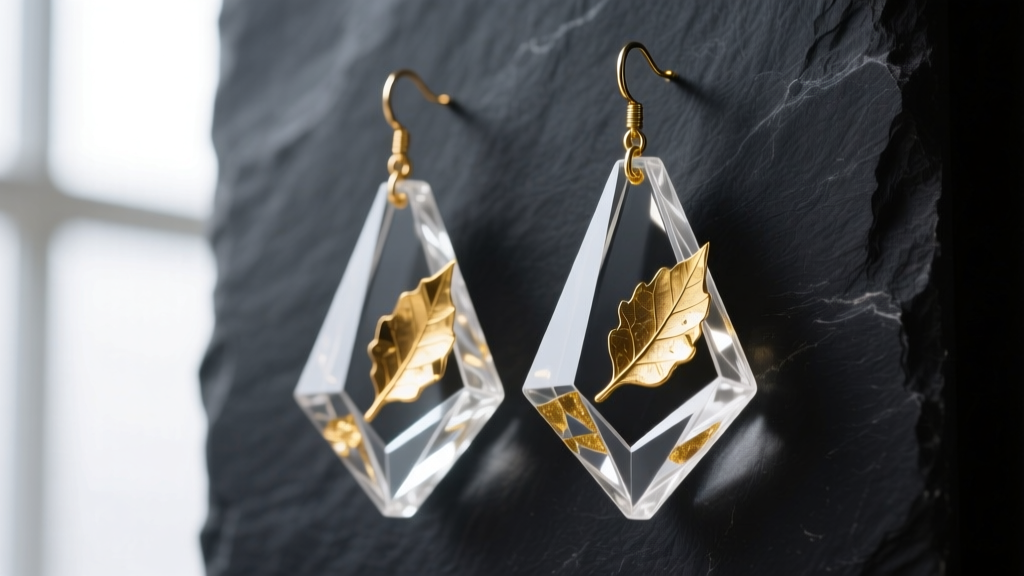
Over the past decade, the jewelry industry has witnessed a massive shift toward lightweight, oversized statement pieces. When evaluating modern earrings, resin has emerged as a premier material, allowing artisans to encapsulate botanicals, pigments, and metallic foils in crystal-clear or opaque matrices. However, the surge in popularity has also flooded the market with mass-produced, poorly cured alternatives that can cause skin irritation and structural failure. As we move through 2026, understanding the chemical and structural nuances of resin jewelry is no longer optional for the informed buyer—it is essential.
Unlike traditional metals or gemstones, resin is a synthetic polymer. Its safety, durability, and aesthetic longevity depend entirely on the specific chemical formulation and the artisan's curing process. This comprehensive buying guide will dissect what you must look for when investing in resin ear adornments, from molecular stability to hardware integration.
Epoxy vs. UV vs. Polyester: Which Formulation is Safe?
Not all resins are created equal. The term 'resin' is a blanket category that encompasses several distinct chemical families. For jewelry that sits against the skin, the curing process and the final inert state of the material are critical to preventing contact dermatitis.
| Resin Type | Cure Mechanism | Yellowing Resistance | Skin Safety (Cured) | Best Use Case |
|---|---|---|---|---|
| Jewelry-Grade Epoxy | Chemical (2-part) | High (with HALS/UV additives) | Excellent (Inert) | High-end artisan studs, deep molds |
| UV Resin | Photoinitiated | Low to Moderate | Good (if fully cured) | Thin layers, quick repairs, small charms |
| Polyester Resin | Chemical (Catalyst) | Very Low | Poor (Off-gasses) | Industrial, large sculptures (Avoid for ears) |
The Importance of Full Curing and Exothermic Reactions
Epoxy resin cures via an exothermic reaction, meaning it generates heat as the resin and hardener cross-link. If an artisan rushes this process or uses incorrect ratios, the piece remains 'tacky' and continues to off-gas volatile organic compounds (VOCs). According to safety data from ArtResin, fully cured, high-quality epoxy is non-toxic and inert, making it exceptionally safe for prolonged skin contact. However, uncured or improperly mixed resin can trigger severe allergic reactions. Always purchase from makers who explicitly state their curing times (usually 24 to 72 hours) and use jewelry-grade, BPA-free formulations.
Hardware Integration: The Hidden Flaw in Cheap Pieces
The most common point of failure in resin jewelry is not the polymer itself, but how the metal hardware is attached. Because resin is completely inert, it is hypoallergenic. Therefore, any contact dermatitis experienced while wearing these pieces is almost always caused by the metal post or the adhesive used to bind it. The American Academy of Dermatology frequently identifies nickel and cheap adhesives as primary culprits for earlobe inflammation.
Embedded Posts vs. Glued Pads
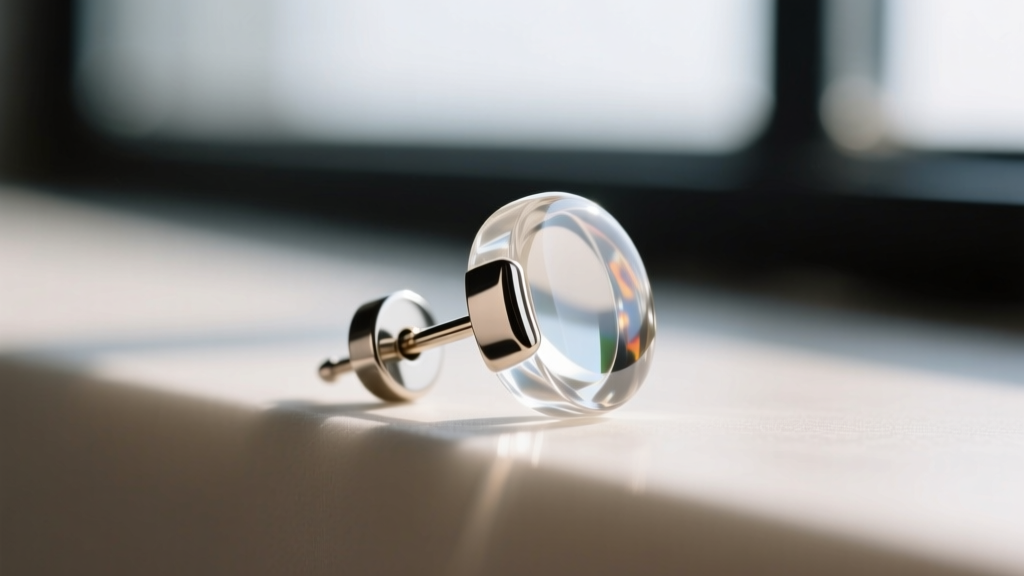
When shopping, inspect the back of the earring closely. There are two primary methods for attaching posts:
- The Glued Pad Method (Avoid): Mass manufacturers often cure a flat piece of resin and use cyanoacrylate (super glue) or E6000 to attach a metal pad with a post. Over time, body heat, humidity, and the natural oils from your skin degrade the adhesive. The post will inevitably snap off, ruining the piece.
- The Embedded Post Method (Seek): High-end artisans place the metal post directly into the silicone mold before pouring the liquid resin. As the epoxy cures, it forms a permanent, mechanical bond around the post's base. This method is structurally superior and ensures the metal touching your skin is exactly what the maker claims it to be.
Expert Sizing Note: Look for embedded posts made of Grade 23 Titanium (Ti-6Al-4V ELI) or 316L Surgical Steel. The standard gauge for lobe earrings is 20g (0.81mm) or 18g (1.02mm). If an artisan uses 22g wire to save money, the post will bend under the weight of larger resin drops.
Sizing, Weight, and Lobe Health
One of the most significant advantages of resin is its remarkable strength-to-weight ratio. The density of cured epoxy resin is approximately 1.1 to 1.2 g/cm³. By comparison, brass is roughly 8.5 g/cm³, and glass is around 2.5 g/cm³. This physical property allows designers to create massive, architectural silhouettes that would cause severe lobe stretching or tearing if cast in metal.

Calculating the Drop Weight
When buying oversized dangles or large hoops, consider the total weight. A standard earlobe can comfortably support up to 7–10 grams for extended wear without experiencing fatigue or 'droop.' A 50mm solid brass hoop might weigh upwards of 14 grams, whereas a 50mm hollow-core or solid resin hoop of the same visual volume will typically weigh between 2.5 and 4 grams. If a listing does not provide the weight in grams for a large statement piece, message the seller. Artisans who understand their craft will always have this metric readily available.
2026 Pricing Tiers: What Should You Actually Pay?
The market is currently saturated with dropshipped items masquerading as handmade artisan goods. Understanding the pricing tiers will help you identify genuine craftsmanship and fairly compensate independent makers.
- Tier 1: Mass-Produced / Dropshipped ($8 - $18): Typically made from cheap UV resin or polyester, featuring glued-on steel posts. Often plagued by micro-bubbles, uneven edges, and rapid yellowing. The hardware is almost always nickel-plated brass.
- Tier 2: Emerging Artisans ($25 - $55): Hand-poured epoxy resin in small batches. You will see intentional inclusions like dried florals or mica powders. Hardware is usually embedded 316L surgical steel. Edges are sanded and polished.
- Tier 3: Master Resin Artists ($75 - $200+): Museum-quality encapsulation. These pieces feature complex, multi-layer pours, suspended metallic foils, and zero micro-bubbles. Posts are embedded Grade 23 Titanium. The resin is treated with advanced UV stabilizers and HALS (Hindered Amine Light Stabilizers) to guarantee optical clarity for decades.
Maintenance: Preventing the 'Cloudy' Effect
Resin is highly durable, but it is vulnerable to specific chemicals. The most common mistake owners make is cleaning their jewelry with isopropyl alcohol or commercial jewelry dips. Alcohol causes micro-fissures in the surface of epoxy resin, leading to a permanent, cloudy haze that destroys the optical clarity of the piece.
To maintain your earrings, simply use a microfiber cloth dampened with warm water and a drop of mild dish soap. Gently wipe the surface to remove skin oils and environmental dust, then dry immediately. Store your pieces in a dark, velvet-lined box; even UV-stabilized resins will benefit from being kept out of direct, prolonged sunlight when not in use. By respecting the material's chemical boundaries, your resin earrings will remain as vivid and structurally sound as the day they were poured.


