Gold Shrimp Hoop Earrings: The Complete Buying Guide
Discover what to look for when buying gold shrimp hoop earrings. Learn about karats, clasp types, gauge sizes, and sizing for the perfect everyday fit.

The Anatomy of the Shrimp Hoop
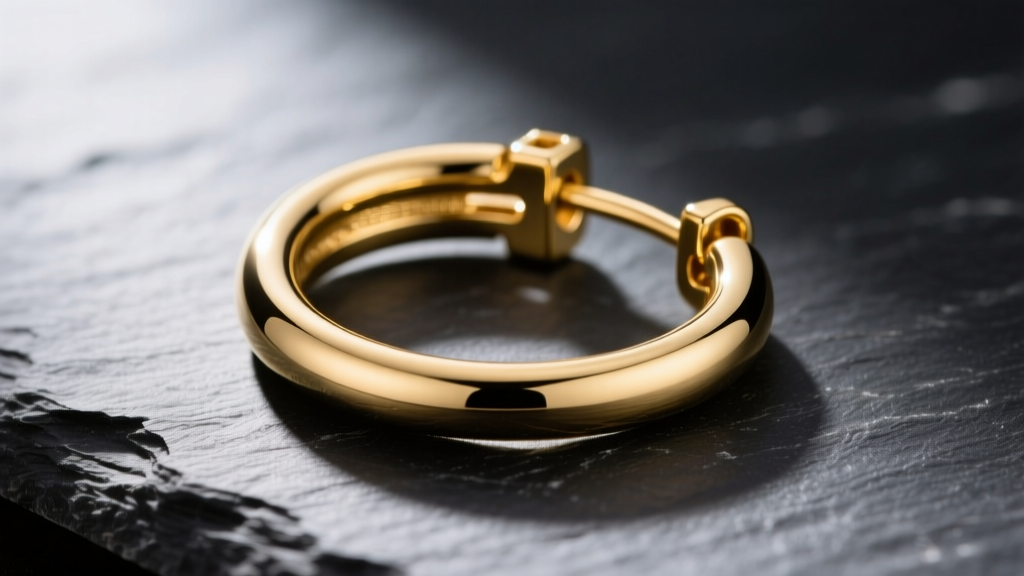
If you have been browsing contemporary jewelry collections lately, you have likely encountered the distinct silhouette of gold shrimp hoop earrings. Unlike traditional continuous hoops or standard huggies, the "shrimp" design is an architectural hybrid. The front of the earring features a straight or slightly angled decorative bar (the "body"), which seamlessly transitions into a curved, hinged posterior wire (the "tail") that wraps securely behind the earlobe. This unique geometry offers the sleek, minimalist aesthetic of a straight stud from the front, while providing the secure, hug-like comfort of a hoop from the back.
Because of their asymmetric weight distribution and complex hinging, buying gold shrimp hoop earrings requires more technical consideration than a simple wire hoop. From metallurgical durability to hinge mechanics, this guide breaks down exactly what to look for to ensure your investment lasts a lifetime.
Metallurgy Matters: Choosing the Right Gold
When investing in hinged jewelry, the metal alloy is not just about color and prestige; it dictates the structural integrity of the clasp. According to the Gemological Institute of America (GIA), pure 24k gold is far too soft for functional jewelry components. Therefore, understanding karatage is critical when evaluating shrimp hoops.
14k Solid Gold: The Hinge Champion
For gold shrimp hoop earrings, 14k solid gold (58.3% pure gold alloyed with metals like copper, silver, or zinc) is the undisputed sweet spot. The alloying metals provide the necessary tensile strength and hardness required for the tiny hinge pin and the "clicker" groove. A 14k hinge will retain its snapping tension for decades without deforming.
18k Solid Gold: Luxurious but Delicate
While 18k gold offers a richer, deeper yellow hue, its higher gold content makes it noticeably softer. If you opt for 18k shrimp hoops, be aware that the clicker groove may wear smooth over years of daily opening and closing, eventually causing the earring to pop open unexpectedly. If you choose 18k, look for brands that reinforce the hinge mechanism with a steel or titanium micro-pin.
Gold Vermeil vs. Standard Plating
If solid gold is out of your budget, gold vermeil (a thick layer of gold over a sterling silver base) is the only acceptable alternative for hinged earrings. Avoid standard gold-plated brass or copper. Base metals oxidize and expand microscopically over time, which will quickly seize a delicate shrimp hoop hinge, rendering the earring useless.
Hinge Mechanics and Failure Modes
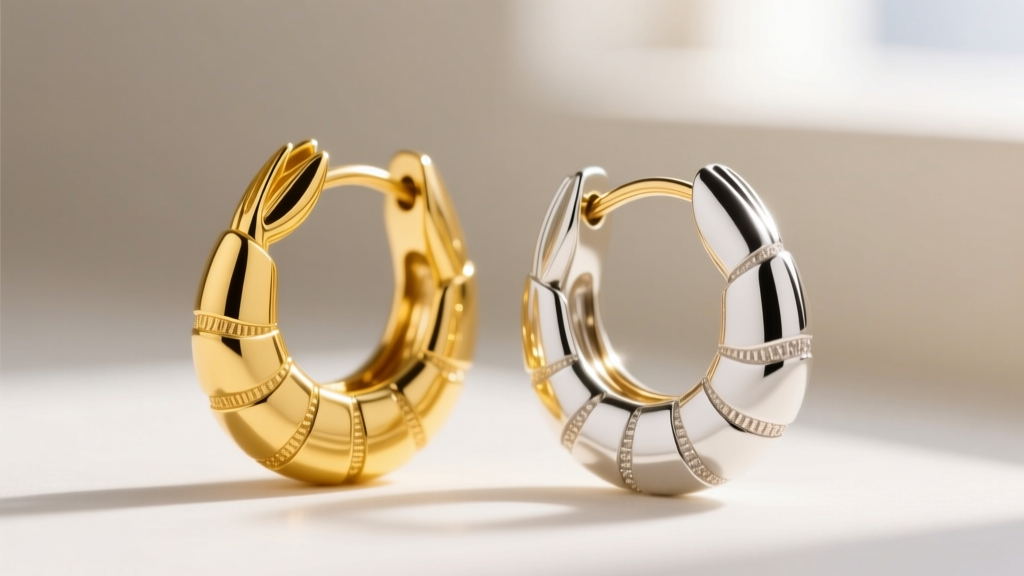
The most common point of failure in gold shrimp hoop earrings is the posterior clasp. Because the back of the earring bears the mechanical stress of being opened and closed, the engineering of the hinge is paramount.
- The Clicker Hinge: The gold standard for shrimp hoops. A precision-machined clicker features a tiny metal tab that snaps into a corresponding groove. When buying, test the tension. It should require a deliberate, firm push to close, emitting an audible "click."
- The Latch-Back: A more traditional, older mechanism where a thin wire loops over a catch. While secure, latch-backs on shrimp hoops can catch on hair and sweaters, bending the posterior wire and ruining the sleek silhouette.
- Friction Hinges: Often found in cheaper manufacturing, these rely solely on the tightness of the hinge pin to stay closed. Avoid these entirely; as the pin loosens with wear, the earring will fall out and be lost.
Sizing, Gauge, and the Cheese-Cutter Effect
Sizing a shrimp hoop involves two distinct metrics: the wire gauge (thickness) and the inner diameter (the space between the front bar and the back wire). The Association of Professional Piercers (APP) frequently warns against the "cheese-cutter effect," where thin, lightweight jewelry slowly migrates through the earlobe tissue due to gravity and tension.
Gauge Thickness
Standard earlobe piercings are typically done at 20g or 18g. However, because the hinged back of a shrimp hoop carries slightly more weight than a standard wire, opting for a 16-gauge (1.2mm) or a robust 18-gauge (1.0mm) post is highly recommended. This thicker metal distributes the weight evenly, preventing tissue migration and ensuring the straight front bar sits perfectly flush against your lobe without drooping.
Inner Diameter (ID)
Shrimp hoops are essentially a sub-category of huggies. The inner diameter must accommodate the thickness of your earlobe plus a millimeter of breathing room to prevent the hinge from pulling taut.
| Inner Diameter | Best For | Fit Profile |
|---|---|---|
| 8mm - 9mm | Thin lobes, upper lobe piercings | Snug, tight hug (may restrict movement) |
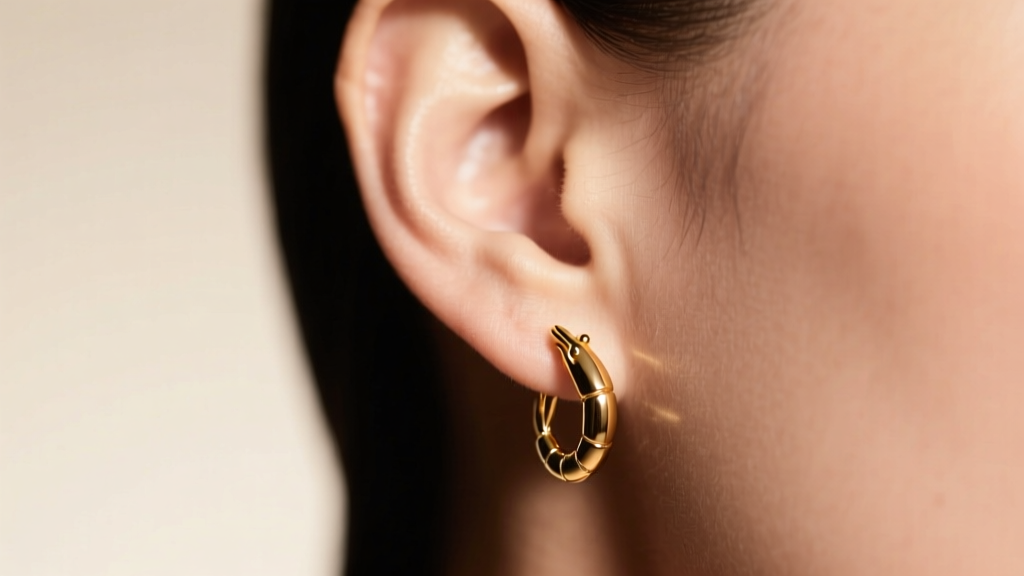
| 10mm - 11mm | Standard earlobes (Most Common) | Comfortable everyday fit with slight dangle |
| 12mm - 14mm | Thick lobes, stretched piercings | Relaxed fit, emphasizes the "shrimp" curve |
2026 Pricing Tiers: What Should You Actually Pay?
The market for gold shrimp hoop earrings has expanded significantly, but pricing remains a reliable indicator of hinge quality and metal purity. Here is a realistic breakdown of what to expect when shopping this year.
- Budget Tier ($45 - $90): Gold vermeil over sterling silver. Expect 18g thickness. The hinges will be functional but may loosen after 1-2 years of daily wear. Best for occasional use or trend-testing.
- Mid-Tier ($150 - $350): Solid 14k gold. This is where you find precision CNC-machined clicker hinges, 16g or 18g options, and lifetime warranties on the clasp mechanism. Brands in this tier offer the best long-term value.
- Luxury/Designer Tier ($450 - $1,200+): Solid 18k gold, often featuring pavé diamond accents on the front bar or custom-cast, weighted posterior wires for perfect balance. You are paying for brand heritage, gemstone quality, and advanced metallurgical engineering.
Maintenance and Hinge Care
The hinge of a shrimp hoop is a magnet for sebum, dead skin cells, and soap residue. If left uncleaned, this buildup will calcify inside the clicker groove, preventing the earring from snapping shut securely.
Expert Cleaning Protocol: Do not use harsh chemical dips or ultrasonic cleaners on hinged gold jewelry, as the high-frequency vibrations can bend the microscopic hinge pin. Instead, soak the earrings in warm water with a drop of mild, phosphate-free dish soap for ten minutes. Use a soft-bristled baby toothbrush to gently sweep the hinge joint and the clicker groove. Rinse thoroughly and dry with a lint-free cloth. Once a month, apply a microscopic drop of mineral oil to the hinge pin using a toothpick to maintain smooth, frictionless movement.
Final Verdict
Gold shrimp hoop earrings represent a brilliant evolution in minimalist jewelry design, offering the best of both studs and hoops. By prioritizing 14k solid gold, insisting on a precision clicker hinge, and selecting a 16g or 18g thickness to protect your piercing, you will secure a piece of jewelry that is as mechanically sound as it is aesthetically striking.


