Tiny Black Hoop Earrings: A Technical Guide to Metals and Sizing
Discover the technical details of tiny black hoop earrings. We analyze PVD coatings, black rhodium, gauge sizes, and inner diameters for perfect fits.

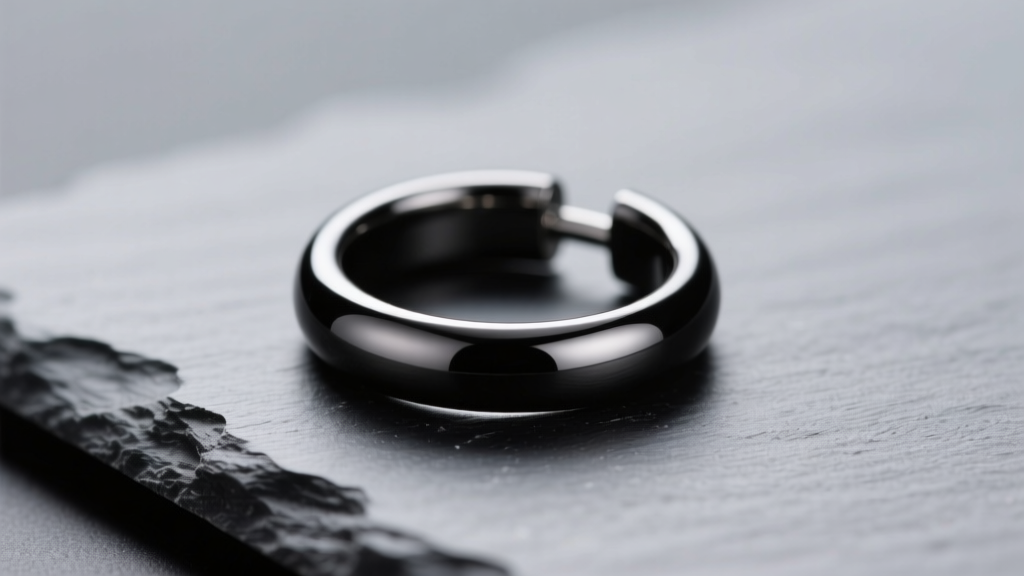
When curating a minimalist or edgy jewelry collection, tiny black hoop earrings are an indispensable staple. However, the transition from standard gold or silver hoops to black metal alternatives introduces complex metallurgical variables that most consumers—and even many jewelers—overlook. A sub-12mm black hoop is not simply a painted piece of wire; it is a micro-engineered component where surface treatments, structural gauges, and closure mechanics must operate in perfect harmony. In this expert deep dive, we deconstruct the material science, precise sizing mathematics, and mechanical failure modes of tiny black hoops to help you make technically sound purchasing decisions.
The Metallurgy of Black Finishes: PVD vs. Plating vs. Oxidation
The term 'black metal' in jewelry is a misnomer. With the exception of a few specialized alloys, black finishes are surface treatments applied to a base metal. Understanding the exact chemical and physical processes used to achieve these dark hues is critical for predicting the longevity of your tiny black hoop earrings.
Physical Vapor Deposition (PVD) on Titanium
The gold standard for durable black jewelry is PVD coating applied to ASTM F-136 implant-grade titanium. In a vacuum chamber, titanium is vaporized and bonded with carbon or nitrogen gases to create a microscopically thin layer of Titanium Nitride (TiN) or Diamond-Like Carbon (DLC). DLC coatings achieve a true, deep black without the brownish-purple tint common in cheaper PVD processes. According to the Association of Professional Piercers (APP), PVD-coated titanium is highly biocompatible, making it the safest choice for fresh cartilage piercings or sensitive lobes. The coating thickness typically ranges from 1 to 3 microns, offering exceptional scratch resistance.
Black Rhodium Electroplating
Black rhodium is an electroplated finish usually applied over sterling silver or white gold. The plating thickness is incredibly thin, generally between 0.1 and 0.25 microns. While it offers a brilliant, dark gunmetal-black shine, it is inherently fragile. As noted by Rio Grande Jewelry Supply, rhodium plating is susceptible to friction wear. On tiny black hoop earrings, the highest friction points are the hinge mechanism and the post entry. Expect black rhodium to wear back to the bright silver or gold underplate within 6 to 12 months of daily wear.
Oxidized Sterling Silver
Oxidation is a chemical reaction, not a coating. Sterling silver is exposed to liver of sulfur (potassium sulfide), which accelerates tarnishing to create a black silver sulfide layer. 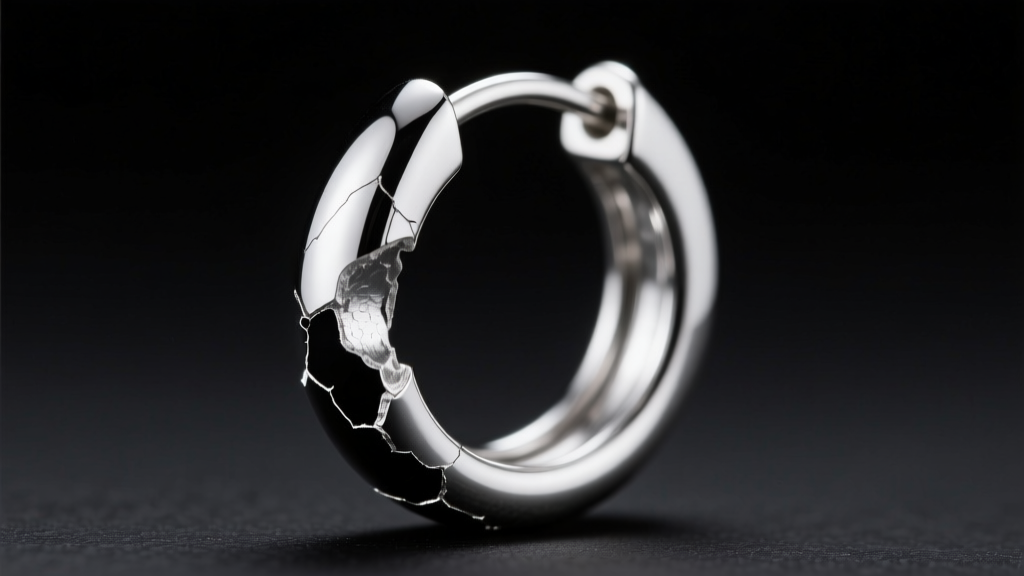 However, because this layer sits on the surface, high-contact areas will naturally polish back to bright silver over time. For tiny hoops, this means the inner diameter (which rubs against the earlobe) will quickly lose its black patina.
The Mathematics of Micro-Sizing: ID vs. OD
Sizing errors are the most common reason for customer dissatisfaction with micro-hoops. The critical metric is not the Outer Diameter (OD), but the Inner Diameter (ID). The ID dictates how much space exists between the wire and your ear tissue. If a hoop has a 10mm OD but is made from a thick 1.2mm wire, the actual ID is only 7.6mm, which may be too tight for a standard lobe piercing, causing tissue compression and migration.
| Piercing Location | Ideal Inner Diameter (ID) | Recommended Wire Gauge | Notes on Fit and Clearance |
|---|---|---|---|
| Standard Lobe | 10mm - 12mm | 18G (1.0mm) | Allows for natural lobe movement and swelling without pinching. |
| Helix / Upper Cartilage | 8mm - 10mm | 16G (1.2mm) | Snug fit required to prevent snagging on hair; 16G provides rigidity. |
| Tragus | 6mm - 8mm | 16G (1.2mm) | Requires precise measurement; tragus tissue is thick and dense. |
| Daith | 10mm - 11mm | 16G (1.2mm) | Must clear the inner conch ridge; clicker closure highly recommended. |
Always verify the ID specification with the manufacturer. Many mass-market brands advertise '10mm hoops' based on the outer edge, leading to painful, overly tight fits in cartilage piercings.
Gauge Thickness and Structural Rigidity
The gauge (wire thickness) of tiny black hoop earrings directly impacts both comfort and mechanical survival. In the American Wire Gauge (AWG) system, a lower number means a thicker wire.
- 20-Gauge (0.81mm): Generally too flimsy for hoops under 12mm. The thin wire lacks the structural memory to maintain a perfect circle, warping easily when inserted or removed. Furthermore, 20G wire is too thin to house a reliable internal hinge pin.
- 18-Gauge (1.0mm): The sweet spot for delicate lobe hoops. It offers a refined, minimalist aesthetic while providing just enough tensile strength to resist minor bending.
- 16-Gauge (1.2mm): The mandatory standard for cartilage. The 1.2mm thickness provides the necessary rigidity for clicker mechanisms and prevents the hoop from deforming when subjected to the lateral pressure of sleeping or wearing headphones.
Expert Insight: Never force a 20-gauge continuous hoop through a 16-gauge cartilage piercing. The friction of the thicker fistula tissue against the thin wire can cause micro-tears and severe irritation bumps.
Closure Mechanics for Sub-12mm Hoops
As the diameter of a hoop shrinks, the engineering complexity of its closure increases. You cannot simply scale down a standard hoop clasp; the tolerances become microscopic.
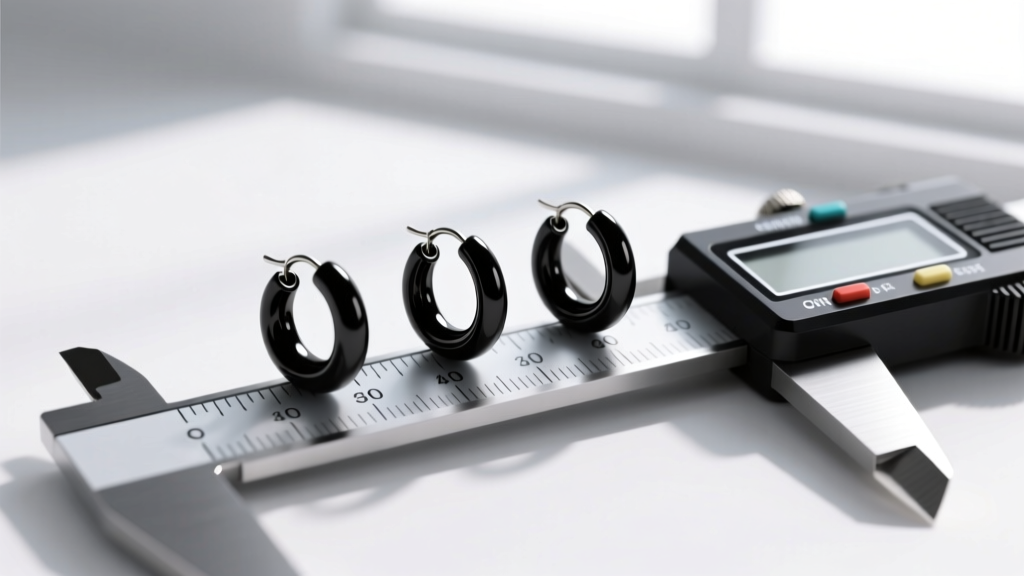
Hinged Segment Rings (Clickers)
Clickers are the superior choice for tiny black hoops. They feature a micro-hinge on one side and a tension-based snap closure on the other. The satisfying 'click' confirms the closure is secure. However, manufacturing a reliable clicker requires a minimum wire thickness of 18G (and ideally 16G) to accommodate the internal hinge pin without compromising the structural integrity of the surrounding metal. If you are buying a black PVD titanium clicker, ensure the hinge itself is also PVD coated, as exposed titanium hinges can cause galvanic reactions against the coating.
Continuous (Endless) Hoops
Continuous hoops feature a hollow tube that the opposite end slots into. While they offer a seamless look, they are notoriously difficult to manipulate at sub-10mm sizes. Bending a 16G black zirconium or PVD titanium wire to open an 8mm continuous hoop requires significant force, which risks snapping the metal or permanently warping the circular geometry. We strongly advise against continuous closures for tiny, rigid black metals.
Maintenance and Coating Failure Modes
Preserving the dark aesthetic of your earrings requires strict adherence to material-specific cleaning protocols. The most common failure mode for black jewelry is improper chemical exposure.
The Ultrasonic Cleaner Warning: Never place black rhodium or oxidized silver hoops in an ultrasonic jewelry cleaner. The high-frequency cavitation bubbles will strip the microscopic plating and chemical patina within minutes, leaving you with a patchy, ruined piece. Ultrasonic cleaners are only safe for solid PVD-coated titanium or black zirconium.
Routine Care: For PVD titanium, a simple soak in warm water with a drop of mild, fragrance-free dish soap, followed by a gentle brush with a soft-bristled baby toothbrush, is sufficient. For oxidized silver, avoid silver polishing cloths entirely, as the mild abrasives embedded in the cloth are designed to remove tarnish—which, in this case, is the intentional black finish you are trying to protect. Instead, use a damp microfiber cloth to gently wipe away sebum and environmental dust from the recesses of the hoop.
By understanding the precise interplay of PVD coatings, inner diameters, and gauge tolerances, you can select tiny black hoop earrings that are not only visually striking but mechanically engineered to last a lifetime of daily wear.


