Best Metals and Settings for Guys with Diamond Earrings
Discover the best metals, settings, and gauge sizes for guys with diamond earrings. Compare platinum, white gold, and titanium for active lifestyles.

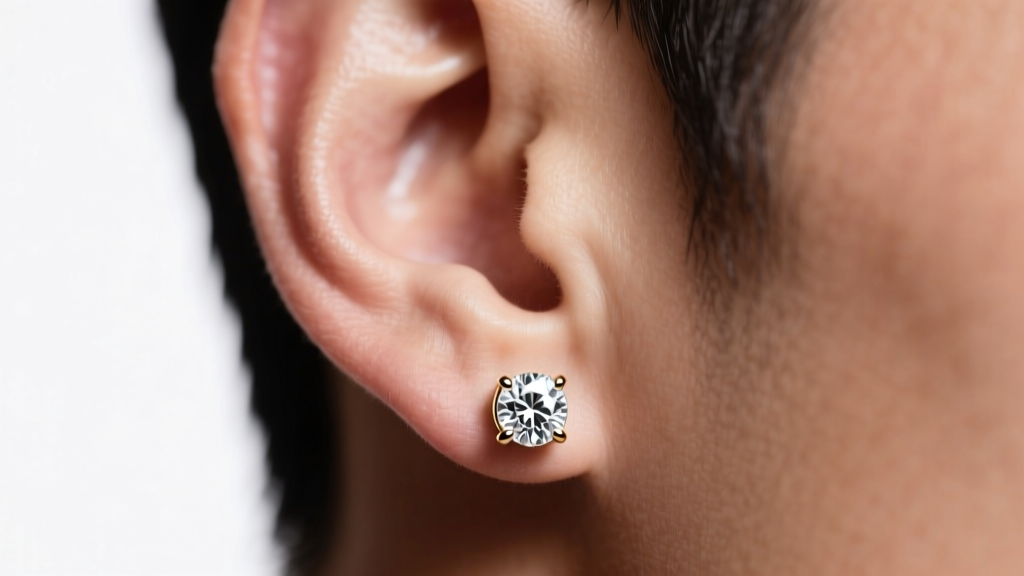
Why Material Science Matters for Men's Diamond Studs
The landscape of men's jewelry has shifted dramatically, and guys with diamond earrings are no longer an exception in fine jewelry boutiques. However, the metallurgical and structural requirements for men's earrings differ vastly from women's. Men generally subject their jewelry to higher degrees of mechanical stress, environmental exposure, and blunt force. Sweat, gym equipment, manual labor, and the habit of sleeping in earrings all introduce lateral shear forces that can compromise inferior settings.
Choosing the right metal alloy and setting architecture is not merely an aesthetic decision; it is an exercise in material science. A poorly matched metal-to-stone ratio or an undersized post gauge will inevitably lead to lost diamonds, bent posts, or lobe trauma. This guide breaks down the exact material properties, alloy grades, and structural specifications required to ensure longevity and security for men's diamond earrings.
The Diamond: Hardness vs. Cleavage Planes
Before selecting the metal, we must understand the stone. According to the Gemological Institute of America (GIA), diamonds rank a 10 on the Mohs hardness scale, making them impervious to scratching from everyday materials. However, hardness is not the same as toughness. Diamonds possess perfect octahedral cleavage planes. If a prong setting is too high and the diamond's girdle strikes a hard surface at the exact angle of its cleavage plane, the stone can chip or fracture.
For active men, this physical property dictates the setting style. Furthermore, when choosing between natural and lab-grown diamonds (CVD or HPHT), the physical and chemical properties are identical. Lab-grown stones offer a 70-80% cost reduction, allowing buyers to reallocate their budget toward a superior, heavy-duty metal setting like Platinum 950 rather than settling for a fragile 10K white gold mount.
Top Metal Alloys for Guys with Diamond Earrings
The setting metal must balance tensile strength, malleability for prong tightening, and resistance to corrosion. Here is how the top three metals perform under stress.
Platinum 950 (Ruthenium or Iridium Alloy)
Platinum is the undisputed king of secure diamond settings. Standard fine jewelry uses 950 Platinum (95% pure Pt, 5% alloy, typically Ruthenium or Iridium). Unlike gold, platinum does not lose material when scratched; it merely displaces, forming a patina. More importantly, platinum's high density and tensile memory mean that if a prong is bent out of place, it is far less likely to snap than white gold. It is hypoallergenic and immune to the corrosive effects of acidic sweat. The primary drawback is weight and cost, but for a high-carat stone, it is the only responsible choice.
14K vs. 18K White Gold (The Rhodium Problem)
White gold is an alloy of yellow gold and white metals like nickel, palladium, or zinc. 14K white gold (58.5% pure gold) is harder and more scratch-resistant than 18K (75% pure gold) due to the higher ratio of alloy metals. However, white gold requires rhodium plating to achieve its bright white finish. For men who sweat heavily or work with their hands, this rhodium layer can wear off in months, revealing a yellowish-gray undertone. Furthermore, nickel-alloyed white gold is a common trigger for contact dermatitis. If choosing white gold, insist on a palladium-alloyed mix and budget for annual re-plating.
Grade 5 Titanium (Ti-6Al-4V)
Titanium is highly favored in men's rings, but it presents unique challenges for diamond earrings. Commercially pure titanium (Grade 2) is too soft for secure prong settings. Jewelers must use aerospace-grade Grade 5 Titanium (Ti-6Al-4V), which is exceptionally hard. The problem? It is so hard that traditional prong-setting techniques are difficult, and if a post bends, it cannot be easily straightened without snapping. Titanium is best utilized in bezel settings or as a lightweight post material for heavy earlobes, rather than intricate prong work.
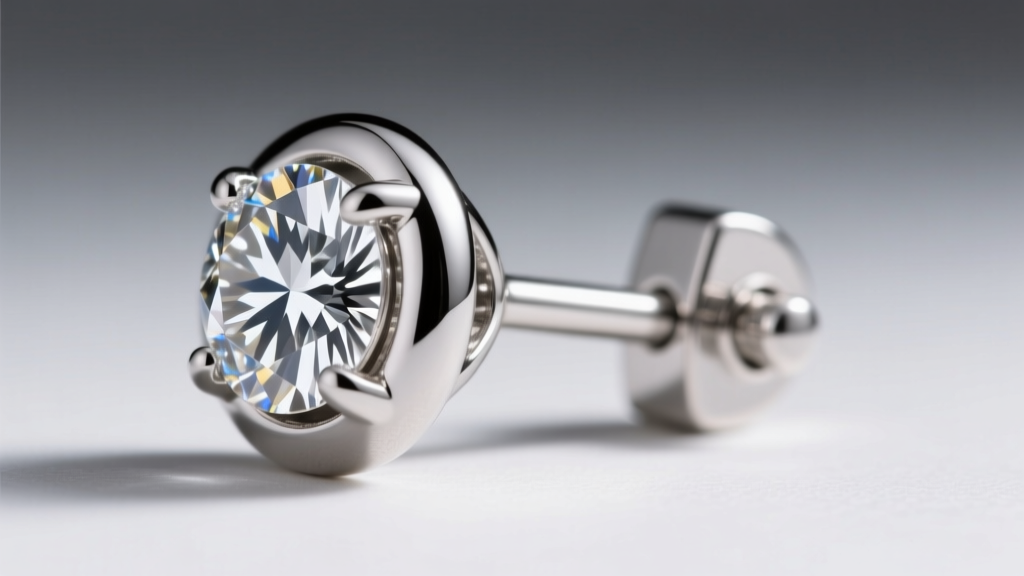
Material Comparison Matrix: Durability, Maintenance, and Cost
The following table provides a direct comparison of the Vickers Hardness (HV), maintenance requirements, and practical applications for the most common metals used in men's diamond studs.
| Metal Alloy | Vickers Hardness (HV) | Corrosion Resistance | Maintenance Level | Best Application for Men |
|---|---|---|---|---|
| 950 Platinum (Ru) | 130 - 150 | Exceptional | Low (Polish patina if desired) | High-value stones, secure prongs, sensitive skin |
| 14K White Gold (Pd) | 140 - 160 | High | Medium (Rhodium replating) | Everyday wear, budget-conscious buyers |
| 18K White Gold (Ni) | 120 - 130 | Moderate | High (Frequent replating) | Avoid for active men (allergy & wear risks) |
| Grade 5 Titanium | 330 - 350 | Exceptional | Very Low | Bezel settings, lightweight posts, gym wear |
| Black Zirconium | 120 (Core) / 450 (Shell) | High | Low | Alternative streetwear styles, bezel cuffs |
Setting Architecture: Bezel vs. Martini vs. Crown
The way the metal interfaces with the diamond dictates the earring's survival rate in an active lifestyle.
- The Bezel Setting: A continuous rim of metal wraps around the diamond's girdle. This is the ultimate choice for guys with diamond earrings who work out, wear helmets, or frequently use headphones. It eliminates snag points and protects the diamond's vulnerable edges from lateral impacts.
- The Martini Setting: Features three or four high prongs that allow maximum light return. While visually striking, the high profile and exposed prongs act as levers. If caught on a towel or shirt collar, the prongs can lift, releasing the stone.
- The Crown / Basket Setting: Features a lower profile with a horizontal gallery wire that adds structural rigidity to the prongs. A solid basket setting in 14K white gold or platinum offers a great compromise between the security of a bezel and the brilliance of a martini.
Expert Insight: Never choose a tension setting for men's earrings. The constant micro-vibrations from daily movement and the risk of lateral compression can cause the metal to yield, instantly dropping the diamond.
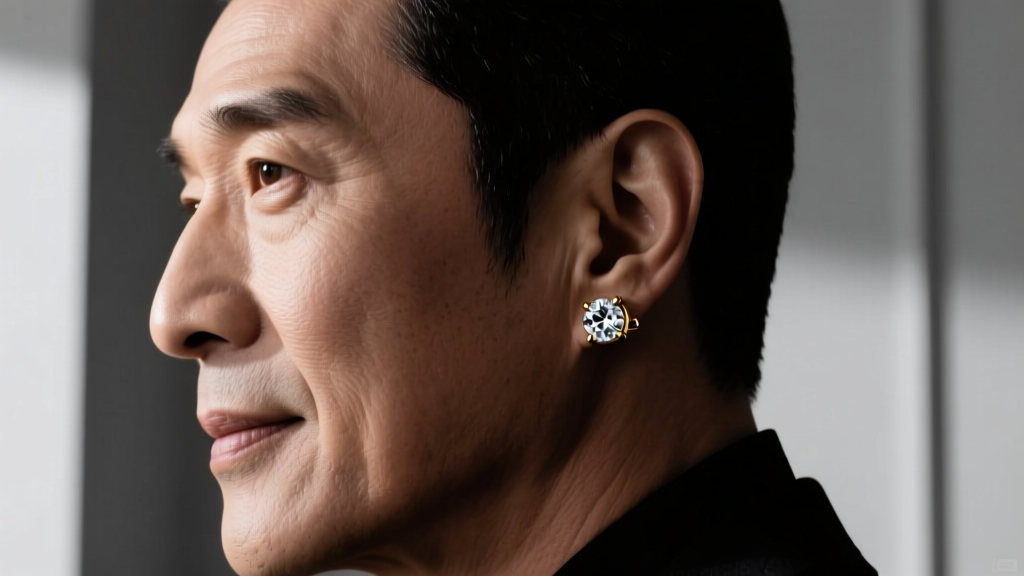
Gauge Sizes and Post Thickness: Preventing the Cheese-Cutter Effect
Most standard women's diamond studs are manufactured with 20-gauge (0.81mm) or 18-gauge (1.02mm) posts. For men, these thin posts are a structural liability. Men's earlobes are typically thicker and denser, and the tendency to sleep in earrings puts immense bending pressure on the post.
More critically, if a man wears a heavy diamond (e.g., 0.75 carats or larger per ear) on a thin 20-gauge post, the combination of weight and gravity will cause the post to slice through the earlobe tissue over time—a phenomenon known in body modification as the 'cheese-cutter effect.'
The Optimal Gauge Specifications for Men
- 18-Gauge (1.0mm): Acceptable only for lightweight stones (under 0.25ct) in low-profile bezel settings.
- 16-Gauge (1.2mm): The ideal standard for men's diamond studs ranging from 0.25ct to 0.50ct. It provides enough rigidity to resist bending during sleep without requiring lobe stretching.
- 14-Gauge (1.6mm): Mandatory for heavy stones (0.75ct+), elaborate dangles, or men who already have slightly stretched lobes. Ensure the jeweler uses a custom-fabricated 14G friction back or a secure screw-back mechanism, as standard butterfly backs will not fit a 14G post.
Care and Maintenance Protocols
Maintaining the structural integrity of the metal is just as important as cleaning the stone. According to GIA's care guidelines, while diamonds attract grease and require regular degreasing, the metal setting requires specific handling.
Avoid using ultrasonic cleaners on fracture-filled diamonds or stones with significant internal inclusions, as the high-frequency vibrations can shatter the stone. For platinum and white gold settings, use a simple solution of warm water and mild dish soap with a soft-bristled toothbrush to remove sebum and dead skin cells that accumulate behind the setting. Finally, have a professional jeweler inspect the prong tips or bezel walls every 12 months using a 10x loupe to check for metal fatigue, thinning, or micro-fractures before a catastrophic failure occurs.
Final Verdict on Material Selection
When outfitting guys with diamond earrings, prioritize structural integrity over sheer carat weight. A 0.50ct diamond set in a heavy-duty 16-gauge platinum bezel will outlast, outperform, and look significantly more intentional than a 1.00ct stone dangling from a fragile, rhodium-plated 18K white gold martini setting. Invest in the metallurgy first, and the jewelry will survive the rigors of a modern, active lifestyle.


