The Engineering Behind Pretty Earrings: Alloys, Settings, and Weight
Discover the technical anatomy of pretty earrings. We break down gold alloys, gemstone light return, post gauges, and setting ergonomics.

The Hidden Science of Aesthetic Jewelry
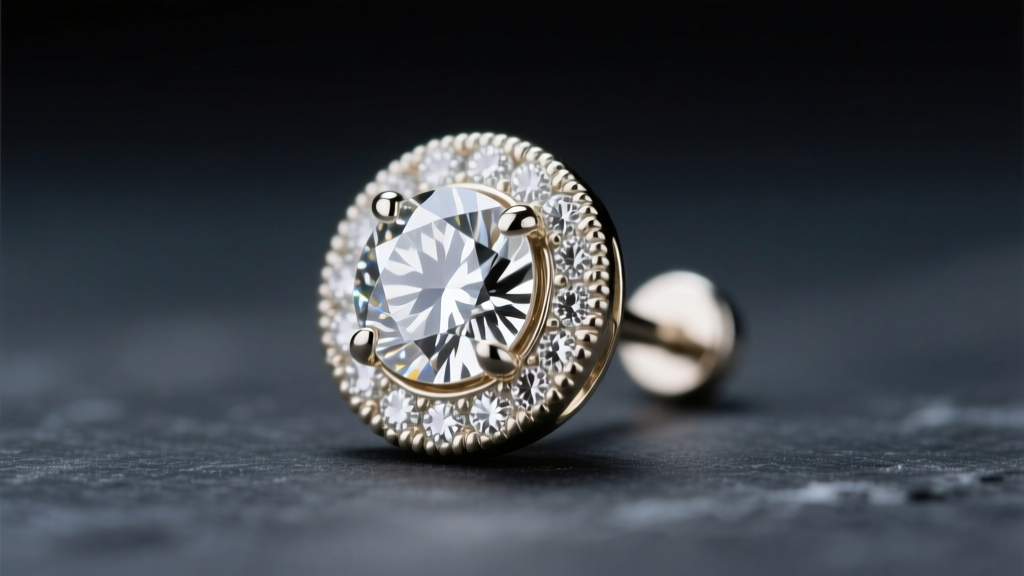
When consumers search for "pretty earrings," they are typically reacting to visual symmetry, brilliance, and color harmony. However, from a gemological and metallurgical perspective, true aesthetic appeal is never accidental. It is the direct result of precise optical engineering, ergonomic weight distribution, and advanced metallurgy. An earring that looks stunning in a display case but droops on the earlobe or loses its luster after six months is a failure of engineering. In this deep dive, we deconstruct the technical specifications that separate genuinely beautiful, durable fine jewelry from mass-produced costume pieces.
The Metallurgy of Aesthetic Durability
The visual warmth and structural integrity of gold earrings depend entirely on their alloy composition. Pure 24k gold is too malleable for secure gemstone settings, which is why jewelers use 18k (75% gold) or 14k (58.3% gold) alloys. The remaining percentage consists of metals like copper, silver, zinc, and palladium, which dictate both the color and the tensile strength of the piece.
The White Gold Rhodium Problem
Many consumers are frustrated when their "pretty" white gold earrings begin to look yellowish after a year of wear. This is not a defect in the gold, but a failure mode of traditional nickel-based white gold alloys. To achieve a bright white finish, manufacturers plate these alloys with rhodium. As the plating wears away from friction and skin oils, the natural pale-yellow/grey hue of the underlying alloy is exposed. Furthermore, nickel alloys are a primary cause of contact dermatitis, affecting roughly 10-15% of the population.
The Expert Solution: Seek out Palladium White Gold. An 18k palladium white gold alloy (typically 75% Au, 10% Pd, 10% Ag, 5% Zn) possesses a naturally cool, grey-white tone that does not require rhodium plating. It is inherently hypoallergenic and maintains its aesthetic consistency indefinitely, adhering to the biocompatibility principles outlined in ASTM F136 standards for implant-grade metals, adapted for fine jewelry.
Optical Engineering: Cut Grades and Light Return
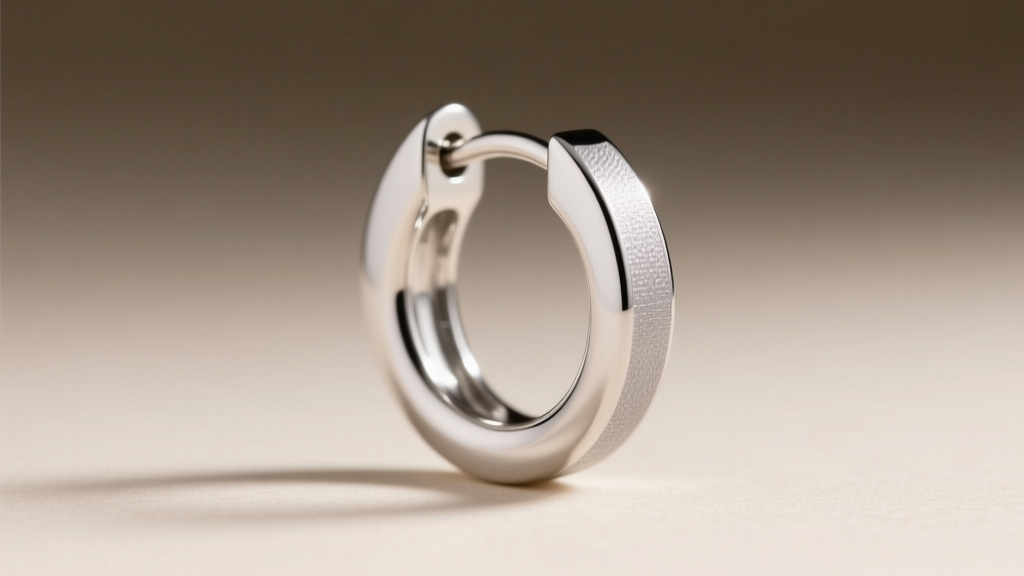
A gemstone's beauty is defined by its light return—how effectively it captures, refracts, and reflects light back to the observer's eye. In diamond studs and drop earrings, the cut grade is exponentially more important than clarity or color. A poorly proportioned diamond will suffer from "light leakage," where light escapes through the pavilion (bottom) rather than reflecting through the crown (top), resulting in a dull, lifeless stone regardless of its carat weight.
According to the Gemological Institute of America (GIA), the interplay between the table percentage and depth percentage dictates a diamond's optical performance. Below is a technical breakdown of how cut proportions impact the visual appeal of diamond earrings.
| Cut Grade | Table % | Depth % | Visual Impact in Earrings |
|---|---|---|---|
| Ideal / Hearts & Arrows | 53% - 58% | 59% - 62.5% | Maximum scintillation; creates the highly desired "pretty" sparkle from across the room. |
| Excellent | 52% - 60% | 58% - 63.5% | Near-perfect light return; indistinguishable from Ideal to the untrained naked eye. |
| Very Good | 51% - 64% | 57% - 65% | Slight light leakage at the edges; appears brilliant but lacks intense contrast patterns. |
| Poor / Shallow | > 65% | < 55% | "Fish-eye" effect; the stone looks wider but appears glassy, flat, and entirely un-pretty. |
Ergonomic Weight Distribution and Post Gauge
The most common failure mode in larger, heavier drop and stud earrings is the "droop." This occurs when the center of gravity of the earring sits too far forward or below the earlobe's piercing axis, causing the earring to tilt downward. This not only ruins the aesthetic profile but also stretches the earlobe tissue over time, leading to permanent elongation.
The Physics of the Post
Standard earring posts are manufactured at 20-gauge (0.81mm) or 19-gauge (0.90mm). While sufficient for lightweight studs under 1.00 carat total weight (CTW), a 20-gauge post will physically bend under the dynamic load of a 2.5 CTW diamond or heavy gemstone drop. For any earring exceeding 3.5 grams, an 18-gauge (1.02mm) post is structurally mandatory to maintain a 90-degree angle against the earlobe.
Friction Backs vs. La Pousette
Standard "butterfly" friction backs rely on the tension of a metal spring to hold the earring. They typically fail (slip off) when subjected to lateral forces exceeding 0.4 ounces. For heavy, high-value earrings, experts mandate La Pousette (locking) backs or screw-backs. La Pousette backs utilize a dual-spring locking mechanism that grips the post's safety notch, securing earrings weighing up to 1.2 ounces and completely eliminating the risk of loss during wear.
Prong vs. Bezel: Security vs. Maximum Brilliance
The setting style fundamentally alters both the security of the gemstone and its optical performance. Choosing between a prong and a bezel setting requires balancing the desire for maximum light exposure with the physical realities of the wearer's lifestyle.
The Martini Setting Advantage
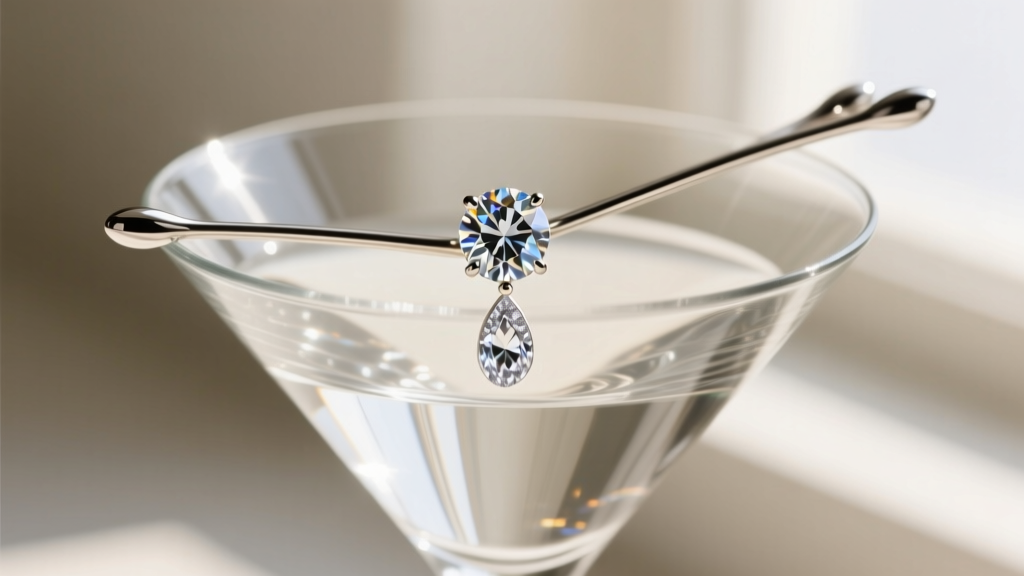
For diamond studs, the 3-prong "Martini" setting is technically superior to the traditional 4-prong basket setting. The Martini setting features a lower profile and a narrower base, which brings the diamond's pavilion closer to the earlobe. This lowers the center of gravity, drastically reducing the forward droop that plagues larger basket-set studs. Furthermore, using three prongs instead of four leaves 15% more of the diamond's crown exposed, increasing the stone's visible surface area and overall brilliance.
Expert Warning on Bezel Settings: While bezel settings offer superior impact protection, poorly executed bezels suffer from "over-burnishing." If the jeweler pushes too much metal over the girdle of the stone to secure it, they block light from entering the crown's edges, effectively killing the diamond's scintillation. Always inspect bezel-set earrings under 10x magnification to ensure the metal rim is paper-thin and uniform.
Synthesizing Beauty and Engineering
Ultimately, finding truly pretty earrings requires looking past the initial sparkle and examining the architectural foundation of the piece. By prioritizing palladium white gold over rhodium-plated alternatives, demanding Ideal or Excellent cut grades for optimal light return, insisting on 18-gauge posts for heavier stones, and selecting ergonomically balanced settings like the Martini, you ensure that your jewelry remains as visually captivating and structurally sound on day 1,000 as it was on day one. True beauty in fine jewelry is, and always will be, a triumph of engineering.


