When Were Earrings Invented? A Material Evolution Guide
Discover when earrings were invented and trace the evolution of body jewelry materials, from ancient gold to modern implant-grade titanium.

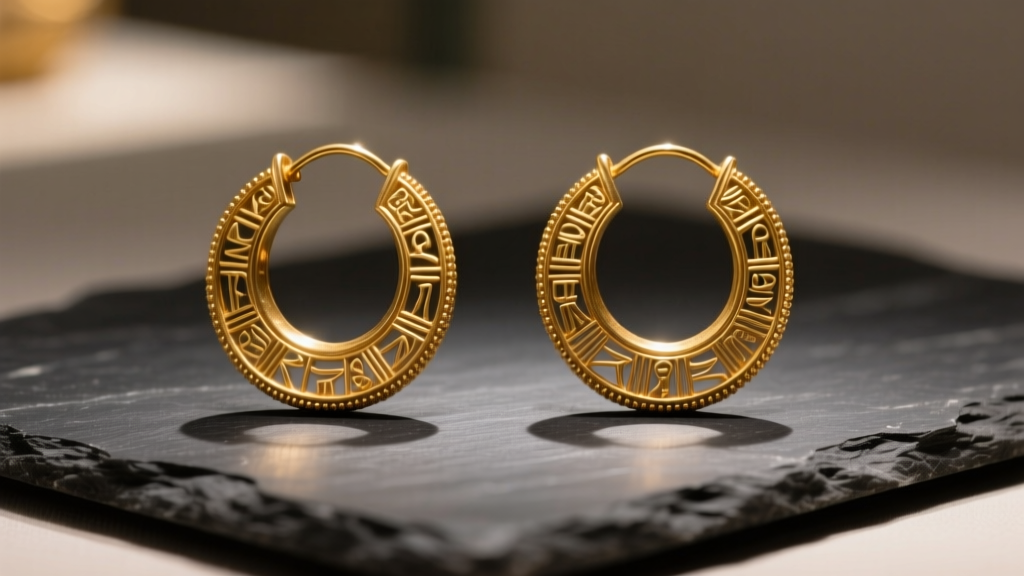
The Dawn of Adornment: When Were Earrings Invented?
To understand the modern science of body jewelry, we must first ask: when were earrings invented? The earliest known earrings date back to approximately 2500 BCE, discovered in the Royal Cemetery of Ur in ancient Mesopotamia (modern-day Iraq). According to The Metropolitan Museum of Art, these ancient artifacts were primarily crafted from pure gold, lapis lazuli, and carnelian. They took the form of heavy, crescent-shaped hoops that required substantial earlobe stretching to support their weight.
However, the metallurgical properties of these early pieces were fundamentally flawed by modern standards. Pure 24-karat gold possesses a Mohs hardness of just 2.5 to 3, making it exceptionally malleable but highly susceptible to deformation. While ancient royalty valued gold for its incorruptibility and brilliant luster, its structural softness meant that early earrings frequently bent, warped, or tore through the earlobe under their own weight. This historical limitation sparked a millennia-long evolution in material science, driving the transition from elemental metals to engineered alloys and biocompatible polymers.
The Alloy Era: Engineering Durability in Precious Metals
As earring designs evolved from simple hoops to intricate dangles and heavy drop earrings during the Hellenistic and Roman periods, jewelers realized that pure metals could not support complex structural mechanics. The solution was alloying. By introducing copper, silver, and zinc to gold, metallurgists dramatically increased the Vickers hardness of the material.
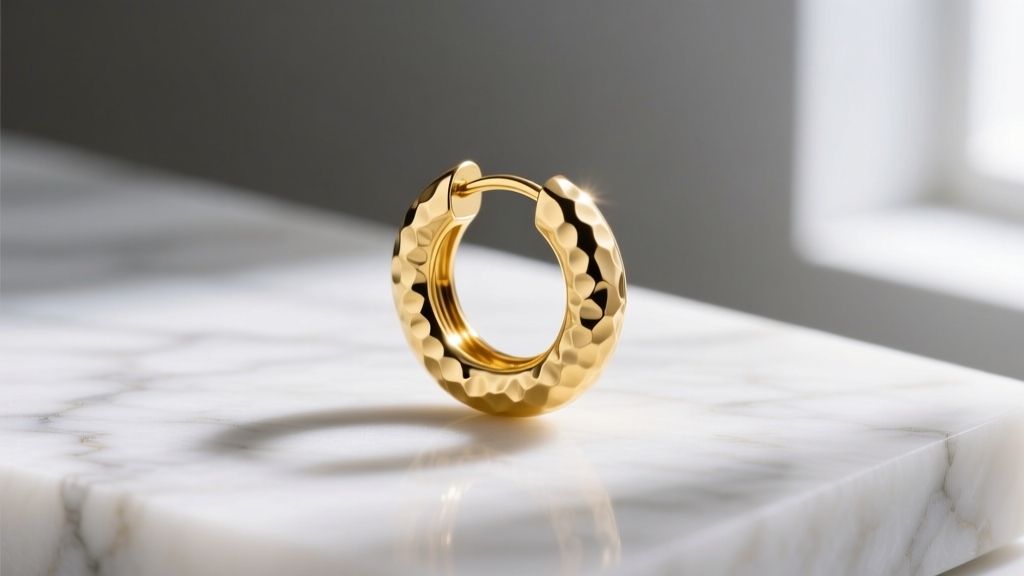
Today, the jewelry industry relies heavily on 14K (58.5% gold) and 18K (75% gold) alloys. From a material properties perspective, 14K yellow gold offers superior tensile strength compared to 18K, making it the preferred choice for thin, high-stress components like huggie hinges and butterfly clutch posts. However, the introduction of alloying metals brought a new challenge: contact dermatitis. White gold, for instance, is traditionally alloyed with nickel to achieve a silvery hue. Because nickel is a leading cause of allergic contact dermatitis, modern high-end jewelers now palladium-alloy their white gold or rely on thick rhodium plating to create an inert barrier between the reactive alloy and the skin.
Modern Biocompatibility: The Shift to Implant-Grade Standards
The most significant leap in earring materials occurred in the late 20th century with the rise of professional body piercing. The question was no longer just about aesthetics; it was about cellular compatibility. The Association of Professional Piercers (APP) established strict material guidelines to prevent cytotoxicity, galvanic reactions, and rejection in fresh cartilage and lobe piercings.
Understanding the difference between commercial "surgical steel" and true implant-grade metals is critical for anyone selecting earrings for unhealed or sensitive piercings. Below is a comparative breakdown of the most common modern earring materials and their physical properties.
| Material | Standard / Grade | Nickel Content | Ideal Gauge (Lobe/Cartilage) | Relative Weight |
|---|---|---|---|---|
| Implant-Grade Titanium | ASTM F136 (Ti6Al4V) | 0% | 18G - 14G | 1.0x (Baseline) |
| Surgical Steel | 316L / 316LVM | 8-10.5% | 16G - 12G | 1.25x |
| Niobium | C110 (Commercially Pure) | 0% | 18G - 14G | 1.35x |
| 14K Yellow Gold | 58.5% Au, Cu, Ag | 0% (Typically) | 20G - 16G | 2.1x |
| Borosilicate Glass | Soda-Lime-Borosilicate | 0% | 14G - 0G | 1.8x |
Why ASTM F136 Titanium Dominates Fresh Piercings
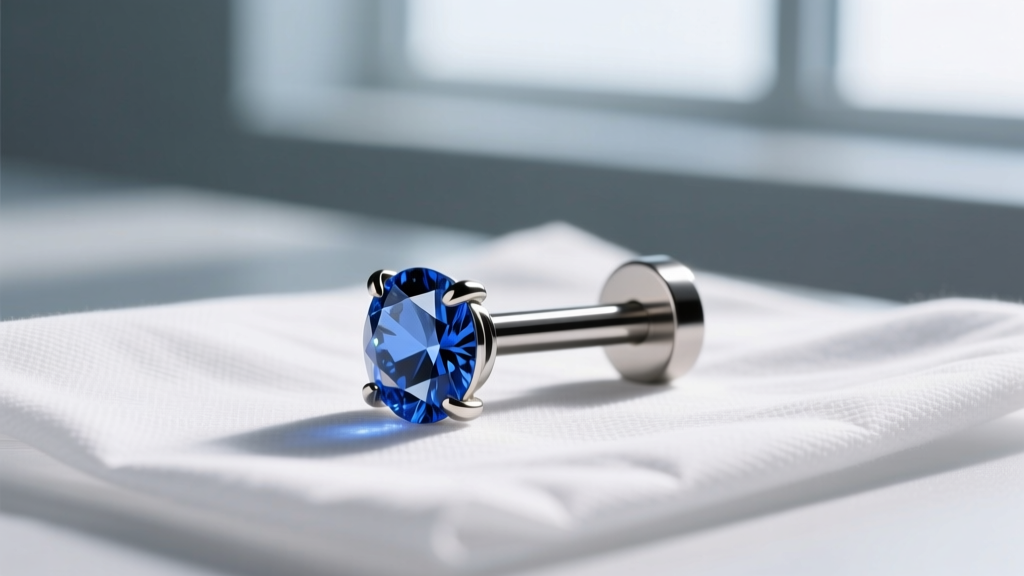
ASTM F136 titanium is the undisputed gold standard for initial piercings. Unlike 316L surgical steel, which traps nickel within its crystalline structure (but can still leach ions when exposed to the saline environment of a healing fistula), F136 titanium contains zero nickel. Furthermore, titanium is approximately 43% lighter than steel, reducing the gravitational drag on delicate cartilage tissues like the helix or conch, thereby minimizing the risk of migration.
Polymers and Glass: Non-Metallic Alternatives for Sensitive Ears
For individuals with severe metal hypersensitivities or those undergoing MRI procedures, non-metallic earrings offer vital alternatives. However, not all plastics are created equal. Acrylic and 3D-printed resins are highly porous, harboring bacteria and off-gassing toxic monomers that can cause severe localized infections in fresh piercings.
"When selecting polymeric jewelry for extended wear, the material must exhibit high chemical inertness and a non-porous surface finish to prevent biofilm accumulation."
- PTFE (Polytetrafluoroethylene): Commonly known as Teflon, PTFE is highly flexible, biologically inert, and autoclavable. It is frequently used for retainers in 16G to 12G gauges, though its high flexibility makes it unsuitable for threaded ends.
- Borosilicate Glass: With a Mohs hardness of around 6.5, borosilicate glass is incredibly smooth, non-porous, and completely hypoallergenic. It is the premier choice for stretched lobes and heavy cartilage projects, as its thermal stability allows for rigorous sterilization without warping.
- Bioplast: A trademarked bio-compatible polymer that can be heat-molded. While useful for emergency retainers, it degrades faster than PTFE and should be treated as a temporary material solution.
Practical Framework: Matching Material to Ear Placement
Selecting the right earring material requires balancing the anatomical placement, the gauge thickness, and the wearer's lifestyle. Here is a targeted decision framework for modern earring selection:
Standard Earlobes (20G - 18G)
The earlobe is highly vascular and heals quickly. Because the tissue is forgiving, 14K or 18K gold, as well as platinum, are excellent choices for long-term wear. The higher density of gold provides a satisfying, premium drape for drop and dangle earrings without risking structural failure at the post.
Upper Cartilage (Helix, Forward Helix, Conch - 16G - 14G)
Cartilage is avascular, meaning it heals slowly and is highly prone to irritation bumps (hypertrophic scarring) caused by microscopic friction or allergic reactions. For these placements, ASTM F136 titanium is mandatory for initial healing. Once fully healed (12+ months), high-polish 14K or 18K gold with mirror-finished posts can be safely introduced. Avoid porous materials like raw brass or oxidized silver, which can trap sebum and cause localized necrosis.
The Daith and Rook (16G - 14G)
These thick, dense cartilage folds require jewelry that can navigate tight anatomical angles. Clicker rings made from solid 14K gold or anodized niobium are ideal here. Niobium is particularly advantageous because it can be reactively anodized to create vibrant, permanent colors without the use of toxic dyes or platings that could flake off inside the fistula tract.
Conclusion: From Ancient Gold to Engineered Alloys
Tracing back to when earrings were invented in the ancient sands of Ur reveals a fascinating journey from soft, elemental metals to the highly engineered, biocompatible materials we utilize today. Understanding the metallurgical properties, gauge requirements, and allergy profiles of modern jewelry materials ensures that your ear curation is not only visually striking but anatomically harmonious. Whether you are opting for the historical warmth of 18-karat gold or the clinical safety of implant-grade titanium, respecting the material science behind the jewelry is the ultimate key to lifelong wearability.


