The Ultimate Buying Guide for Bow Silver Earrings
Discover what to look for when buying bow silver earrings. Learn about silver grades, structural integrity, gauge sizes, and pricing tiers.

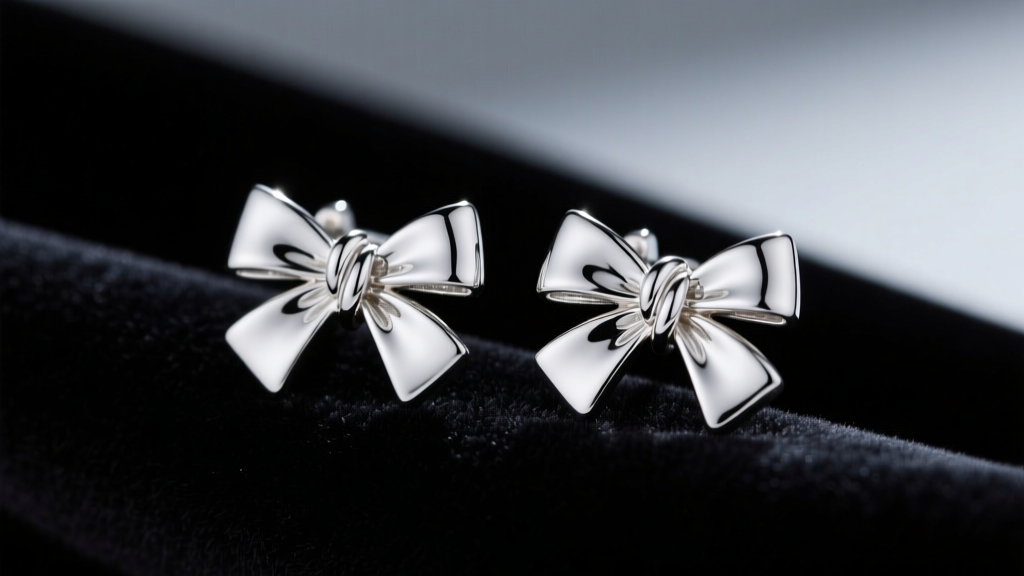
The Enduring Appeal of the Bow Motif
The bow motif has transcended its novelty roots to become a cornerstone of modern fine jewelry. In 2026, the convergence of the "quiet luxury" movement and the enduring "coquette" aesthetic has elevated bow silver earrings from playful accessories to sophisticated staples. However, the intricate geometry of a bow presents unique manufacturing challenges that buyers must understand before investing. This comprehensive buying guide breaks down exactly what to look for regarding metal purity, structural engineering, gauge sizing, and long-term wearability when shopping for bow silver earrings.
Decoding Silver Grades: What You Are Actually Buying
Not all silver is created equal. The Gemological Institute of America (GIA) notes that pure silver is inherently too soft for complex jewelry structures. Therefore, understanding the alloy composition is critical when evaluating bow silver earrings, as the loops and tails of the bow require rigid durability to prevent bending.
| Silver Grade | Hallmark | Durability | Tarnish Resistance | Price Tier |
|---|---|---|---|---|
| Fine Silver | .999 | Low (Too soft for bows) | High | $$$ |
| Sterling Silver | .925 | High (Ideal standard) | Moderate (Needs Rhodium) | $$ |
| Silver-Plated | None / EP | Low (Wears off quickly) | Low | $ |
For bow silver earrings, Sterling Silver (.925) is the undisputed gold standard. It contains 92.5% pure silver and 7.5% copper or zinc, providing the necessary tensile strength to hold the bow's shape. In 2026, premium sterling silver pieces are almost universally flashed with a micro-layer of rhodium or platinum to prevent sulfur-induced tarnishing and provide a bright, white-gold-like finish.
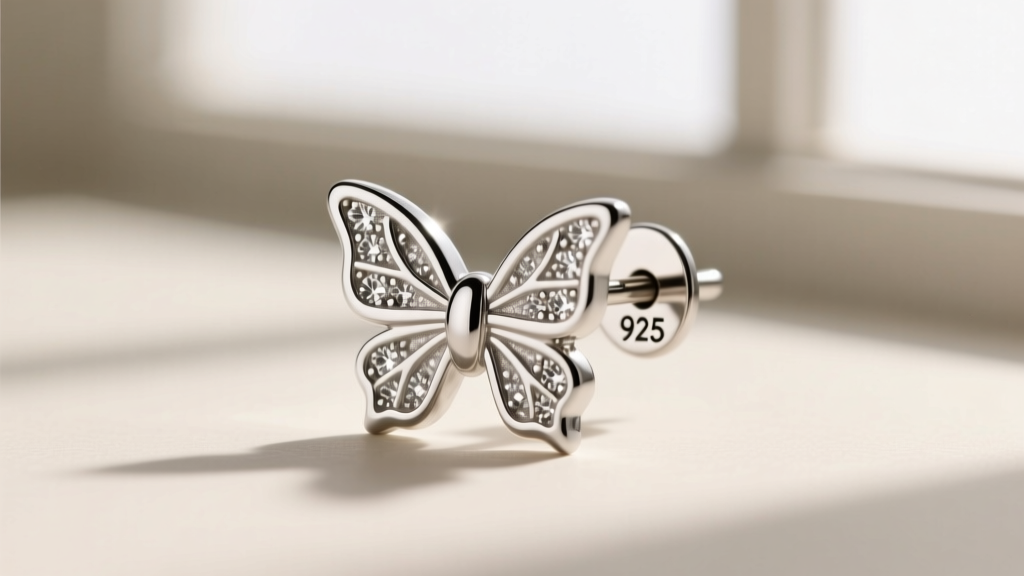
Structural Integrity: How Bow Earrings Fail
The most common point of failure in bow earrings is the center knot. Structurally, the knot is a complex intersection of metal. Mass-produced, budget-friendly bows often cast the "tails" and the "knot" as separate pieces, bonding them with cyanoacrylate (jeweler's epoxy). Over time, exposure to sebum, perfume, and humidity degrades this adhesive, causing the knot to snap off or the center gemstone to fall out.
When evaluating high-quality bow silver earrings, look for lost-wax casting where the entire bow is formed as a single, continuous piece of silver. If the design features a center gemstone on the knot, ensure it is secured with traditional prong or bezel settings rather than glued into a smooth depression. The Rio Grande jewelry supply experts emphasize that laser-welding or seamless casting is the only reliable method for ensuring the longevity of intricate silver motifs.
"Always inspect the under-gallery of a bow earring. A high-quality piece will have clean, filed metalwork underneath, while cheap castings will show porosity, pitting, and visible glue lines around the center knot."
Gauge Sizing and Placement: Lobe vs. Cartilage
A frequent mistake buyers make is ignoring the post thickness (gauge) relative to the piercing placement. The weight and physical footprint of a silver bow dictate the necessary gauge to prevent tissue damage.
Standard Earlobe Placement
For standard lobe piercings, a 20-gauge (0.8mm) or 19-gauge (0.9mm) post is standard. Because the earlobe is fleshy and forgiving, it can easily support the slight top-heaviness of a medium-sized silver bow stud without stretching the piercing hole.
Cartilage and Helix Placement
If you are purchasing bow silver earrings for an upper cartilage or helix piercing, you must opt for an 18-gauge (1.0mm) or 16-gauge (1.2mm) post. Cartilage is rigid and lacks the elasticity of the lobe. Placing a heavy silver bow on a thin 20-gauge wire in a cartilage piercing creates the "cheese-cutter effect," where the tension and weight cause the thin wire to slowly slice through the tissue, leading to migration and permanent scarring.
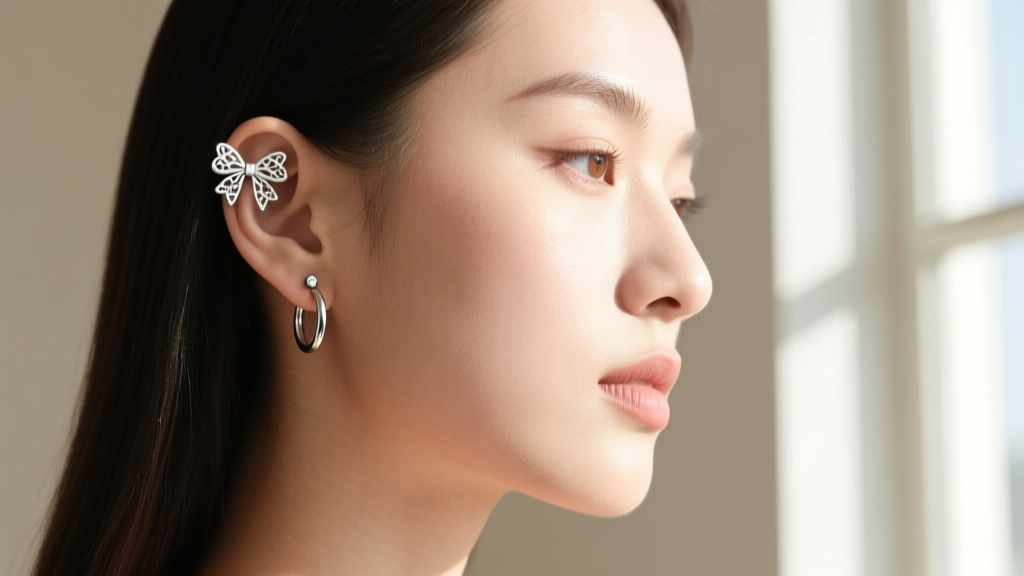
Securing the Bow: Backing Mechanisms
The back of your earring is just as important as the front, especially for top-heavy designs like bows. Standard push-back "butterfly" clutches rely on friction and can easily be snagged on hair or clothing, pulling the earring out. For valuable sterling silver bow earrings, consider upgrading your backings:
- La Pousette Backings: These feature a mechanical locking mechanism that clicks securely into a grooved post. They are the gold standard for securing top-heavy silver bows.
- Screw Backings: The post is threaded, and the backing screws on. While highly secure, they require careful handling to avoid cross-threading the delicate silver.
- Silicone Discs: For a budget-friendly upgrade, pairing a standard post with a wide, flat silicone disc provides a larger surface area against the ear, distributing the weight of the bow more evenly and preventing the "droop" effect.
Proportion and Face Shape Matching
The scale of your bow silver earrings should complement your facial structure. Because bows naturally add horizontal volume and draw the eye outward, they interact with face shapes in specific ways:
- Round Faces: Opt for elongated "droplet" bow designs or dangle bow earrings that add vertical length, avoiding wide, puffy stud bows that emphasize facial width.
- Angular/Square Faces: Soft, rounded, and puffy silver bow studs help soften sharp jawlines and add a touch of curved femininity to the profile.
- Heart-Shaped Faces: Medium-sized, balanced silver bows that sit flush on the lobe draw attention to the cheekbones without overwhelming a narrower chin.
2026 Pricing Tiers for Silver Bow Earrings
Understanding the market landscape helps you identify fair value and avoid overpaying for poorly constructed pieces.
- Budget ($20 - $50): Typically silver-plated or lightweight, hollow-cast .925 sterling. Often feature glued center knots and standard butterfly backs. Best for occasional wear.
- Mid-Range ($60 - $150): Solid .925 sterling silver with rhodium flashing. Features lost-wax casting, secure prong-set center stones (like cubic zirconia or white sapphire), and upgraded friction backs. The sweet spot for everyday durability.
- Luxury / Designer ($200 - $500+): Premium sterling silver, often incorporating mixed metals (like 14k gold accents on the bow tails), pave-set natural diamonds on the knot, and mechanical La Pousette locking backings.
Long-Term Care and Maintenance
Silver naturally reacts with sulfur in the air to form silver sulfide (tarnish). The intricate folds and crevices of a bow design make it a magnet for trapping skin oils, cosmetics, and environmental pollutants, which accelerate this chemical reaction. According to the American Academy of Dermatology, regular cleaning of jewelry that sits flush against the skin is also vital for preventing localized contact dermatitis.
To maintain the brilliance of your bow silver earrings, store them in an airtight anti-tarnish bag with a silica gel packet or specialized anti-tarnish strip. Clean them weekly using a dedicated silver polishing cloth—never use liquid silver dips, as the harsh chemicals can strip the protective rhodium plating and become permanently trapped in the tight crevices of the bow's folds, leading to accelerated corrosion.


