Saint Laurent Earrings: 2026 Value & Investment Guide
Are Saint Laurent earrings worth the luxury price tag? We analyze 2026 retail costs, brass materials, weight ergonomics, and resale value.

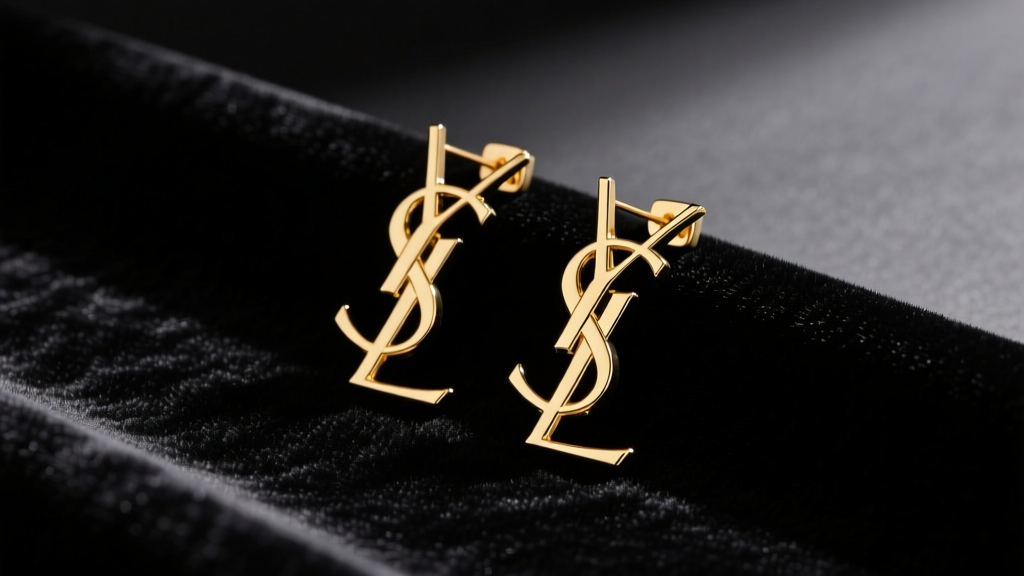
The True Cost of Saint Laurent Earrings in 2026
When navigating the luxury fashion jewelry market, few silhouettes carry the immediate cultural weight of Yves Saint Laurent. But beyond the iconic interlocking YSL monogram and the avant-garde runway aesthetics, a critical question remains for the discerning buyer: what is the actual financial and material value of Saint Laurent earrings? As we move through 2026, the gap between 'fashion jewelry' and 'fine jewelry' has become a major point of contention among luxury consumers. To properly assess the budget and value proposition of these pieces, we must dissect retail pricing tiers, material composition, and long-term wearability.
Unlike fine jewelry houses that trade in 18k solid gold and VVS diamonds, Saint Laurent’s earring collections are fundamentally rooted in high-end costume and fashion jewelry. You are investing in the brand’s design archive, the structural engineering of their hardware, and the undeniable cachet of the logo. Below is a breakdown of the current market pricing based on data aggregated from the official YSL boutique and luxury retailers.
2026 Pricing & Value Tiers
| Category | Style Example | Retail Price Range | Primary Materials | Est. Resale Retention |
|---|---|---|---|---|
| Entry-Level Studs | Enamel Logo Studs | $350 – $420 | Brass, Enamel, Gold-tone plating | 30% – 45% |
| Mid-Tier Hoops | Cassandra Huggies | $495 – $650 | Gold-tone Brass, Resin | 40% – 55% |
| Statement Drops | Crystal Cascade Chandeliers | $890 – $1,450 | Brass, Glass Crystals, Rhinestones | 50% – 70% (Archival) |
Note: Resale retention percentages apply to pieces kept in pristine condition with original packaging. Data sourced from Vestiaire Collective market trends.
Material Breakdown: What Are You Actually Paying For?
To accurately assess the value of Saint Laurent earrings, one must understand the metallurgy and gemology at play. The foundation of almost all YSL fashion earrings is brass—an alloy of copper and zinc. Brass is chosen for its excellent casting properties, allowing for the brand's sharp, architectural lines and intricate logo molds that softer metals like pure gold cannot hold without thickening.
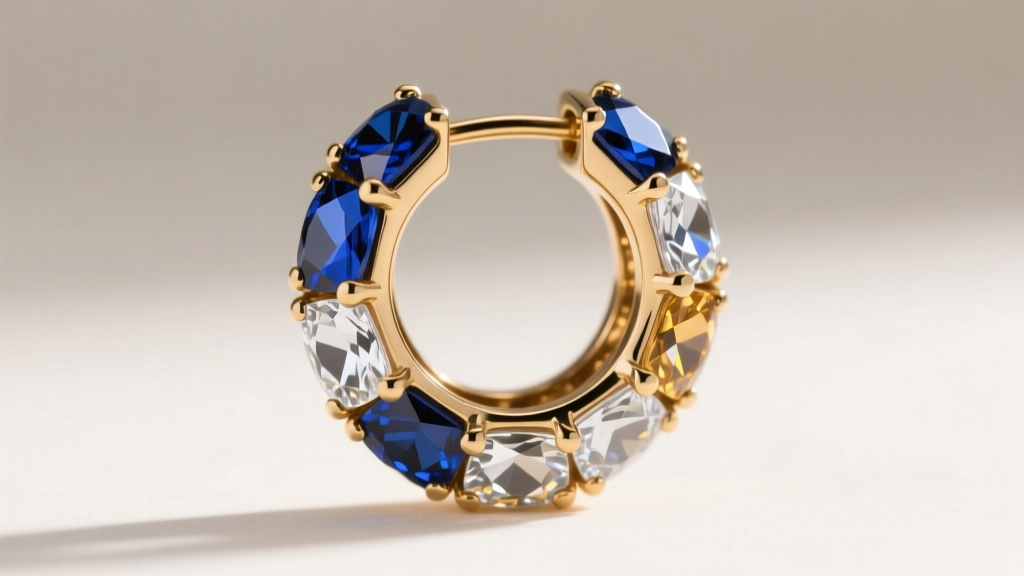
The Plating and E-Coating Process
The 'gold' or 'silver' finish is achieved through electroplating, typically depositing a layer of gold or rhodium ranging from 0.5 to 1.5 microns thick over the brass base. To prevent the copper in the brass from oxidizing and turning the wearer's skin green, Saint Laurent applies an electrophoretic deposition (e-coating) layer. This is a microscopic, clear polyurethane-like lacquer that seals the metal.
- The Vulnerability: Human sweat contains lactic acid, urea, and salts. Over time, the friction of putting on the earrings and the acidity of the skin will degrade the e-coating, particularly on the post and the back of the earring where it rests against the neck.
- The Crystal Elements: The 'diamonds' seen in YSL pavé hoops and chandelier drops are not precious stones. They are high-lead glass crystals or precision-cut acrylic. While they offer exceptional light refraction and a heavy, premium feel, they are fundamentally costume elements. A missing stone on a modern YSL piece requires a specialized third-party jeweler to source and set a matching Swarovski or Preciosa crystal, as YSL boutiques do not typically offer in-house stone replacement for fashion jewelry.
Durability & Wearability: The Heavy Drop Dilemma
One of the most frequent complaints among luxury buyers regarding statement Saint Laurent earrings is the sheer physical weight of the pieces. The brand is famous for its 3-inch to 5-inch cascading crystal drops and oversized metallic shield earrings. While visually stunning on the runway, these pieces introduce real-world ergonomic challenges.
The Physics of Lobe Fatigue
A heavy brass and glass earring can weigh anywhere from 15 to 35 grams per ear. When suspended from the earlobe, this creates a pendulum effect. Every time you turn your head, the kinetic energy transfers torque directly to the fistula (the piercing hole). Over an 8-hour wear period, this constant micro-tugging can lead to lobe fatigue, stretched piercings, or even migration of the piercing angle.
Furthermore, to support this weight, Saint Laurent engineers their earring posts to be thicker than standard fashion jewelry. While a typical commercial earring post is 20-gauge (0.81mm) or 18-gauge (1.02mm), heavy YSL drops often utilize 16-gauge (1.29mm) or even 14-gauge (1.63mm) wire for structural integrity. For buyers with older, delicate, or tightly healed piercings, inserting a 1.29mm YSL post can cause friction and micro-tearing.
Pro-Tips for Heavy YSL Earrings
- Use Polyurethane Support Patches: Brands like BlingDots make invisible, medical-grade adhesive patches that sit on the back of the earlobe, distributing the weight of heavy YSL drops across a wider surface area.
- Upgrade the Clutch: The standard metal butterfly backs provided by YSL can slip under the weight of a chandelier earring. Swapping them for heavy-duty silicone O-ring clutches provides a higher-friction grip on the thicker 16G posts.
- Alternate Piercings: If you have secondary lobe piercings or cartilage setups, consider having a professional jeweler solder a secondary support wire to distribute the load, though this voids the manufacturer warranty.
Resale Value and Investment Potential
When conducting a budget assessment of luxury goods, depreciation is a vital metric. Modern Saint Laurent earrings bought directly from a boutique or authorized retailers like Farfetch behave much like luxury handbags: they lose 30% to 50% of their retail value the moment they leave the store. They are not 'investments' in the traditional financial sense, as the intrinsic melt value of brass and glass is negligible.
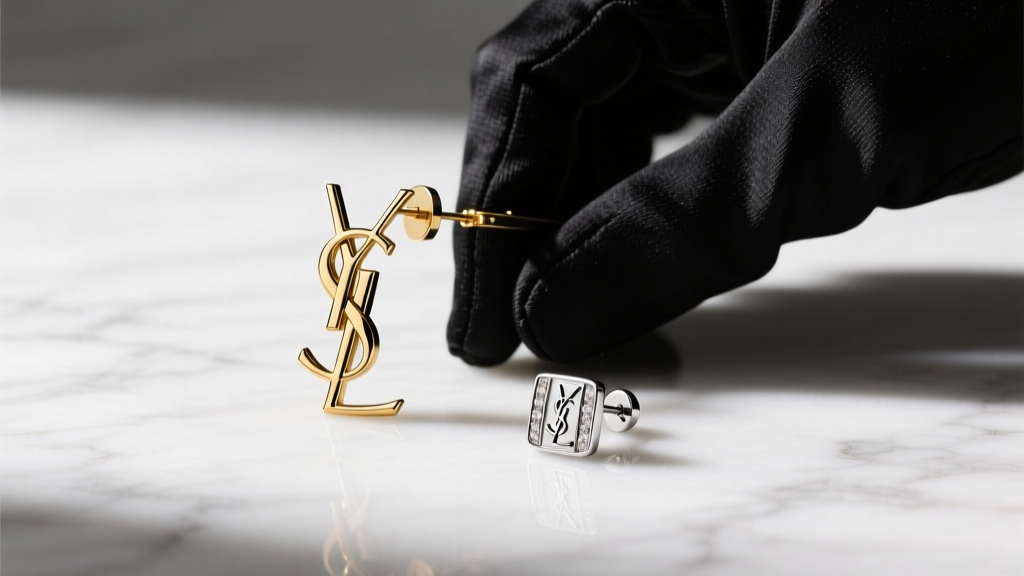
The Vintage Exception: Archival YSL
Where the true 'investment' value lies is in the secondary market for vintage Yves Saint Laurent. Pieces from the 1970s and 1980s, particularly those designed in collaboration with legendary Parisian jewelers like Robert Goossens or Roger Scemama, are highly collectible. These archival pieces often feature heavier gold-gilt finishes, poured glass (pâte de verre), and intricate baroque pearl settings. Because the brand transitioned through different creative directors (from Yves himself to Tom Ford, Stefano Pilati, Hedi Slimane, and Anthony Vaccarello), specific era-defining pieces—such as the 1980s heart-motif clip-ons or the 2012 Hedi Slimane tribal spikes—can actually appreciate in value, fetching 150% to 300% of their original retail price at auction houses and specialized vintage dealers.
Saint Laurent vs. The Competition: A Value Matrix
How do Saint Laurent earrings stack up against their direct competitors in the luxury fashion jewelry space? Here is a comparative framework to help you allocate your budget:
- Saint Laurent vs. Chanel: Chanel’s fashion jewelry often incorporates resin, faux pearls, and the CC logo, with a heavy emphasis on seasonal runway themes. Chanel retains slightly higher resale value due to the 'Chanel tax' and global demand, but Saint Laurent offers sharper, more architectural, and gender-neutral designs that age better in a minimalist wardrobe.
- Saint Laurent vs. Dior: Dior’s 'Tribales' and pearl-heavy designs are more classically feminine. However, Dior's use of resin pearls can scratch and cloud over time. Saint Laurent’s use of glass crystals and solid brass molds tends to survive physical wear and tear slightly better, provided the plating is maintained.
- Saint Laurent vs. Contemporary Fine Jewelry (e.g., Missoma, Mejuri): For the $500 price of a pair of YSL brass hoops, you could purchase solid 14k gold hoops from a contemporary fine jewelry brand. The fine jewelry route offers intrinsic metal value, hypoallergenic properties, and zero tarnishing. Choose YSL if you prioritize bold, oversized brand silhouettes; choose fine jewelry if you prioritize material longevity and daily 'never-take-off' wear.
The Final Verdict: Who Should Buy YSL Earrings?
Saint Laurent earrings are a masterclass in branding, silhouette, and hardware design, but they require a specific buyer mindset. They are not an asset class, nor are they indestructible heirlooms. They are premium, high-impact fashion accessories.
Buy Saint Laurent if: You need a powerful, recognizable statement piece for evening wear, editorial events, or to anchor a sharp, tailored wardrobe. You understand the maintenance required to protect gold-plated brass from moisture and cosmetics, and you are willing to utilize lobe-support accessories for their heavier runway drops.
Skip Saint Laurent if: You are seeking an everyday, waterproof, hypoallergenic earring that you can sleep and shower in. If your primary goal is material intrinsic value or passing down a solid-gold heirloom to the next generation, redirect your $500–$1,000 budget toward independent fine jewelers working in 18k gold and ethically sourced precious stones.


