The Ultimate Guide to Buying Nugget Earrings Hearts
Discover what to look for when buying nugget earrings hearts. Learn about gold purity, casting methods, gauge sizes, and pricing in our expert guide.

The Juxtaposition of Romance and Raw Texture
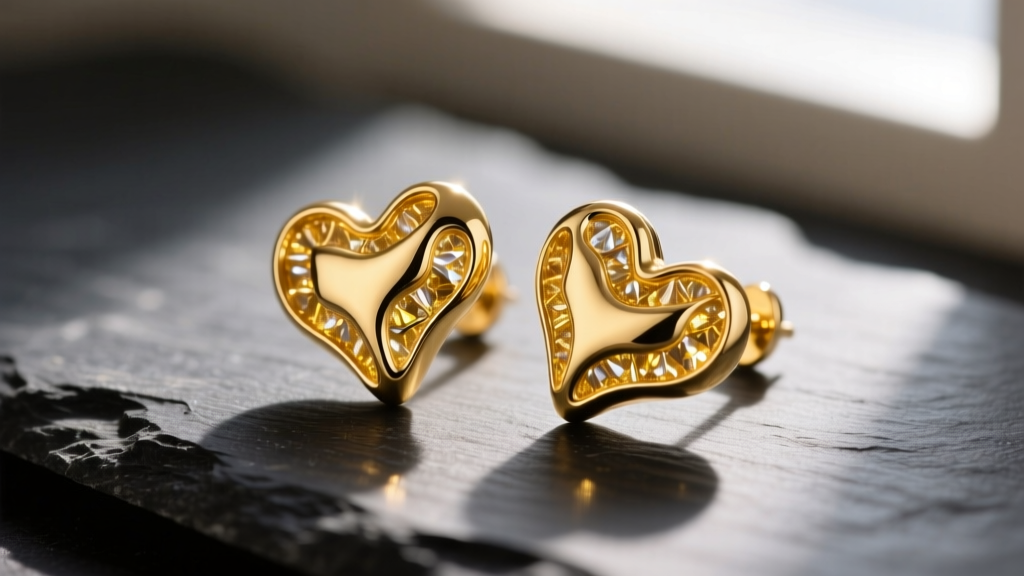
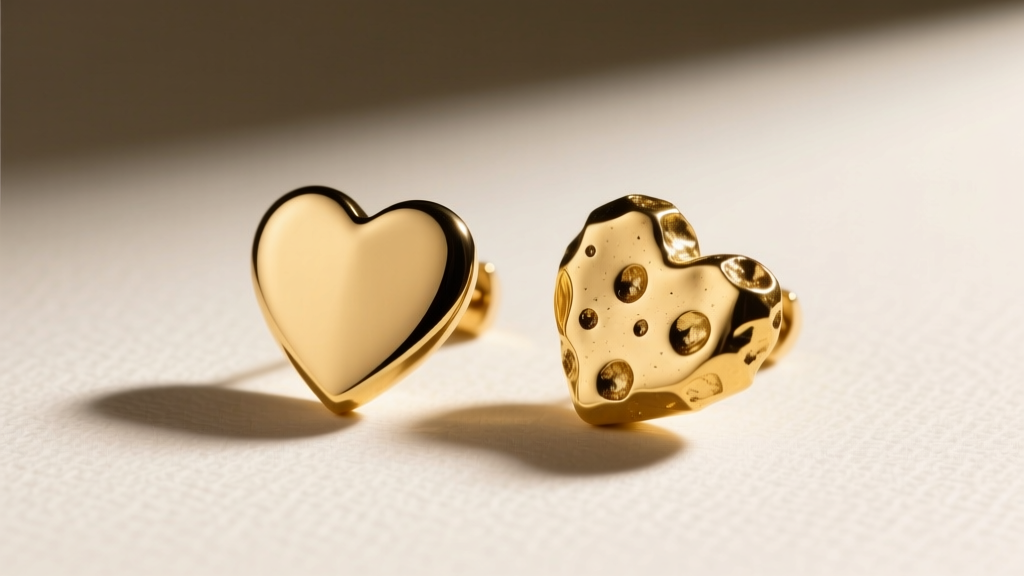
In the ever-evolving landscape of contemporary jewelry, few designs capture the zeitgeist quite like the combination of raw, unrefined textures with classic romantic motifs. Nugget earrings hearts represent a fascinating intersection of grunge-inspired organic metallurgy and timeless symbolism. The 'nugget' finish—characterized by its melted, hammered, or heavily reticulated surface—mimics the appearance of raw, unpolished gold or silver as it is pulled directly from the earth. When this rugged texture is applied to the universally beloved heart shape, the result is a piece of jewelry that feels both deeply personal and effortlessly edgy.
However, buying heavily textured jewelry requires a different set of evaluative criteria than purchasing smooth, high-polish pieces. The deep crevices, irregular edges, and often substantial weight of nugget-style hearts introduce unique challenges regarding durability, earlobe health, and long-term maintenance. This comprehensive buying guide will equip you with the metallurgical knowledge and structural insights necessary to invest in a pair of nugget heart earrings that will last a lifetime.
Material Selection: Karats, Alloys, and Tarnish
The foundation of any fine jewelry piece is its metal content. For nugget earrings, the choice of alloy dramatically affects both the visual warmth of the piece and its structural integrity.
14k vs. 18k Solid Gold
According to the Gemological Institute of America (GIA), the karat system dictates the ratio of pure gold to alloy metals. 18k gold (75% pure gold) offers a rich, buttery yellow hue that beautifully accentuates the shadows and highlights of a nugget texture. However, because pure gold is inherently soft, 18k pieces are more susceptible to scratching and deformation. Conversely, 14k gold (58.5% pure gold) is alloyed with higher amounts of copper, silver, and zinc. This makes 14k gold significantly harder and more durable, which is highly recommended for the earring posts and the structural core of heavier nugget hearts.
The Sterling Silver Conundrum
While 925 sterling silver nugget hearts are more accessible, they present a specific maintenance challenge. Silver naturally oxidizes and tarnishes when exposed to sulfur and moisture. In a smooth silver piece, tarnish is easily wiped away. In a deeply textured nugget piece, tarnish becomes trapped in the microscopic crevices of the 'melted' surface, turning the deep grooves black and making the piece look dirty rather than intentionally textured. If you opt for silver, ensure it has a high-quality rhodium or anti-tarnish plating, or be prepared for rigorous cleaning routines.
Manufacturing Methods: Lost-Wax Casting vs. Hand-Melted
Understanding how your nugget earrings hearts were created is crucial for assessing their quality and value. The 'nugget' look is achieved through two primary methods, each with distinct characteristics.
| Feature | Lost-Wax Casting | Hand-Melted / Torch-Forged |
|---|---|---|
| Process | Wax model is carved, encased in investment, burned out, and molten metal is forced into the mold. | Jeweler uses a high-heat torch to melt metal directly on a charcoal block, allowing surface tension to form organic shapes. |
| Texture Authenticity | Can look uniform or repetitive if the original wax model was not highly detailed. | 100% unique; natural ripples, pitting, and asymmetrical heart shapes. |
| Structural Risks | Prone to 'casting porosity' (tiny internal air bubbles) which can weaken the post attachment. | Denser metal grain structure, but post soldering requires high skill to avoid melting the delicate nugget edges. |
| Price Point | Generally lower due to scalability and mass production. | Premium pricing due to artisanal labor and one-of-a-kind nature. |
As detailed by jewelry manufacturing experts at Ganoksin, lost-wax casting is the industry standard for scalability. However, when buying cast nugget jewelry, inspect the surface closely. Sometimes, manufacturers use casting porosity (tiny pits caused by trapped gas during the pour) to simulate a 'raw' texture. True hand-melted nuggets will have smooth, flowing ripples caused by surface tension, rather than sharp, sandy pits.
Sizing, Weight, and the Cheese-Cutter Effect
One of the most critical, yet frequently overlooked, aspects of buying heavy statement earrings is the relationship between the weight of the pendant and the gauge (thickness) of the ear wire or post. Solid gold nugget hearts are dense. A moderately sized pair can easily weigh between 3 to 6 grams per earring.
Understanding Gauge Physics
Standard fashion earrings typically use 20-gauge (0.81mm) or even 22-gauge (0.64mm) posts. When you hang a 5-gram solid gold nugget heart from a 20-gauge wire, the pressure exerted on the delicate tissue of your earlobe fistula (the piercing hole) is immense. Over time, gravity and the weight of the metal will cause the thin wire to slowly slice through the skin—a phenomenon known in the body modification community as the 'cheese-cutter effect.' The Association of Professional Piercers (APP) consistently warns against wearing heavy jewelry on thin-gauge wires to prevent permanent lobe tearing and migration.
- Under 2 grams: Safe for standard 20G (0.81mm) posts.
- 2 to 4 grams: Requires a minimum of 18G (1.02mm) for long-term comfort and lobe health.
- Over 4 grams: Demands a sturdy 16G (1.29mm) post or a specialized heavy-duty ear wire to distribute the weight safely.
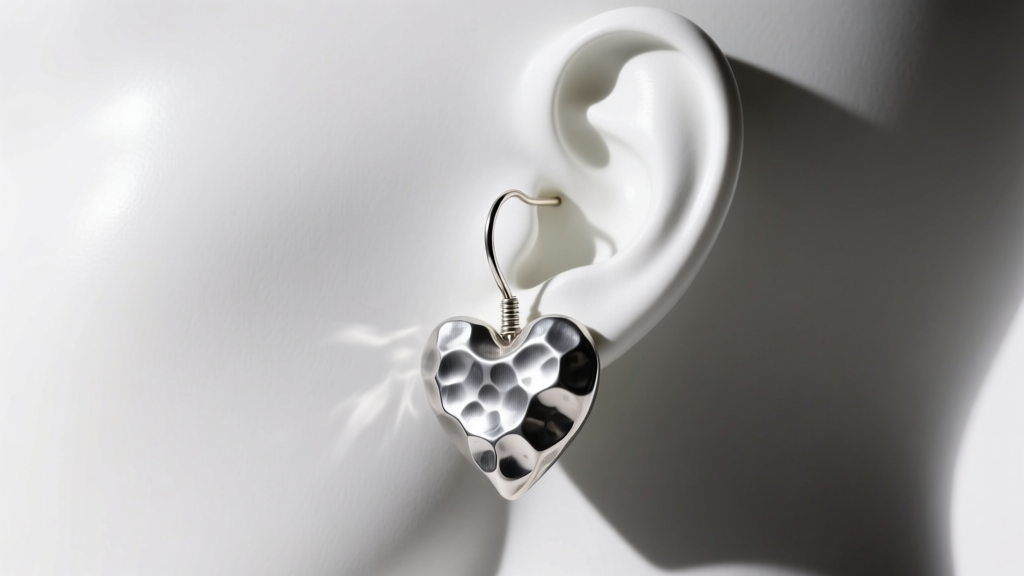
Always check the product specifications for the post gauge before purchasing. If a brand does not list the gauge size, it is almost certainly a flimsy 20G or 22G wire that will bend under the weight of a solid nugget heart.
Hardware and Backings: Securing the Weight
The earring backing is just as important as the post. Standard friction-backed 'butterfly' clasps rely on a small spring mechanism that easily wears out. When dealing with the irregular weight distribution of a nugget heart, standard backs often slip off, leading to lost jewelry. For pieces weighing over 3 grams, look for the following hardware upgrades:
- Screw Backs: These thread onto a specially grooved post, making it physically impossible for the earring to fall off without intentional unscrewing.
- Jumbo Silicone Discs: A wide, flat silicone back distributes the weight of the earring across a larger surface area of the earlobe, preventing the post from pulling at an awkward angle.
- Locking Latch Backs: Often found on heavier lever-back styles, these feature a mechanical hinge and a secure clasp that snaps firmly into place.
Pricing Tiers: What Should You Expect to Pay?
Navigating the pricing of nugget earrings hearts requires an understanding of material costs versus artisanal labor. Here is a realistic breakdown of what you should expect to pay in the current market:
Vermeil and Gold-Plated ($40 - $90)
These pieces feature a sterling silver or brass base coated in a thin layer of gold. While visually appealing initially, the friction of the nugget texture against hair and clothing will cause the plating to wear off rapidly, especially in the raised ridges of the 'melted' surface.
Solid 14k Gold (Cast) ($150 - $350)
This is the sweet spot for everyday luxury. You are paying for the intrinsic value of the gold melt weight plus the manufacturing cost. Ensure the piece is stamped with '14k' or '585' and comes with a certificate of authenticity detailing the exact gram weight.
Solid 18k Gold (Hand-Forged / Artisan) ($400 - $800+)
At this tier, you are investing in wearable art. Independent jewelers who hand-melt and forge each heart individually charge a premium for their time, expertise, and the bespoke nature of the piece. These are heirloom-quality items that will appreciate in value alongside the fluctuating spot price of gold.
Expert Tip: Always ask the seller for the exact gram weight of the gold. If a pair of 'solid gold' nugget hearts is priced suspiciously low and the seller refuses to disclose the weight, the piece is likely hollowed out (electroformed) or heavily gold-plated over a base metal core.
Maintenance: Cleaning Deep Crevices
The very texture that makes nugget earrings hearts so visually striking also makes them magnets for lotion, soap scum, and environmental dust. Avoid ultrasonic cleaners for heavily textured or hand-soldered pieces, as the high-frequency vibrations can sometimes weaken delicate solder joints where the post meets the heart.
Instead, adopt a gentle, manual cleaning routine. Fill a small bowl with warm water and a few drops of mild, phosphate-free dish soap. Let the earrings soak for ten minutes to loosen debris. Then, use a soft-bristled baby toothbrush to gently agitate the crevices of the nugget texture. Rinse thoroughly under lukewarm water and pat dry with a lint-free microfiber cloth. This routine, performed once a month, will keep the shadows deep and the highlights brilliantly reflective, ensuring your organic heart motifs remain as captivating as the day you bought them.


