The Ultimate Guide to Buying Flower Pearl Earrings
Discover how to choose the perfect flower pearl earrings. Learn about pearl types, metal grades, sizing, and pricing in our expert buying guide.

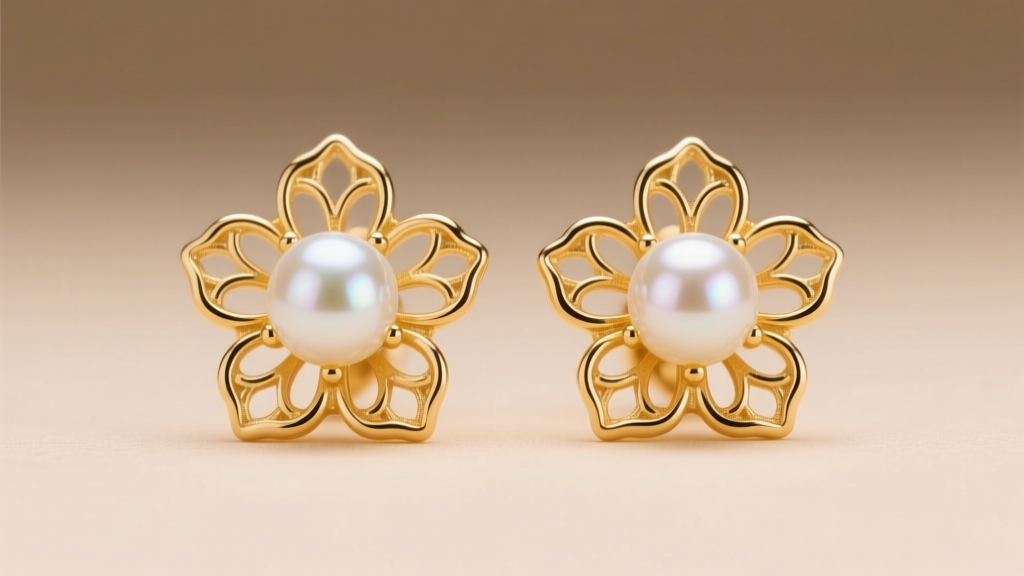
The Intersection of Botanical Design and Organic Gems
Floral motifs have been a staple in jewelry design for centuries, but when paired with the iridescent depth of pearls, they create a uniquely balanced aesthetic. Buying flower pearl earrings requires more than just picking a pretty design; it demands an understanding of gemological quality, metallurgical integrity, and structural engineering. Unlike simple stud earrings, floral designs introduce complex geometries—petals, stems, and layered settings—that can compromise durability if poorly manufactured. In this comprehensive buying guide, we break down exactly what to look for when investing in floral pearl jewelry, ensuring your pieces withstand daily wear while maintaining their botanical brilliance.
Decoding the Pearl: Akoya, Freshwater, and South Sea
The center of any flower pearl earring is typically the pearl itself, acting as the pistil or core of the bloom. The type of pearl dictates not only the price but the luster, overtone, and longevity of the piece. According to the Gemological Institute of America (GIA), nacre thickness and luster are the primary drivers of pearl value.
| Pearl Type | Average Size | Luster Profile | Nacre Thickness | Best Floral Application |
|---|---|---|---|---|
| Akoya | 6.0mm - 8.5mm | Mirror-like, sharp | 0.4mm - 0.8mm+ | Delicate, precise 5-petal studs |
| Freshwater | 7.0mm - 10.0mm | Soft, satiny glow | Solid nacre | Baroque/organic petal clusters |
| South Sea | 9.0mm - 14.0mm+ | Deep, luxurious | 2.0mm - 4.0mm | Bold, statement drop florals |
Expert Insight: When examining Akoya pearls in floral settings, inspect the drill hole where the pearl meets the metal cup. If the nacre is too thin (under 0.3mm), the edge of the drill hole will appear chalky or prone to flaking. Always opt for Akoya pearls with a minimum nacre thickness of 0.4mm, ideally 0.8mm for heirloom-quality earrings.
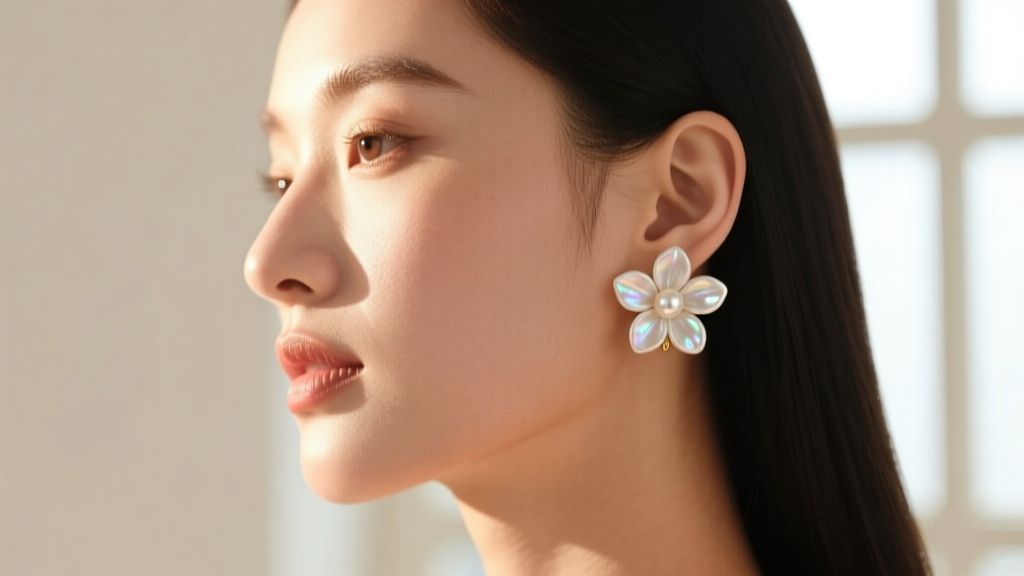
The Anatomy of a Floral Pearl Setting
The most common failure point in flower pearl earrings is not the metal, but the connection between the pearl and the floral base. Understanding how these components are assembled will save you from premature repairs.
Casting vs. Stamping
High-end floral earrings are typically created using lost-wax casting, which allows for intricate, three-dimensional petal textures and smooth, rounded edges. Cheaper alternatives use die-stamping, where thin sheets of metal are punched into shapes. Stamped petals often have sharp, unfinished edges that can snag on hair or clothing. Run your finger along the edge of the petals; if it feels like a knife edge, avoid the piece.
The Cup, The Peg, and The Adhesive
Pearls are almost never prong-set. Instead, they are half-drilled and mounted onto a metal peg (post) that sits inside a decorative cup.
- The Peg: Must be at least 0.8mm (approx. 20-gauge) in diameter. Thinner pegs will bend under the weight of an 8mm pearl, causing the flower to droop.
- The Cup: Should cover at least 15% of the pearl's base. A shallow cup provides inadequate surface area for adhesion.
- The Adhesive: Jewelers use a two-part jeweler's epoxy. Avoid earrings where the glue is visibly seeping out from the cup's rim, as this indicates sloppy assembly and potential degradation from skin oils.
Metal Purity and Plating Pitfalls
The metal forming the petals must complement the pearl without overwhelming it, while also resisting tarnish and wear. For a deep dive into metal standards, resources like Pearl Paradise's Education Center offer excellent guidelines on pairing metals with pearl overtones.
Solid Gold vs. Vermeil
14k Solid Gold: The gold standard for daily-wear floral studs. 14k offers the perfect balance of rich color and structural rigidity. 18k gold is softer, making thin, elongated petals more susceptible to bending.
Gold Vermeil: Vermeil consists of a thick layer of gold (minimum 2.5 microns) over sterling silver. While beautiful, the high-friction edges of floral petals are prone to accelerated wear. If you buy vermeil flower earrings, ensure the petals are rounded and not razor-thin, as thin edges will expose the silver core within months of daily wear.
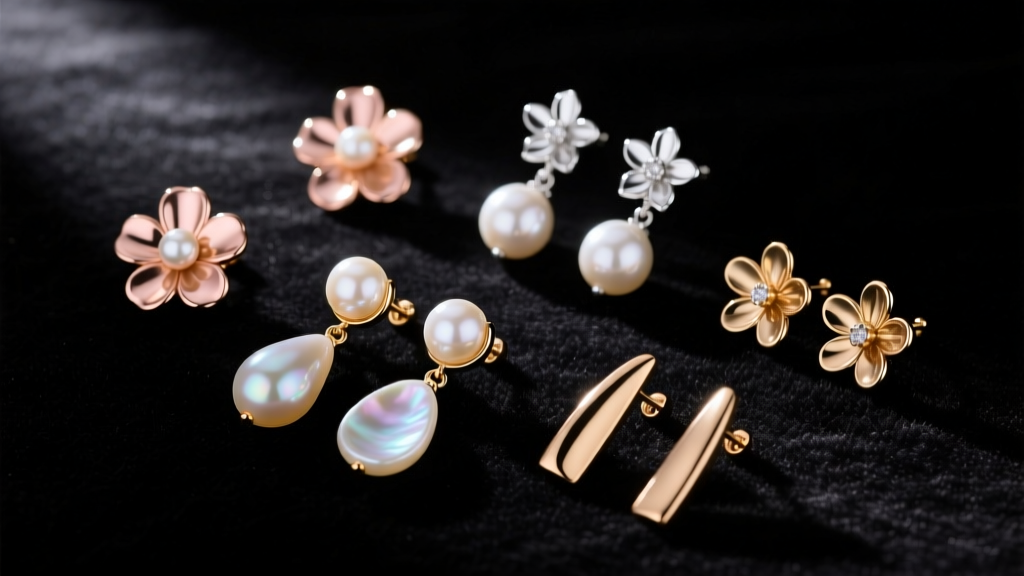
Sizing and Proportions for Face Shapes
Floral earrings carry visual weight. The spread of the petals (the diameter of the flower) should be chosen based on your facial geometry to ensure harmony rather than overwhelming your features.
- Round Faces: Opt for elongated floral dangles or asymmetrical petal designs that create vertical lines. Avoid wide, circular lotus or daisy studs that mimic the roundness of the face.
- Square Faces: Choose flowers with soft, curved, and overlapping petals (like peonies or roses). The organic curves will soften a strong jawline.
- Heart-Shaped Faces: Teardrop-shaped floral drops or studs where the petals point downward help balance a narrower chin.
- Oval Faces: Highly versatile; you can pull off bold, oversized 15mm+ statement floral blooms as well as micro-studs.
Pricing Tiers: What You Should Actually Pay
Navigating the pricing of flower pearl earrings can be confusing due to the variable costs of both the gemstone and the complex metalwork. Use these 2026 market brackets as a baseline to ensure you aren't overpaying for inferior materials.
- $40 - $120 (Entry Level): Freshwater pearls (often button or near-round shapes) set in gold vermeil or rhodium-plated sterling silver. Petals are usually die-stamped.
- $250 - $650 (Mid-Range): High-luster Akoya pearls (6.5mm - 7.5mm) set in 14k solid yellow or white gold. Lost-wax cast petals with detailed milgrain or sandblasted textures.
- $1,200 - $3,500+ (Luxury): South Sea or high-end Hanadama Akoya pearls set in 18k gold, often accented with diamond pavé on the petal edges or stems.
Care and Maintenance to Prevent Petal Tarnish
The intricate crevices of floral designs are magnets for cosmetics, hairspray, and dead skin cells, which can dull both the metal and the pearl's luster.
Pro-Tip: Never use ultrasonic cleaners on flower pearl earrings. The high-frequency vibrations will shatter the epoxy bond holding the pearl to the floral cup, causing the gemstone to detach and potentially chip against the metal petals. Instead, use a soft, damp microfiber cloth to gently wipe the petals, and a dry, untreated polishing cloth for the metal.
By prioritizing nacre thickness, structural integrity in the casting, and appropriate metal gauges, you can confidently select flower pearl earrings that are not only breathtaking but engineered to last a lifetime.


