The Complete Buying Guide to Secure Round Earring Backs
Discover how to choose the best round earring backs for your studs. Compare materials, gauge sizes, and mechanisms to prevent lost jewelry.

Why the Right Earring Back Matters More Than the Stud
When investing in fine jewelry, buyers typically obsess over diamond clarity, gold purity, or gemstone origin. Yet, the most critical component for safeguarding that investment is often an afterthought: the earring back. A loose or poorly engineered clasp is the number one cause of lost stud earrings. In 2026, with the rising costs of precious metals and gemstones, securing your jewelry with precision-engineered round earring backs is no longer optional—it is a necessity.
Round earring backs, which encompass spherical screw backs, dome-shaped friction clasps, and circular silicone stoppers, offer superior ergonomics and security compared to traditional flat butterfly backs. They prevent hair snagging, distribute weight more evenly across the earlobe, and provide a comfortable sleeping experience. This comprehensive buying guide breaks down the exact material grades, gauge tolerances, and locking mechanisms you need to look for when purchasing or upgrading your earring backs.
Anatomy of Round Earring Backs: Types & Mechanisms
Not all round backs function the same way. The term 'round' refers to the external profile of the clasp, but the internal mechanism dictates its security level. Here is a deep dive into the three primary categories.
Spherical Screw Backs
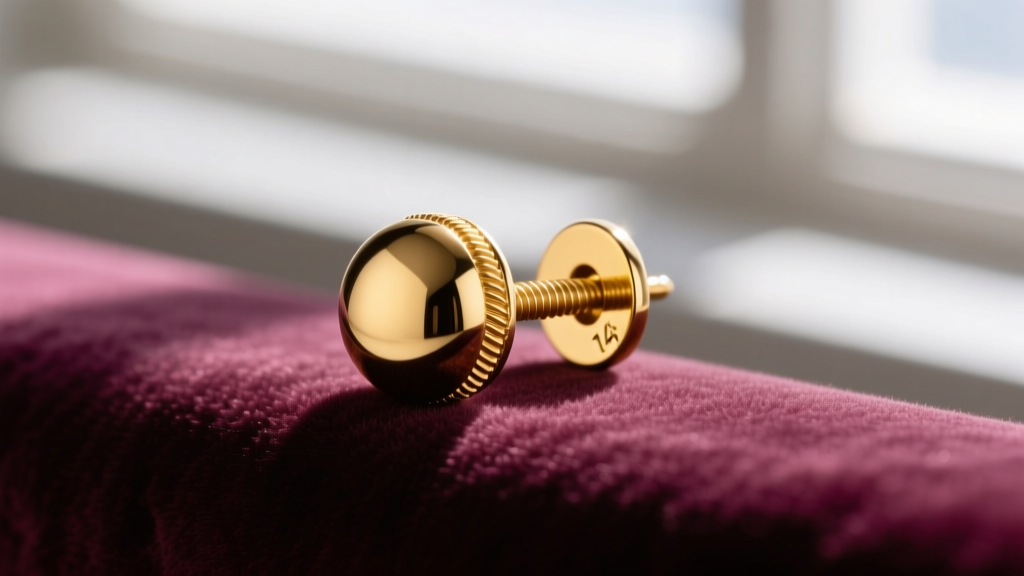
Spherical screw backs are the gold standard for high-value diamond and gemstone studs. The post is threaded, and the round back screws onto it, creating a mechanical lock that cannot be pulled off by accident. Modern 2026 manufacturing utilizes CNC-machined threading, which has largely eliminated the cross-threading issues that plagued older, mass-market screw backs. When buying, look for a 'double-thread' or 'precision-cut' designation to ensure smooth engagement without stripping the post.
Dome-Shaped Friction Backs (Push Backs)
These feature a rounded, domed exterior that houses an internal metal spring or tension clutch. Unlike flat butterfly backs that catch on hair and sweaters, the smooth dome shape allows hair to glide over the clasp. The internal tension mechanism grips the notched groove on the earring post. While convenient for daily wear, they rely entirely on friction and are not recommended for heavy stones or active lifestyles.
Round Silicone O-Rings & Stoppers
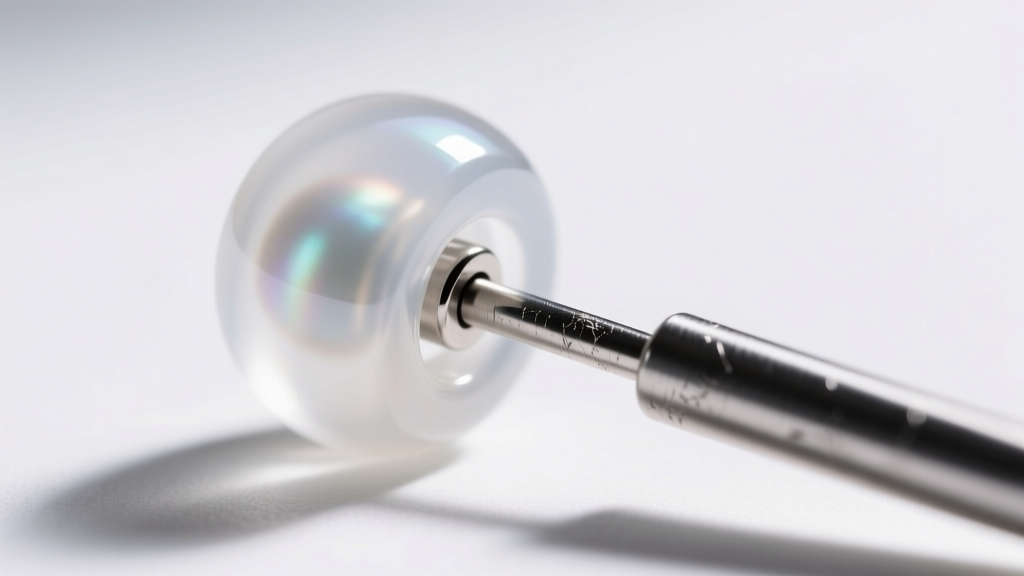
For hypoallergenic needs and active wearers, medical-grade silicone round stoppers are highly effective. They slide over the post and grip the metal through high-friction elastomer tension. In recent years, antimicrobial silicone formulations have been introduced, preventing the buildup of sebum and bacteria behind the earlobe—a common cause of contact dermatitis.
Material Grades & Hypoallergenic Requirements
The skin behind the earlobe is highly vascular and sensitive. According to the Mayo Clinic, nickel allergy is one of the most common causes of allergic contact dermatitis, often triggered by cheap jewelry alloys. When buying round earring backs, material verification is critical.
| Material Grade | Type of Back | Nickel-Free? | Avg. Price (Per Pair) | Best Application |
|---|---|---|---|---|
| 14k / 18k Solid Gold | Screw & Dome Friction | Yes (if alloyed correctly) | $45 - $120 | High-value diamond studs |
| Platinum (PT950) | Screw & La Pousette | Yes | $150 - $250 | Heavy, luxury gemstone studs |
| 316L Surgical Steel | Dome Friction | No (contains trace nickel) | $5 - $15 | Budget-friendly daily wear |
| ASTM F138 Titanium | Screw & Friction | Yes (100% biocompatible) | $20 - $40 | Sensitive skin & fresh piercings |
| Medical-Grade Silicone | Round O-Ring Stoppers | Yes | $3 - $8 | Active wear, sleeping, sports |
Note: Always verify that white gold backs are rhodium-plated or alloyed with palladium rather than nickel to avoid allergic reactions.
Gauge Sizing: Matching the Back to the Post
A frequent and costly mistake buyers make is mismatching the earring back gauge to the post gauge. Earring posts are manufactured in standard wire gauges, and a round screw back designed for a 20-gauge post will completely strip if forced onto an 18-gauge post.
- 20 Gauge (0.81mm): The industry standard for most fine jewelry diamond and gemstone studs. Most spherical screw backs are cut to this exact tolerance.
- 18 Gauge (1.02mm): Common for slightly heavier studs, vintage estate jewelry, and some cartilage piercings. Requires specific 18G threaded backs.
- 16 Gauge (1.29mm): Typically reserved for cartilage studs and heavier body jewelry. Standard fine jewelry backs will not fit.
Before purchasing replacement round backs, measure your earring post with a digital caliper. If the post lacks threading entirely, you cannot use a screw back; you must opt for a dome friction back or a silicone stopper.
Troubleshooting Common Round Back Failures
Even high-quality round earring backs can experience mechanical failure over time. Here is how to diagnose and fix the most common issues:
1. Stripped Screw Threads
The Problem: The spherical back spins endlessly without tightening.
The Cause: Cross-threading during application or forcing a 20G back onto an 18G post.
The Fix: The back is usually salvageable, but the post may need to be re-threaded by a jeweler. Always align the back perfectly straight before twisting.
2. Loss of Friction Tension
The Problem: Dome friction backs slide off the post with a light tug.
The Cause: The internal metal clutch has stretched out from repeated use, or the notches on the earring post have worn smooth.
The Fix: Replace the friction back. To prolong the life of new backs, push them on and pull them off by the sides rather than yanking them from the top.
3. Silicone Tearing
The Problem: Round silicone stoppers split down the middle.
The Cause: Exposure to harsh chemicals (like chlorine or alcohol-based cleaners) which degrade the elastomer, or stretching over a post with a sharp, unpolished edge.
The Fix: Discard torn silicones immediately as they harbor bacteria. Replace them every 6 to 12 months and clean them with mild soap and water.
Final Verdict: Which Round Back Should You Buy?
If you are securing high-value jewelry (stones over 0.50 carats or heirloom pieces), spherical screw backs in 14k gold or platinum are the only responsible choice. The mechanical lock provides peace of mind that friction simply cannot match. For everyday, lower-value studs, dome-shaped friction backs offer a smooth, snag-free profile that is vastly superior to traditional butterfly clasps. Finally, keep a pack of medical-grade silicone round stoppers on hand for the gym, sleeping, or traveling, as recommended by experts for minimizing earlobe irritation. By matching the correct gauge, material, and mechanism to your specific lifestyle, you ensure your jewelry stays exactly where it belongs.


