The 2026 Trend Guide to Styling Large Black Earrings
Discover the 2026 trend forecast for large black earrings. Learn how to style oversized onyx, acrylic, and enamel drops for every face shape.


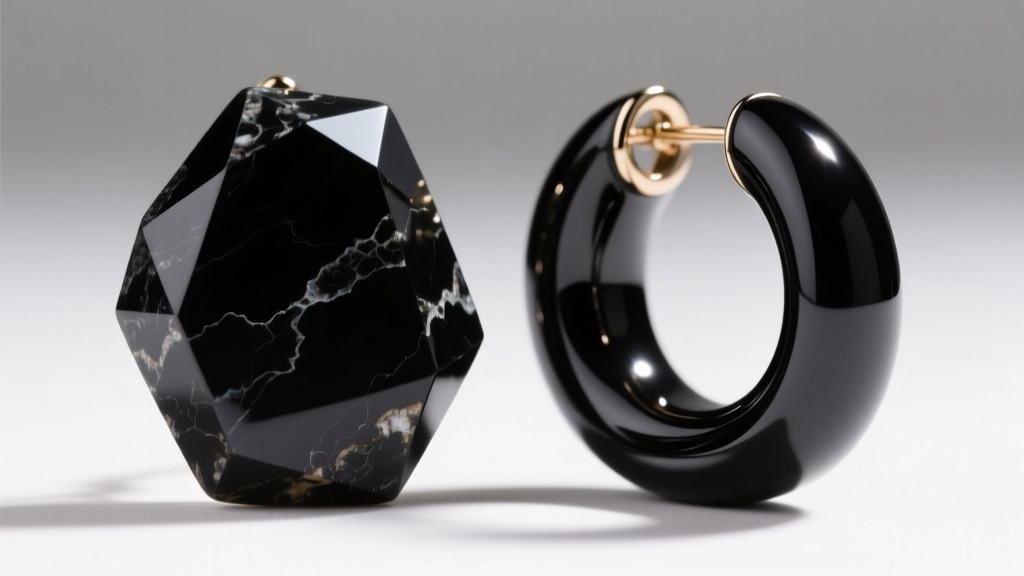
The evolution of ear styling in 2026 marks a definitive pivot away from the hyper-minimalism of the early 2020s. As runway forecasts and street-style analytics confirm, bold, architectural silhouettes are dominating the jewelry space. At the forefront of this movement are large black earrings—statement pieces that leverage negative space, high contrast, and dark maximalism to anchor both avant-garde and everyday wardrobes. Whether crafted from matte acrylic, oxidized silver, or deep black onyx, these oversized pieces demand an understanding of proportion, material science, and structural integrity to be worn comfortably and stylishly.
The Shift to Dark Maximalism in 2026
While "quiet luxury" championed microscopic gold studs and barely-there huggies, the 2026 aesthetic embraces deliberate weight and visual gravity. Large black earrings serve as a focal point, drawing the eye and framing the jawline without the high-reflectivity flash of traditional diamonds or polished gold. This trend aligns with a broader cultural shift toward moody, romantic, and neo-gothic influences in contemporary fashion. Designers are utilizing blackened metals, vulcanized rubber, and carved gemstones to create pieces that feel both ancient and futuristic.
However, scaling up earring size introduces specific challenges. A 50-millimeter black resin hoop behaves entirely differently than a 50-millimeter solid onyx drop. Understanding these material differences is crucial for both comfort and longevity.
Material Breakdown: Weight, Durability, and Price
Not all black earrings are created equal. The material dictates not only the price point but the physical toll on your earlobes. Below is a comparative analysis of the most common materials used in oversized black earrings this year.
| Material | Weight Profile (per earring) | Durability (Mohs Scale) | Average Price Range | Common Failure Modes |
|---|---|---|---|---|
| Black Onyx (Dyed Agate) | Heavy (15g - 30g+) | 6.5 - 7.0 | $40 - $150 | Color bleeding onto skin with sweat; chipping at edges. |
| Black Spinel (Natural) | Medium-Heavy (10g - 20g) | 8.0 | $120 - $400+ | Facet abrasion if stored poorly; prong loosening. |
| Matte Acrylic / Resin | Ultra-Light (2g - 6g) | 2.0 - 3.0 | $25 - $85 | Deep scratching; snapping at the wire drill-hole. |
| Black Enamel on Brass | Medium (8g - 15g) | N/A (Surface) | $35 - $120 | Enamel chipping upon impact; base metal tarnishing. |
| Blackened Sterling Silver | Medium (10g - 18g) | 2.5 - 3.0 | $90 - $350 | Oxidation (blackening) rubbing off on high-friction edges. |
According to the Gemological Institute of America (GIA), true black onyx is incredibly rare; most commercial "onyx" earrings are actually gray agate treated with sulfuric acid and heat. While this yields a beautiful, uniform black, the dye can sometimes leach when exposed to high acidity or heavy perspiration, making acrylic or natural black spinel superior choices for all-day, high-sweat environments.
Structural Integrity: Gauge Sizes and Lobe Health
The most overlooked aspect of wearing large black earrings is the biomechanical stress placed on the earlobe. A solid stone drop earring can easily exceed 25 grams. For context, a standard U.S. quarter weighs 5.67 grams. Suspending the equivalent of four quarters from a single 18-gauge (1.02mm) puncture hole will inevitably lead to lobe stretching, micro-tearing, and eventual sagging.
The Hardware Hierarchy
- 18-Gauge (1.02mm): The industry standard for lightweight and medium earrings. Avoid this wire thickness for any solid stone earring exceeding 12 grams.
- 16-Gauge (1.29mm): The optimal choice for heavy architectural drops. The 25% increase in wire thickness distributes the shear force across a wider surface area of the fistula (piercing hole), drastically reducing the "cheese-cutter" effect.
- 14-Gauge (1.63mm): Reserved for extreme statement pieces or stretched lobes. Standard piercings will require gradual stretching to accommodate this size.
Weight Distribution and Support Systems
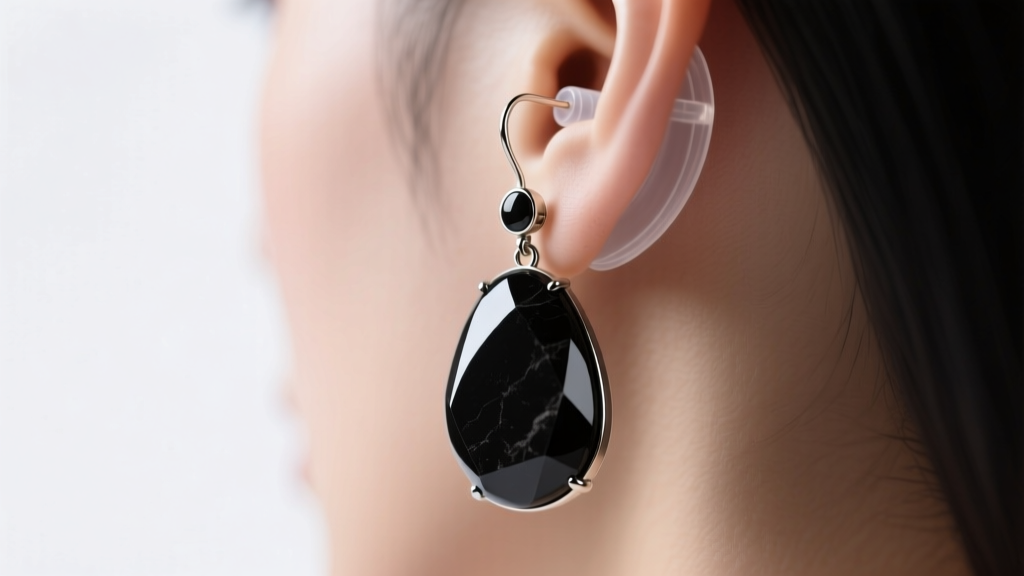
To wear heavy oversized black earrings safely, you must upgrade your earring backs. Standard butterfly friction backs are insufficient for heavy drops; they concentrate all the weight on a tiny point behind the lobe. Instead, utilize clear silicone O-ring supports or clip-on ear huggers that brace against the upper cartilage to lift the lobe. The American Academy of Dermatology (AAD) emphasizes that chronic traction from heavy jewelry can cause permanent tissue thinning and contact dermatitis if the metal hardware contains nickel—a common culprit in cheap, heavy brass alloy earrings. Always verify that the wire hook is surgical steel, titanium, or solid gold, even if the decorative body is base metal.
Face Shape Mapping for Oversized Silhouettes
Because large black earrings command immense visual weight, they actively alter the perceived geometry of your face. Selecting the right shape is a matter of optical illusion and balancing proportions.
Angular and Square Faces
If you possess a strong, angular jawline or a square face shape, avoid harsh, geometric black earrings (like large black squares or sharp triangles). These will echo and exaggerate your natural angles, creating a severe look. Instead, opt for large black teardrops, oversized circular hoops, or fluid, asymmetrical resin melts. The curves of these pieces will soften the jawline, while the dark color provides the necessary contrast without adding visual "width" to the lower half of the face.
Round and Oval Faces
Round faces benefit immensely from the elongating effect of long, linear black earrings. A pair of 3-inch blackened silver bar drops or narrow rectangular onyx pendants will draw the eye vertically, creating the illusion of a longer, more sculpted neck and face. Oval faces possess the most versatile proportions and can comfortably carry the trend's boldest iterations, including massive, earlobe-hugging black acrylic shields and wide geometric cuffs.
Styling Framework: Necklines and Hair Placement
Large black earrings are not merely accessories; they are structural elements of your overall outfit. To maximize their impact in 2026, adhere to the following styling frameworks:
"Dark, oversized ear styling requires negative space to breathe. If the earring is massive, the neckline must be minimalist. High collars and black turtlenecks create a seamless, editorial canvas for matte black acrylics and oxidized metals."
- The Monochromatic Matrix: Pairing matte black resin earrings with a black silk blouse creates a tonal, textural masterpiece. The difference in light absorption between the matte jewelry and the shiny silk is where the luxury lies.
- The High-Contrast Pop: Wearing oversized black onyx drops against a crisp, oversized white poplin shirt or a stark cream blazer. The dark earrings act as visual anchors, framing the face sharply against the bright fabric.
- Hair Placement Rules: For earrings over 40mm in length, hair should be swept up into a severe claw clip or a tight chignon. Allowing hair to cascade over large black earrings creates visual clutter and increases the risk of the earring wire snagging on stray strands, which can lead to sudden lobe trauma.
Final Thoughts on the 2026 Ear Trend
The dominance of large black earrings in 2026 is a testament to fashion's cyclical return to bold, unapologetic self-expression. By prioritizing material integrity, respecting the biomechanics of your earlobes, and strategically mapping silhouettes to your face shape, you can master this trend with both confidence and comfort. Whether you are investing in natural black spinel or experimenting with architectural acrylic, the key lies in treating these pieces not as mere afterthoughts, but as the foundational anchors of your personal style.


