Beginner's Guide to Buying Silver Pearl Hoop Earrings
Discover how to choose, style, and care for silver pearl hoop earrings. Learn about pearl grades, sterling silver hallmarks, and hoop sizing.


Why Silver and Pearls Remain a Timeless Pairing
As we navigate the jewelry landscape of 2026, the industry continues to see a massive resurgence in heritage-inspired, organic materials. Among the most versatile and enduring combinations are silver pearl hoop earrings. For beginners, the intersection of luminous pearls and reflective silver offers a masterclass in balancing contrast and elegance. However, the market is flooded with misleading descriptions, plated base metals masquerading as solid silver, and coated shell beads sold as genuine pearls. This guide will decode the metallurgy, gemology, and mechanics you need to know to make an informed, confident purchase.
Decoding the Materials: Sterling Silver & Pearl Types
Silver Grades: What 925 Actually Means
When shopping for high-quality silver jewelry, you will frequently encounter the "925" stamp. According to The UK Assay Office, sterling silver must contain exactly 92.5% pure silver and 7.5% alloy metals—usually copper. Pure silver (999) is too soft to hold the structural tension of a hoop earring closure; the copper provides the necessary tensile strength. However, copper is also the culprit behind silver tarnish, as it reacts with sulfur in the air. To combat this, premium silver pearl hoop earrings are often plated with a microscopically thin layer of rhodium, a platinum-group metal that provides a brilliant white finish and acts as a tarnish barrier.
Pearl Varieties: Freshwater vs. Akoya vs. Shell
Pearls are organic gemstones, and their value is dictated by luster, surface cleanliness, shape, and nacre thickness. The Gemological Institute of America (GIA) emphasizes that nacre thickness is the primary indicator of a pearl's longevity. Thin-nacre pearls will eventually peel or crack, especially when subjected to the friction of a hoop earring's wire. Here is a breakdown of what you will find on the market:
| Pearl Type | Origin | Nacre Thickness | Price Range | Best For |
|---|---|---|---|---|
| Freshwater | China | 0.5mm - 2.0mm | $30 - $150 | Everyday wear, durability |
| Akoya | Japan/China | 0.8mm+ | $200 - $800+ | Mirror-like luster, formal events |
| Shell Pearl | Lab/Molded | N/A (Coated) | $15 - $50 | Budget-friendly, travel |
For beginners, high-grade freshwater pearls offer the best intersection of durability and price. Because they are solid nacre throughout (tissue-nucleated), they are far less prone to chipping than bead-nucleated saltwater pearls with thin nacre layers.
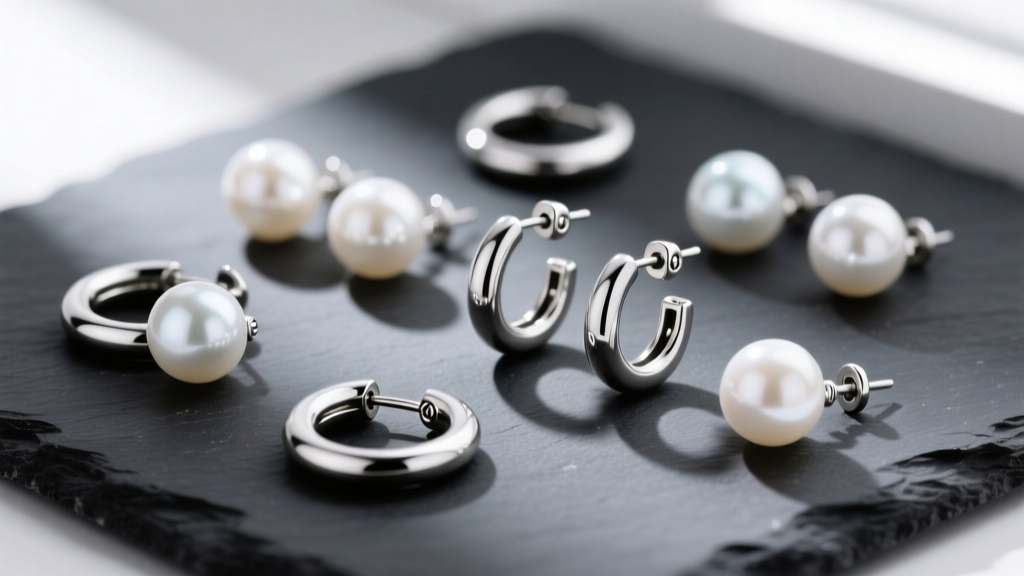
Hoop Mechanics & Sizing for Beginners
Diameter and Wire Gauge
The comfort of your earrings relies heavily on the wire gauge—the thickness of the metal that actually passes through your piercing. Standard earlobe piercings are typically done at 20G (0.81mm) or 18G (1.02mm). If you buy silver pearl hoop earrings with a 16G (1.29mm) wire, they will feel tight and may cause micro-tears in un-stretched lobes. Conversely, a 22G (0.64mm) wire is too thin and can easily bend out of shape or cause the "cheese-cutter effect," where the thin wire slowly migrates through the earlobe tissue under the weight of the pearls.
Regarding diameter, sizing dictates the visual weight of the earring:
- 12mm - 15mm (Huggies): Snug against the earlobe. Ideal for a minimalist look or for wearing alongside multiple cartilage piercings.
- 20mm - 25mm (Small Hoops): The most versatile size. The hoop clears the earlobe, allowing attached pearls to dangle freely without catching on hair.
- 30mm - 40mm (Medium/Large Hoops): Makes a bold statement. Ensure the metal is lightweight so the pearls do not drag the earlobe down over time.
Closure Types and Failure Modes
The closure is the most common point of failure in hoop earrings. Understanding the mechanics will save you from losing a cherished piece.
"Continuous wire hoops are elegant but fragile. If you bend the wire to open it, you are work-hardening the sterling silver. Over time, the metal will fatigue and snap. Always use hinged closures for daily wear." — Master Jeweler Insight
- Hinged Snap Closure: Features a hidden hinge and a grooved post that clicks into the opposite end. Highly secure and beginner-friendly.
- Clicker Closure: Common in cartilage hoops, utilizing a tension-based segment. Requires a specific snapping tool or strong fingernails to open safely.
- Continuous Wire: A single piece of wire that loops through the ear. Least secure for heavy pearl attachments due to the risk of bending.
The Face Shape & Styling Matrix
Styling silver pearl hoop earrings is not just about personal preference; it is about geometric balance. The interplay between the circular hoop and the spherical pearl can be used to soften angles or add necessary curves to your facial structure.
- Round Faces: Avoid perfectly round, small hoops with a single centered pearl, as this echoes the face's natural geometry. Instead, opt for elongated, oval-shaped hoops or hoops where the pearls dangle vertically below the metal circle to create a lengthening illusion.
- Square Faces: Strong jawlines benefit from the softening effect of curved jewelry. Medium-sized (30mm) circular hoops with clustered, asymmetrical pearl arrangements help diffuse sharp angles.
- Heart-Shaped Faces: With a wider forehead and narrow chin, you want to add visual weight to the lower half of the face. Teardrop-shaped hoops with a single, large freshwater pearl resting at the bottom apex provide perfect balance.
- Oval Faces: The most versatile shape. Almost any configuration of silver pearl hoop earrings will work, from tiny 12mm pearl-studded huggies to dramatic 50mm oversized hoops.
Care & Maintenance: Preventing Tarnish and Pearl Damage
Maintaining the dual materials of silver and pearl requires a nuanced approach. What cleans the metal might destroy the gemstone.
The "Last On, First Off" Rule
Pearls are exceptionally sensitive to chemicals. Their Mohs hardness rating sits between 2.5 and 4.5, making them soft, but their real vulnerability is their calcium carbonate composition. Acids, perfumes, hairsprays, and even natural skin oils can etch the nacre, dulling the pearl's luster permanently. Always apply your cosmetics, fragrances, and hair products before putting on your earrings. When you return home, your silver pearl hoop earrings should be the first thing you take off.
Cleaning Solutions to Avoid
According to Jewelers of America, ultrasonic cleaners and chemical silver dips are strictly forbidden for any jewelry containing pearls. The high-frequency vibrations of an ultrasonic cleaner can shatter the nacre or loosen the adhesive holding the pearl to its silver mount. Silver dip solutions contain harsh acids that will strip the pearl's surface in seconds.
The Correct Cleaning Method:
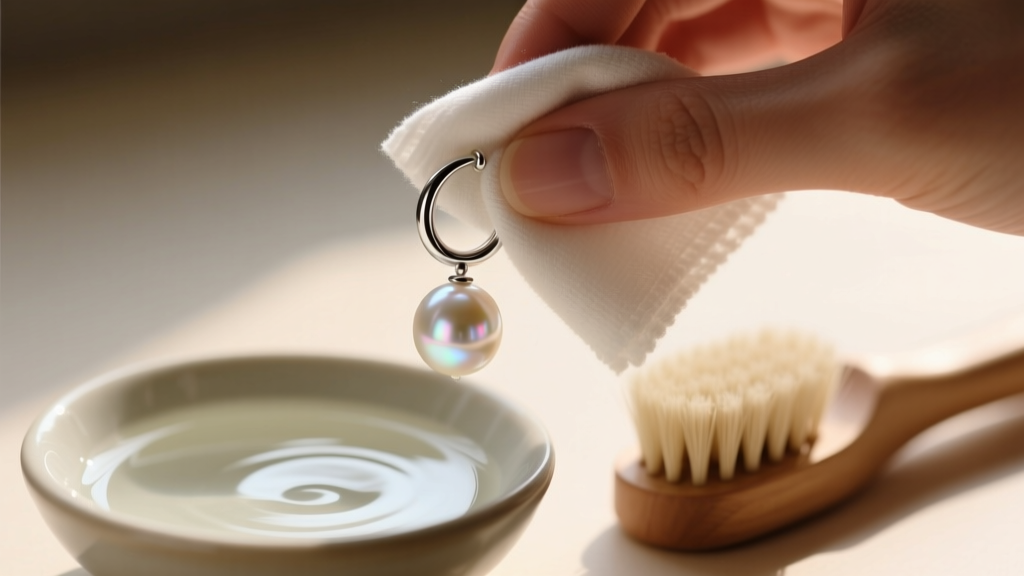
- Wipe the pearls gently with a dry, lint-free microfiber cloth after every wear to remove skin oils.
- If the silver hoop is tarnished, use a dedicated silver polishing cloth on the metal parts only, carefully avoiding the pearls.
- If the pearls become visibly soiled, dampen a soft cloth with distilled water and a single drop of baby shampoo. Wipe the pearls gently, then immediately dry them with a separate soft cloth. Never submerge the earrings in water, as moisture can become trapped in the drill holes, leading to internal degradation and odor.
By understanding the material science and structural mechanics behind these pieces, you can confidently curate a collection of silver pearl hoop earrings that will remain a staple in your wardrobe for decades.


