Expert Care Guide for Your Gold Flower Drop Earrings
Learn expert cleaning and maintenance tips to keep your gold flower drop earrings tarnish-free, brilliant, and secure for everyday wear.

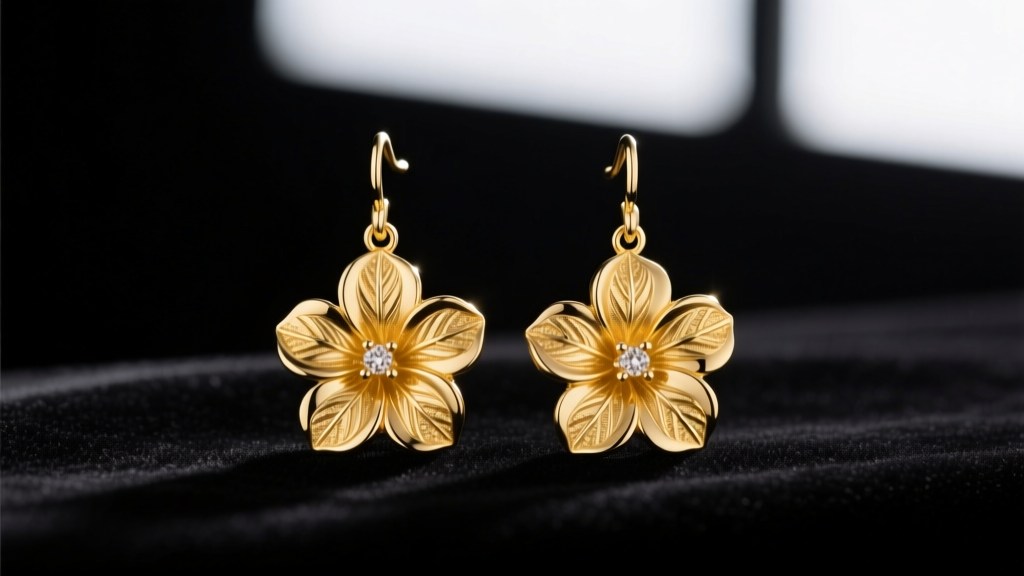
Gold flower drop earrings are a timeless staple in any jewelry collection, blending organic, intricate aesthetics with the enduring elegance of precious metals. However, the very details that make floral designs so captivating—deeply carved petals, textured stamens, and delicate drop mechanisms—also make them magnets for sebum, cosmetic residue, and environmental pollutants. As we navigate the jewelry care landscape in 2026, understanding the metallurgy and mechanical vulnerabilities of your specific pieces is paramount. This comprehensive guide provides actionable, expert-level maintenance protocols to preserve the brilliance and structural integrity of your gold flower drop earrings.
The Metallurgy of Floral Gold Jewelry
To properly care for gold jewelry, one must first understand its composition. Pure 24k gold is highly resistant to tarnish but far too soft to hold the intricate shapes of a floral motif or support the weight of a drop mechanism. Therefore, jewelers alloy gold with metals like copper, silver, and zinc. According to the Gemological Institute of America (GIA), 14k gold contains 58.3% pure gold and 41.7% alloy metals, while 18k gold contains 75% pure gold. The copper and silver content in these alloys is what makes your earrings susceptible to oxidation and tarnish, particularly when exposed to sulfur compounds in the air or chlorine in water.
Understanding Karat Alloys and Tarnish
If your floral drops are crafted in 14k gold, you may notice a subtle darkening in the deep crevices of the petals over time. This is not dirt; it is silver sulfide or copper oxide forming on the alloy metals. 18k gold will tarnish much slower due to its higher pure gold content, but it is also softer, meaning the delicate tips of the flower petals are more prone to micro-scratches and bending during aggressive cleaning.
The Drop Mechanism: A Vulnerable Connection Point
The defining feature of 'drop' earrings is the connection point between the ear wire (or stud post) and the dangling floral motif. This is usually achieved via a microscopic jump ring or a delicate soldered hinge. This junction is the most critical failure point on the earring. When cleaning, excessive pulling or snagging a brush bristle on the jump ring can warp the metal, creating a gap that will eventually lead to the loss of the floral drop. Always support the weight of the drop motif in the palm of your hand while cleaning the upper wire.
Step-by-Step Cleaning Routine for Intricate Petals
Floral designs require a gentle but thorough approach to dislodge debris trapped in the petal grooves without damaging the metal's polish.
The Distilled Water and pH-Neutral Soap Soak
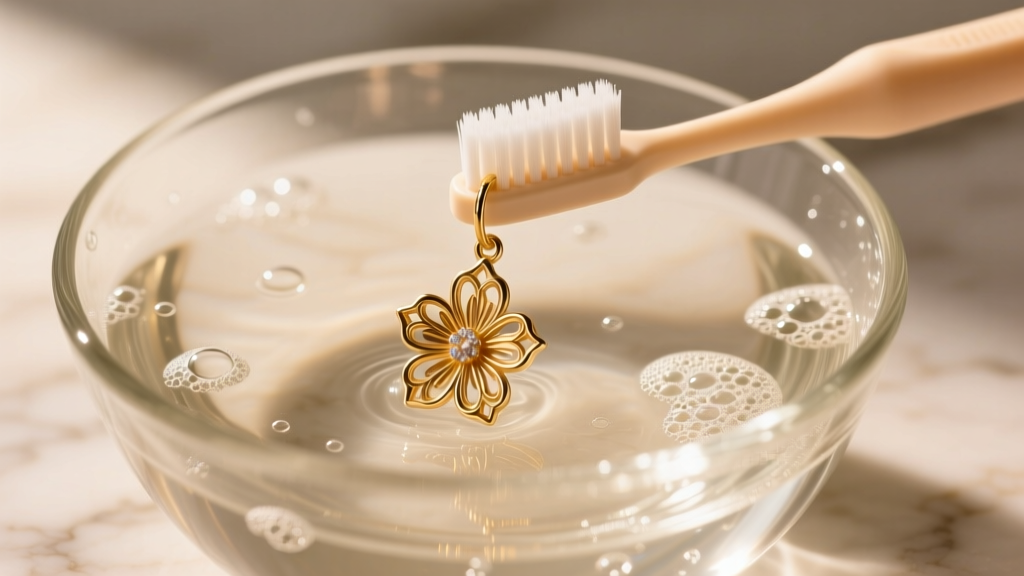
Tap water often contains trace minerals and chlorine that can leave hard water spots or react with gold alloys. Always use distilled or filtered water. Fill a small glass bowl with distilled water heated to approximately 90°F (32°C)—warm enough to melt skin oils, but not hot enough to shock any potential gemstone inlays. Add three drops of a pH-neutral, lotion-free dishwashing liquid. Submerge your gold flower drop earrings and let them soak for exactly 15 minutes. This allows the surfactants to break down the molecular bonds of cosmetic buildup.
Micro-Agitation: Brushing Without Bending
After soaking, use an extra-soft baby toothbrush with bristles no thicker than 0.05mm. Do not use standard adult toothbrushes, as their stiff bristles can leave microscopic abrasions on high-polish gold. Gently agitate the brush in circular motions over the surface of the petals. Pay special attention to the back of the floral motif, where skin contact and sweat accumulation are highest. Avoid brushing directly over the jump ring or hinge mechanism to prevent accidental prying.
Chemical Hazards: What Destroys Gold Alloys
Many people mistakenly believe that because gold is a noble metal, it is impervious to chemicals. This is a dangerous misconception regarding gold alloys. Exposure to harsh chemicals can lead to 'stress corrosion cracking,' a phenomenon where the alloy metals degrade, causing the gold to become brittle and snap, particularly at the high-stress points of drop earring hooks.
| Chemical Agent | Effect on Gold Alloys | Common Sources |
|---|---|---|
| Chlorine | Causes severe structural weakening and stress corrosion cracking. | Swimming pools, bleach, household cleaners. |
| Sulfur | Reacts with silver/copper alloys to create black tarnish layers. | Hot springs, rubber bands, certain cardboard boxes. |
| Alcohol/Acetone | Strips natural oils, dries out porous gemstone inlays (if present). | Hand sanitizers, nail polish remover, perfumes. |
| Abrasive Powders | Physically scratches the metal, dulling the high-polish finish. | Baking soda pastes, toothpaste, commercial silver dips. |
Advanced Care: Ultrasonic Cleaners and Gemstone Inlays
Ultrasonic jewelry cleaners use high-frequency sound waves (typically around 40kHz) to create microscopic cavitation bubbles in a liquid solution. When these bubbles collapse, they generate tiny shockwaves that blast dirt out of the deepest crevices of a floral design. According to Jewelers of America, ultrasonic cleaners are highly effective for plain gold and diamond-set jewelry. However, you must exercise extreme caution.
Handling Enamel and Pearl Accents
If your gold flower drop earrings feature cold enamel, guilloché, or organic gemstones like pearls, opals, or turquoise, never use an ultrasonic cleaner. The intense vibrations can shatter organic gems and cause enamel to flake or crack away from the gold backing. For these mixed-material floral drops, stick strictly to the manual soaking and soft-bristle brushing method outlined above.
Archival Storage: Preventing Scratches and Oxidation
How you store your earrings is just as critical as how you clean them. Gold is a relatively soft metal, and dropping your floral earrings into a communal jewelry box where they rub against diamonds or sapphires will result in severe scratching (diamonds rank a 10 on the Mohs scale, while gold is roughly 2.5 to 3).
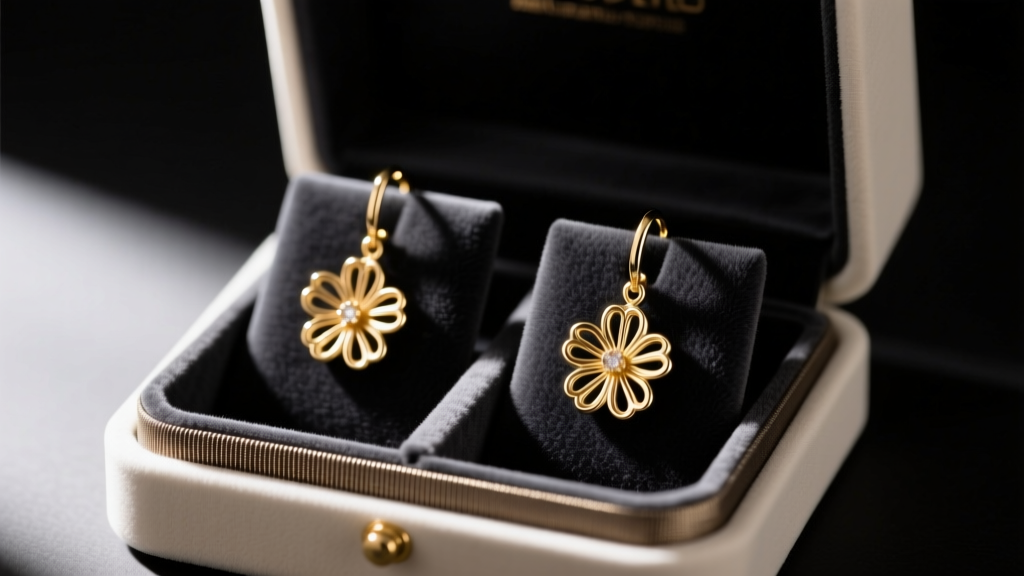
Expert Tip: Always store gold flower drop earrings in individual, anti-tarnish flannel pouches. For added protection against humidity-induced oxidation, place a small strip of 3M anti-tarnish paper and a silica gel desiccant packet inside your primary jewelry storage drawer to maintain a dry, sulfur-free microclimate.
Furthermore, always fasten the ear wires or secure the butterfly backs before storing. This prevents the sharp posts from snagging on the delicate petal edges of other earrings and keeps the drop mechanisms from becoming tangled in chains or other jewelry pieces. By adhering to these meticulous care standards, your gold flower drop earrings will retain their structural security and radiant bloom for decades to come.


