The Ultimate Care Guide for Gold Spiral Drop Earrings
Learn how to properly clean, store, and maintain your gold spiral drop earrings to prevent tarnish, wire bending, and clasp failure.

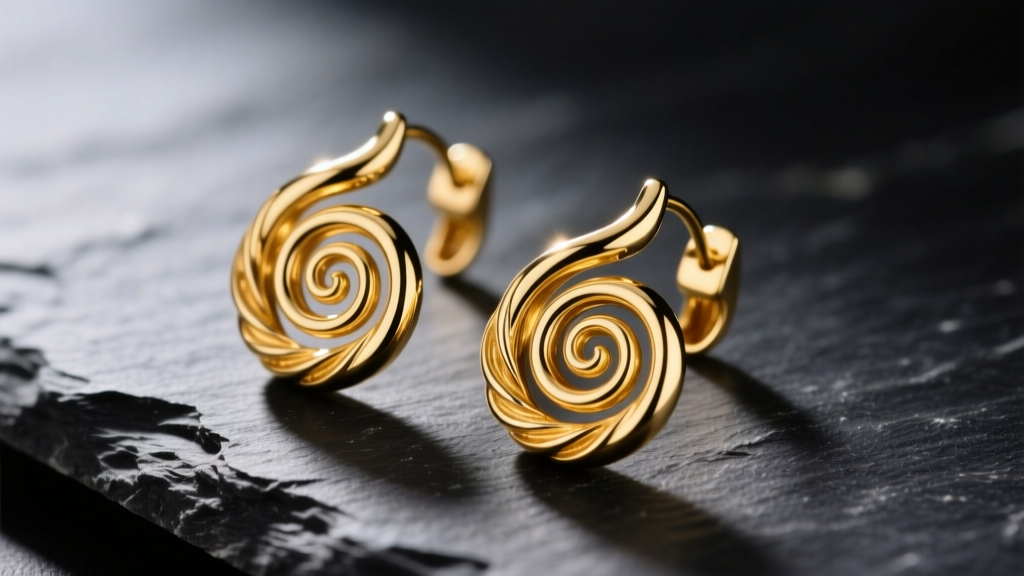
Understanding the Mechanics and Metallurgy of Spiral Drops
Gold spiral drop earrings represent a unique intersection of kinetic movement and structural metallurgy. Unlike standard studs or simple hoops, the coiled architecture of a spiral drop introduces specific vulnerabilities. The continuous loops create crevices that trap environmental debris, while the hanging drop element places continuous tensile stress on the connecting jump rings. To properly care for these pieces, you must first understand the gold alloy you are working with.
14k vs. 18k Gold: The Tension Factor
The structural integrity of your spiral depends heavily on its karat rating. 14k gold (58.5% pure gold alloyed with copper, silver, and zinc) is relatively rigid. This makes it the superior choice for spiral designs, as the alloy possesses excellent 'memory' and resists stretching under the weight of the drop element. 18k gold (75% pure gold) is noticeably softer. An 18k spiral crafted from delicate 20-gauge wire (0.81mm) can slowly elongate and lose its tight coil shape over time if the drop element is heavy. If you own 18k spiral drops, you must be hyper-vigilant about removing them before sleeping or engaging in high-movement activities.
The Gold Vermeil Warning
If your earrings are gold vermeil (a sterling silver base plated with a minimum of 2.5 microns of 10k+ gold), the care protocol changes entirely. The spiral shape makes the piece highly susceptible to friction. Rubbing a vermeil spiral too aggressively with a polishing cloth can wear through the gold layer at the apex of each curve, exposing the silver core to oxidation and tarnish.
Daily Maintenance and Wear Habits
The most effective way to maintain gold spiral drop earrings is through proactive daily habits. The spiral coils act as a catch-net for aerosolized beauty products. Hairspray, dry shampoo, and setting sprays leave a microscopic film that dulls the gold's luster and creates a sticky surface that attracts dust.
- The Post-Wear Wipe: After removing your earrings, gently wipe the spiral coils with a clean, untreated microfiber cloth. Do not use treated silver-polishing cloths on solid gold, as the mild abrasives can create micro-scratches on high-polish finishes.
- Moisture Avoidance: Never wear spiral drops in the shower. Shampoo and conditioner are highly viscous and will lodge deep within the inner diameter of the spiral coils, requiring intensive deep cleaning to remove.
- The Snag Hazard: Spiral drops are notorious for catching on knitwear, lace, and hair. When putting on or taking off scarves and sweaters, always remove your earrings first. A single hard snag on a heavy wool sweater can warp an 18k spiral or pull an unsoldered jump ring open, resulting in a lost drop element.
Deep Cleaning Protocol for Coiled Gold
When daily wiping is no longer enough to restore the brilliance of your earrings, a targeted deep clean is required. This method is safe for solid 14k and 18k gold, as well as gold vermeil (with adjusted soaking times).
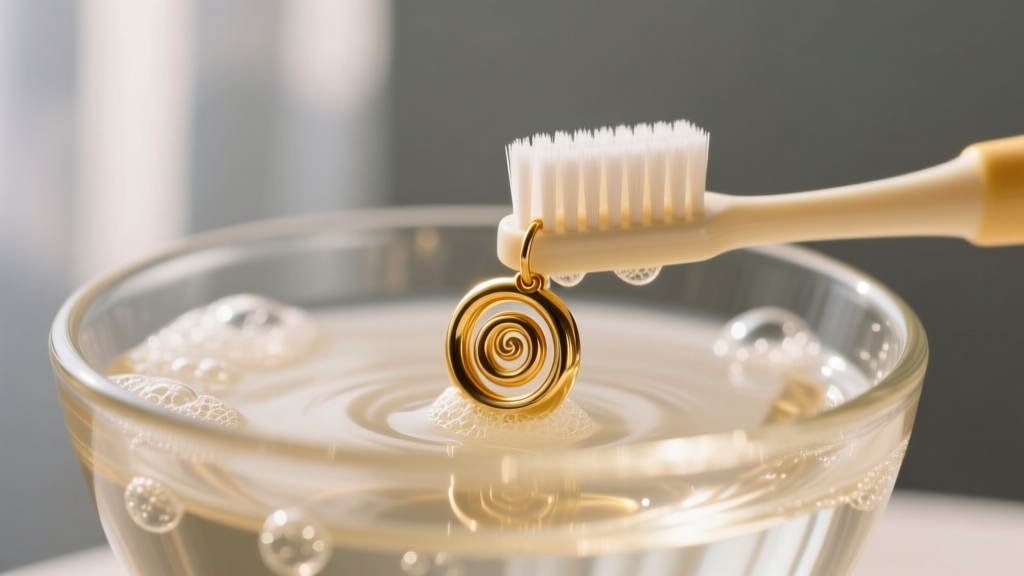
Step-by-Step Cleaning Guide
- Prepare the Solution: Fill a glass bowl with warm distilled water. Add three drops of pH-neutral, lotion-free dish soap (such as original blue Dawn). Avoid tap water, as the dissolved minerals and chlorine can leave water spots or react with the alloy metals over time.
- Controlled Soaking: Submerge the earrings. For solid gold, soak for 15 to 20 minutes. For gold vermeil, limit the soak to a maximum of 5 minutes to prevent moisture from penetrating any microscopic pores in the plating.
- Directional Agitation: Using an ultra-soft baby toothbrush, gently clean the spiral. Critical technique: Brush along the path of the coil, not across it. Scrubbing perpendicular to the wire can bend delicate 20-gauge spirals and loosen any micro-pave gemstone settings along the drop.
- The Distilled Rinse: Rinse thoroughly under a gentle stream of distilled water. Ensure all soap residue is flushed from the jump ring connections.
- Drying: Pat dry with a lint-free microfiber cloth. Use the edge of the cloth to floss between the tightest spiral coils. Never use paper towels or tissues, as the wood pulp fibers will snag on the metal and leave behind microscopic lint.
Chemical Compatibility Matrix
Using the wrong chemical agents can cause catastrophic, irreversible damage to your gold spiral drops. Refer to the table below before applying any commercial jewelry cleaner.
| Cleaning Agent | Effect on Solid Gold (14k/18k) | Effect on Gold Vermeil | Recommendation |
|---|---|---|---|
| Chlorine Bleach | Severe pitting, structural weakening of alloy | Strips gold layer, ruins silver core | Never Use |
| Baking Soda Paste | Micro-scratches on high-polish finishes | Scratches through vermeil plating | Avoid |
| Mild Dish Soap | Safe, lifts oils effectively | Safe, but limit soaking time | Highly Recommended |
| Ultrasonic Cleaners | Safe for plain metal, risky for pave drops | High vibration can peel plating | Use with Extreme Caution |
| Ammonia-based Cleaners | Can whiten copper alloys, causing discoloration | Will strip plating rapidly | Avoid |
Preserving Structural Tension and Jump Rings
The most common failure point on gold spiral drop earrings is not the spiral itself, but the connection hardware. The drop element is typically suspended via a jump ring or a French wire hook. According to structural guidelines highlighted by Jewelers of America, jump rings are under constant kinetic stress due to the swinging motion of the drop.
The Danger of Work-Hardening
Gold alloys undergo a process called 'work-hardening' when repeatedly bent. If your spiral becomes slightly misshapen, do not attempt to bend it back into place yourself. Bending the wire back and forth increases its brittleness, leading to micro-fractures that will eventually cause the earring to snap. If a spiral loses its shape, take it to a professional jeweler. They will use a torch to 'anneal' the metal—heating it to a specific temperature to relieve internal crystalline stresses—before safely reshaping the coil.
Jump Ring Inspections
Once a month, perform a tactile inspection of the jump ring connecting the spiral to the drop. Gently try to twist the ring. If you feel any movement or see a gap in the seam, the earring is at high risk of dropping the pendant. A jeweler can laser-weld or solder the jump ring shut for a nominal fee (typically between $25 and $60, depending on the karat), ensuring the drop element is permanently secured.
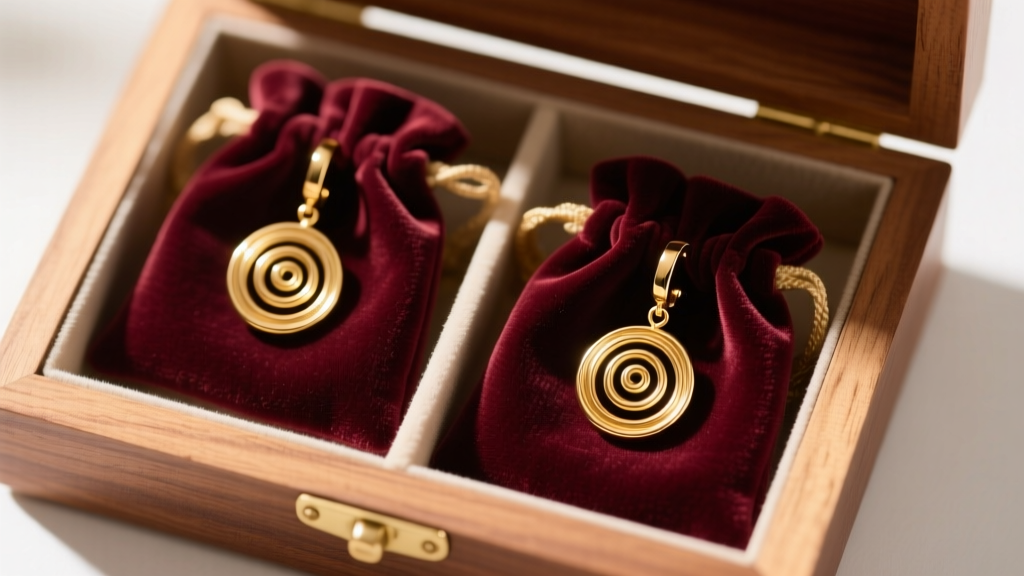
Strategic Storage to Prevent Warping and Tangling
Improper storage is the leading cause of warped spirals and tangled drop elements. Because of their three-dimensional coiled shape, spiral drops should never be tossed loosely into a communal jewelry drawer or a standard flat tray.
- The Pouch Method: Store each earring in its own individual soft velvet or satin pouch. This prevents the spiral coils from interlocking with other chains or earrings, which can cause severe pulling and warping.
- Hanging vs. Flat: If your jewelry box features hanging hooks, they are ideal for spiral drops. Hanging the earring by its post or top wire allows gravity to keep the drop element aligned, preventing the jump ring from resting at an awkward, stress-inducing angle.
- Climate Control: Store your jewelry in a cool, dry environment. For gold vermeil spirals, consider placing a silica gel desiccant packet inside the storage box to absorb ambient humidity and protect the sterling silver core from oxidizing if the plating is compromised.
When to Seek Professional Intervention
While home maintenance is sufficient for routine cleaning, certain scenarios require professional equipment. The Gemological Institute of America (GIA) recommends professional servicing for intricate jewelry pieces at least once a year. If your spiral drops feature tension-set gemstones, micro-pave diamonds, or delicate enamel work within the coils, avoid home cleaning entirely. The vibration of ultrasonic cleaners or the pressure of manual brushing can dislodge stones or crack enamel. A professional jeweler will use controlled steam cleaning and microscopic inspection to ensure the structural integrity of your gold spiral drop earrings remains flawless for years to come.