How to Clean & Maintain Large Butterfly Earrings
Learn expert techniques to clean, store, and support large butterfly earrings. Protect enamel, prevent tarnish, and secure heavy posts.

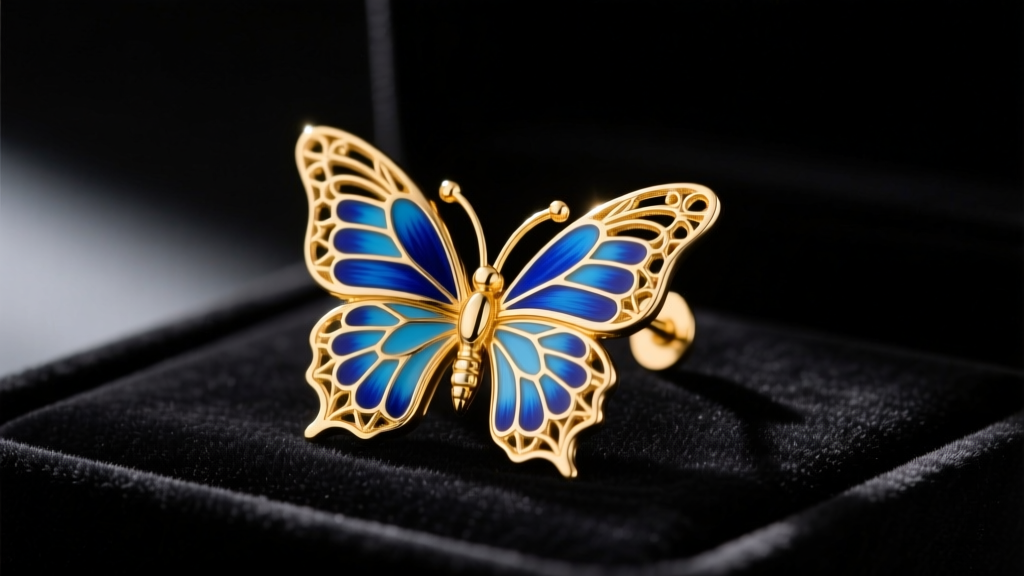
Statement jewelry requires statement-level maintenance. Large butterfly earrings are a masterclass in structural complexity, combining wide wingspans, intricate filigree, mixed materials (like cold enamel and pave rhinestones), and significant weight. While they make a stunning visual impact, their elaborate anatomy makes them highly susceptible to trapped sebum, bent posts, and material degradation if cleaned using generic jewelry methods.
As a domain expert in jewelry care, I have compiled this comprehensive maintenance guide to help you preserve the structural integrity and visual brilliance of your large butterfly earrings. According to the Gemological Institute of America (GIA), improper cleaning techniques are the leading cause of irreversible damage to mixed-media statement pieces.
The Anatomy of Vulnerability: Why Standard Cleaning Fails
Standard drop earrings have a relatively simple center of gravity. Large butterfly earrings, however, feature a wide horizontal wingspan that acts as a lever. When the wing catches on a sweater or hair, the torque is transferred directly to the solder joint where the post meets the backing plate. Over time, this micro-stress can fracture standard lead-free silver solder joints.
Furthermore, the surface area of a butterfly wing is often textured with crevices, milgrain detailing, or recessed enamel. These microscopic valleys trap dead skin cells, cosmetic powders, and environmental sulfur. Standard polishing cloths cannot reach these depths, leading to a dull, grayish film that mimics permanent tarnish but is actually compacted organic debris.
The Ultrasonic Danger: Protecting Enamel and Rhinestones
Many enthusiasts mistakenly toss their statement pieces into ultrasonic cleaners. Never use an ultrasonic cleaner on large butterfly earrings featuring cold enamel, resin, or foil-backed rhinestones.
"Ultrasonic cleaners work through cavitation—the rapid formation and implosion of microscopic bubbles. While excellent for solid gold and diamonds, the shockwaves from these implosions will shatter cold enamel, fracture resin wings, and strip the delicate silver foil backing off the underside of rhinestones, leaving them cloudy and dead."
Instead, large butterfly earrings require a manual, targeted approach that respects the chemical sensitivities of their mixed materials.
Step-by-Step Deep Cleaning Protocol for Intricate Wings
To safely remove buildup without compromising adhesives or delicate finishes, follow this precise manual cleaning protocol.
Step 1: Dry Dusting and Debris Removal
Before introducing any moisture, use a clean, soft-bristled makeup brush (like a fluffy eyeshadow blending brush) to sweep away loose dust and cosmetic powders from the wing crevices. Moistening powder creates a paste that is significantly harder to remove.
Step 2: The pH-Neutral Soak
Mix a solution of distilled water and a few drops of pH-neutral dish soap (Dawn Original is the industry standard). Avoid tap water, as the trace minerals and chlorine can react with base metals or leave hard water spots on enamel. Submerge the earrings for exactly 3 to 5 minutes. Do not exceed this time, as prolonged water exposure can degrade the cyanoacrylate adhesives used in pave settings.
Step 3: Targeted Crevices Cleaning
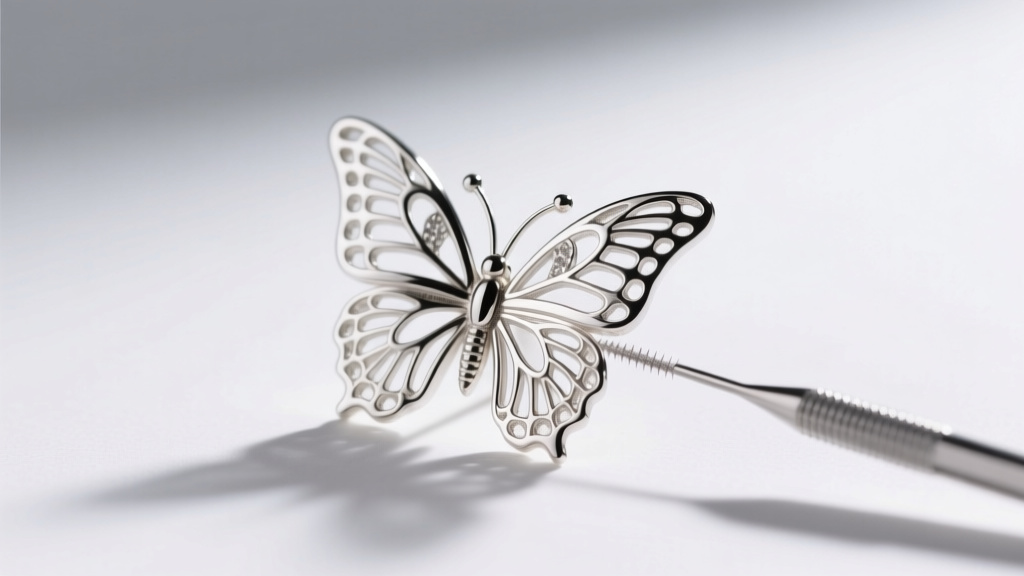
Remove the earrings from the solution. Using a 0.4mm soft interdental brush (such as TePe size pink), gently agitate the filigree loops and the junction where the wing meets the center body. The specialized bristles reach deep into the metalwork without scratching gold vermeil or silver. Rinse briefly under a gentle stream of distilled water.
Step 4: Controlled Drying
Never air-dry intricate jewelry, as water spots will form. Use a microfiber cloth to blot the main surfaces, then use a hair dryer on the cool, low-air setting to blow water out of the deep crevices and post hinges.
Material-Specific Maintenance Matrix
Large butterfly earrings are rarely made of a single material. Use this matrix to tailor your ongoing maintenance based on the primary materials of your piece.
| Material | Vulnerability | Recommended Maintenance | Avoid |
|---|---|---|---|
| Gold Vermeil (Brass/Silver base) | Sweat acids strip the gold layer, exposing base metal. | Wipe with a dry microfiber cloth after every wear. | Polishing pastes, ultrasonic cleaners, perfumes. |
| Sterling Silver (925) | Copper alloy reacts with sulfur to form black tarnish. | Store with 3M anti-tarnish strips; use a Sunshine cloth. | Harsh liquid dips, rubber bands in storage. |
| Cold Enamel / Resin | Thermal shock causes cracking; alcohol dissolves resin. | Clean only with distilled water and mild soap. | Alcohol wipes, ultrasonic, hot water, steam. |
| Pave Rhinestones | Adhesive failure; foil backing oxidation. | Keep completely dry; use a soft brush for dusting. | Submerging in water, steam cleaning, chemicals. |
Weight Distribution and Lobe Support
A significant, often overlooked aspect of maintaining large butterfly earrings is protecting your earlobes—and the earring posts—from gravitational stress. Statement butterfly wings can weigh between 12 and 25 grams per earring. Standard metal butterfly friction backs concentrate this weight onto a tiny 2mm point, causing the lobe to droop forward. This not only looks unflattering but puts immense lateral stress on the earring post, leading to bending or snapping.
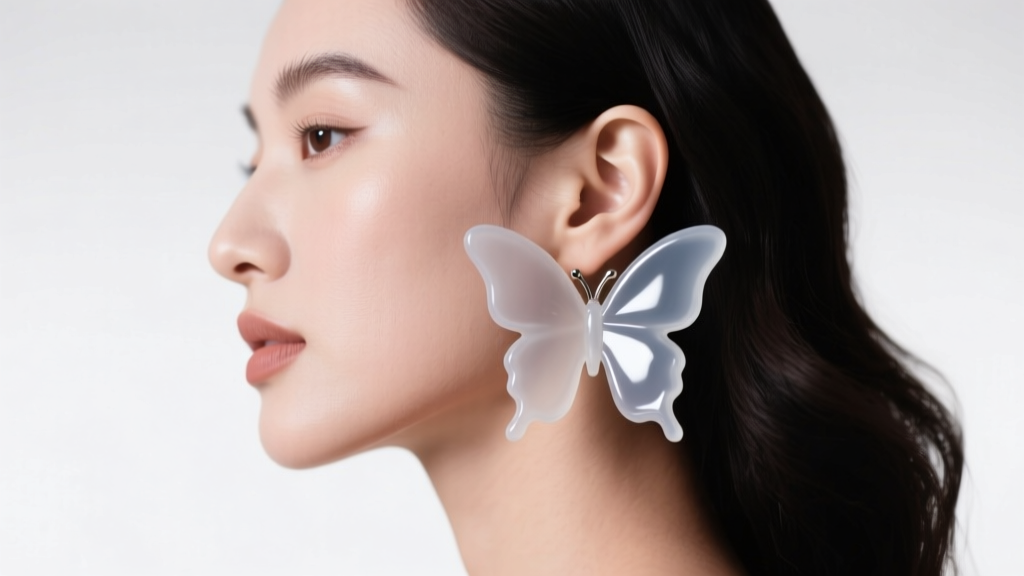
To maintain the structural integrity of the post and the health of your piercing, upgrade your earring backs. The Jewelers of America recommends utilizing wide surface-area backs for heavy statement pieces.
- Silicone Disc Backs (10mm - 12mm): Brands like Blomdahl or generic silicone O-rings distribute the weight across a wider area of the back of the lobe, keeping the earring facing perfectly forward.
- Locking Lever Backs: If your butterfly earrings feature a hook or lever, ensure the locking mechanism is fully engaged to prevent the heavy wing from pulling the wire out of the piercing during movement.
- Post Gauge Check: For heavy pieces, ensure the post is at least 18-gauge (1.0mm). Standard 20-gauge (0.8mm) posts will inevitably warp under the leverage of a wide butterfly wingspan.
Storage Architecture for Wide Wingspans
Tossing large butterfly earrings into a standard jewelry box is a recipe for disaster. The protruding wingtips will snag on chains, bend against hard dividers, and scratch adjacent pieces. Furthermore, if the wings feature rhinestones, the hard facets of the stones can easily scratch the soft enamel or gold plating of the opposing earring when stored together.
The Ideal Storage Protocol:
- Wrap each earring individually in a soft, lint-free microfiber pouch or acid-free tissue paper.
- Place the wrapped earrings in a rigid, compartmentalized box where the wingspan can lay completely flat without touching the sides.
- Include a Pacific Silvercloth strip or 3M anti-tarnish tab in the drawer to absorb ambient sulfur gases, which is critical for preserving sterling silver and copper-alloy base metals.
Troubleshooting Common Failure Modes
Even with meticulous care, heavy statement pieces encounter issues. Here is how to troubleshoot and resolve the most common problems associated with large butterfly earrings.
1. The Post is Bent
If the post bends due to the leverage of the heavy wing, do not use pliers to bend it back. Pliers will mar the metal and create a micro-fracture that will eventually snap. Instead, place the post on a flat, hard surface and use a smooth, cylindrical object (like a metal pen barrel) to gently roll and apply even pressure along the length of the post until it straightens.
2. Green or Black Skin Discoloration
This is not an allergy; it is a chemical reaction. Many affordable large butterfly earrings use brass or copper as a base metal beneath gold plating. When the plating wears thin, skin acids react with the copper, creating copper chloride (green) or copper sulfate (black). To fix this without replacing the earrings, apply a micro-thin layer of clear nail polish or a specialized jewelry barrier coating (like Jewelry Shield) to the post and the back of the butterfly body.
3. Cloudy or 'Dead' Rhinestones
If the pave stones on the butterfly wings lose their sparkle and look gray, moisture has likely breached the setting and oxidized the foil backing. Unfortunately, this is irreversible without professional re-foiling. To prevent this, never wear rhinestone-heavy butterfly earrings in high-humidity environments like saunas or outdoor summer festivals, and never use liquid cleaners on them.
By treating your large butterfly earrings as intricate, mixed-media sculptures rather than standard accessories, you ensure they remain structurally sound and visually breathtaking for years to come. Consistent, gentle care is the ultimate secret to preserving statement jewelry.


