How to Clean and Maintain Silver Filigree Hoop Earrings
Learn expert techniques to clean, polish, and store silver filigree hoop earrings without damaging delicate wirework. Keep your silver bright.

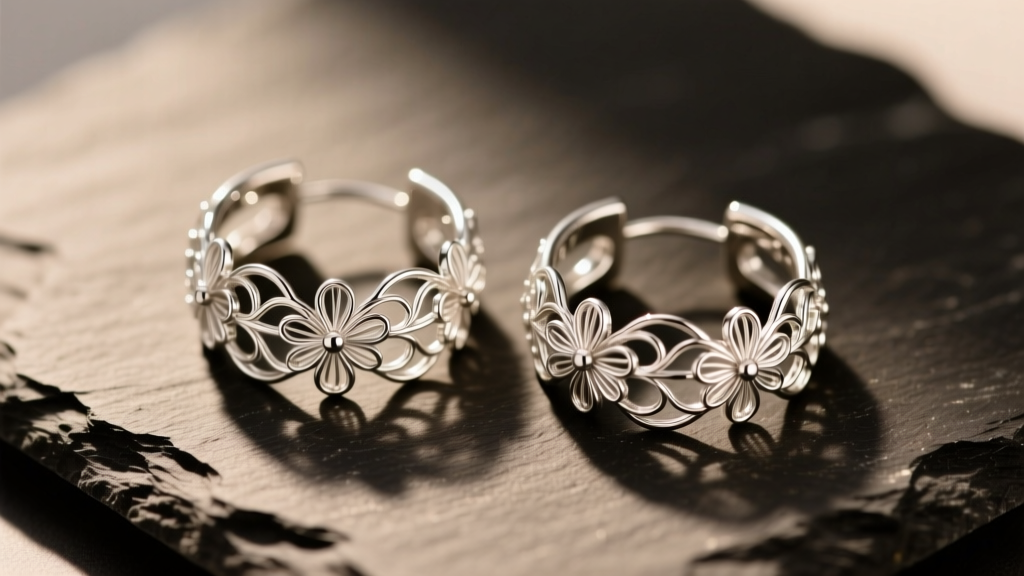
The Unique Vulnerability of Filigree Silver
Sterling silver is an alloy composed of 92.5% pure silver and 7.5% copper. While pure silver is highly resistant to tarnish, the copper added for structural integrity reacts with hydrogen sulfide in the atmosphere to form silver sulfide—the dark, dull layer we recognize as tarnish. When this material is crafted into silver filigree hoop earrings, the vulnerability to tarnish accelerates dramatically.
Filigree jewelry relies on ultra-fine wires, typically ranging from 24-gauge to 28-gauge, which are curled, woven, and soldered into intricate lace-like patterns. This manufacturing technique creates a massive surface-area-to-volume ratio. Consequently, filigree silver hoops are exposed to significantly more atmospheric sulfur, skin oils, and cosmetic residues than a solid, cast-silver piece of the same weight. Furthermore, the microscopic crevices between the soldered wires act as traps for dead skin cells and lotions, creating a localized humid environment that accelerates oxidation. Understanding this structural reality is the first step in mastering the care and maintenance of your delicate hoops.
Essential Cleaning Supplies (and What to Avoid)
Before you begin cleaning, it is critical to assemble the correct tools. The delicate nature of filigree wirework means that standard silver cleaning methods can easily cause irreversible damage.
Safe Supplies
- Distilled Water: Tap water contains chlorine and trace minerals that can leave spots or react with the silver.
- Mild, Phosphate-Free Dish Soap: A gentle degreaser to lift sebum and cosmetic buildup without stripping the metal.
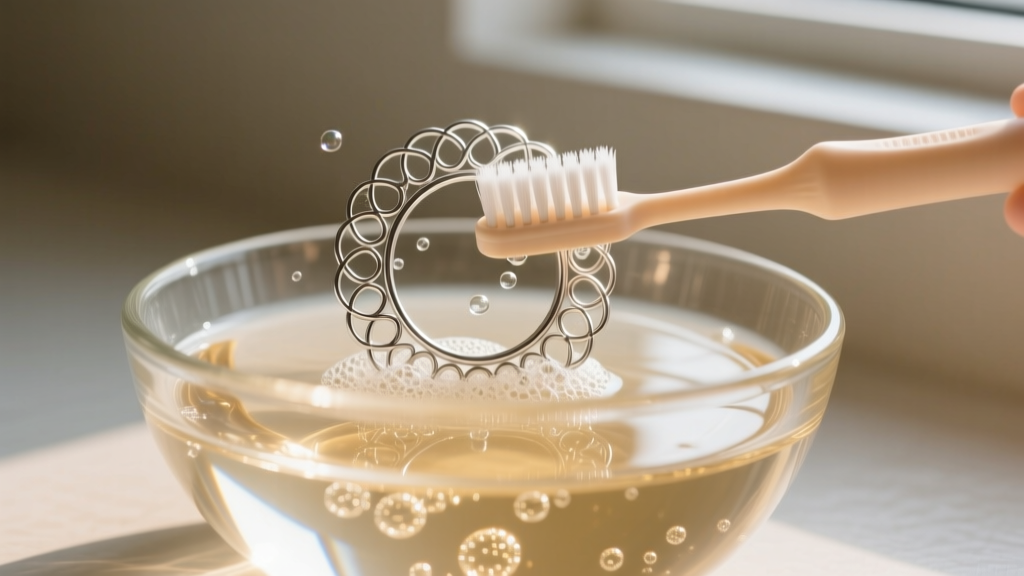
- Extra-Soft Baby Toothbrush: The ultra-fine bristles can navigate the tight corners of 26-gauge wirework without bending the delicate curls.
- 100% Cotton or Microfiber Lint-Free Cloths: Essential for final polishing.
- Compressed Air Duster: Crucial for moisture removal from deep crevices.
Dangerous Chemicals and Tools to Avoid
Never use commercial silver dip polishes (such as Tarn-X) on filigree pieces. These products rely on thiourea, a highly acidic chemical that strips tarnish instantly but also removes microscopic layers of silver. Over time, this leaves the filigree wires with a frosted, matte finish and severely degrades the fragile solder joints. Additionally, avoid ultrasonic cleaners; the high-frequency cavitation can easily shatter delicate solder points or rattle loose any tension-set gemstones integrated into the hoop design. Finally, never use baking soda paste, as the abrasive particles will scratch the high-polish finish of the fine wires.
Step-by-Step Wet Cleaning Method
For routine maintenance and the removal of oils and dirt, a gentle wet cleaning is the safest approach. This method should be performed every few weeks if you wear your silver filigree hoop earrings daily.
- Prepare the Bath: Fill a small glass bowl with warm (not hot) distilled water. Add two drops of mild, phosphate-free dish soap and swirl gently to create a low-suds solution.
- Soak Briefly: Submerge the earrings in the solution for exactly 3 to 5 minutes. This allows the soap to break down the lipid bonds of skin oils trapped in the filigree crevices. Do not exceed 10 minutes.
- Agitate Gently: Using the extra-soft baby toothbrush, lightly brush the wirework. Brush with the grain of the wire patterns, applying zero downward pressure. Let the bristles do the work of sweeping debris out from under the soldered joints.
- Rinse Thoroughly: Hold the hoops under a gentle stream of lukewarm distilled water to wash away all soap residue. Any remaining soap film will dry into a cloudy haze that mimics tarnish.
Advanced Tarnish Removal: The Electrochemical Bath
If your silver filigree hoop earrings have developed heavy, dark silver sulfide tarnish, mechanical polishing is too risky due to the snagging hazard. Instead, utilize an electrochemical reduction bath. This method reverses the chemical reaction, converting silver sulfide back into pure silver without removing any metal.
The Process:
- Line the bottom of a heat-safe glass dish with aluminum foil, shiny side facing up.
- Place the tarnished silver hoops directly on the foil. The silver must physically touch the aluminum.
- Sprinkle 1 tablespoon of baking soda and 1 tablespoon of non-iodized sea salt over the jewelry.
- Pour boiling distilled water into the dish until the earrings are fully submerged. You will immediately see bubbling and smell a faint sulfur (rotten egg) odor.
- Leave the earrings in the bath for 3 to 5 minutes. The aluminum acts as an anode, drawing the sulfur away from the silver cathode.
- Remove the earrings with wooden or plastic tongs (never metal, which can scratch the silver) and rinse under distilled water.
Critical Warning: Do NOT use this electrochemical bath if your filigree hoops feature an intentional oxidized patina (darkened recesses used to highlight the wirework contrast). This bath will strip the intentional antiquing, leaving the piece flat and washed out. It will also dissolve the adhesives used in glued-in gemstones due to the extreme heat.
Comparing Silver Cleaning Methods for Filigree
| Method | Best For | Risk to Filigree | Effectiveness |
|---|---|---|---|
| Mild Soap & Distilled Water | Routine oil/dirt removal | None | Low (No tarnish removal) |
| Electrochemical Bath | Heavy, uniform tarnish | Low (Strips intentional patina) | High (Chemical reversal) |
| Silver Polishing Cloth | Light surface tarnish | High (Snagging on wire ends) | Medium |
| Thiourea Dip Cleaners | None (Avoid entirely) | Severe (Degrades solder joints) | High (But destructive) |
| Ultrasonic Cleaners | Diamond/solid metals | Severe (Shatters solder points) | High (But structurally risky) |
Drying and Polishing Delicate Wirework
Drying filigree silver is notoriously difficult because standard towels contain loops of cotton thread that will inevitably snag on the microscopic ends of the 24-gauge wires, potentially bending or snapping the delicate floral or geometric patterns.
After the final distilled water rinse, shake the earrings gently over a sink to remove excess water droplets. Next, use a can of compressed air (held upright to prevent freezing propellant from spraying) to blow the moisture out of the deep crevices. Alternatively, a hairdryer set to the cool, low-speed setting works exceptionally well. Once bone-dry, you can address any residual light tarnish on the high points of the wirework. Use a high-quality jeweler's cloth impregnated with micro-abrasives, such as a Sunshine Cloth. Gently pinch the outer edges of the hoop wires between the cloth and glide along the smooth curves. Never push the cloth into the negative space or interior cutouts of the filigree, as the fabric will catch and pull the wires outward.
Proper Storage to Prevent Future Tarnish
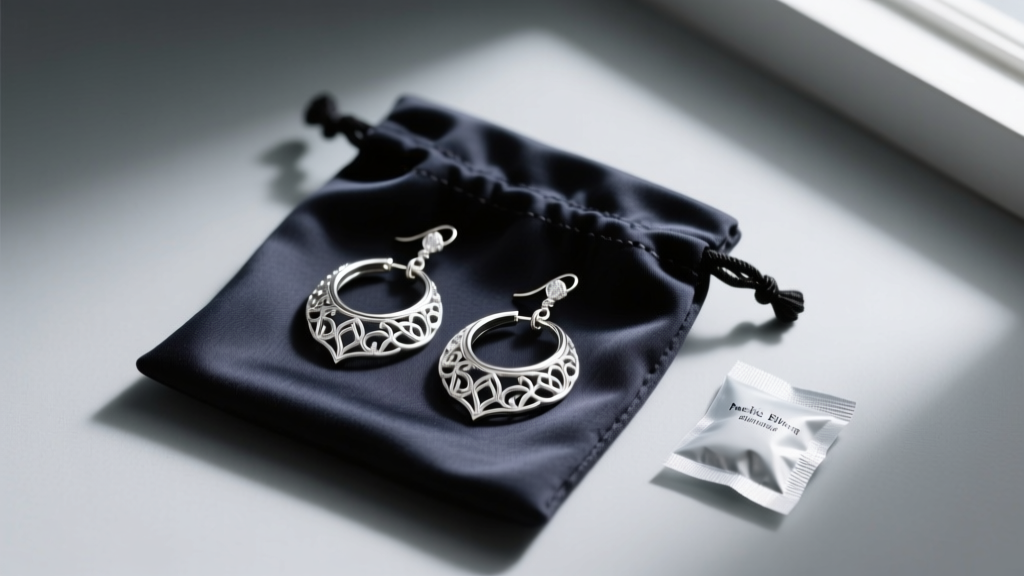
Because silver sulfide formation requires exposure to sulfur and moisture, proper storage is your most effective maintenance tool. Never store silver filigree hoop earrings in cardboard boxes or standard plastic zip-top bags. Cardboard releases sulfur gases as it degrades, and many plastics (like PVC) emit chemicals that accelerate tarnishing.
Instead, invest in Pacific Silvercloth pouches or use 3M anti-tarnish strips. Silvercloth is embedded with microscopic silver particles that act as a sacrificial shield, absorbing sulfur from the air before it reaches your jewelry. Place a small, color-indicating silica gel desiccant packet inside the pouch to control ambient humidity. Store the pouches in a cool, dark drawer away from direct sunlight and extreme temperature fluctuations, which can cause the metal to expand and contract, stressing the solder joints over time.
Structural Maintenance: Checking Solder Joints and Clasps
While chemical care is vital, mechanical maintenance ensures the longevity of your silver filigree hoop earrings. The intricate wirework is usually soldered onto a structural base wire, often 18-gauge or 20-gauge, which bears the physical load of the earring. Every six months, perform a visual and tactile inspection under a jeweler's loupe or strong magnifying glass.
Check the tension of the hoop clasp. If your hoops use a clicker mechanism or a simple wire-and-tube closure, the repeated opening and closing can cause the 20-gauge ear wire to thin or warp. If the closure feels loose, a jeweler can easily re-tension the wire. Additionally, inspect the primary solder joints where the filigree panel meets the top hoop cap. If you notice any microscopic hairline cracks or 'give' when lightly pressing the filigree panel, stop wearing the earrings immediately and take them to a professional laser welder. Traditional torch soldering can easily melt the ultra-fine 26-gauge filigree wires, whereas a laser welder can pinpoint the repair without heat damage to the surrounding artwork. For squeaky or stiff hinges, apply a microscopic drop of synthetic watch oil to the hinge pin using a needle, wiping away any excess immediately to prevent oil buildup.
For more in-depth metallurgical insights, refer to the Gemological Institute of America (GIA) guidelines on silver care, or consult technical bulletins on silver tarnish removal from master jewelers like Rio Grande. By combining gentle chemical cleaning with rigorous structural checks, your silver filigree hoops will remain pristine and structurally sound for generations.


