How to Spell Earring Correctly & Decode Jewelry Material Terms
Learn how to spell earring correctly, avoid jewelry search scams, and decode material properties like titanium grades and gold vermeil hallmarks.

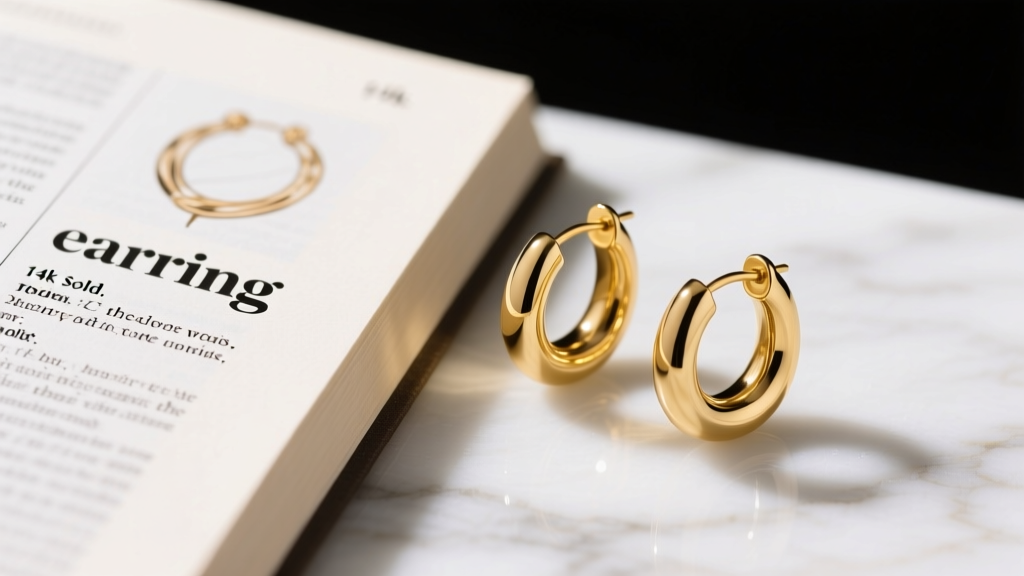
It sounds like a simple linguistic question, but in the world of fine jewelry and body modification, knowing how to spell earring correctly is the first line of defense against low-quality metals, allergic reactions, and deceptive marketing. When you type a query into a search engine, autocorrect and algorithmic SEO manipulation often blur the lines between fine jewelry and mass-produced, allergenic dropshipped goods.
At Jewel Style Radar, we believe that precision in language leads to precision in quality. If you cannot accurately spell and define the terms used to describe your jewelry, you cannot verify the metallurgical properties of the metals touching your skin. In this comprehensive guide, we will break down the linguistics of jewelry terminology, decode the material properties that actually matter, and teach you how to shop for biocompatible earrings with absolute confidence.
The Linguistics of Adornment: Earring vs. Earing vs. Ear Ring
Before we dive into metallurgy, we must address the keyword itself. The correct spelling for the jewelry worn on the ear is earring (a compound word with a double 'r'). However, the internet is flooded with variations that signal different levels of quality and intent:
- Earring: The correct English noun for an ornament worn on the ear. Fine jewelers and reputable body piercers use this spelling exclusively.
- Earing: A single 'r' spelling is actually a legitimate nautical term. It refers to a small rope or line used to secure the corner of a sail to a yardarm. If you are buying jewelry from a site that consistently uses 'earing', you are likely dealing with an overseas dropshipper using poorly translated SEO keywords.
- Ear Ring: Grammatically incorrect as a noun. While some vintage texts may separate the words, modern search algorithms associate this two-word spacing with low-tier marketplace listings (like certain eBay or AliExpress sellers) attempting to capture broad, unrefined search traffic.
Why does this matter for material quality? Because sellers who do not care about basic spelling rarely care about ASTM metallurgical standards or nickel release rates. Precision in product descriptions is a strong indicator of precision in material sourcing.
Material Misspellings That Cost You: A Buyer’s Guide
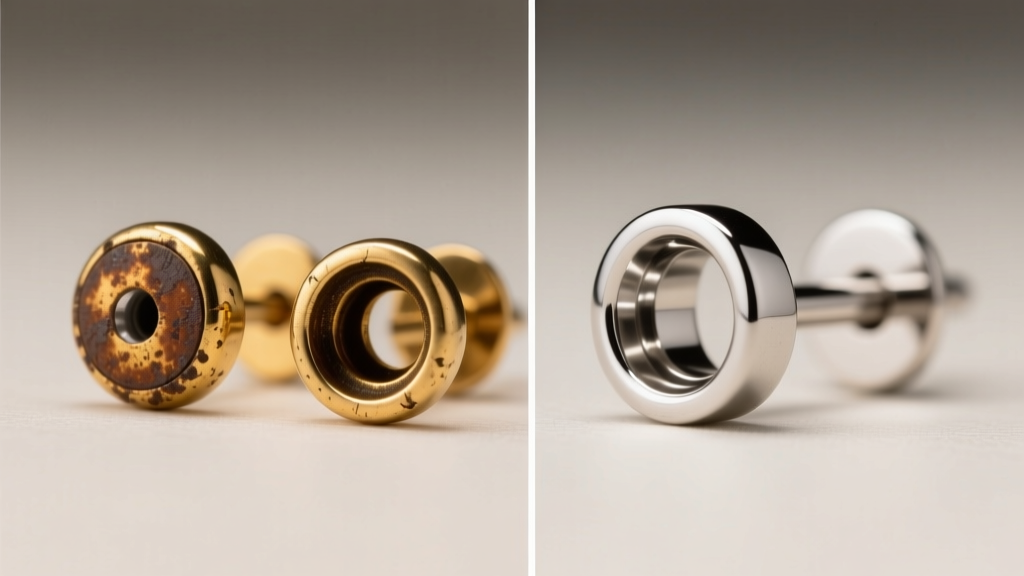
Just as spelling 'earring' correctly separates fine jewelry from nautical ropes, spelling material terms correctly separates biocompatible metals from allergic nightmares. Many consumers search for 'surgical steel' or 'hypoallergenic gold', terms that are either legally unregulated or metallurgically misleading. Let us translate common search terms into their actual material properties.
The Great Titanium Deception
Not all titanium is created equal. Commercial-grade titanium (often used in aerospace or bicycle frames) can contain alloying elements that irritate fresh piercings. For cartilage and lobe piercings, you must look for ASTM F136 or ASTM F67 compliant titanium. According to the Association of Professional Piercers (APP), only implant-grade titanium guarantees the biocompatibility required for long-term wear in the human body without triggering contact dermatitis.
Gold Plated vs. Gold Vermeil vs. Gold Filled
The Federal Trade Commission (FTC) strictly regulates how gold jewelry is labeled in the United States, yet misspellings and misnomers run rampant in online marketplaces.
| Term | Core Material | Gold Thickness / Standard | Longevity & Properties |
|---|---|---|---|
| Gold Plated | Brass or Copper base | Minimum 0.175 microns (often less in cheap goods) | Tarnishes quickly; high risk of nickel allergy if barrier layer fails. |
| Gold Vermeil | Sterling Silver (.925) base | Minimum 2.5 microns of 10k+ gold | Excellent for sensitive ears; will eventually wear down to silver over years. |
| Gold Filled | Jeweler's Brass base | 1/20th of total weight must be solid gold | Highly durable; the thick gold layer rarely wears through to the base metal. |
| Solid Gold | Gold alloy (14k or 18k) | 100% gold alloy throughout | Lifetime durability; 14k (58.5% gold) offers the best balance of purity and hardness. |
Decoding Hallmarks: When Spelling Meets Metallurgy
If spelling 'earring' correctly gets you to the right storefront, reading hallmarks correctly ensures you are buying what the store claims. A hallmark is a microscopic stamp applied to precious metals to certify their purity. However, counterfeit stamps exist, and understanding the underlying metallurgy is crucial.

Purity Stamps Explained
- 925: Sterling Silver. Contains 92.5% pure silver and 7.5% copper. (Note: Copper can cause green oxidation on the skin, though it is generally safe for healed lobes).
- 585 or 14K: 14-Karat Gold. Contains 58.5% pure gold. The remaining 41.5% consists of strengthening alloys like zinc, silver, or copper. Warning: White gold often contains nickel to achieve its color. If you have a nickel allergy, avoid 14k white gold unless it is rhodium-plated and you are prepared for re-plating.
- 750 or 18K: 18-Karat Gold. Contains 75% pure gold. Softer than 14k, making it less ideal for threadless cartilage pins that require structural rigidity, but beautiful for lobe studs.
- PT950: Platinum. 95% pure platinum. Hypoallergenic, dense, and highly resistant to tarnish, though rarely used in standard earrings due to its extreme weight and cost.
The Nickel Release Standard (EN 1811:2011)
Many shoppers search for 'hypoallergenic earrings', a term the Gemological Institute of America (GIA) notes is largely a marketing buzzword rather than a scientific guarantee. The true metric you should care about is the European Nickel Directive (EN 1811:2011), which limits nickel release from post-assembly jewelry to less than 0.2 µg/cm²/week. Implant-grade titanium and high-purity platinum naturally fall far below this threshold, while 'surgical stainless steel' (316L) often exceeds it, making it unsuitable for fresh piercings or highly sensitive ears.
The 2026 Material Standard: What to Actually Search For
Armed with the correct spelling of 'earring' and a deep understanding of material properties, how should you structure your search queries to find high-quality, safe jewelry? Stop using vague terms and start using metallurgical specifications.
Optimal Search Queries by Piercing Type
For Fresh Cartilage Piercings (Helix, Conch, Tragus):
- Do not search: 'Surgical steel cartilage earrings'
- Do search: 'ASTM F136 titanium threadless labret 16g'
- Why: Threadless (push-pin) ends made of implant-grade titanium eliminate the microscopic tearing caused by screwing in threaded ends, while 16-gauge (1.2mm) thickness prevents the 'cheese-cutter effect' in delicate cartilage tissue.
For Healed Lobe Piercings (Everyday Wear):
- Do not search: 'Hypoallergenic gold ear rings'
- Do search: '14k solid gold vermeil huggie hoops 2.5 micron'
- Why: This query forces the algorithm to find sellers who explicitly state their micron thickness and base metal, filtering out cheap flash-plated brass that will turn your lobes green within a week.
Pricing Expectations for Genuine Materials
Material integrity has a baseline cost. In the current market, if you are purchasing a pair of 14k solid gold huggie hoops, expect to pay between $120 and $350 depending on weight and brand. High-quality ASTM F136 titanium flat-back labrets typically range from $35 to $85 per piece. If you find 'solid gold earrings' selling for $15, you are not finding a bargain; you are encountering a linguistic and material deception.
Conclusion: Precision in Language, Precision in Quality
Knowing how to spell earring correctly is about more than just passing a grammar test—it is about adopting the vocabulary of a discerning jewelry consumer. When you demand correct spelling, accurate hallmarks, and specific metallurgical standards like ASTM F136 or 2.5-micron vermeil, you signal to the market that you will not accept substandard, allergenic metals. Protect your piercings, respect your skin, and always read the fine print behind the search results.


