Dream Catcher Earrings: Material Guide for Sensitive Ears
Discover the best metals and materials for dream catcher earrings. Compare weight, hypoallergenic properties, and durability for sensitive ears.

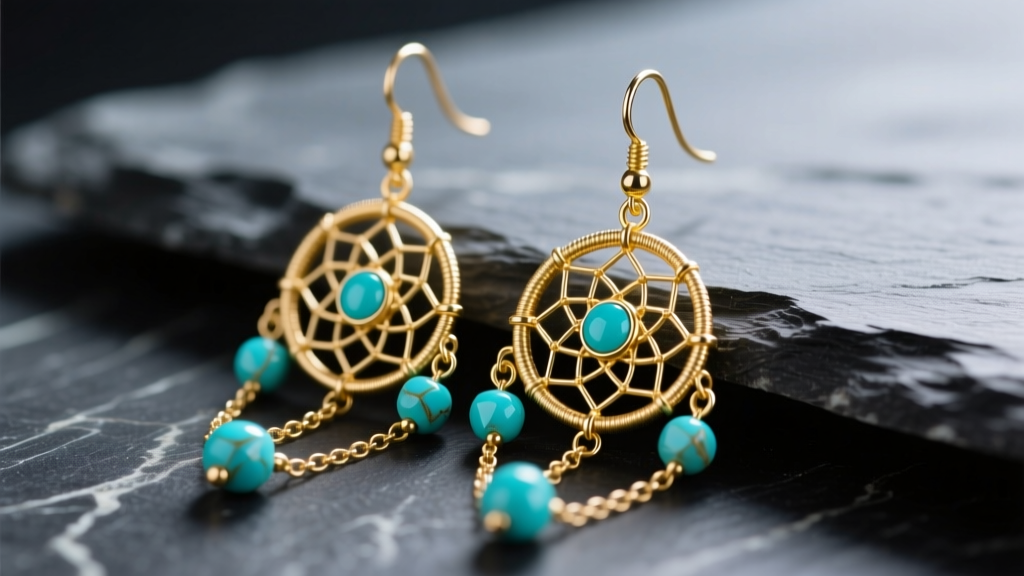
Dream catcher earrings are a striking sartorial choice, blending bohemian aesthetics with intricate craftsmanship. However, their expansive silhouettes and dangling components introduce unique metallurgical and structural challenges. Because these earrings possess a large surface area and significant kinetic movement, the materials used dictate not only the visual appeal but also the biomechanical comfort and dermatological safety of the wearer. As of 2026, the jewelry market has seen a massive shift toward hypoallergenic, lightweight alloys, making it easier than ever to find statement pieces that do not compromise ear health.
The Physics of Dangles: Weight Distribution and Lobe Stress
Unlike standard studs or huggies, dream catcher earrings act as pendulums. Every turn of the head creates kinetic energy that transfers directly to the earlobe piercing. A heavy brass dream catcher weighing just 15 grams can exert localized shear stress on the fistula (the piercing hole), leading to lobe stretching, migration, or even tearing over time. Therefore, material density is just as critical as aesthetic finish. Selecting low-density metals or advanced polymers for the primary hoop framework is essential for maintaining long-term ear lobe integrity while wearing oversized dangles.
Core Metal Frameworks: Material Comparison Matrix
The foundational hoop of a dream catcher earring must resist warping while remaining light enough for all-day wear. Below is a comparative analysis of the most common metals used in 2026 for these specific designs, evaluating their density, allergy risks, and structural viability.
| Material | Grade / Standard | Density (g/cm³) | Hypoallergenic Rating | Price Range (Per Pair) |
|---|---|---|---|---|
| Titanium | ASTM F136 (Grade 23) | 4.43 | Excellent (Nickel-Free) | $45 - $120 |
| Niobium | 99.9% Pure | 8.57 | Excellent (Highly Biocompatible) | $35 - $90 |
| Sterling Silver | 925 (7.5% Copper) | 10.36 | Moderate (Tarnishes, Copper allergy risk) | $60 - $150 |
| Brass | C260 (Copper/Zinc) | 8.53 | Poor (High Contact Dermatitis Risk) | $15 - $40 |
| Gold-Filled | 14/20 GF (Brass Core) | 8.53 (Core) | Good (If outer layer is intact) | $50 - $110 |
For individuals with sensitive skin, the American Academy of Dermatology strongly recommends avoiding base metals like brass or nickel-silver, which frequently cause allergic contact dermatitis. Titanium (specifically ASTM F136, the standard for surgical implants) remains the undisputed champion for lightweight, allergy-proof dream catcher hoops.
The Webbing Matrix: Threads, Cords, and Wires
The "web" inside the dream catcher hoop is where artisanal skill meets material science. The tension required to keep the web taut without warping the outer hoop depends heavily on the weaving medium.
Synthetic vs. Natural Threads
- Nymo and FireLine Threads: These synthetic, gel-spun polyethylene threads are the industry standard for high-end bead weaving. They offer immense tensile strength, resist UV degradation, and do not absorb ambient moisture, preventing the web from sagging in humid climates.
- Waxed Cotton and Silk: While traditional and visually authentic, natural fibers are hygroscopic. They absorb sweat and humidity, leading to stretching, discoloration, and eventual dry rot. If you live in a high-humidity environment, avoid silk-webbed dream catchers unless they are treated with a hydrophobic nano-coating.
Structural Wire Choices
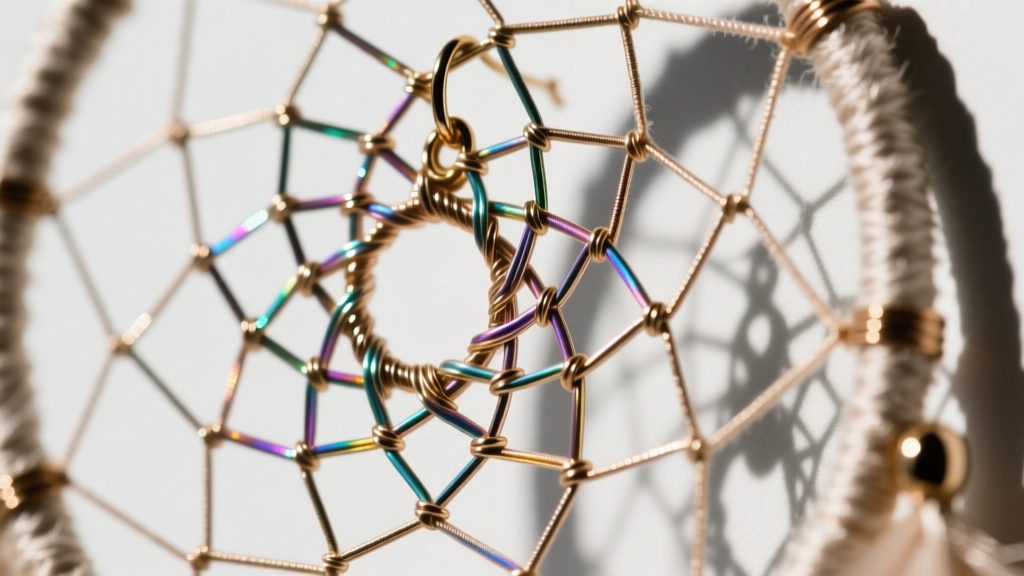
Some modern 2026 designs utilize metallic webbing instead of thread. Dead-soft niobium wire (typically 26-gauge or 0.4mm) is favored for its ability to be anodized into vibrant, permanent colors without using toxic dyes or plating. Unlike plated copper wire, which will eventually chip and expose the reactive base metal, anodized niobium's color is a result of light interference through an oxide layer, meaning it will never flake or cause green skin discoloration.
Ear Wire Gauges and Structural Failure Modes
The point of failure in heavy dangle earrings is rarely the hoop itself; it is the ear wire (the hook that passes through the piercing). Standard French hooks are typically manufactured from 20-gauge (0.81mm) wire. However, a fully beaded dream catcher earring can easily exceed 12 grams. Under this load, a 20-gauge sterling silver hook will undergo plastic deformation—meaning it will permanently bend outward, risking the loss of the earring.
"When designing oversized dangles, I always mandate 18-gauge (1.02mm) or 19-gauge (0.91mm) ear wires made from spring-tempered metals. The increased cross-sectional area provides a 50% boost in yield strength, ensuring the hook snaps back to its original shape even after being snagged on a sweater." — Master Jeweler and Metallurgist, 2026 Industry Symposium.
If you are purchasing or commissioning heavy dream catcher earrings, explicitly request 18-gauge titanium or spring-tempered 14k gold ear wires. According to the Mayo Clinic, minimizing micro-abrasions caused by ill-fitting or bending ear wires is crucial to preventing secondary bacterial infections in stretched piercings.
Modern Embellishments: Bio-Resins and Lab-Grown Accents
The dangling talismans—feathers, beads, and charms—add the final layer of weight. In 2026, the market has pivoted sharply away from heavy glass beads and mined turquoise toward advanced alternatives:
- Bio-Epoxy Resins: Cast from plant-based epoxies, these components mimic the translucency of sea glass or jade but weigh roughly 70% less. They are highly impact-resistant and can be embedded with dried botanicals.
- Lab-Grown Opals and Spinels: Synthetic gemstones offer the exact same Mohs hardness and optical fire as their mined counterparts but can be grown in thin, lightweight wafers, drastically reducing the pendulum weight at the bottom of the earring.
- Recycled Acetate Feathers: Instead of heavy metal-cast feathers or ethically questionable avian plumage, laser-cut bio-acetate provides a feather-light, cruelty-free alternative that moves beautifully with kinetic energy.
Expert Maintenance and Tarnish Mitigation
Dream catcher earrings, due to their intricate webs, are notorious traps for cosmetic dust, hairspray, and sebum. Improper cleaning can destroy the structural integrity of the webbing.
What to Avoid
Never use ultrasonic jewelry cleaners on dream catcher earrings. The high-frequency cavitation bubbles can easily snap delicate 26-gauge wire webbing or fray synthetic threads. Furthermore, harsh chemical dips (like silver polish) will strip the anodized oxide layer off niobium or titanium, ruining the color.
The Proper Cleaning Protocol
- Dry Dusting: Use a clean, soft-bristled makeup brush to gently sweep dust out of the webbing and bead crevices.
- Spot Cleaning Metals: Dampen a microfiber cloth with a 50/50 mix of distilled water and isopropyl alcohol. Wipe down the metal hoops and ear wires to remove skin oils.
- Thread Revitalization: If the webbing appears dull or stained, use a cotton swab lightly dampened with a mild, pH-neutral baby shampoo solution. Dab gently—do not rub—and allow to air dry completely before storing.
- Storage: Store the earrings flat in a shadow box or a specialized earring tray. Hanging them long-term can cause gravity-induced stretching of the webbing threads.
By prioritizing low-density, biocompatible metals and high-tensile synthetic webbing, you can confidently wear dream catcher earrings as a bold, comfortable, and skin-safe statement piece for years to come.