How to Style Mauve Earrings: A Beginner's Color Guide
Discover how to choose and style mauve earrings for your skin undertone. Learn about materials, gauge sizes, and gemstone options in our guide.

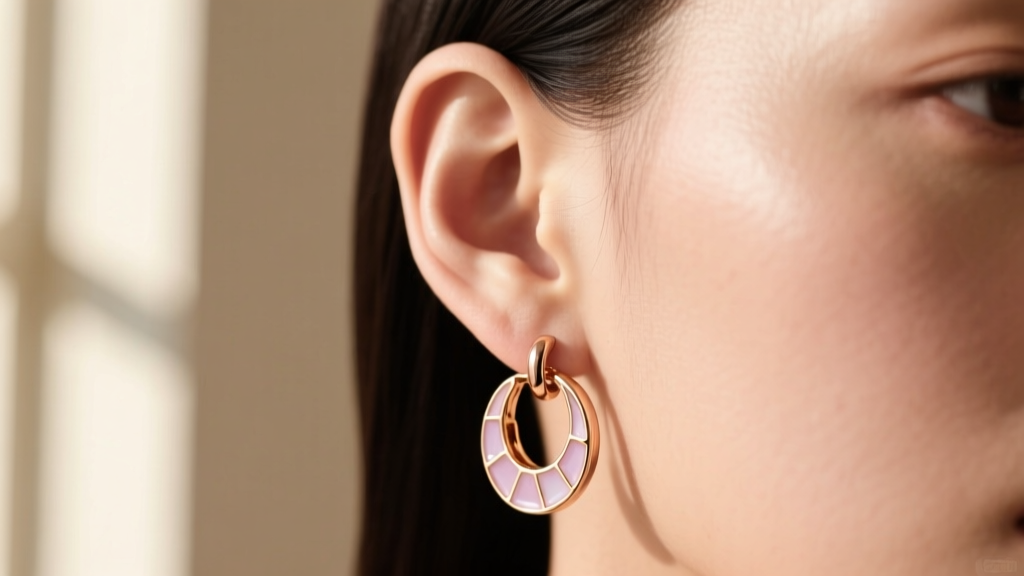
Mauve is having a major moment in jewelry design. As we navigate 2026's shift toward muted, romantic, and emotionally resonant color palettes, mauve earrings have emerged as a sophisticated alternative to stark whites, aggressive reds, and predictable pastels. But for beginners, mauve can be an intimidating shade to style. Is it purple? Is it pink? Is it gray? The truth is that mauve sits at a complex crossroads of the color wheel, meaning the wrong shade can wash you out, while the right shade will make your skin look luminous.
This beginner-friendly explainer will demystify mauve earrings. We will break down the exact color theory, map specific shades to your skin's undertone, explore the best materials for sensitive ears, and provide exact gauge sizing for both lobe and cartilage placements.
What Exactly is Mauve in Jewelry?
Historically, mauve was the first synthetic dye, accidentally created by chemist William Henry Perkin in 1856. In modern jewelry, mauve is generally understood as a pale, grayish-purple or dusty pink-violet. It is a desaturated color, meaning it has a lower chroma (intensity) than a true lilac or magenta.
Because it contains both warm (red/pink) and cool (blue/gray) base pigments, mauve is incredibly versatile. However, jewelry makers achieve this color through vastly different methods, ranging from vitreous enamel and anodized metals to naturally occurring gemstones. Understanding these material differences is the first step to buying a pair of mauve earrings that will last.
The Undertone Framework: Finding Your Perfect Mauve
The most common mistake beginners make is buying a mauve earring based solely on how it looks in the display case. To ensure your earrings flatter your complexion, you must match the specific bias of the mauve to your skin's undertone.
| Skin Undertone | Vein Color Test | Best Mauve Shade | Ideal Metal Pairing |
|---|---|---|---|
| Cool | Blue / Purple | Lilac-Mauve (more blue) | White Gold, Platinum, Silver |
| Warm | Green / Olive | Dusty Rose-Mauve (more pink) | Yellow Gold, Rose Gold, Brass |
| Neutral | Blue-Green Mix | True Grayish-Mauve | Mixed Metals, Titanium |
If you have cool undertones, look for mauve earrings that lean slightly toward lavender or icy lilac. If you have warm undertones, seek out 'dusty mauve' or 'peach-mauve' shades, which will harmonize with the golden notes in your skin. Neutral undertones can pull off the truest, most gray-heavy mauves without looking sallow.
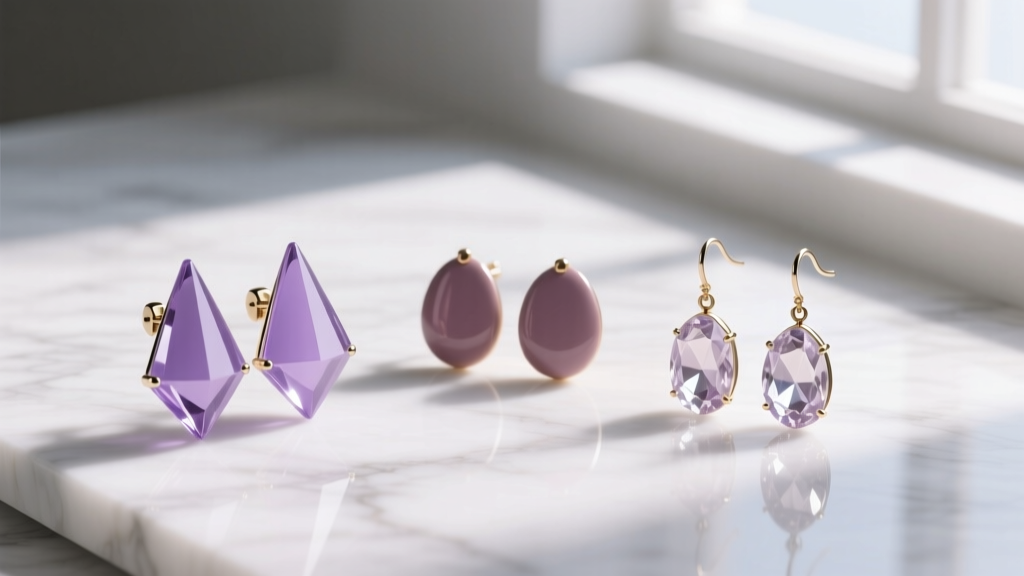
Material Deep-Dive: How Mauve is Created
Not all mauve earrings are created equal. The material dictates not only the price point but also the longevity of the color and the safety of the piece for sensitive piercings.
1. Vitreous Enamel over Sterling Silver
For a rich, opaque mauve, kiln-fired vitreous enamel is the gold standard. Unlike cheap painted resins that yellow or chip within months, glass enamel is fused to the metal at high temperatures. Brands like Mejuri and Monica Vinader frequently use mauve enamel in their 14k gold vermeil and sterling silver huggie collections. Expect to pay between $45 and $120 for high-quality enamel pieces.
2. Anodized Implant-Grade Titanium
If you have highly reactive ears or nickel allergies, anodized titanium is your best option. Titanium (specifically ASTM F-136 implant-grade) is naturally silver-gray, but through an electrolytic anodizing process, the surface oxide layer is thickened to refract light, creating a stunning, metallic mauve hue without using any dyes or paints. High-end body jewelry brands like NeoMetal and BVLA offer anodized mauve titanium ends and clickers that will never tarnish or cause contact dermatitis.
3. Natural Gemstones: Kunzite and Morganite
For fine jewelry enthusiasts, natural stones offer the most brilliant mauve tones. According to the Gemological Institute of America (GIA), Kunzite is a pink-to-violet spodumene that perfectly captures the cool, lilac-mauve spectrum. For warmer, peachy-mauve tones, Morganite (a beryl variety) is the premier choice. Be aware that both stones can fade if exposed to prolonged, direct sunlight, so store your gemstone mauve earrings in a dark jewelry box when not in use.
Gauge Sizes and Cartilage Considerations
When shopping for mauve earrings, especially for cartilage piercings like the helix, flat, or tragus, you must pay attention to the gauge (thickness) of the post or hoop. Wearing the wrong gauge can cause irritation bumps or migration.
- Standard Lobe Piercings: Usually pierced at 20g (0.8mm) or 18g (1.0mm). Most commercial fashion earrings, including enamel studs and drop styles, are made in 20g.
- Cartilage Piercings (Helix, Forward Helix, Flat): Typically pierced at 16g (1.2mm) or 18g (1.0mm). If you are buying a mauve titanium clicker hoop for your helix, ensure you select the correct gauge. The Association of Professional Piercers (APP) strongly recommends internally threaded or threadless (push-pin) jewelry for cartilage to avoid tissue damage during insertion.
- Conch and Daith: Often require 16g or even 14g (1.6mm) hoops. Always measure your existing jewelry with a digital caliper before ordering a replacement mauve hoop.
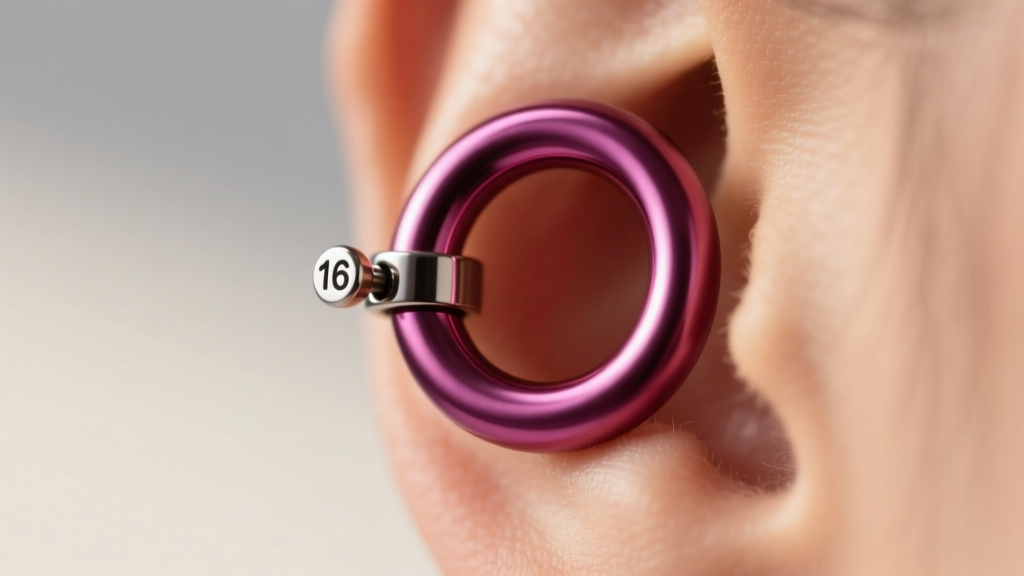
Threadless vs. Internally Threaded
For beginner-friendly cartilage styling, threadless (push-pin) mauve titanium ends are highly recommended. You simply bend the pin slightly and push it into the hollow post. The tension holds it securely in place, making it incredibly easy to change out your jewelry without losing a tiny screw in your bathroom sink.
Wardrobe Pairings: Where to Wear Mauve
Mauve is a 'bridge' color, meaning it pairs beautifully with both neutrals and contrasting jewel tones. Here is a quick styling framework to help you integrate your new earrings into your daily rotation:
- The Office (Subtle & Professional): Pair small mauve enamel studs or 10mm huggies with charcoal gray, navy blue, or cream silk blouses. The gray undertones in the mauve will tie the outfit together without being distracting.
- Weekend Casual (Soft & Romantic): Dusty mauve drop earrings look stunning against olive green, mustard yellow, or rust-colored knitwear. The warm/cool contrast creates a highly intentional, curated aesthetic.
- Evening Wear (Bold & Elegant): For formal events, opt for mauve morganite or kunzite chandelier earrings. Pair them with a monochromatic plum or deep burgundy dress for a tonal, high-fashion look that leans into the romanticism of the color.
By understanding your skin's undertone, choosing biocompatible materials like anodized titanium or kiln-fired enamel, and respecting proper gauge sizing, you can confidently wear mauve earrings that elevate your personal style while keeping your piercings healthy and irritation-free.


