Preventing Earring Swelling: A Complete Buyer's Guide
Discover how to prevent earring swelling with our expert buyer's guide. Learn which metals, gauges, and backings keep your piercings healthy.

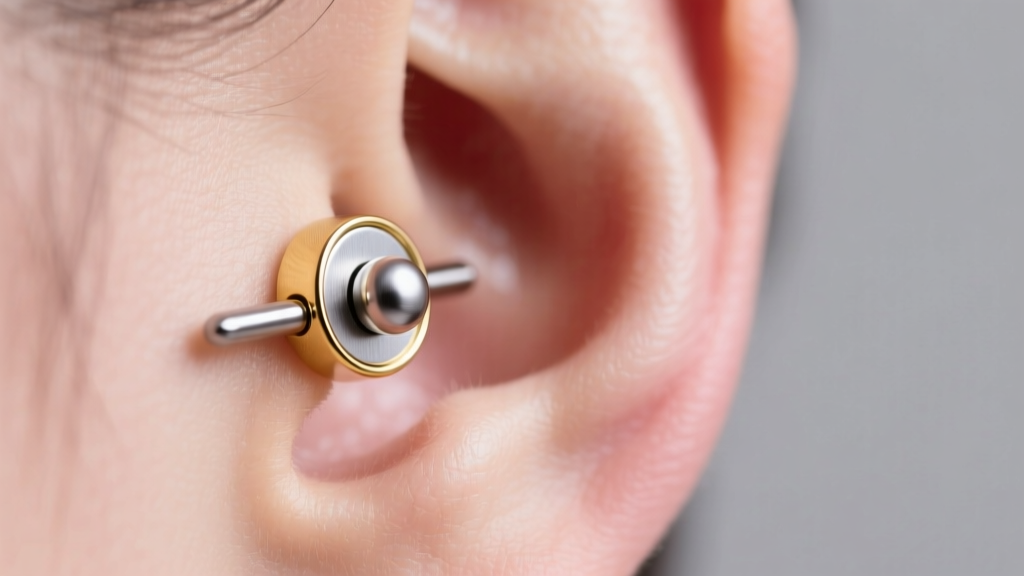
Earring swelling is the bane of both new piercings and seasoned collectors. Whether you are dealing with a fresh lobe piercing or a stubborn helix that refuses to settle, the jewelry you choose dictates the healing trajectory. As a buyer, navigating the jewelry market requires looking past aesthetic appeal and scrutinizing metallurgy, mechanical design, and dimensional accuracy. This guide breaks down exactly what to look for to prevent earring swelling, ensuring your cart is filled with pieces that promote long-term tissue health.
The Root Causes of Earring Swelling
Before selecting jewelry, you must understand why ears swell. Swelling (edema) combined with redness, heat, and itching typically stems from three distinct failure modes:
- Allergic Contact Dermatitis: The immune system reacts to metal ions, most commonly nickel, leaching into the tissue.
- Mechanical Irritation: Poorly designed backings or overly thin posts create micro-tears, trap moisture, or apply uneven pressure to the fistula.
- Compression and the "Cheese Cutter" Effect: Jewelry that is too tight restricts lymphatic drainage, while posts that are too thin slice through the tissue under the weight of the decorative end.
The Metals Matrix: What to Buy and What to Avoid
The American Academy of Dermatology notes that nickel allergy is the leading cause of allergic contact dermatitis. When shopping, ignore vague marketing terms like "surgical steel" or "hypoallergenic," which are largely unregulated. Instead, look for specific metallurgical standards.
| Material | Specific Grade/Standard | Nickel Risk | Price Range | Swelling Verdict |
|---|---|---|---|---|
| Implant-Grade Titanium | ASTM F-136 or F-67 | Zero | $30 - $80+ | Best for active swelling and fresh piercings |
| Niobium | 99.9% Pure | Zero | $25 - $60 | Excellent, highly malleable for custom fits |
| Solid Gold | 14k or 18k (Nickel-Free Alloy) | Low (if alloyed correctly) | $100 - $500+ | Safe for healed ears; avoid in fresh, weeping piercings |
| Surgical Steel | 316L or 316LVM | High (Contains 8-12% Nickel) | $10 - $30 | Avoid: High risk of triggering swelling |
| Sterling Silver | 925 Silver | Variable (Often contains copper/nickel) | $15 - $50 | Avoid: Porous, tarnishes, causes argyria in fresh holes |
Surface Finish: The Microscopic Factor
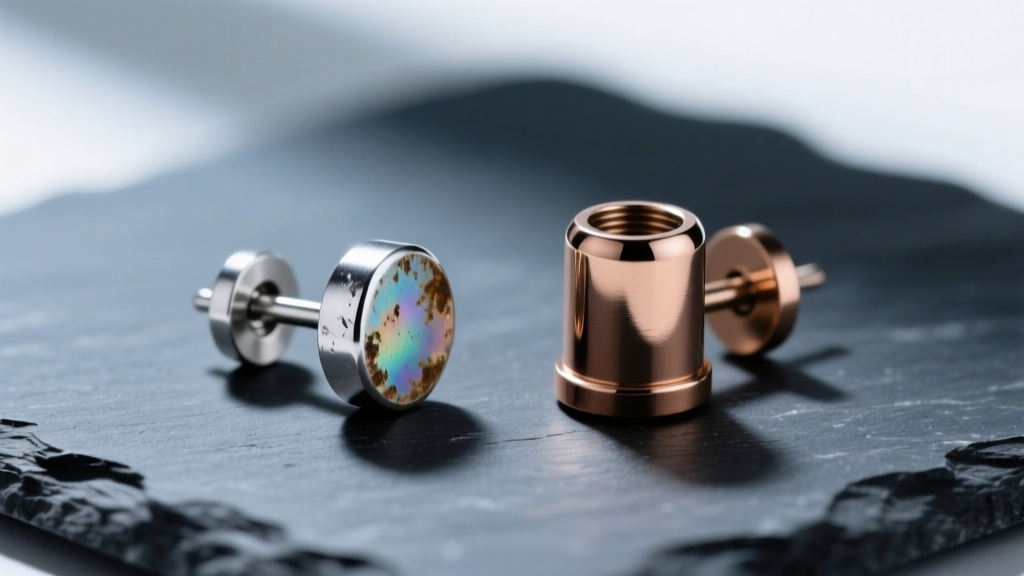
Even if you buy the correct ASTM F-136 titanium, a poor surface finish can trigger earring swelling. High-quality body jewelry features a mirror polish. Under a microscope, a poorly polished post reveals deep scratches and pits. These microscopic valleys harbor biofilm, dead skin, and soap residue. When this biofilm builds up inside the fistula, the body mounts an immune response, leading to localized swelling and the formation of irritation bumps (hypertrophic scarring). Always buy from reputable body jewelry brands that guarantee a mirror finish on their posts. Avoid matte or textured posts for any piercing that is prone to swelling.
The Danger of Plated and Coated Jewelry
Gold vermeil and PVD (Physical Vapor Deposition) coatings are popular for their affordability, but they are a primary culprit behind delayed swelling. PVD coating is safe for the decorative end of the earring, but the post that passes through the tissue must be solid, uncoated implant-grade titanium or solid gold. Coatings eventually wear down due to friction and the slightly acidic pH of human sebum. Once the coating breaches, it exposes the base metal—often brass or low-grade steel—directly to the wound bed, resulting in sudden, severe allergic swelling weeks or months after the initial purchase.
Anatomy of a Swelling-Safe Earring: Backings and Posts
The structural design of your earring is just as critical as the metal. Traditional butterfly backs (friction backs) are notorious for causing earring swelling in sensitive ears.
Why You Must Ditch Butterfly Backs
Butterfly backs feature tight crevices that trap dead skin cells, sebum, and shower moisture. This creates an anaerobic environment perfect for bacterial overgrowth. Furthermore, the narrow friction post digs into the neck when sleeping, applying uneven pressure to the fistula and restricting proper lymphatic drainage.
The Flat Back Labret Solution
For preventing earring swelling, threadless flat back labrets are the gold standard. The flat disc sits flush against the back of the ear, distributing pressure evenly and allowing the tissue to breathe. According to the Association of Professional Piercers (APP), internally threaded or threadless jewelry minimizes tissue trauma during insertion because there are no sharp external threads scraping the healing fistula.
Gauge and Length: The Hidden Culprits of Irritation
Buying the right metal is only half the battle; dimensional accuracy prevents mechanical swelling.
Understanding the Gauge
Gauge refers to the thickness of the post. The standard "mall kiosk" earring is usually 20g (0.81mm) or 22g (0.64mm). However, wearing a heavy decorative top on a 22g wire creates the "cheese cutter" effect, where the thin wire migrates downward, tearing the tissue and causing severe swelling.
- Standard Lobes: Upgrade to 18g (1.0mm) or 16g (1.2mm) for better weight distribution.
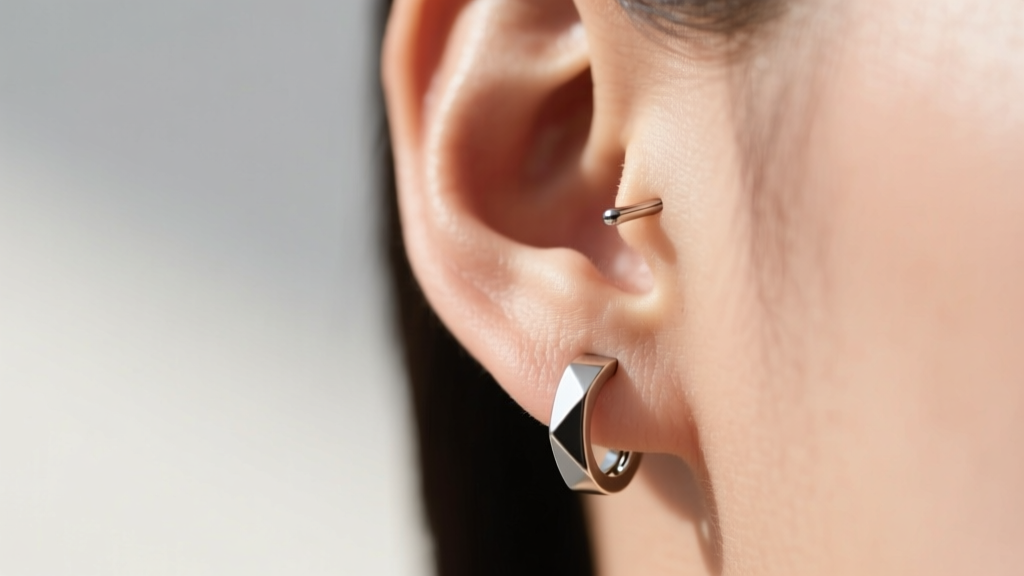
- Cartilage (Helix, Tragus, Conch): Strictly use 16g (1.2mm) or 14g (1.6mm) to prevent migration and swelling.
Post Length and the Swelling Window
If you are buying jewelry for a piercing that is currently swollen or prone to flare-ups, post length is paramount. A standard flat back is 6mm (1/4"). If the ear is actively swollen, a 6mm post will compress the tissue, cutting off circulation and worsening the edema. Always keep 8mm (5/16") or 10mm (3/8") posts in your collection to accommodate fluctuation. Once the swelling subsides, you must downsize to prevent the longer post from snagging and re-triggering the swelling cycle.
Step-by-Step Buying Checklist for Sensitive Ears
Before checking out, run your selection through this rigorous filter:
- Verify the Alloy: Does the product page explicitly state "ASTM F-136 Titanium" or "Nickel-Free 14k Gold"? If it just says "Titanium" or "Gold Plated," abandon the cart.
- Inspect the Threading: Ensure the piece is threadless (press-fit) or internally threaded. Externally threaded jewelry should never touch your skin.
- Check the Backing: Confirm you are purchasing a flat back labret or a secure threaded bead, not a friction butterfly back.
- Measure the Wearable Area: Ensure the post length accounts for your current tissue state (size up for active swelling, size down for healed stability).
Expert Insight: When transitioning from standard friction earrings to threadless flat backs, the initial insertion can feel confusing. Remember that threadless pins rely on tension. You must slightly bend the gold or titanium pin with your fingers before inserting it into the hollow shaft to create a secure, custom fit that won't fall out or irritate the channel.
When to See a Professional Piercer
If you have upgraded to implant-grade titanium, switched to flat backs, and verified your gauge, but earring swelling persists, the issue may be anatomical. The angle of the original piercing might be crooked, causing the jewelry to sit under constant tension. A professional piercer can assess the fistula angle and may recommend a custom-bent post or, in severe cases, a re-pierce at the correct anatomical angle to permanently resolve the mechanical irritation.


