How to Clean and Care for Yellow Gold Diamond Earrings
Learn expert techniques to clean, maintain, and protect your yellow gold diamond earrings. Discover safe solutions, prong checks, and storage tips.

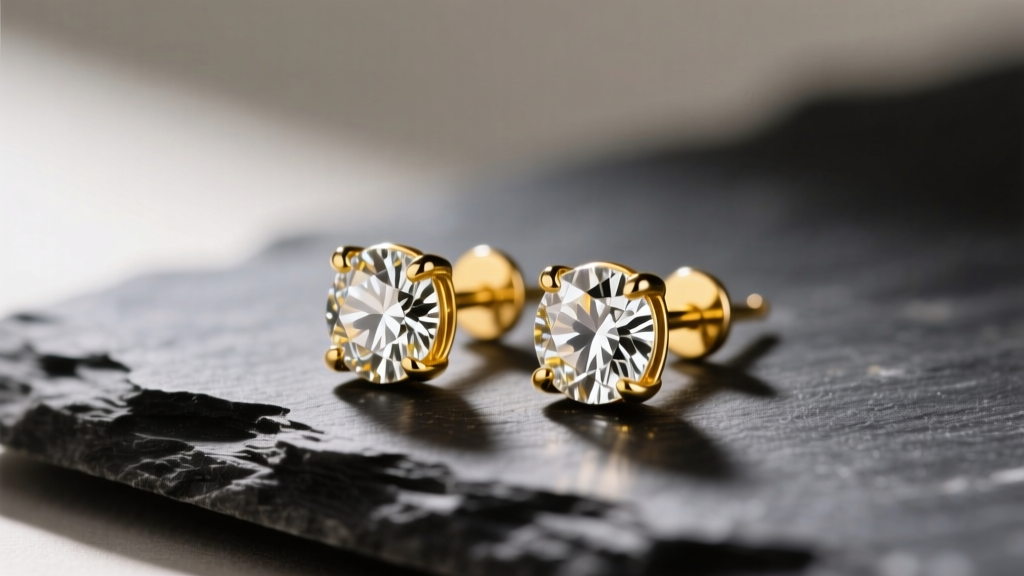
The Timeless Appeal and Delicate Reality of Gold and Diamonds
Yellow gold diamond earrings remain a cornerstone of fine jewelry, offering a warm, vintage-inspired contrast to the icy brilliance of diamonds. However, the very properties that make these earrings beautiful also dictate how they must be maintained. Pure gold is inherently soft, and while diamonds are the hardest natural substance on earth, they are not indestructible. Understanding the metallurgy and gemology behind your jewelry is the first step in preserving its structural integrity and optical brilliance for decades.
Many owners mistakenly assume that because diamonds score a perfect 10 on the Mohs scale of hardness, their earrings require no special handling. In reality, diamonds possess distinct cleavage planes—internal structural weaknesses where a precise, hard impact can cause chipping or fracturing. Similarly, the gold alloy holding the diamond requires specific chemical environments to prevent degradation. This guide provides a masterclass in the care, maintenance, and cleaning of yellow gold diamond earrings, moving beyond generic advice into actionable, expert-level protocols.
The Metallurgy: 14k vs. 18k Yellow Gold
To properly care for your earrings, you must first identify the karat weight of the gold. The karat system dictates the ratio of pure gold to alloy metals (like copper, silver, and zinc), which directly impacts durability and cleaning requirements.
- 18k Yellow Gold (75% Pure Gold): Prized for its rich, saturated yellow hue. However, it has a lower Vickers hardness score (approximately 135 HV), making the prongs holding your diamonds more susceptible to bending, snagging, and wear over time.
- 14k Yellow Gold (58.5% Pure Gold): Contains a higher percentage of strengthening alloys. With a Vickers hardness around 160 HV, 14k gold is significantly more durable and is often the preferred choice for secure diamond settings, especially for active lifestyles.
According to the Gemological Institute of America (GIA), the alloy metals mixed with gold can react to certain environmental chemicals, meaning your cleaning solutions must be pH-balanced and free of harsh abrasives that could strip the polished finish of the gold alloy.
Step-by-Step Cleaning Protocol for Yellow Gold Diamond Earrings
Daily wear exposes your earrings to sebum, dead skin cells, cosmetic residues, and environmental dust. Because diamonds are lipophilic (oil-attracting), they quickly accumulate a greasy film that can reduce their light return and brilliance by up to 40%. Follow this precise cleaning protocol every two weeks to maintain optimal sparkle.
The Expert Cleaning Solution
Avoid commercial 'jewelry dips' that contain undisclosed harsh chemicals. Instead, formulate a safe, highly effective degreasing bath:
- The Base: Fill a small glass bowl with 1 cup of warm (not hot) distilled water. Distilled water is critical; tap water contains calcium and magnesium that leave microscopic hard-water spots on the diamond's pavilion.
- The Surfactant: Add exactly 3 to 4 drops of a mild, ammonia-free dish detergent (such as Dawn Platinum). The surfactants will break down the lipophilic oils clinging to the diamond's facets.
- The Soak: Submerge your yellow gold diamond earrings and let them soak for 20 to 30 minutes. This softens hardened cosmetic residues without stressing the metal.
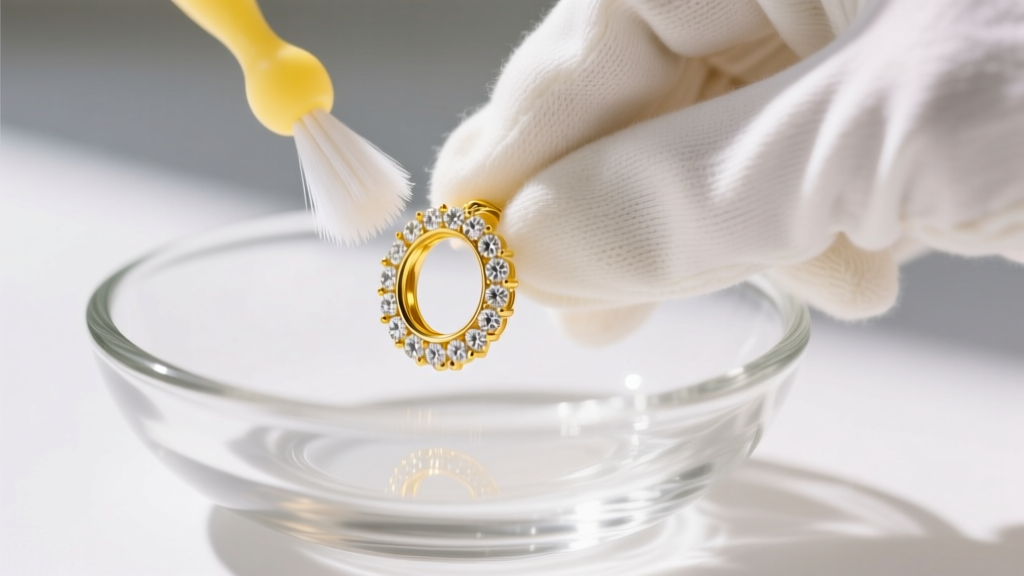
The Mechanical Agitation
After soaking, use an infant-sized toothbrush with extra-soft bristles. Gently brush the diamond, paying special attention to the pavilion (the bottom underside of the stone) and the gallery where the diamond meets the gold setting. Never use stiff bristles or apply heavy pressure, as trapped dust particles (which may contain quartz, a Mohs 7 mineral) can scratch the yellow gold alloy. Rinse the earrings under a gentle stream of lukewarm distilled water, and pat dry with a lint-free microfiber cloth. Avoid paper towels, as wood fibers can leave micro-scratches on highly polished gold.
Chemical Hazards: What to Strictly Avoid
The most common cause of irreversible damage to yellow gold diamond earrings is chemical exposure. The alloy metals in yellow gold (particularly copper and silver) are highly reactive to specific household and recreational chemicals.
Expert Warning: Never wear your gold earrings in a swimming pool or hot tub. Chlorine reacts with the copper and silver alloys in gold, causing a phenomenon known as 'stress corrosion cracking.' This microscopic degradation weakens the prongs from the inside out, often leading to sudden diamond loss.
Additionally, be highly cautious with ultrasonic cleaners. While ultrasonic waves are excellent for shaking dirt out of tight settings, they are incredibly dangerous for certain types of diamonds. If your earrings feature fracture-filled diamonds (treated to improve clarity), the high-frequency vibrations and heat can shatter the stone or melt the glass-like filler. Always verify your diamond's treatment status before using ultrasonic technology. For routine care, the Jewelers of America recommends sticking to manual, gentle cleaning methods to ensure the longevity of both the stone and the setting.
Prong and Setting Maintenance: The 6-Month Check
Cleaning is only half the battle; structural maintenance is what keeps your diamonds secure. Prongs are essentially tiny metal claws that fold over the diamond's girdle. Over time, friction from hair, clothing, and pillows slowly files these prongs down.
| Metal Type | Hardness Profile | Prong Check Frequency | Common Failure Mode |
|---|---|---|---|
| 18k Yellow Gold | Soft / Malleable | Every 6 Months | Prongs bending back, lifting off the diamond table. |
| 14k Yellow Gold | Medium / Durable | Every 9-12 Months | Gradual thinning of the prong tip due to friction. |
| Platinum (Benchmark) | Hard / Dense | Every 12-18 Months | Prongs displacing metal rather than wearing away. |
To perform a basic at-home check, use a 10x jeweler's loupe. Inspect the tips of the prongs holding your diamond. They should sit flush against the crown of the stone. If you see a gap, or if the prong tip looks flat rather than rounded, the earring requires immediate professional re-tipping. Do not wear the earring until a jeweler has added fresh gold to the worn prong.
Proper Storage Solutions to Prevent Micro-Scratches
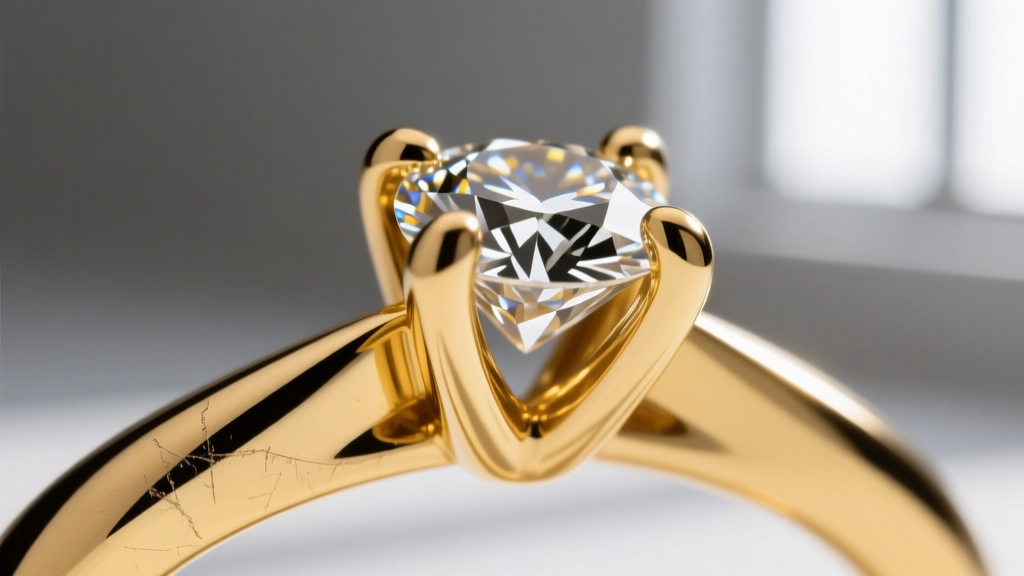
How you store your yellow gold diamond earrings when they are not on your ears is just as important as how you clean them. A common mistake is tossing multiple pieces of jewelry into a single communal box. Because diamonds are a Mohs 10, they will effortlessly scratch the surface of yellow gold (Mohs 2.5 to 3) if they come into contact during storage.
Always store your earrings individually in soft, anti-tarnish flannel pouches or a jewelry box with separate, fabric-lined compartments. If your earrings have butterfly friction backs, ensure the backs are pushed securely onto the posts before storage to prevent the posts from bending under the weight of other items. For long-term storage, consider placing a small silica gel packet in the jewelry drawer to control ambient humidity, which helps preserve the polished luster of the gold alloy.
Summary of Best Practices
Maintaining the fire of your diamonds and the rich glow of yellow gold requires a disciplined, informed approach. By utilizing distilled water and gentle surfactants, avoiding chlorine and ultrasonic risks, and adhering to a strict prong-inspection schedule, you ensure that your earrings remain structurally sound and optically brilliant. Fine jewelry is an investment; treating it with expert-level care guarantees it will continue to elevate your style for a lifetime.


