Troubleshooting Different Types of Earring Backings for Secure Fits
Discover how to stop losing earrings and fix drooping lobes. Our expert troubleshooting guide to the different types of earring backings for every piercing.

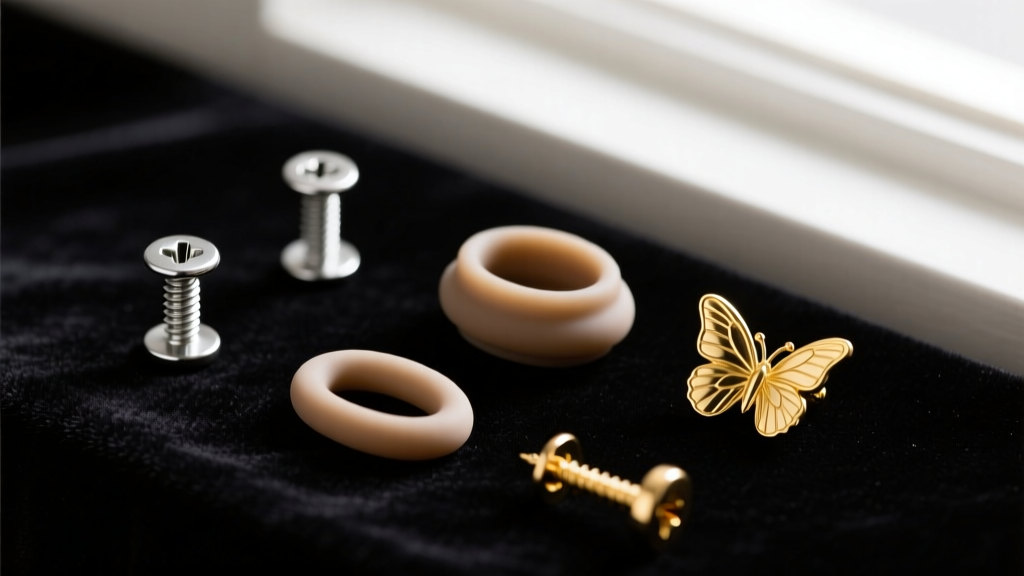
There are few things more frustrating in jewelry wear than reaching up to touch your earlobe, only to realize your favorite diamond stud or vintage gold hoop is missing. As we navigate 2026's shift towards minimalist, heavy-gauge fine jewelry and curated ear projects, the structural integrity of your earring backings has never been more critical. Yet, most consumers treat backings as an afterthought. The reality is that mismatching your backing to your earring's weight, gauge thickness, and piercing location is the root cause of 90% of lost jewelry and lobe irritation.
In this comprehensive troubleshooting guide, we will dissect the different types of earring backings, identify their specific failure modes, and provide actionable, expert-level solutions to ensure your jewelry stays secure, comfortable, and perfectly positioned.
The Anatomy of Earring Security: Why Backings Fail
To troubleshoot effectively, you must understand the physics of earring security. A backing fails for one of three reasons: tension loss, thread degradation, or material breakdown. Standard friction backs rely on the outward spring tension of metal prongs against a grooved post. Over time, repeated removal and the natural oils from your skin cause these prongs to widen, reducing the friction coefficient until the backing slides off. Conversely, threaded backs suffer from cross-threading or microscopic debris buildup in the screw mechanism, leading to a false sense of security before the backing unscrews itself during sleep.
Furthermore, the gauge of the post dictates the backing's grip. A standard lobe piercing is usually 20-gauge (0.81mm) or 18-gauge (1.02mm). If you attempt to use a 20G friction back on an 18G post, you will permanently stretch the backing's metal clutch, ruining it for future use on thinner posts. Always match your backing's internal diameter to the exact gauge of your earring post.
Troubleshooting Heavy Studs and Drooping Dangles
The "forward tilt" or "drooping lobe" syndrome occurs when the center of gravity of an earring extends past the structural support of a standard butterfly backing. Heavy gemstone studs, elongated drop earrings, and solid 14k gold hoops require specialized load distribution.
Comparison Chart: Backings for Heavy Earrings
| Backing Type | Best For | Common Failure Mode | Expert Troubleshooting Fix |
|---|---|---|---|
| Standard Butterfly | Lightweight studs under 2 grams | Prongs widen; earring tilts forward | Use needle-nose pliers to gently squeeze the prongs inward to restore tension. |
| Jumbo Silicone Clutch | Heavy drops and elongated dangles | Silicone degrades and tears over time | Replace every 6 months; clean with mild soap, never rubbing alcohol. |
| La Pousette (Locking) | High-value diamond studs and hoops | Internal spring mechanism jams with debris | Soak in warm distilled water and use a soft brush to clear the locking chamber. |
| Screw Back | Medium-weight studs requiring high security | Cross-threading strips the microscopic threads | Always align the backing perfectly straight before twisting; never force it. |
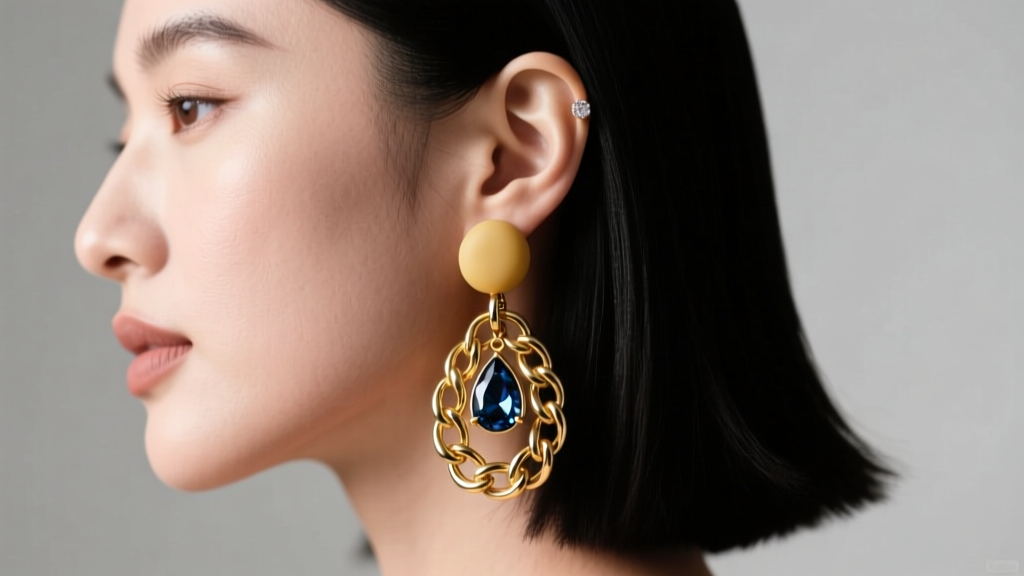
If your heavy earrings are still drooping even with a jumbo silicone backing, the issue may be the post length. If the post is too short, the backing sits flush against the back of the lobe, providing no counterbalance. Upgrading to a slightly longer post (e.g., moving from 6mm to 8mm) allows the backing to sit further back, acting as a lever to keep the front of the earring upright.
Solving Cartilage and Helix Piercing Irritation
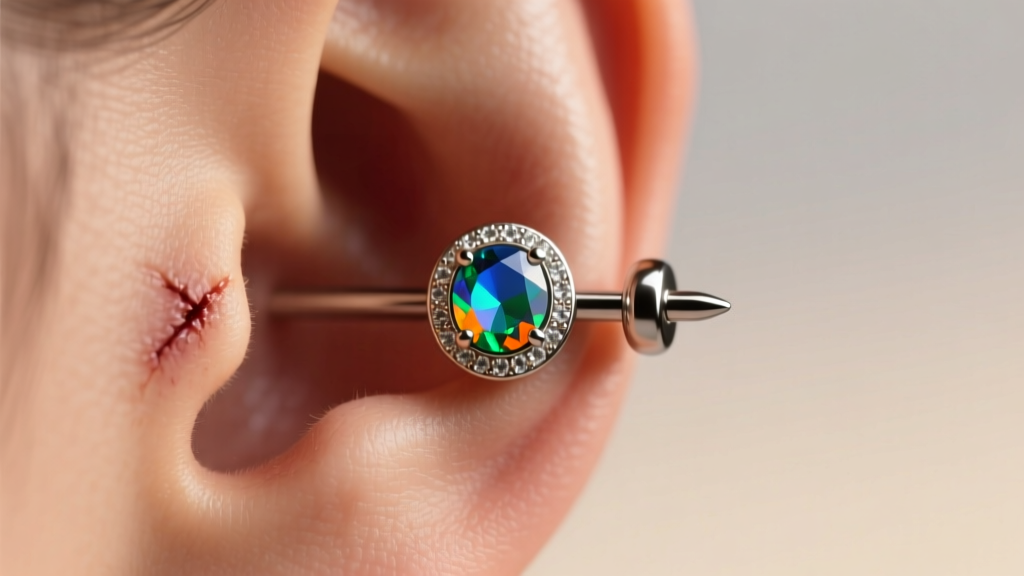
Cartilage piercings, including the helix, tragus, and conch, present an entirely different set of biomechanical challenges. The most common mistake consumers make is using standard butterfly friction backs in cartilage piercings. The sharp prongs of a butterfly back will dig into the side of your head while sleeping, causing pressure necrosis, migration, and chronic irritation bumps.
The industry standard for cartilage, heavily endorsed by the Association of Professional Piercers (APP), is the flat back labret. These feature a flat, smooth disc that sits flush against the back of the ear, distributing pressure evenly.
Threadless vs. Internally Threaded Flat Backs
When troubleshooting cartilage security, you must choose between threadless (push-pin) and internally threaded mechanisms. Threadless jewelry relies on the tension of a slightly bent pin inserted into a hollow post. If your threadless labret keeps falling out, the pin has likely lost its bend. The Fix: Remove the pin, insert it only 1mm into the post, and gently bend it upward at a 5-to-10-degree angle. This restores the internal spring tension.
For internally threaded cartilage jewelry, the threads are cut into the inside of the hollow post, while the decorative end has a smooth pin with external threads. This prevents the sharp threads from passing through and tearing the delicate fistula (piercing channel) during insertion. If an internally threaded end feels loose, apply a microscopic drop of clear, jewelry-safe threadlocker to the screw mechanism—never use superglue, which will permanently fuse the jewelry and emit toxic fumes near the ear.
Fixing Allergic Reactions and Contact Dermatitis
If your earlobes are itchy, red, or weeping clear fluid, you are likely experiencing allergic contact dermatitis. According to the Mayo Clinic, nickel allergy is one of the most common causes of allergic contact dermatitis, and it is notoriously prevalent in cheap earring backings and the solder joints of standard butterfly clutches.
Many brands market their jewelry as "hypoallergenic" or "surgical steel," but 316L surgical steel still contains up to 10-14% nickel, which can leach out when exposed to the acidic pH of human sweat. The friction of a backing rubbing against the sensitive skin behind the ear accelerates this leaching process.
The Material Upgrade Protocol
To permanently troubleshoot backing allergies, you must audit the metallurgical grade of your jewelry components:
- Implant-Grade Titanium (ASTM F136): The gold standard for sensitive skin and healing piercings. It contains zero nickel and is highly resistant to corrosion. Ensure your silicone clutches are paired with titanium posts to avoid galvanic reactions.
- Solid 14k or 18k Gold: Excellent for healed lobes, but ensure the backing itself is solid gold, not gold-plated over a brass or nickel core. Plating wears off rapidly on friction backs due to the mechanical scraping against the post.
- Niobium: A highly biocompatible, reactive metal that is an excellent, cost-effective alternative to titanium for custom-colored flat back labrets.
Quick Reference: Earring Backing Failure Modes & Solutions
Keep this troubleshooting checklist handy for your most common earring emergencies:
- Problem: Silicone bullet clutches feel sticky and are tearing when removed.
Diagnosis: Chemical degradation from harsh cleaners.
Solution: Stop cleaning silicone with rubbing alcohol or hydrogen peroxide. Wash with warm water and mild, fragrance-free antibacterial soap. Replace torn clutches immediately, as micro-tears harbor staph bacteria. - Problem: Screw backs won't tighten completely and feel wobbly.
Diagnosis: Sebum and dead skin cells packed into the internal threads.
Solution: Soak the post and backing in a small ultrasonic jewelry cleaner with a few drops of mild dish soap for 3 minutes. Use a soft-bristled interdental brush to gently sweep the threads clean. - Problem: Omega-back clip-ons (for non-pierced ears) cause intense throbbing pain after 30 minutes.
Diagnosis: Excessive clamping force and lack of padding.
Solution: Visit a professional jeweler to have the tension of the omega hinge adjusted with specialized pliers. Add self-adhesive silicone earring cushions to the clip pad to distribute the pressure across a wider surface area of the earlobe. - Problem: Ear cuffs keep sliding off the cartilage rim.
Diagnosis: Improper sizing and lack of structural grip.
Solution: Ear cuffs are not one-size-fits-all. Gently squeeze the cuff to reduce its internal diameter by 1-2mm. Ensure you are sliding it onto the thinnest part of the outer helix rim, pushing it down until it meets natural resistance.
Conclusion: Maintenance is Security
Understanding the different types of earring backings is only the first step; consistent maintenance is what guarantees longevity. Make it a habit to inspect your friction backs for prong tension every few months, check your threaded posts for debris, and retire silicone clutches at the first sign of dry rot. By treating your earring backings as precision mechanical components rather than disposable accessories, you will protect your investment, preserve your piercing health, and never have to retrace your steps on the floor looking for a lost diamond again.


