How to Say Earrings in Spanish: A Jewelry Shopper's Guide
Learn how to say earrings in Spanish across regions. A complete jewelry shopper's guide to styles, metals, metric gauges, and hallmarks.

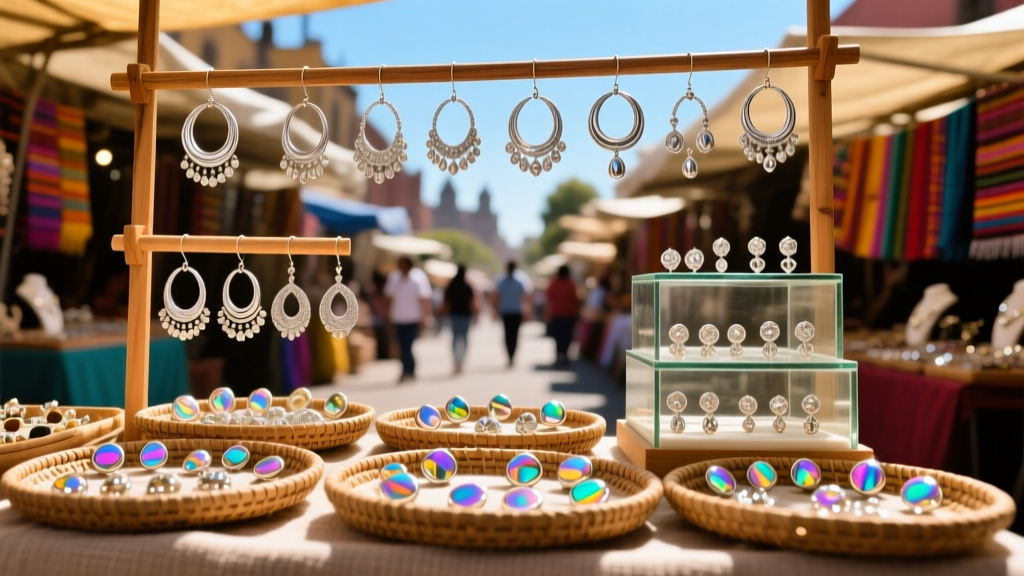
Whether you are navigating the artisan markets of Oaxaca, browsing high-end boutiques in Madrid, or shopping online from Latin American jewelers, language barriers can turn a thrilling jewelry hunt into a frustrating guessing game. Knowing how to say earrings in Spanish is just the first step. To truly protect your ears from allergic reactions, secure the correct gauge sizes, and understand what you are paying for, you need a deeper grasp of regional jewelry terminology, metric measurements, and metallurgical hallmarks.
This beginner-friendly explainer bridges the gap between language learning and expert jewelry curation, giving you the exact vocabulary and technical specs needed to shop for earrings in any Spanish-speaking country.
The Core Vocabulary: Regional Terms for Earrings
The Spanish language is rich with regionalisms, and the word for "earring" changes dramatically depending on your geographic location. According to linguistic databases like WordReference and the Real Academia Española, here is how the terminology breaks down across the globe:
- Pendientes: Used primarily in Spain. It literally translates to "pendants" or "hanging things," which makes sense given the historical popularity of drop styles in European fashion.
- Aretes: The most common term in Mexico, Colombia, Peru, and the United States (among Spanish speakers). It derives from the French arrête, historically linked to the clasps of fish hooks.
- Zarcillos: Widely used in Venezuela, parts of the Caribbean, and rural areas of Central America. It specifically evokes a delicate, often vine-like or intricate design.
- Aros: The go-to word in Argentina, Chile, and Uruguay. It translates directly to "rings" or "hoops," reflecting the cultural dominance of hoop earrings in the Southern Cone.
Essential Earring Styles and Their Spanish Translations
When asking a jeweler for a specific silhouette, using the exact style name will save you time and ensure you get the structural support your piercing requires. Below is a quick-reference translation chart for the most common earring categories.
| English Style | Spanish Translation | Context & Usage Notes |
|---|---|---|
| Stud Earrings | Dormilonas or Pendientes de botón | Dormilonas ("sleepers") specifically refers to small, comfortable studs or tiny hoops meant to be worn 24/7, especially in fresh piercings. |
| Hoop Earrings | Aros or Argollas | Argollas is heavily used in Mexico and Colombia for medium-to-large continuous hoops. |
| Huggies | Aros abrazados or Huggies | Many modern boutiques in major cities simply use the English loanword huggies. |
| Dangle / Drop | Pendientes colgantes | Used universally across all Spanish-speaking regions for any earring that drops below the earlobe. |
| Ear Cuffs | Ear cuffs or Aretes de cartílago | Because they don't require piercing, they are often described as sin perforación (without piercing). |
Navigating Materials and Hypoallergenic Specs Abroad
The most critical part of shopping for earrings abroad is understanding the metal composition. Tourist markets are notorious for selling alloys that cause severe contact dermatitis. Here is the exact terminology you need to verify metal grades with a vendor.
Gold: Solid vs. Plated
In Spain and Latin America, gold purity is often stamped numerically rather than with the "K" system. The Gemological Institute of America (GIA) notes that international hallmarking relies on parts-per-thousand. Look for these stamps:
- Oro de 18 quilates (18k): Stamped 750. Contains 75% pure gold. Excellent for heirloom pieces, but slightly too soft for high-friction ear wires.
- Oro de 14 quilates (14k): Stamped 585. Contains 58.5% pure gold. The ideal balance of durability and hypoallergenic properties for daily-wear studs.
- Chapado en oro / Baño de oro: Gold plated. Avoid this if you have sensitive ears, as the base metal is often latón (brass) or alpaca (nickel silver), both of which are highly allergenic.
Silver and Surgical Metals
If you are buying silver, ask for Plata de Ley 925 (Sterling Silver). However, for fresh piercings or sensitive cartilage, sterling silver can tarnish and cause irritation due to its copper content. Instead, use these phrases:
"¿Tienen aretes de acero quirúrgico 316L o titanio de grado implante?"
(Do you have 316L surgical steel or implant-grade titanium earrings?)
Always look for Titanio ASTM F136. This is the medical standard for implant-grade titanium, entirely free of nickel, making it the safest choice for cartilage piercings like the helix or tragus.
Understanding Gauge Sizes and Metric Measurements
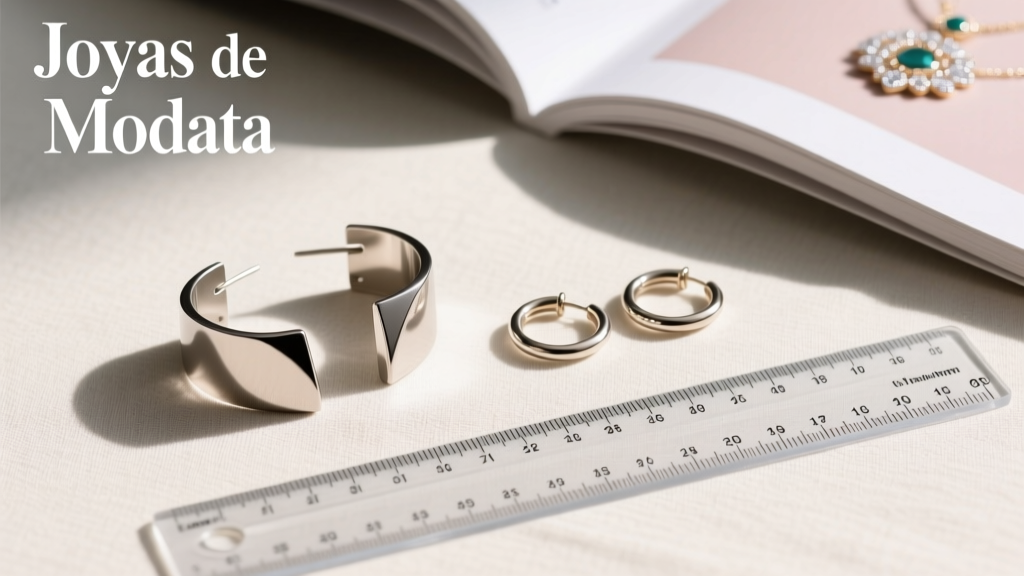
One of the most common mistakes North American shoppers make abroad is asking for jewelry by "gauge" (e.g., 20G or 16G). The metric system is the standard in Spain and Latin America, meaning jewelers measure wire thickness and post diameters in millimeters (mm). If you ask for a "16 gauge" hoop, you will likely be met with confusion.
Use this conversion framework to ensure you buy the correct thickness for your piercing:
- 20G (Standard Lobe): Ask for 0.8 mm or 0.9 mm.
- 18G (Standard Cartilage/Nostril): Ask for 1.0 mm.
- 16G (Thicker Cartilage/Helix): Ask for 1.2 mm.
- 14G (Industrial/Conch): Ask for 1.6 mm.
For hoop diameters, a standard 8mm huggie is simply called an aro de 8 milímetros. Always carry a digital caliper or a printable gauge wheel when shopping in artisan markets where standardized manufacturing isn't guaranteed.
Practical Phrases for the Jewelry Counter
Equip yourself with these targeted phrases to negotiate, verify quality, and ensure proper closures:
- "¿El poste es macizo o hueco?" (Is the post solid or hollow?) Crucial for gold hoops to ensure structural integrity.
- "¿Qué tipo de cierre tienen?" (What type of closure do they have?) Listen for cierre de mariposa (butterfly back), cierre de clic (clicker), or cierre catalán (hinged hoop closure).
- "¿Ofrecen garantía contra defectos de fabricación?" (Do you offer a warranty against manufacturing defects?)
- "Busco aretes hipoalergénicos para piel sensible." (I am looking for hypoallergenic earrings for sensitive skin.)
Cultural Nuances: The Tradition of 'La Puesta de Aretes'
Understanding the cultural weight of earrings in Spanish-speaking countries adds depth to your shopping experience. In many Latin American cultures, la puesta de aretes (the ear-piercing ceremony) is a significant milestone for infants and young girls, often accompanied by family gatherings and religious blessings. Gifting a pair of high-quality dormilonas de oro de 14k (14k gold sleepers) for a baptism or a quinceañera is considered a deeply meaningful, generational gesture. By mastering the vocabulary and technical specs outlined above, you ensure that the pieces you select are not only linguistically accurate but structurally safe and culturally resonant.


