Earring Post Sizes: 2026 Gift Guide for Perfect Fits
Discover the ultimate 2026 gift guide to earring post sizes. Learn gauge, length, and material specs to buy perfect, comfortable earrings for any occasion.

Why Earring Post Sizes Matter When Gifting
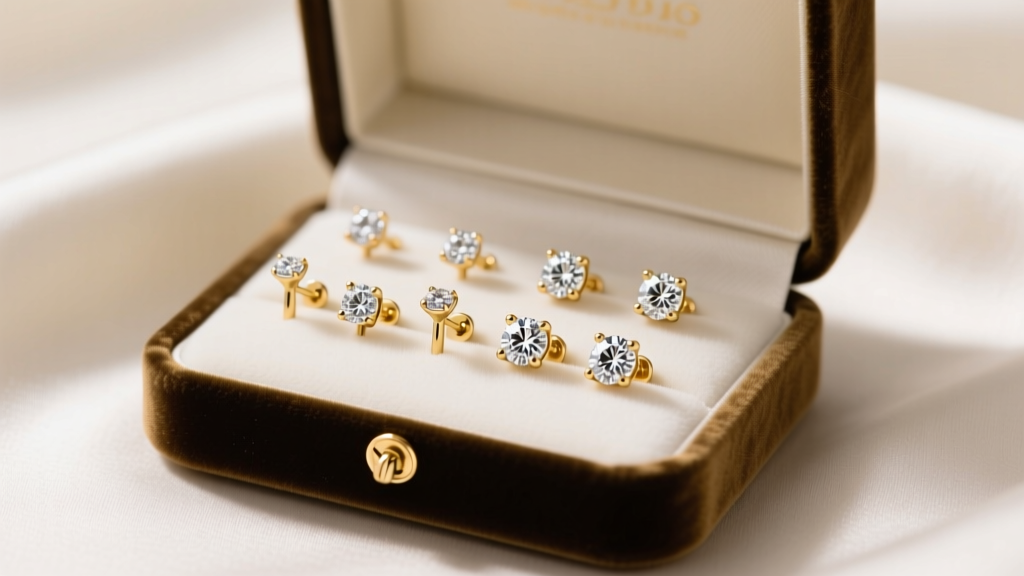
Gifting fine jewelry is a timeless gesture, but in 2026, consumers are far more educated about body jewelry than ever before. Presenting a loved one with a stunning pair of diamond studs or artisan-crafted hoops is a memorable moment—until they realize they cannot comfortably wear them. The secret to a flawless jewelry gift lies in understanding earring post sizes. While most gift-givers obsess over carat weight, gold purity, or gemstone color, the physical dimensions of the earring post dictate whether the piece will be worn daily or relegated to the back of a jewelry box.
Human earlobes vary drastically in thickness, typically ranging from 4mm to over 12mm. Furthermore, the gauge (thickness) of the piercing channel itself can differ based on whether the recipient was pierced at a commercial mall kiosk or a professional body modification studio. If you gift an earring with a post that is too short, the backing will press into the flesh, causing painful embedding, restricted blood flow, and potential infection. Conversely, a post that is too long will leave an awkward gap between the earlobe and the earring head, making the jewelry prone to snagging on hair, sweaters, and towels, which can lead to traumatic tearing.
Understanding the nuances of earring post sizes elevates your gifting from a generic purchase to a highly personalized, deeply considered gesture. According to the Association of Professional Piercers, properly fitted jewelry is the cornerstone of long-term piercing health and comfort. Let us break down exactly how to select the right dimensions for every occasion.
The Standard Earring Post Sizes Chart
Before selecting a gift, you must familiarize yourself with the two primary metrics of earring posts: gauge (thickness) and length. Commercial jewelry stores often default to a one-size-fits-all approach, but professional jewelers and piercers rely on precise millimeter measurements.
| Gauge (G) | Thickness (mm) | Common Use Case | Best Gifting Scenario |
|---|---|---|---|
| 20G | 0.81mm | Standard commercial mall piercings, lightweight fashion studs | Casual gifts, young teens, lightweight gemstone studs |
| 18G | 1.02mm | Standard fine jewelry studs, most vintage earrings | Anniversary diamond studs, graduation gifts |
| 16G | 1.29mm | Professional piercer standard for lobes, cartilage | High-end body jewelry, BVLA/Neometal threadless ends |
| 14G | 1.60mm | Stretched lobes, heavy statement pieces | Custom heavy-gauge gold hoops, alternative styles |
Note on Lengths: Post lengths generally come in 6mm (1/4 inch) for thin lobes and cartilage, 8mm (5/16 inch) for standard lobes, and 10mm+ (3/8 inch and up) for thick lobes or healing piercings that require room for swelling.
Matching Post Sizes to Gifting Occasions
New Piercings and Healing Milestones
If your recipient has recently had their ears or cartilage pierced, gifting standard butterfly-back earrings is a critical mistake. Healing piercings require flat-back labret posts to prevent the backing from embedding in the swollen tissue. For a new piercing milestone, gift a high-end threadless or internally threaded flat-back post made from ASTM F136 implant-grade titanium. Look for an 18G or 16G thickness, and opt for an 8mm or 10mm length to accommodate initial swelling. Brands like Maria Tash or BVLA offer exquisite 14k gold ends that press securely into titanium posts, blending medical-grade safety with luxury.
Anniversaries and Milestone Diamond Studs
When gifting diamond studs for a major anniversary or graduation, the focus shifts to security and longevity. The Gemological Institute of America emphasizes that securing precious stones is just as vital as their cut and clarity. Avoid friction backs (butterfly clasps), which degrade over time and easily slip off. Instead, seek out 18G or 16G posts equipped with screw-back clasps or secure locking mechanisms. An 8mm post length is generally the safest bet for standard adult lobes, ensuring the screw-back sits comfortably flush without digging into the neck or behind the ear.
Everyday Minimalist Huggies and Hoops
For birthdays or 'just because' gifts, huggie hoops are incredibly popular. However, the 'post' in this context refers to the hinge and clicker mechanism. Ensure the inner diameter matches the recipient's anatomy; a 10mm inner diameter is standard for lobes, while 8mm is better for helix or tragus piercings. Always opt for a 16G clicker post for cartilage huggies to prevent the 'cheese cutter effect,' where thin wire slowly migrates and tears through the delicate cartilage tissue over time.
How to Secretly Measure Their Post Size
Surprise gifts require stealth. If you need to determine their exact earring post sizes without ruining the surprise, employ these investigative techniques:
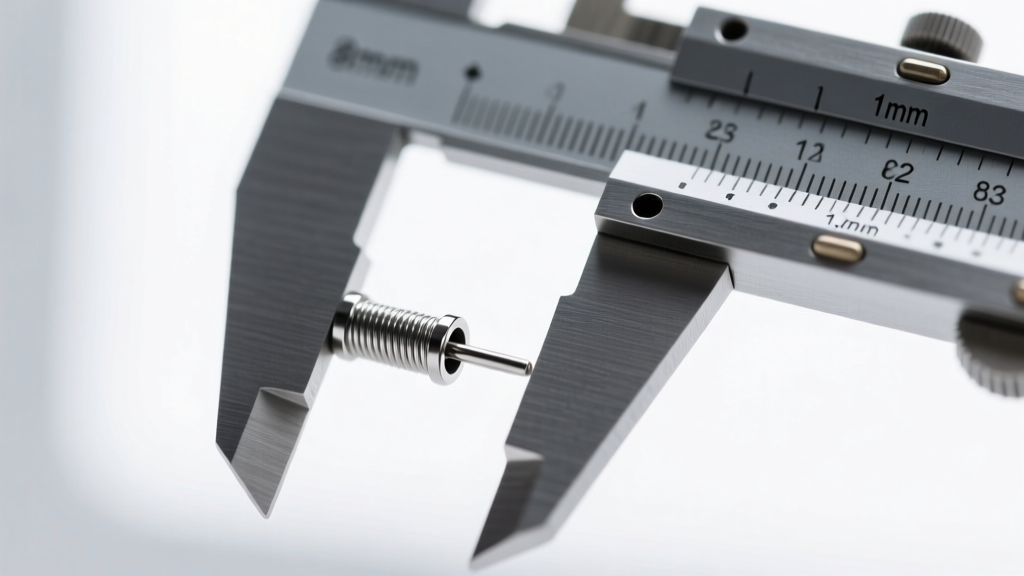
- The Caliper Method: Borrow a pair of their most-worn, comfortable studs. Use a cheap digital caliper (available online for under $15) to measure the post thickness (gauge) and the distance from the gem setting to the backing groove (length).
- The Backing Check: Examine their current jewelry box. Do they wear friction backs, screw backs, or flat-back labrets? Matching their preferred backing style ensures the new gift integrates seamlessly into their daily routine.
- The Lobe Pinch Test: If you are buying for a partner, gently pinch their earlobe when they are resting. A thin lobe (under 6mm) requires a 6mm post. A standard lobe (6mm-8mm) needs an 8mm post. A thick, plush lobe requires a 10mm post to avoid compression.
Material Grades: The Ultimate Sensitive Ear Gift
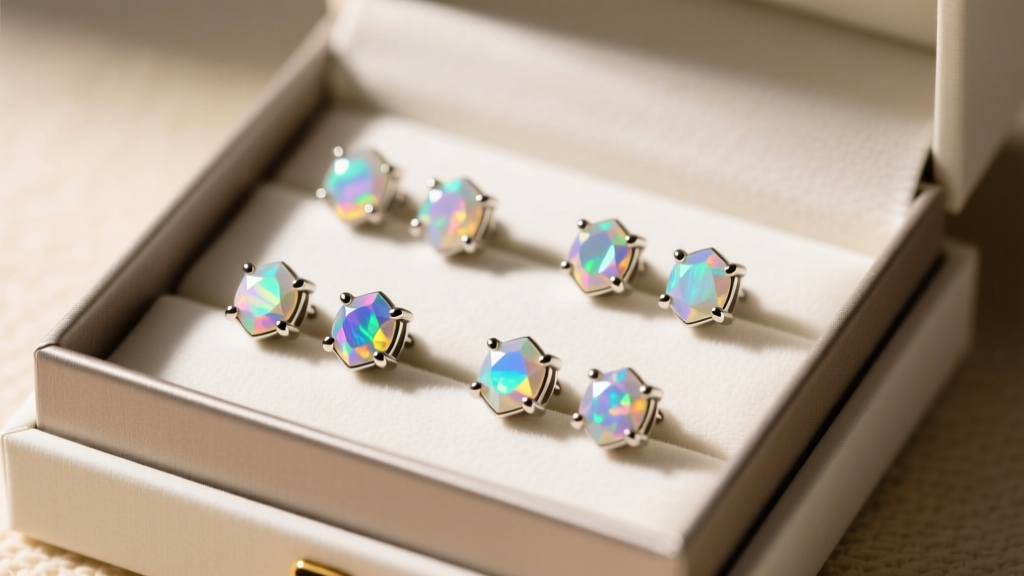
Understanding earring post sizes is only half the battle; the material composition of the post dictates whether the recipient will suffer from contact dermatitis. Many commercial brands deceptively market their jewelry as 'surgical steel,' which often contains nickel—a notorious allergen that causes itching, flaking, and rejection.
For the ultimate sensitive-ear gift, strictly adhere to these material grades:
Always prioritize ASTM F136 Implant-Grade Titanium or ASTM F562 Cobalt-Chrome for the post itself. If gifting solid gold, ensure it is 14k or 18k and explicitly alloyed without nickel (often using palladium or silver instead).
Titanium posts are exceptionally lightweight, entirely hypoallergenic, and can be anodized into stunning colors without the use of surface plating that might chip or wear away. Gifting a set of custom-anodized titanium threadless posts with high-quality gemstone ends shows a level of anatomical care that generic mall-store jewelry simply cannot match.
Common Gifting Mistakes and How to Avoid Them
Even with the best intentions, gift-givers frequently fall into predictable traps. Avoid these common failures to ensure your 2026 jewelry gift is a resounding success:
1. The 'One-Size' Assumption: Assuming all standard studs are 8mm long. Many vintage or imported earrings feature 10mm or 11mm posts, which will droop and irritate a modern, standard-thickness lobe. Always verify the length.
2. Ignoring the Threading: Externally threaded posts (where the screw pattern is on the post itself) tear through the delicate fistula (piercing channel) upon insertion. Always gift internally threaded or threadless (push-pin) jewelry, where the post is completely smooth.
3. Overlooking the Clasp Weight: Heavy diamond or gemstone tops require a thicker post (16G) and a wider, more secure backing. A massive 2-carat diamond set on a flimsy 20G post will constantly tilt forward, causing discomfort and an uneven appearance.
By mastering the technicalities of earring post sizes, you transform a simple jewelry purchase into an act of profound consideration. You are not just gifting a beautiful object; you are gifting daily comfort, anatomical harmony, and long-term piercing health.


