Best Metals for Every Man Earring Style: A Full Guide
Discover the best metals for your man earring style. Compare titanium, gold, and steel properties, gauge sizes, and allergy safety.


The Intersection of Metallurgy and Men's Jewelry
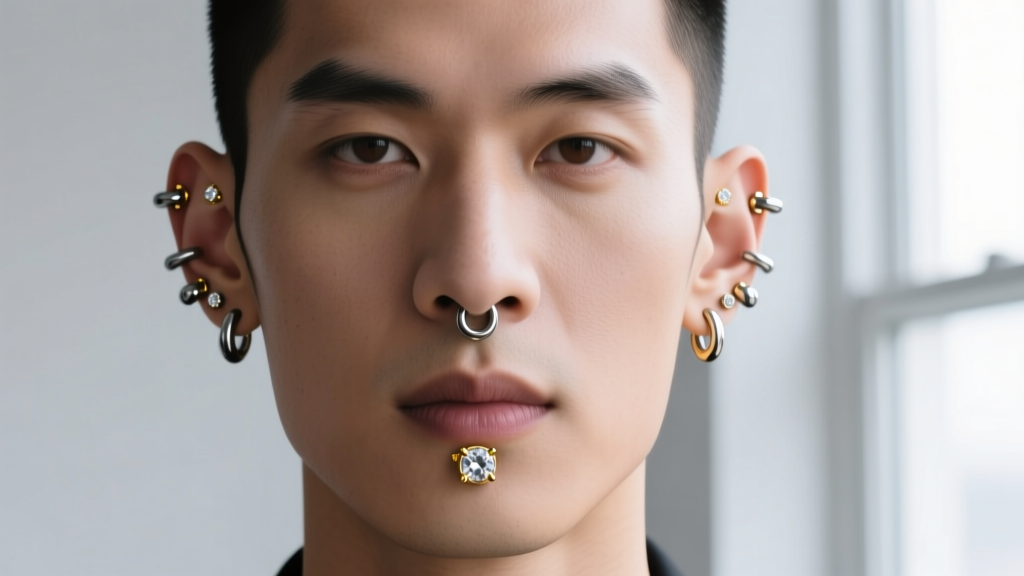
When curating a definitive man earring style, the conversation often revolves around silhouettes, face shapes, and cultural trends. However, the foundational element that dictates the longevity, comfort, and safety of your jewelry is metallurgy. In 2026, the market is saturated with everything from cheap fast-fashion alloys to aerospace-grade metals. Understanding the molecular behavior of these materials is critical, especially when dealing with the highly vascular and sensitive tissue of the earlobe and cartilage.
Choosing the wrong metal can lead to contact dermatitis, migration, and irreversible tissue damage. Whether you are opting for a minimalist stud, a heavy dangle, or stretched tunnels, the material must align with the mechanical stress and biological environment of the piercing. Below, we dissect the core metals used in men's earrings, analyzing their tensile strength, biocompatibility, and ideal applications.
Core Material Breakdown: Properties and Pricing
Not all metals are created equal. The jewelry industry frequently uses umbrella terms like "surgical steel" or "titanium" without specifying the exact alloy grade. Here is a structured comparison of the most common materials used in men's ear jewelry.
| Material | Grade / Standard | Nickel Content | Best Application | Average Price Range |
|---|---|---|---|---|
| Titanium | ASTM F136 (Implant) | 0% (Nickel-Free) | Fresh piercings, sensitive skin, threaded ends | $35 - $120 |
| Gold | 14k or 18k Solid | Varies (Palladium alloys are safe) | Healed lobes, prestige huggies, permanent jewelry | $150 - $800+ |
| Surgical Steel | 316L / 904L | 8% - 10.5% | Healed lobes, budget-friendly hoops | $15 - $50 |
| Tungsten | Commercial Carbide | 0% (Cobalt binder risks) | Stretched lobes (plugs/tunnels) | $25 - $75 |
| Platinum | 950 Pt | 0% (Hypoallergenic) | High-end heirloom studs, heavy dangles | $400 - $1,500+ |
Implant-Grade Titanium (ASTM F136)
According to the Association of Professional Piercers (APP), ASTM F136 implant-grade titanium is the gold standard for body jewelry. Unlike commercial-grade titanium (ASTM B265), which may contain impurities, F136 is highly biocompatible and entirely nickel-free. One of the most unique properties of titanium is its ability to be anodized. By running an electrical current through the metal in an electrolyte bath, the surface oxide layer thickens, refracting light to create vibrant colors (like matte black, deep blue, or rose gold) without using any toxic plating or paints that could flake off inside the fistula.
Precious Metals: Gold and Platinum
For a luxurious man earring style, gold remains a top contender, but karat purity dictates durability. 24k gold (99.9% pure) is far too soft for jewelry; it will bend, warp, and lose its shape under the mechanical stress of a hoop or dangle. 14k gold (58.5% pure) offers the perfect balance of rich color and structural rigidity. However, buyers must be wary of white gold, which is traditionally alloyed with nickel to achieve its silver hue. Always seek out palladium-based white gold to avoid severe allergic reactions. Platinum (950 Pt) is exceptionally dense, hypoallergenic, and develops a desirable patina over time, though its high density makes it unsuitable for large, heavy cartilage hoops that could cause migration.
Steel Alloys: The Nickel Dilemma
316L surgical steel is the most ubiquitous metal in affordable men's jewelry. It is strong, highly polishable, and resistant to corrosion. However, it contains up to 10.5% nickel. While the nickel is generally bound within the steel's crystalline lattice, prolonged exposure to sweat and bodily fluids can cause ion leaching, triggering contact dermatitis in sensitized individuals. If you prefer the look of steel but have sensitive skin, you must upgrade to titanium or platinum.
Matching Materials to Specific Earring Styles
The physical design of your earring dictates the mechanical requirements of the metal. A material that works perfectly for a static stud may fail catastrophically in a dynamic dangle.
Studs and Huggies: High Friction Areas
Studs and huggies sit tightly against the ear, creating micro-environments where sweat, dead skin cells, and sebum accumulate. Because these styles require frequent handling and threading, the metal must resist tarnish and corrosion. Titanium and solid 14k gold are ideal here. Avoid silver (sterling 925), as it contains copper, which reacts with sulfur in the air and skin oils to create black silver sulfide tarnish that can permanently stain the piercing channel.
Heavy Dangles and Hoops: Tensile Strength
Hoops and dangles act as pendulums. Every time you turn your head, the earring swings, applying lateral torque to the piercing fistula. If the metal is too soft (like high-karat gold or pure silver), the post or the hoop ring will slowly bend out of its circular shape, creating a weak point that can snap. 316L steel and titanium possess high tensile strength and yield points, ensuring that a 14-gauge or 12-gauge hoop maintains its structural integrity despite constant kinetic stress.
Stretched Lobes and Plugs: Weight and Porosity
For men sporting stretched lobes (00 gauge and above), the weight of the jewelry becomes a primary concern. Heavy materials like steel or glass can cause gradual downward migration, thinning the bottom of the earlobe over time. Titanium is exceptionally light, making it a superior choice for large, solid plugs. Tungsten carbide is another popular option for stretched ears due to its scratch resistance and dark, gunmetal aesthetic. However, tungsten is incredibly brittle (rating a 9 on the Mohs hardness scale); if dropped on a hard surface, a tungsten plug can shatter, making it a risky choice for active lifestyles.
Gauge Sizing and Structural Integrity
Material selection must also account for the thickness of the jewelry post. The standard gauge sizes for men's earrings are:
- 20g (0.81mm) & 18g (1.02mm): Standard for commercial lobe studs and lightweight dangles. At this thickness, soft metals like silver or low-karat gold can easily bend.
- 16g (1.29mm) & 14g (1.63mm): The standard for cartilage piercings (helix, tragus, conch) and high-quality men's hoops. The increased thickness provides the necessary rigidity to prevent the "cheese-cutter effect," where thin wire slowly slices through the tissue.
- 12g (2.05mm) and thicker: Used for heavy industrial bars and stretched lobes. Titanium is highly recommended at these gauges to offset the sheer volume and weight of the metal.
Troubleshooting: Contact Dermatitis and Tarnish
If you experience itching, redness, or a clear fluid weeping from your piercing, you are likely experiencing allergic contact dermatitis. The Mayo Clinic identifies nickel as the leading cause of this reaction, noting that once a nickel allergy develops, it is typically lifelong.
Pro Tip: If you inherit or purchase vintage men's earrings and are unsure of the metal composition, do not wear them in unhealed or sensitive piercings. You can purchase a simple dimethylglyoxime (DMG) nickel test kit online to swab the jewelry. If the swab turns pink, the jewelry contains leachable nickel and should be relegated to display or returned.
Final Verdict: Investing in Your Ears
Developing a signature man earring style is an exercise in personal expression, but it should never come at the cost of your tissue health. For fresh piercings, sensitive skin, or lightweight cartilage setups, ASTM F136 titanium remains the undisputed champion of biocompatibility and versatility. For those seeking heirloom-quality prestige in healed lobes, palladium-alloyed 14k or 18k gold offers the perfect marriage of luxury and durability. By understanding the metallurgical properties of your jewelry, you ensure that your earrings remain a permanent, comfortable, and striking addition to your aesthetic arsenal.


