How to Style and Care for Mother of Pearl Heart Earrings
Learn how to clean, style, and maintain your mother of pearl heart earrings with our expert step-by-step guide on preserving nacre luster.

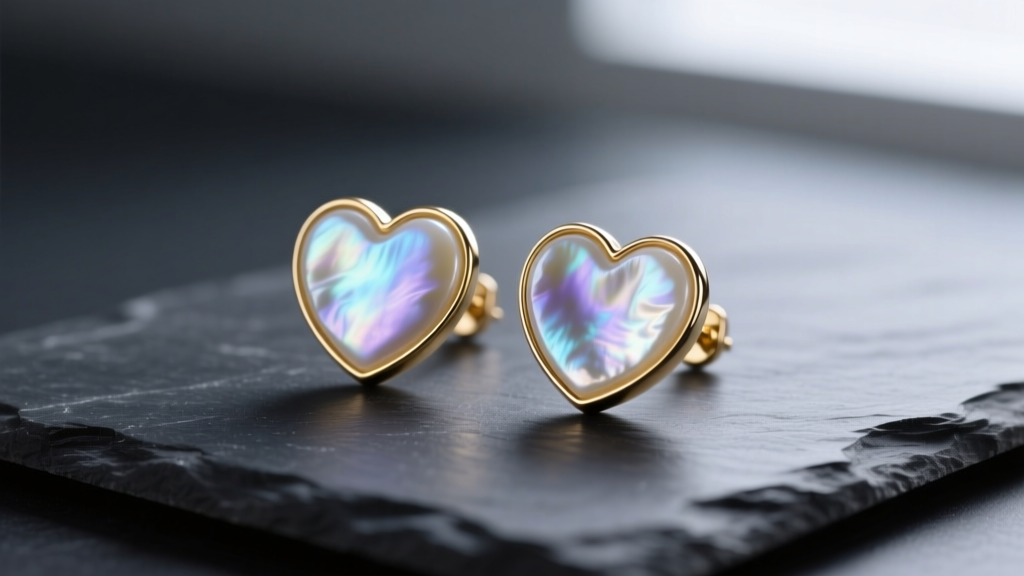
The Organic Anatomy of Nacre: Why Special Care is Required
Mother of pearl heart earrings have surged in popularity, bridging the gap between vintage nostalgia and modern minimalist aesthetics. Whether you are wearing delicate 14k gold studs, chunky resin-encased drops, or subtle huggies, the iridescent allure of nacre is undeniable. However, because nacre is an organic gemstone, it requires a vastly different maintenance protocol than diamonds or sapphires. In this comprehensive guide, we will walk you through the exact steps to clean, style, and preserve your mother of pearl heart earrings, ensuring they remain luminous for decades.
To understand how to care for these earrings, you must first understand their composition. Nacre is secreted by mollusks and consists of microscopic hexagonal platelets of aragonite (a crystalline form of calcium carbonate) layered with conchiolin, an organic protein binder. This structure gives mother of pearl its signature orient and iridescence. However, it also means the material ranks a mere 2.5 to 3.0 on the Mohs hardness scale. For context, a copper penny is about a 3.5. This extreme softness makes your heart-shaped earrings highly susceptible to scratching, chemical etching, and dehydration.
Step-by-Step Cleaning Protocol for Nacre Jewelry
According to the Gemological Institute of America (GIA), organic gems require a gentle, non-abrasive approach to cleaning. The most common mistake jewelry owners make is treating mother of pearl like quartz or topaz. Harsh chemicals can strip the nacre layers, leaving the shell dull and chalky. Follow this exact step-by-step cleaning protocol at home to safely restore your earrings.
- Step 1: Dry Dusting. Before introducing any moisture, use a clean, untreated makeup brush or a very soft microfiber cloth to gently sweep away surface dust and skin cells. This prevents abrasive particles from being ground into the soft aragonite during the wet cleaning phase.
- Step 2: The Distilled Water Wipe. Tap water contains chlorine and trace minerals that can leave microscopic deposits on the nacre. Dampen a lint-free cloth with distilled water. If your earrings have stubborn body oil buildup, add a single drop of pH-neutral castile soap to the cloth. Gently wipe the mother of pearl heart, avoiding excessive pressure.
- Step 3: Immediate Drying. Never let moisture sit on the surface or seep into the drill holes. Use a dry, soft cotton cloth to immediately pat the earrings completely dry. Allow them to air dry on a towel for 15 minutes before storing.
Critical Warning: Never place mother of pearl heart earrings in an ultrasonic cleaner. The cavitation bubbles generated by ultrasonic waves will literally blast the delicate aragonite layers off the shell base, causing irreversible peeling and structural failure.
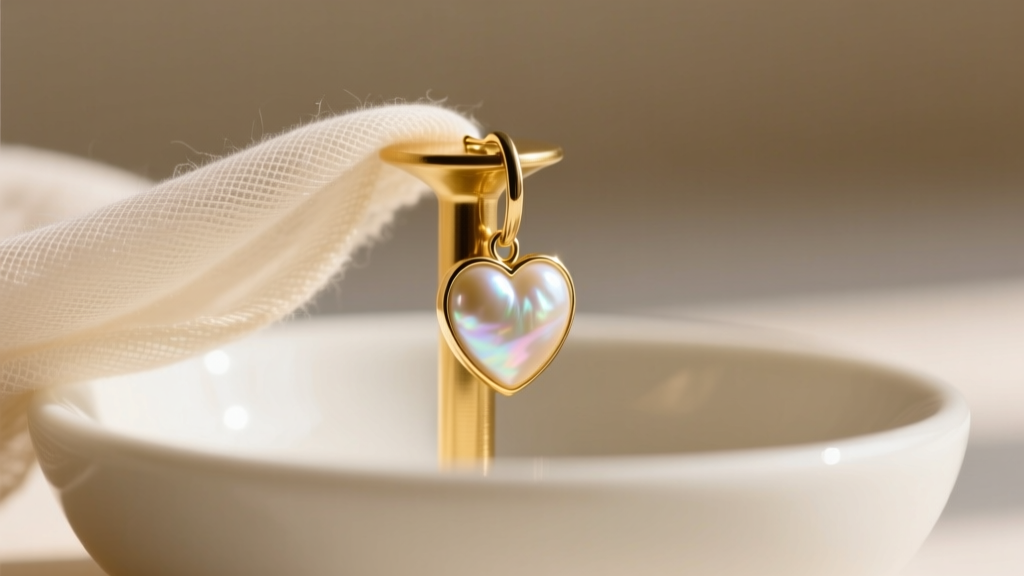
Styling Guide: Balancing the Heart Motif
Styling mother of pearl heart earrings requires an understanding of both facial geometry and the visual weight of the shell. The heart motif naturally draws the eye downward and outward, making it a powerful tool for balancing facial features. Furthermore, the subtle pastel overtones of nacre (often flashing pink, green, or silver) pair best with natural fabrics like crisp white linen, silk slip dresses, and cashmere. Avoid pairing nacre with harsh neon textiles, which can visually wash out the gemstone's delicate orient.
Face Shape and Style Matrix
| Face Shape | Recommended Earring Style | Visual Effect & Pairing Advice |
|---|---|---|
| Round | Elongated Drop / Dangle | Creates a vertical line that lengthens the jaw. Pair with V-necklines. |
| Square | Curved Huggies with Charms | Softens angular jawlines. The curved huggie offsets the sharp heart point. |
| Heart | Wide Studs or Short Drops | Adds visual weight to the lower half of the face, balancing a narrow chin. |
| Oval | Any Style (Studs to Chandeliers) | Perfectly balanced proportions allow for experimental, oversized nacre hearts. |
When shopping, expect to pay between $60 and $120 for high-quality gold vermeil options from contemporary brands, while solid 14k or 18k gold settings from fine jewelers will typically range from $300 to over $800, depending on the nacre thickness and diamond accents.
Hardware, Gauges, and Piercing Health
The hardware supporting your mother of pearl heart earrings is just as critical as the shell itself. Most standard earlobe piercings are done at 20-gauge (0.81mm) or 18-gauge (1.02mm). When purchasing drop or dangle styles featuring large, solid mother of pearl hearts, the weight of the dense shell can easily bend a flimsy 20-gauge wire. Always inspect the post thickness; for heavy drops, an 18-gauge or even 16-gauge (1.29mm) post is necessary to prevent the earring from drooping forward or permanently warping.
Additionally, consider the backing mechanism. Standard friction backs (butterfly backs) often fail to support the front-heavy nature of carved nacre hearts. For security, look for earrings equipped with La Pousette (screw) backs, or purchase aftermarket silicone stoppers to keep the heavy hearts sitting flush against your earlobe. Finally, ensure the post material is solid 14k/18k gold, platinum, or implant-grade titanium. Gold-plated brass posts can cause contact dermatitis and the resulting acidic sweat will rapidly etch the adjacent mother of pearl.
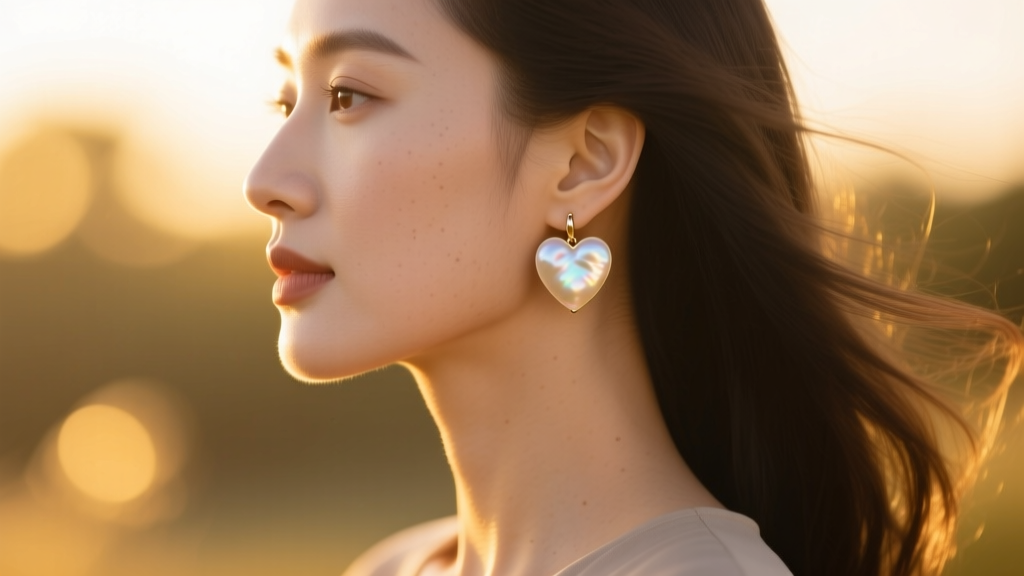
Long-Term Storage and Hydration Techniques
Proper storage is the final pillar of nacre preservation. The conchiolin protein in mother of pearl requires a slight amount of ambient moisture to remain flexible. Storing your earrings in airtight plastic bags or leaving them in a bank safety deposit box for years can lead to severe dehydration. According to guidelines from Jewelers of America, extreme dryness causes the organic binder to shrink, leading to micro-fractures, crazing, and the eventual peeling of the nacre layers.
To prevent this, store your mother of pearl heart earrings in a breathable silk or untreated cotton pouch. Keep them away from direct sunlight and heat sources, which will bake the moisture out of the shell. If you live in an exceptionally dry climate or must store them in a vault, place a slightly damp cotton ball inside the jewelry box (but outside the silk pouch) to maintain a stable, gentle humidity level. Never store nacre loosely in a jewelry box where it can tumble against harder gemstones like diamonds or sapphires, which will instantly gouge the 2.5 Mohs surface.
Summary Checklist for Nacre Longevity
- Wear Last, Remove First: Always put your earrings on after applying perfume, hairspray, and cosmetics to prevent chemical etching.
- Wipe After Wear: A quick 5-second wipe with a dry microfiber cloth after wearing removes acidic sweat and skin oils.
- Avoid Ultrasonics: Stick to distilled water and pH-neutral soap for deep cleaning.
- Check the Gauge: Ensure heavy drops have at least an 18-gauge post to prevent bending.
- Breathe in Storage: Use silk pouches and avoid airtight plastics to prevent conchiolin dehydration.
By respecting the organic nature of nacre and following these precise maintenance steps, your mother of pearl heart earrings will retain their breathtaking iridescence and structural integrity for a lifetime of wear.


