Care and Cleaning for the World's Biggest Earrings & Heavy Pieces
Discover expert care, cleaning, and structural maintenance tips for the world's biggest earrings and heavy statement jewelry to protect your lobes.

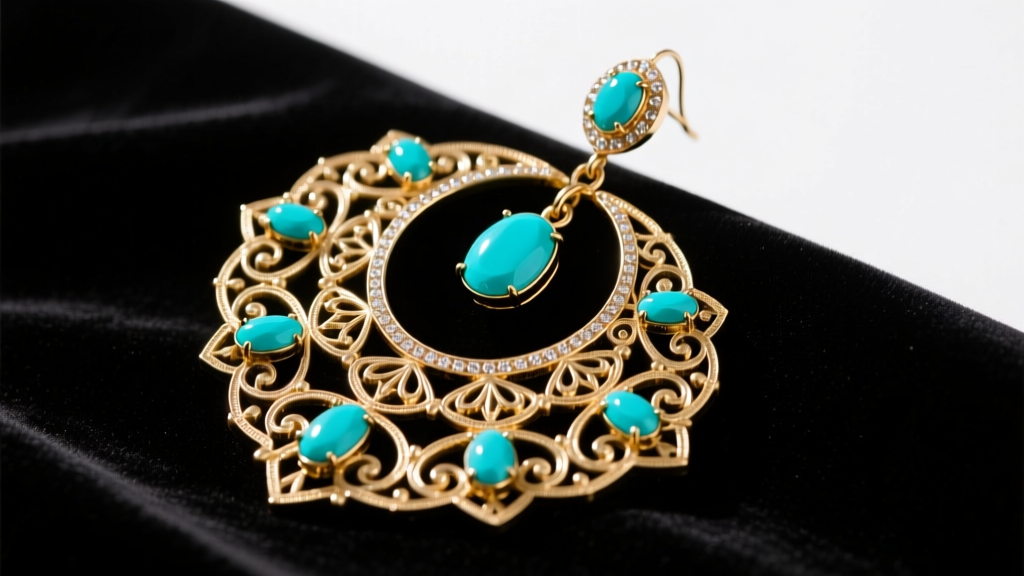
While the literal world's biggest earrings might require a forklift, a structural harness, and a Guinness adjudicator to verify their multi-kilogram weight, the 2026 high-fashion and avant-garde jewelry scenes have embraced hyper-scaled, ultra-heavy statement pieces that push the absolute limits of human anatomy. From oversized sculptural brass hoops to massive, gem-encrusted chandelier drops weighing upwards of 50 to 100 grams per ear, these architectural marvels demand far more than a simple wipe-down with a jewelry cloth. Caring for extreme statement earrings requires a rigorous understanding of metallurgy, weight distribution, lobe preservation, and specialized cleaning protocols to prevent catastrophic material failure and physical trauma.
The Physics of Extreme Jewelry and Lobe Preservation
When you wear pieces inspired by the world's biggest earrings, gravity becomes your primary adversary. Standard earlobes can comfortably support 7 to 10 grams of static weight. Once a piece exceeds 15 grams, the downward force begins to stretch the piercing channel, leading to micro-tears, inflammation, and eventually, permanent auricular clefts (split lobes). The pendulum effect created by walking or turning your head amplifies this stress exponentially. A 30-gram dangle earring can generate over 100 grams of dynamic shear force on the solder joint connecting the post to the earring body.
To mitigate this, heavy earrings must be engineered with reinforced jump rings and thicker posts. Standard 20-gauge (0.8mm) or 18-gauge (1.0mm) posts act like cheese wires under heavy loads. True heavyweight statement pieces require a minimum of 14-gauge (1.6mm) or even 12-gauge (2.0mm) posts to distribute the pressure across a wider surface area of the piercing channel.
Weight-to-Support Matrix for Heavy Earrings
| Earring Weight | Required Post Gauge | Mandatory Support Mechanism | Max Wear Time |
|---|---|---|---|
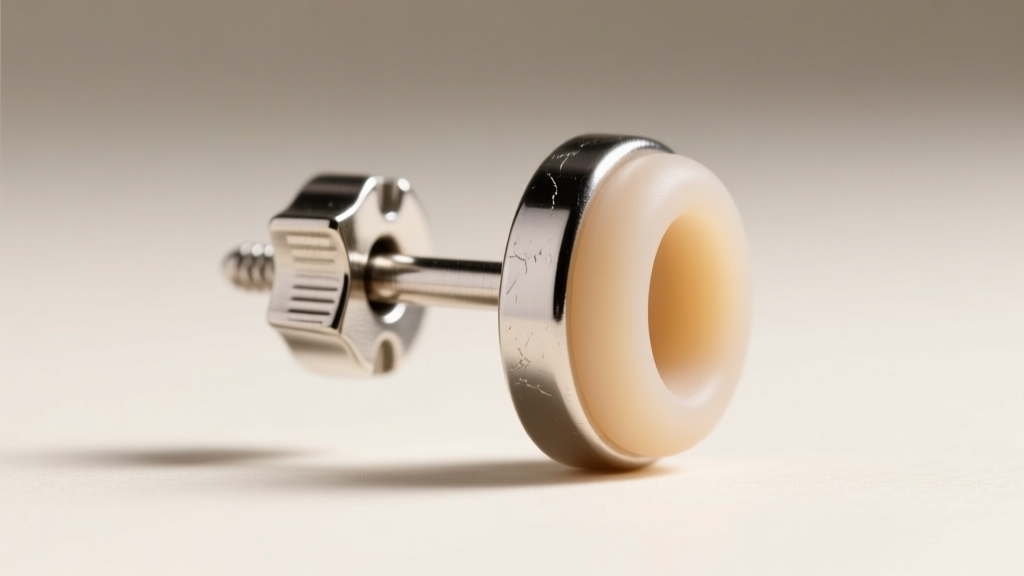
| 10g - 25g | 16g to 14g (1.2-1.6mm) | Wide 10mm silicone friction backs | 8 Hours |
| 25g - 50g | 14g to 12g (1.6-2.0mm) | Invisible nylon ear support bands + Earlaces | 4-6 Hours |
| 50g - 100g+ | Custom / French Wire | Distributed ear cuff harnesses / Chain supports | 2-3 Hours (Events only) |
Structural Integrity: Preventing Metal Fatigue
Massive earrings suffer from unique structural vulnerabilities. The sheer surface area of a large hoop or chandelier catches on clothing and hair, creating sudden torque. According to the Jewelers of America, sudden torque is the leading cause of solder joint failure in statement jewelry.
If you own heavy, oversized pieces, you must perform a bi-monthly structural audit. Using a 10x jeweler's loupe, inspect the exact point where the earring post or hook meets the main body. Look for microscopic stress fractures, thinning metal, or porous solder flows. If the earring features articulated hinges or moving parts, apply a microscopic drop of synthetic watch oil to the pivot points to prevent grinding, which accelerates wear in heavy brass and bronze pieces.
Deep Cleaning Protocols for Massive Surface Areas
The sprawling surface area of the world's biggest earrings acts as a magnet for environmental pollutants, sebum, hairspray, and cosmetic powders. Cleaning these giants requires a systematic approach to avoid damaging delicate patinas or dislodging heavy, epoxy-set stones often used to keep the weight manageable.
The Soaking and Agitation Method
Never use ultrasonic cleaners on massive costume or semi-fine statement pieces. The high-frequency vibrations can shatter large, fragile cabochons (like turquoise or malachite) and liquefy the industrial adhesives holding them in place. Instead, rely on manual deep-cleaning:
- The Bath: Mix warm distilled water (never tap water, as mineral deposits will spot large expanses of polished metal) with a few drops of pH-neutral dish soap, such as Dawn.
- The Agitation: Submerge the earrings for exactly 5 minutes to loosen sebum. Use a soft-bristled baby toothbrush to gently agitate the filigree, bezels, and undercarriage where skin oils accumulate.
- The Rinse: Rinse thoroughly under a gentle stream of distilled water.
- The Dry: Pat dry with a lint-free microfiber cloth, then use a hairdryer on the 'cool' setting to blast moisture out of deep crevices. Trapped moisture in large, complex earrings leads to rapid verdigris (green corrosion) on brass and copper bases.
Expert Warning: Many oversized 'boho' or tribal-style earrings utilize large, porous stones like lapis lazuli, opal, or untreated turquoise. As noted in the Gemological Institute of America (GIA) Gem Care Guide, these stones are highly sensitive to chemicals and prolonged water exposure. Clean these specific areas only with a barely damp, untreated microfiber cloth, avoiding the soap bath entirely.
Polishing and Patina Management
Large expanses of bare silver, brass, or copper oxidize rapidly due to increased exposure to sulfur in the air. For massive sterling silver hoops, use a dedicated silver polishing cloth infused with micro-abrasives (like a Sunshine cloth). Work in straight, linear motions rather than circles to avoid creating microscopic swirl marks that catch the light and dull the mirror finish. If the piece features an intentional oxidized (blackened) patina in its recesses, avoid dipping it in liquid silver cleaners, which will strip the contrast and leave the massive earring looking flat and lifeless.
Archival Storage for Oversized Silhouettes
Storing the world's biggest earrings in a standard jewelry box is a recipe for disaster. Hanging heavy pieces from hooks causes the metal to slowly warp under its own weight over time, while tossing them into a drawer guarantees tangled chains, crushed filigree, and scratched gemstones.
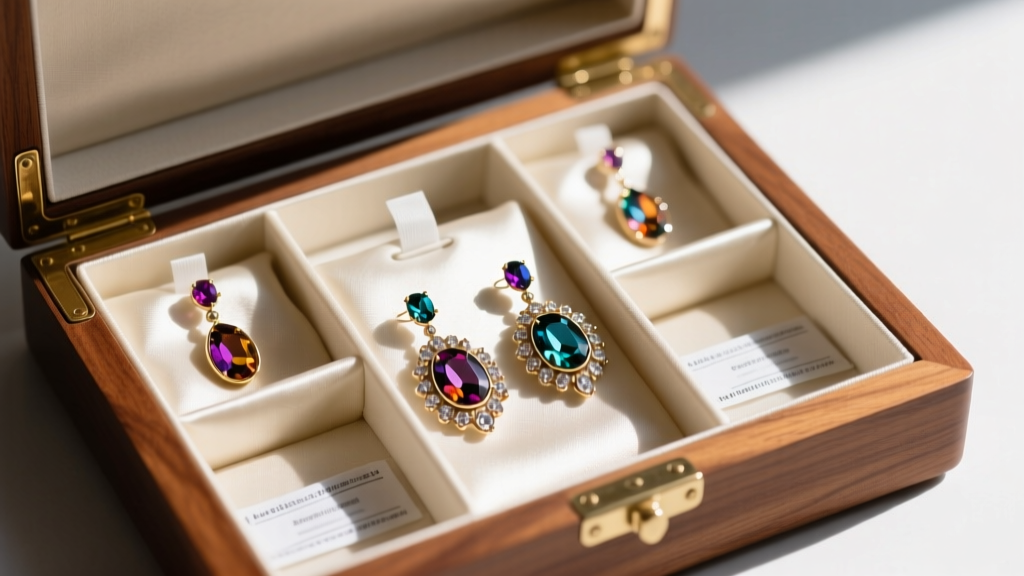
Proper archival storage for hyper-scaled earrings requires a flat-lay approach. Invest in a shallow, multi-compartment jewelry tray lined with untreated silk or anti-tarnish flannel. Each massive piece must have its own dedicated compartment to prevent metal-on-metal contact. Place a 3M anti-tarnish strip and a small silica gel desiccant packet in each compartment to control humidity and sulfur exposure. For extremely fragile, articulated chandelier pieces, wrap them loosely in acid-free tissue paper to support the moving joints and prevent the findings from bending out of shape during long-term storage.
Final Thoughts on Heavyweight Maintenance
Owning and wearing extreme statement jewelry is an exercise in both fashion and physics. By respecting the weight limits of your anatomy, reinforcing your hardware, and adhering to meticulous, chemical-free cleaning routines, you can safely enjoy the breathtaking impact of oversized jewelry without sacrificing your earlobe health or the structural integrity of your investment.


