Tornado Earrings: Technical Guide to Spiral Ear Wraps
Explore the metallurgy, gauge sizing, and tension mechanics of tornado earrings. Expert guide to spiral ear wraps and cuffs for lobe and cartilage.

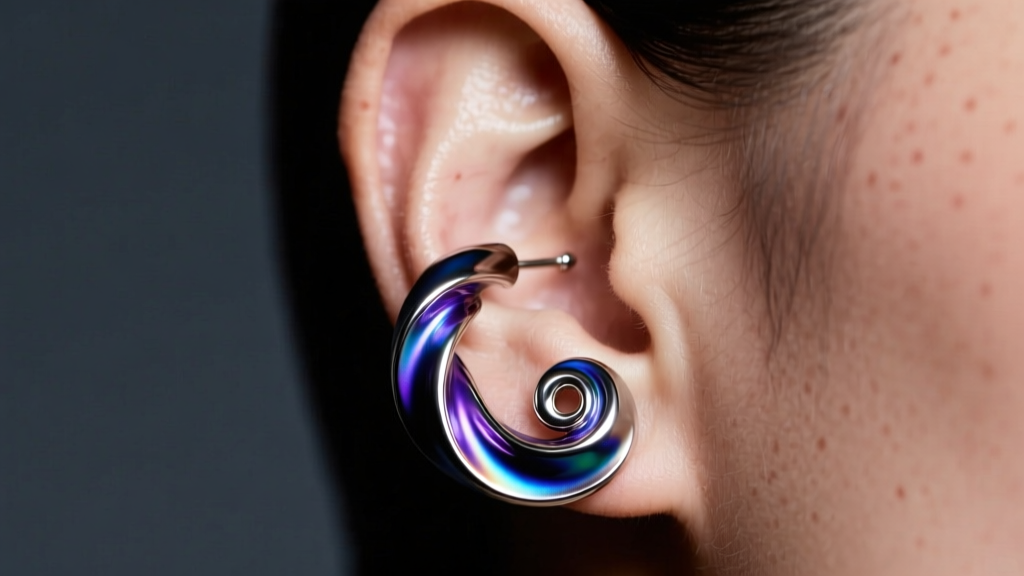
The Architecture of the Spiral: Wire Memory and Tension Mechanics
Tornado earrings—often referred to in the industry as continuous spiral wraps, coil earrings, or ear cuffs—rely entirely on the physical properties of metal tension and structural memory. Unlike traditional post-and-clutch earrings that depend on gravity and friction, tornado earrings utilize radial compression to anchor themselves to the auricular cartilage or the earlobe. To understand how these pieces function, we must examine the concept of 'work hardening' and 'springback' in jewelry metallurgy.
When a jeweler forms a tornado earring, bending the wire introduces dislocations in the metal's crystal lattice. This process, known as work hardening, increases the metal's yield strength but reduces its ductility. If a spiral wrap is made from 'dead-soft' wire, it will easily conform to the ear but lack the springback necessary to maintain compressive tension, leading to a loose fit that slides off. Conversely, wire that is 'spring-hard' will grip the ear fiercely but risks causing pressure necrosis (tissue death) or micro-fracturing the cartilage if the gap is improperly calibrated. The ideal tornado earring is crafted from 'half-hard' tempered wire, offering a precise equilibrium between malleability for adjustment and structural memory for retention.
Gauge Sizing and Tension Tolerances
The thickness of the wire, measured in gauge, dictates both the aesthetic profile and the mechanical grip of the earring. Selecting the incorrect gauge for a specific anatomical placement is the primary cause of structural failure in spiral ear wraps. Below is the technical specification matrix for tornado earring applications:
| Wire Gauge | Metric (mm) | Optimal Temper | Primary Application | Tension Profile |
|---|---|---|---|---|
| 20G | 0.81mm | Half-Hard | Delicate Helix Cuffs | Low compression, high flexibility |
| 18G | 1.02mm | Hard / Spring | Standard Lobe Wraps | Medium compression, secure grip |
| 16G | 1.29mm | Half-Hard | Cartilage Tornado Hoops | High compression, rigid structure |
| 14G | 1.63mm | Dead-Soft to Half-Hard | Heavy Lobe Spirals | Weight-bearing, low tension |
For non-pierced ear cuffs that mimic the tornado spiral, 18G and 16G are the industry standards. Anything thinner than 20G (0.81mm) risks slicing into the tissue under the pressure of the coil's inward force, acting similarly to a cheese wire effect. As of 2026, advancements in micro-forging allow for 16G tornado earrings that feature flattened interior contact points, distributing the radial force over a wider surface area and eliminating the risk of localized ischemia.
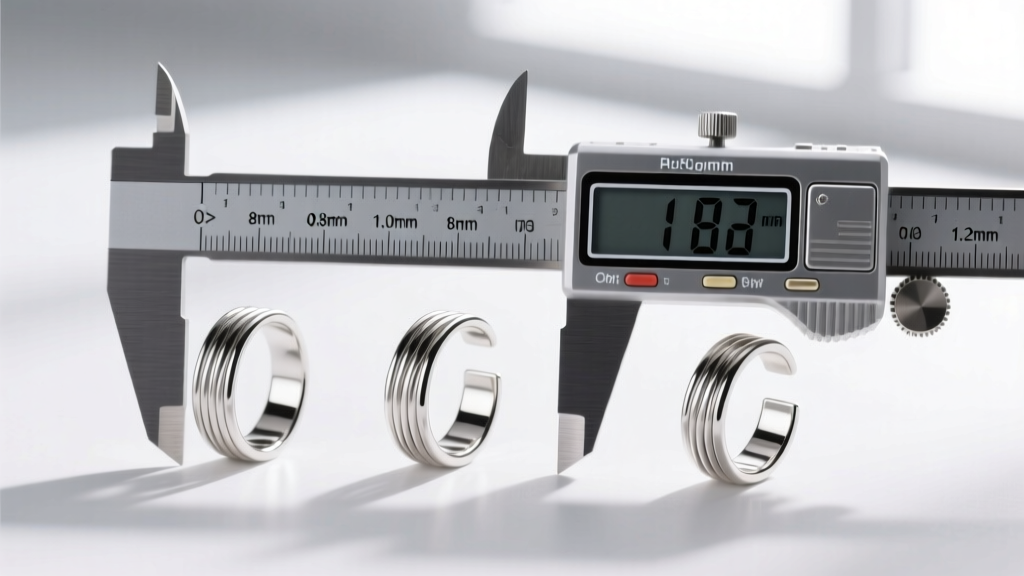
Metallurgy: Material Grades for Tornado Ear Cuffs
The material composition of a tornado earring directly impacts its Vickers Hardness (HV), its biocompatibility, and its resistance to metal fatigue. Because these earrings are subjected to repetitive bending during application and removal, the alloy must withstand cyclic stress without snapping.
- Niobium (Pure): Highly favored for its hypoallergenic properties and ability to be anodized into vibrant colors. However, pure niobium is relatively soft (approx. 60 HV). To use it for tornado earrings, jewelers must alloy it or rely on thicker gauges (16G) to compensate for its low yield strength. According to the Association of Professional Piercers (APP), niobium is one of the safest metals for prolonged skin contact, making it ideal for sensitive cartilage.
- ASTM F136 Titanium (Ti-6Al-4V ELI): The gold standard for body jewelry. This aerospace-grade titanium alloy offers exceptional strength-to-weight ratios and high springback. A 16G titanium tornado earring will maintain its compressive grip for years without suffering from metal creep. The challenge lies in its hardness; adjusting a titanium spiral cuff requires specialized nylon-jawed pliers to avoid marring the surface or snapping the wire.
- 14k Gold (Nickel-Free White or Yellow): Pure 24k gold is too soft for tension-based jewelry. 14k gold, alloyed with copper, silver, and zinc, achieves a Vickers Hardness of roughly 120-140 HV when work-hardened. This provides the luxurious aesthetic of gold with the mechanical memory required for a secure spiral wrap. Suppliers like Rio Grande provide precise metallurgical data on wire tempers, emphasizing that 14k gold must be annealed before shaping and then work-hardened to achieve the 'spring' temper necessary for cuffs.
Pierced vs. Non-Pierced: Structural Failure Points
Tornado earrings generally fall into two categories: continuous hoops that pass through a piercing and wrap around the ear, and non-pierced cuffs that clamp onto the outer rim. Each presents unique failure modes.
In pierced continuous spirals, the primary failure point is the transition zone where the wire enters the fistula (the piercing hole). If the spiral is not perfectly aligned with the angle of the piercing, the wire creates a torque effect, leading to migration, tearing, or the development of hypertrophic scarring. The solution is a custom-bent tornado earring where the initial post is perfectly straight for 5mm before beginning the spiral coil, ensuring zero lateral stress on the fistula.
In non-pierced cuffs, the failure point is almost always user error regarding the 'gap'—the open space in the spiral that allows the ear to enter. If a user forces a cuff with a 3mm gap onto an ear ridge that is 6mm thick, they permanently stretch the metal's crystalline structure beyond its elastic limit. Once the yield point is exceeded, the earring enters plastic deformation; it will never grip the ear tightly again. This is why purchasing adjustable tension tools or having a professional jeweler calibrate the gap to your specific ear anatomy is non-negotiable for high-end pieces.
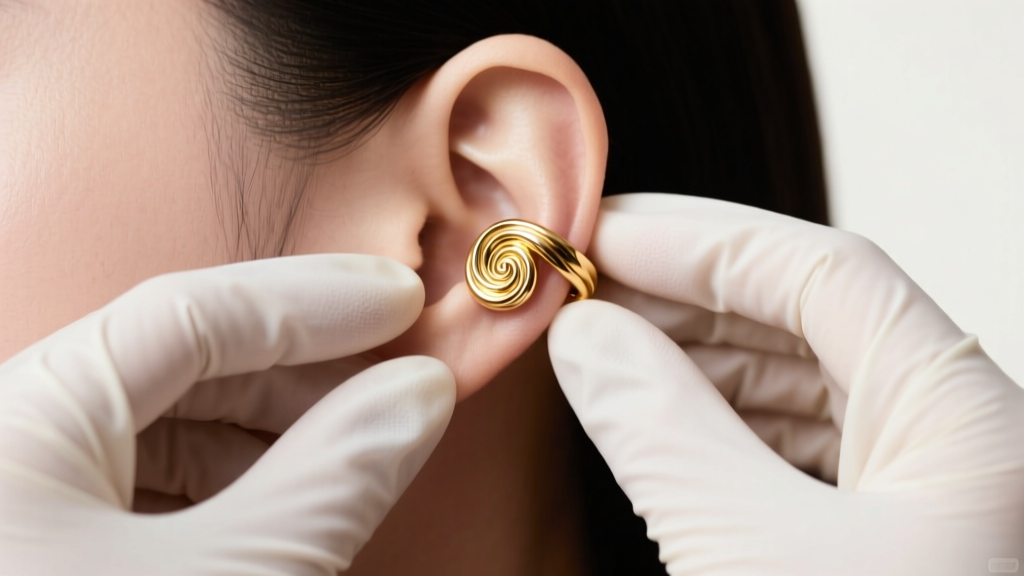
Expert Fitting Protocol: Avoiding Cartilage Trauma
Applying a tornado earring requires a specific mechanical technique to avoid bruising the perichondrium (the connective tissue covering the cartilage). The 'slide-and-rotate' method is the professional standard for fitting spiral ear cuffs and wraps.
- Identify the Thinnest Ridge: Locate the narrowest point of the helix or the lobe edge. Do not attempt to force the cuff over the thickest part of the cartilage.
- Warm the Metal: Body heat or a brief application of warm water slightly increases the ductility of the alloy, making it more forgiving during the initial stretch.
- The Slide: Slide the open gap of the tornado earring horizontally over the thinnest ridge. Never pull the ear through the gap; bring the metal to the ear.
- The Rotate: Once the gap has cleared the tissue, rotate the earring 90 degrees so the coil wraps around the natural curve of the ear. The tension should be firm enough that the earring does not slide when the head is shaken, but loose enough that you can slide a piece of standard printer paper (0.1mm thick) between the metal and the skin.
Maintenance and Tension Recalibration
Over time, all tension-based jewelry suffers from stress relaxation. The constant outward pressure of the ear against the inward compression of the metal causes the wire to slowly lose its grip. For daily wearers, a tornado earring will require recalibration every 4 to 6 months.
To recalibrate, use smooth-jawed parallel pliers. Gently squeeze the top and bottom of the spiral to close the gap by 0.5mm. Never use standard grooved jewelry pliers, as the teeth will bite into the gold or titanium, creating stress concentrators that will inevitably lead to a catastrophic snap during future adjustments. Store your tornado earrings in a rigid, circular mold when not in use to prevent them from being crushed in a jewelry box, which irreversibly alters the spiral's geometry and ruins the radial tension.


