Troubleshooting Crystal Flower Earrings: Care & Fixes
Learn how to fix loose stones, prevent lobe sagging, and clean cloudy crystal flower earrings with expert jewelry repair and care tips.

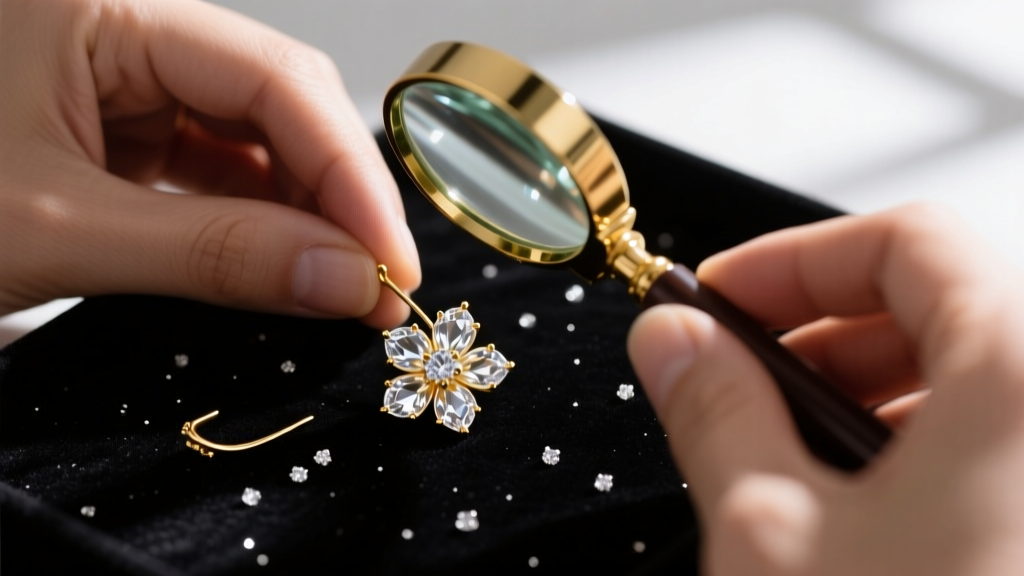
The Allure and the Agony of Floral Crystal Jewelry
In 2026, the trend of oversized, sculptural botanical jewelry continues to dominate, with crystal flower earrings remaining a staple for both bridal parties and everyday maximalists. Whether crafted from precision-cut Swarovski elements, high-grade cubic zirconia, or foiled glass, these intricate floral clusters mimic the delicate geometry of nature. However, their complex architecture—featuring dozens of micro-prongs, layered petals, and multi-stone pavé settings—makes them uniquely vulnerable to structural and cosmetic failures.
As a jewelry specialist, I frequently see beautiful floral pieces relegated to the back of a drawer due to missing stones, bent posts, or irreversible clouding. This comprehensive troubleshooting guide addresses the four most common failure modes of crystal flower earrings, providing actionable, professional-grade solutions to restore and maintain your favorite botanical pieces.
Issue 1: Missing Petals (Stone Loss & Adhesive Failure)
The most frequent complaint with floral cluster earrings is the loss of accent stones, particularly the tiny 1mm to 2mm crystals that form the inner stamen or outer petal edges. This occurs for two primary reasons: prong fatigue or adhesive desiccation.
Diagnosing the Setting Type
Before attempting a repair, examine the empty socket under a 10x jeweler's loupe. If you see tiny metal claws (prongs) that have been pulled back, the stone was mechanically set. You can carefully re-seat a replacement stone and use a prong pusher to gently fold the metal back over the girdle of the crystal. However, if the socket is smooth and features a flat metal bed, the stone was glued.
The Repair Matrix: Choosing the Right Jewelry Adhesive
Using the wrong glue is a catastrophic mistake. Super glue (cyanoacrylate) dries rigid, turns white when exposed to moisture, and will permanently cloud the facets of your crystals. Below is a professional comparison of jewelry adhesives suitable for crystal flower earrings.
| Adhesive Type | Best Use Case | Cure Time | Flexibility & Notes |
|---|---|---|---|
| GS Hypo Cement | Micro-stones (under 2mm), delicate petal tips | 24 Hours | High flexibility; features a precision needle applicator. Does not fog crystals. |
| E6000 Jewelry | Large center stones, heavy structural petal bases | 24-72 Hours | Thick viscosity; high tensile strength. Requires ventilation due to fumes. |
| UV Jewelry Resin | Quick fixes on non-porous metal beds | 2-5 Minutes | Cures instantly under UV light. Can yellow over time if exposed to direct sunlight. |
Pro-Tip: Always clean the metal socket with a micro-swab dipped in isopropyl alcohol (99%) before applying adhesive to remove sebum and lotion residue, which act as a release agent and prevent bonding.
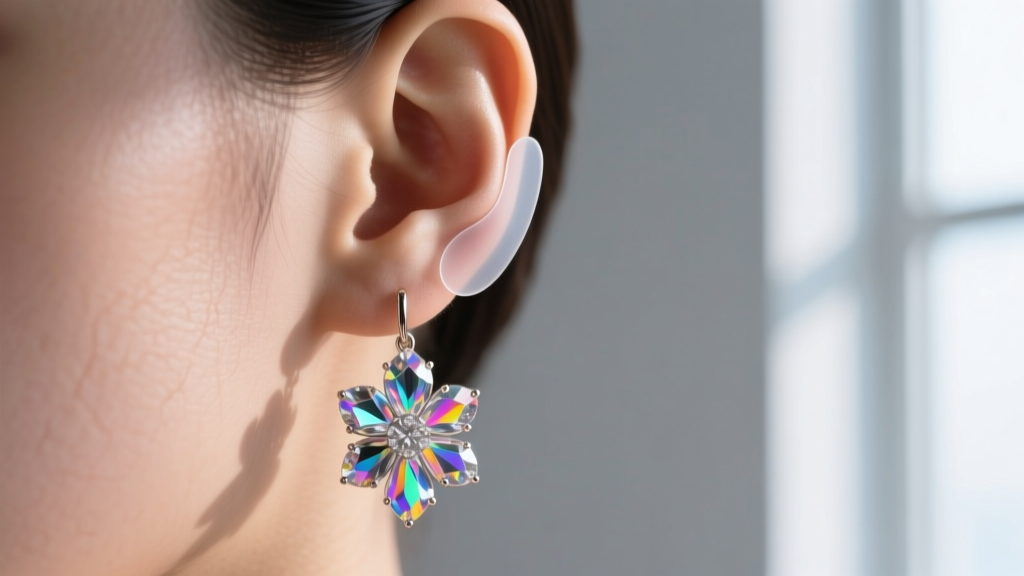
Issue 2: The Heavy Droop (Lobe Sagging & Post Bending)
Floral designs inherently require a wide surface area. A 15mm to 20mm crystal flower earring can easily weigh between 6 and 12 grams. When this weight is suspended from a standard 20-gauge (0.81mm) brass or silver post, the center of gravity pulls the earring forward, causing the post to bend and the earlobe to stretch painfully.
Structural Support Solutions
If your crystal flower earrings droop so severely that the design faces the floor rather than pointing forward, you must alter the load distribution. Do not attempt to bend the post back into shape repeatedly; this will cause metal fatigue and eventual snapping.
- Upgrade the Backing: Discard standard butterfly backs. Switch to heavy-duty silicone earlobe support patches (such as LobeWonder) or wide-base silicone O-rings with a metal insert. These distribute the 12-gram load across a 15mm surface area on the back of the ear, preventing the lobe from tearing.
- Post Replacement: Take the earrings to a bench jeweler to have the 20-gauge post snipped and replaced with an 18-gauge (1.0mm) or 16-gauge (1.2mm) titanium post. Titanium offers superior yield strength compared to sterling silver, resisting the downward torque of heavy floral clusters.
- The Nylon Washer Trick: For an immediate, zero-cost fix, slide a tiny, 2mm thick nylon or rubber washer onto the post before securing the earring back. This creates a wider fulcrum point against the ear, reducing the forward tilt by up to 40%.
Issue 3: Dull Sparkle (Clouding & Foil Degradation)
Crystals lose their fire when the facets are coated in microscopic layers of dead skin, hairspray, and hard water minerals. However, the cleaning method you choose depends entirely on the internal structure of the crystal.
Solid Crystal vs. Foiled Glass
Premium crystals (like Swarovski or precision-cut cubic zirconia) are solid throughout and can withstand gentle submersion. Conversely, many mid-tier crystal flower earrings utilize glass or acrylic stones with a metallic foil backing (mirroring) glued to the pavilion (bottom) to simulate the refractive index of a diamond. If moisture penetrates the setting and touches the foil, it will oxidize, turn black, and permanently ruin the stone's sparkle.
Expert Warning: Never place crystal flower earrings in an ultrasonic cleaner. The high-frequency acoustic cavitation (typically 40-45 kHz) will shatter internally fractured glass, liquefy cheap cyanoacrylate glues, and instantly strip the delicate metallic foil backing off mirrored stones.
The Safe Cleaning Protocol
To safely restore the brilliance of your floral clusters without risking the settings, follow this bench-tested protocol:
- Mix three drops of pH-neutral dish soap (like Dawn) into a bowl of distilled water. Avoid tap water, as dissolved calcium will leave micro-deposits on the facets.
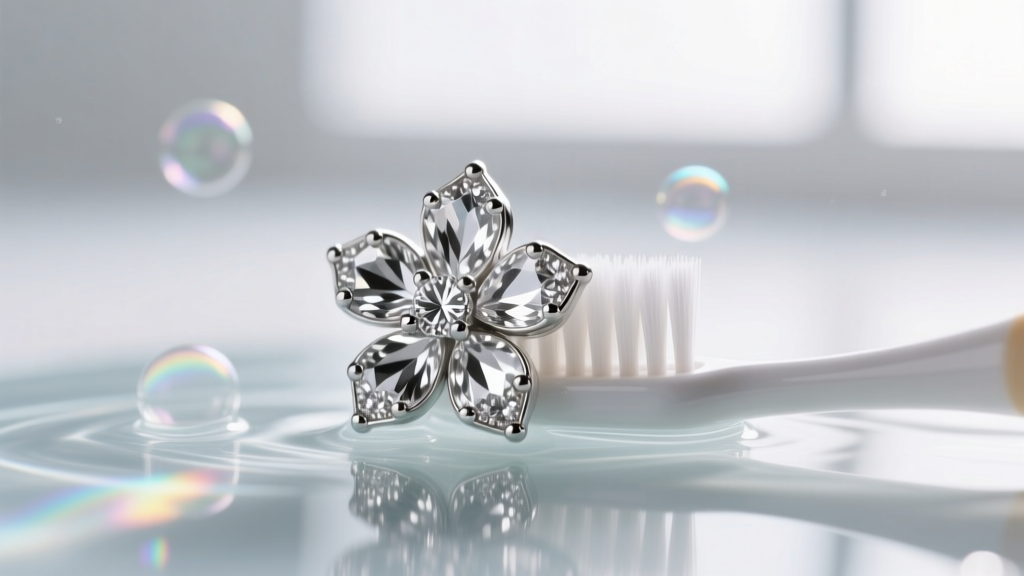
- Use a 0.05mm soft-bristle baby toothbrush to gently agitate the soapy water over the face of the crystals, working in the direction of the petal settings.
- Rinse briefly under a slow stream of distilled water, ensuring the water pressure does not hit the back of the settings.
- Immediately blast the piece with compressed air (canned air held upright) to force moisture out from under the micro-prongs, then pat dry with a lint-free microfiber cloth.
Issue 4: The Itch Factor (Contact Dermatitis & Tarnish)
Because crystal flower earrings feature complex, multi-piece soldered bases, they are frequently cast in base metal alloys (like brass or nickel-silver) and plated with a thin layer of gold or rhodium. Once that plating wears off on the post or the back of the floral cluster, the underlying nickel is exposed to the skin.
According to the Mayo Clinic, nickel allergy is one of the most common causes of allergic contact dermatitis, resulting in the red, itchy, and weeping earlobes frequently associated with heavy fashion jewelry.
Troubleshooting Allergic Reactions
If your earlobes become inflamed after wearing your favorite crystal blooms, do not simply suffer through it. Implement one of the following barriers:
- Rhodium Plating: A jeweler can electroplate the posts and the back of the earring with rhodium (a platinum-group metal). This creates a permanent, hypoallergenic, and highly tarnish-resistant barrier that costs between $25 and $45 per pair.
- The Clear Coat Barrier: For a temporary, at-home fix, paint the earring post and the back of the floral base with two coats of clear, non-toxic nail polish or a specialized jewelry barrier like JewelSkinZ. Allow it to cure for 24 hours before wearing. Reapply every 4 to 6 weeks as the coating wears away from friction.
- Titanium Post Swap: As mentioned in the structural section, having a jeweler laser-weld a medical-grade titanium (ASTM F136) post to the base of the earring completely eliminates the risk of nickel exposure at the piercing site.
Preventative Maintenance Checklist
To ensure your crystal flower earrings remain structurally sound and optically brilliant, integrate these habits into your jewelry routine:
- The Monthly Prong Check: Run a piece of silk fabric or a microfiber cloth lightly over the crystals. If the fabric snags, a prong has lifted and requires immediate professional burnishing to prevent stone loss.
- Proper Storage: Never toss floral cluster earrings into a shared jewelry box. The metal petals will scratch the softer crystals of neighboring pieces. Store them individually in anti-tarnish flannel pouches.
- Friction Testing: Every time you put the earrings on, check the earring back for tightness. The repeated friction of pushing the back onto the post can widen the hole in the metal backing over time. Squeeze the butterfly backs gently with chain-nose pliers to maintain a snug grip.
By understanding the mechanical and chemical vulnerabilities of crystal flower earrings, you can transition from replacing broken pieces to mastering their long-term care. Whether you are re-gluing a 1.5mm petal tip with GS Hypo Cement or upgrading the post gauge to support a heavy botanical cluster, these targeted troubleshooting steps will keep your floral jewelry blooming brilliantly for years to come.


