Expert Care & Cleaning Guide for Pink Spinel Earrings
Learn expert techniques to clean, maintain, and store your pink spinel earrings safely. Discover what solutions to use and avoid for lasting brilliance.

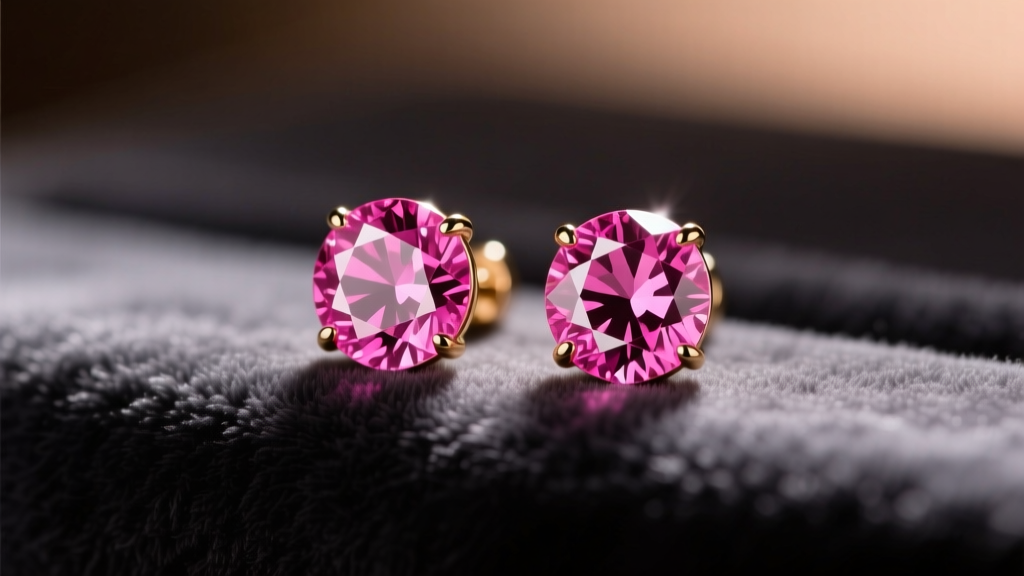
Pink spinel is one of the most captivating and historically significant gemstones in the world, often mistaken for ruby by royalty and jewelers alike. Today, pink spinel earrings are prized for their exceptional brilliance, vivid saturation, and impressive durability. However, like all fine jewelry, they require specific care routines to maintain their optical clarity and structural integrity. Whether you own a pair of delicate pink spinel huggies, classic studs, or elaborate chandelier drops, understanding the mineralogy and setting mechanics of your jewelry is the first step toward lifelong preservation.
The Mineralogy of Pink Spinel: Why Care Matters
To properly care for your earrings, you must first understand the physical properties of the gemstone. Spinel is a magnesium aluminum oxide (MgAl2O4) that crystallizes in the cubic system. On the Mohs scale of mineral hardness, spinel ranks between 7.5 and 8.0, making it highly resistant to everyday scratching from environmental dust (which typically contains quartz at a 7.0).
Crucially, unlike diamonds or topaz, spinel has no cleavage planes. This means it does not have structural weak points where it can easily split if struck. According to the Gemological Institute of America (GIA), this lack of cleavage gives spinel excellent toughness, making it an ideal candidate for daily-wear earrings. However, it is not indestructible. Sharp, high-impact blows against hard surfaces can still cause conchoidal fractures or chipping, particularly along the girdle of the stone.
Step-by-Step Cleaning Routine for Pink Spinel Studs and Drops
The safest and most effective way to restore the fiery brilliance of your pink spinel earrings is through a gentle, manual cleaning process. Over time, sebum, dead skin cells, and cosmetic residues create a film over the pavilion (the bottom of the stone), severely reducing its refractive index (1.712–1.736) and making the gem look dull.
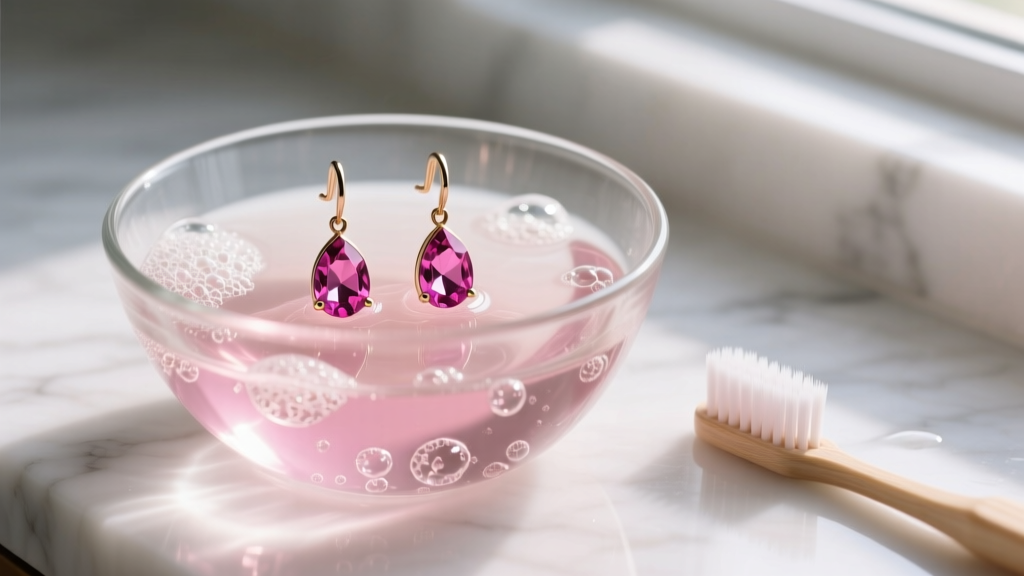
- Prepare the Solution: Fill a small glass or ceramic bowl with lukewarm distilled water. Add two to three drops of a mild, phosphate-free, and ammonia-free liquid dish soap. Avoid hot water, as extreme thermal shock can stress the metal settings or fracture treated stones.
- Soak the Earrings: Submerge your pink spinel earrings in the solution for 10 to 15 minutes. This allows the surfactants in the soap to break down the lipid bonds of body oils and cosmetic buildup trapped in the setting gallery.
- Agitate Gently: Using a dedicated, ultra-soft baby toothbrush or a specialized jewelry brush, gently sweep the bristles over the crown of the spinel and, most importantly, underneath the stone. The pavilion facets are where light enters and reflects; if they are dirty, the stone will appear lifeless.
- Rinse Thoroughly: Rinse the earrings under a gentle stream of lukewarm distilled water. Using distilled water prevents hard water minerals (like calcium and magnesium) from leaving cloudy spots on the metal and gemstone as they dry.
- Dry and Polish: Pat the earrings dry with a lint-free microfiber cloth. Avoid paper towels or tissues, as the wood pulp fibers can leave microscopic scratches on high-polish metal settings and leave lint trapped in the prongs.
Ultrasonic and Steam Cleaners: Are They Safe?
A common question among jewelry collectors is whether automated cleaning methods are safe for spinel. The answer depends heavily on the stone's treatment history and the earring's overall design.
| Cleaning Method | Stone Safety | Setting Safety | Expert Notes |
|---|---|---|---|
| Warm Soapy Water | Excellent | Excellent | The gold standard for all spinel jewelry. Safe for all metals and secondary stones. |
| Ultrasonic (40 kHz) | Conditional | Poor to Fair | Safe for untreated, unfractured spinel. Will shatter fracture-filled stones and can vibrate prongs loose. |
| Steam Cleaning | Good | Fair | Excellent for removing stubborn grease. Avoid if the earring features secondary gems like opals, pearls, or emeralds. |
| Ammonia Solutions | Good | Poor | Can strip the rhodium plating from white gold settings and degrade certain solder joints over time. |
While the International Gem Society (IGS) notes that untreated spinel can generally withstand ultrasonic vibrations, the risk to the metal setting is significant. High-frequency sound waves create cavitation bubbles that can loosen the tiny prongs securing your pink spinel, especially in older or frequently worn earrings. Furthermore, if your earrings feature accent stones like pearls or turquoise, ultrasonic and steam cleaners will permanently ruin them.
Maintaining the Metal Settings and Earring Backs
Cleaning the gemstone is only half the battle; the metal architecture of your earrings requires equal attention. Pink spinel is frequently set in 14k or 18k gold, as well as platinum. The earring post and backing mechanism are prime breeding grounds for bacteria, which can lead to contact dermatitis or earlobe infections.
- Butterfly (Push) Backs: The tiny loops and scrollwork of butterfly backs trap immense amounts of sebum and hair products. Use a cotton swab dipped in rubbing alcohol (isopropyl 70%) to clean the interior of the backing, but keep the alcohol away from the spinel stone, as it can dry out certain metal alloys over time.
- Screw Backs and La Pousette: These secure mechanisms feature tiny threaded posts or spring-loaded grips. Apply a microscopic drop of mineral oil to the threads of a screw-back post once a year to prevent cross-threading and ensure smooth operation.
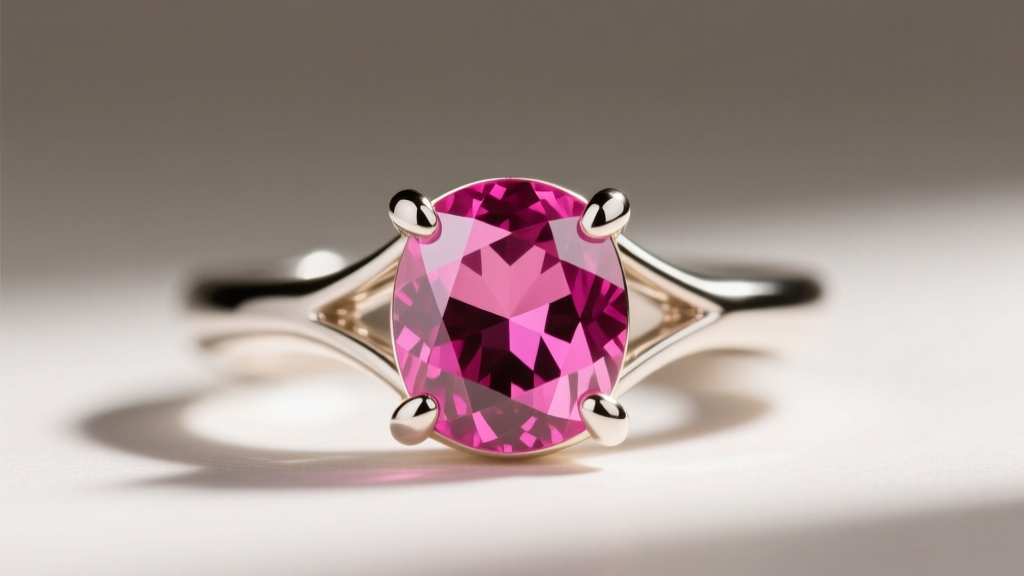
- Prong Maintenance: Inspect the prongs of your pink spinel earrings monthly. If you notice a prong lifting away from the crown of the stone, or if the metal feels snagged when you run a piece of silk over it, stop wearing the earrings immediately and take them to a jeweler for retipping.
Pro Tip: Always put your earrings on after applying cosmetics, perfumes, and hairspray. The alcohol and aerosol propellants in hair products can create a stubborn, cloudy film on pink spinel that requires professional polishing to remove safely.
Proper Storage to Prevent Scratching
Because pink spinel ranks at an 8 on the Mohs scale, it is harder than most precious metals, including platinum (4-4.5), 18k gold (2.5-3), and sterling silver (2.5-3). If you toss your pink spinel earrings loosely into a jewelry box, the gemstones will inevitably scratch the metal settings of your other jewelry, and the metal settings of the spinel earrings will become marred.
Conversely, spinel can be scratched by diamonds (10), rubies, and sapphires (9). Store each pair of pink spinel earrings in individual soft pouches made of untreated flannel or microfiber. For drop or dangle styles, fasten the earring backs securely before storing to prevent the posts from bending or piercing the fabric of the pouch.
When to See a Professional Jeweler
While home maintenance is vital, it does not replace professional oversight. You should schedule an appointment with a certified bench jeweler every 12 to 18 months. A professional will use a 10x triplet loupe to inspect the gallery wire, check for stress fractures in the metal basket, and ensure the earring posts have not become bent or weakened from daily insertion. They can also perform a gentle ionic clean and rhodium re-plating (if applicable to your white gold settings) to restore the earrings to their original, showroom-quality brilliance.


