Cute Christmas Earrings: Technical Guide to Enamel & Metals
Discover the metallurgy, enamel techniques, and gauge physics behind cute christmas earrings. Learn to identify quality holiday jewelry.

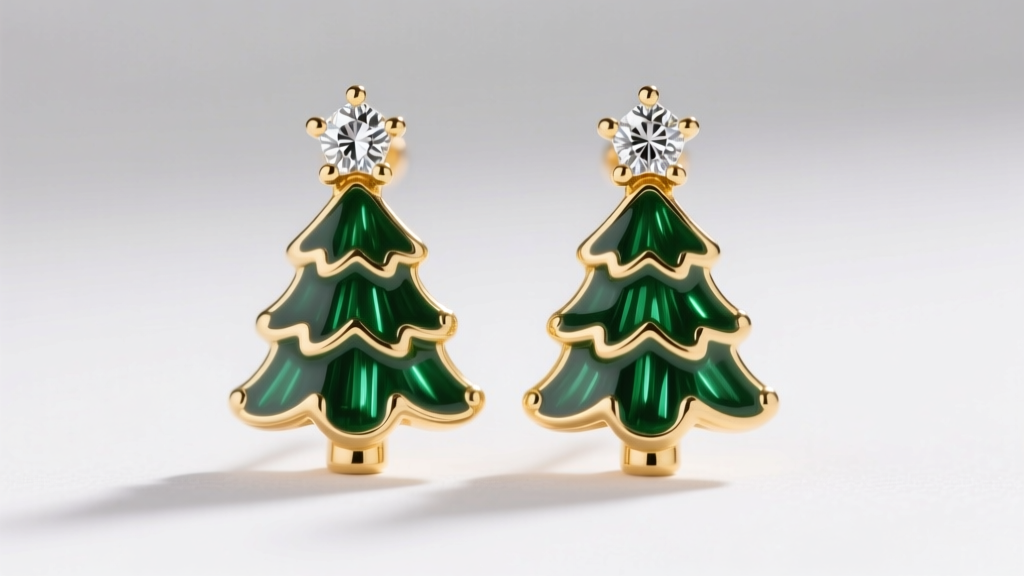
When shoppers search for cute christmas earrings, they are typically drawn to festive motifs: enameled snowflakes, 3D reindeer dangles, and ruby-studded holiday trees. However, behind the whimsical facades of seasonal jewelry lies a complex matrix of metallurgy, structural engineering, and material science. As a domain expert, I often see holiday jewelry fail not because of design, but due to catastrophic compromises in base metals, enamel curing processes, and wire gauge physics.
In this technical deep dive, we will deconstruct the manufacturing realities of holiday-themed earrings. Whether you are sourcing for a boutique or selecting a gift that won't cause contact dermatitis by December 26th, understanding these specifications is critical for making informed purchasing decisions.
The Metallurgy of Festive Jewelry: Base Metals and Allergies
The vast majority of mass-market seasonal earrings are cast from brass or zinc alloys. While these metals are inexpensive and easy to cast into intricate shapes like gingerbread men or candy canes, they require surface plating to prevent oxidation and skin reactions. The industry standard for affordable holiday jewelry is "flash plating"—a microscopically thin layer of gold or rhodium (usually between 0.1 and 0.3 microns) applied via electroplating.
The failure mode here is rapid. Flash plating on high-friction areas (like earring posts and fishhooks) wears away within days, exposing the underlying brass. According to the American Academy of Dermatology, nickel is a common alloying agent in cheaper brass mixes and the leading cause of allergic contact dermatitis. When the plating breaches, sweat and skin oils accelerate nickel leaching, resulting in the dreaded "green ear" and severe lobe itching.
Expert Recommendation: For sensitive ears, demand ASTM F136 implant-grade titanium posts or solid 14k/18k gold, even for novelty shapes. If purchasing vermeil (gold over sterling silver), ensure the gold layer is at least 2.5 microns thick (Heavy Gold Electroplate), as defined by FTC guidelines, to survive the holiday season without degrading.
Enamel Engineering: Cold Epoxy vs. Vitreous Glass
The vibrant reds and deep greens of cute christmas earrings are almost universally achieved through enameling. However, not all enamel is created equal. The technical distinction between cold enamel and vitreous enamel dictates the lifespan and visual fidelity of the piece.
Cold Enamel (Epoxy Resin)
Cold enamel is actually a pigmented epoxy resin that cures at room temperature or with low heat. It is poured into metal recesses (cloisonné style) and allowed to harden. While cost-effective for mass production, cold enamel has distinct failure modes:
- UV Degradation: Epoxy resins yellow when exposed to ultraviolet light. A bright white snowflake earring will likely develop a jaundiced tint within 12 to 18 months of regular wear.
- Shrinkage and Delamination: As the solvent in the resin evaporates during curing, it shrinks slightly. Over time, this creates a microscopic gap between the resin and the metal cell wall, allowing moisture to seep in and lift the enamel entirely.
Vitreous Enamel (Kiln-Fired Glass)
Vitreous enamel is finely ground glass fused to a metal substrate at temperatures exceeding 1400°F (760°C). This creates a permanent, molecular bond. Vitreous enamel is entirely UV-stable, meaning a ruby-red Christmas tree earring will retain its exact hue for centuries. The Rio Grande Metals Guide notes that vitreous enameling requires a base metal with a high melting point and compatible coefficient of thermal expansion, typically fine silver or copper, making it a hallmark of higher-end artisan holiday jewelry. The only trade-off is brittleness; dropping a vitreous enameled earring on a hard tile floor will shatter the glass surface.
Weight Distribution and Gauge Physics
Novelty holiday earrings often feature 3D elements—think solid metal jingle bells or multi-layered acrylic and brass poinsettias. These designs introduce significant weight, which interacts directly with the gauge (thickness) of the earring wire and the tensile strength of the human earlobe.
A standard earlobe can comfortably support 10 to 14 grams of static weight. Beyond this threshold, the downward force creates a "cheese-cutter" effect, where the thin wire slowly stretches the piercing channel downward, causing permanent tissue damage and sagging.
| Earring Style | Average Weight | Recommended Wire Gauge | Structural Risk to Lobe |
|---|---|---|---|
| Flat Enameled Stud (Tree/Star) | 1.5g - 3g | 20g (0.81mm) or 22g (0.64mm) | Minimal / Safe for all-day wear |
| 2D Stamped Dangle (Snowflake) | 4g - 7g | 20g (0.81mm) Fishhook | Low / Safe for 8+ hours |
| 3D Hollow Cast (Reindeer/Santa) | 8g - 12g | 18g (1.02mm) French Wire | Moderate / Limit to 4-6 hours |
| Solid Brass Multi-Drop (Bells) | 15g - 22g+ | 16g (1.29mm) Leverback | High / Risk of lobe tearing |
Always check the wire gauge on heavy dangles. Many manufacturers incorrectly use standard 20-gauge (0.81mm) wires on 15-gram novelty drops to save fractions of a cent per unit. For heavy pieces, a 16-gauge or 18-gauge wire with a wide, flat surface area at the point of contact is mandatory to distribute the load and prevent tissue slicing.

Cartilage Considerations for Holiday Huggies and Cuffs
The helix and tragus cartilage lack the elasticity and blood flow of the earlobe, making them highly susceptible to pressure necrosis and migration. Holiday-themed huggies (e.g., wrapping candy canes or holly leaves) are incredibly popular, but their structural design often ignores cartilage anatomy.
Cartilage piercings are typically performed at 16-gauge (1.2mm) or 14-gauge (1.6mm). Inserting a standard 18-gauge or 20-gauge huggie into a healed cartilage piercing can cause the "cheese-cutter" effect in the opposite direction, slowly migrating the hole upward through the cartilage tissue. Furthermore, novelty huggies often feature heavy decorative elements on the bottom hinge. This pendulum effect creates continuous kinetic friction against the fragile fistula (the tube of healed skin inside the piercing). If you are buying holiday cartilage jewelry, opt for internally threaded, flat-backed labret studs with a fixed holiday motif rather than hinged hoops, as recommended by the Mayo Clinic for minimizing tissue trauma and irritation bumps.
2026 Technical Sourcing and Pricing Matrix
For jewelers and serious collectors, understanding the correlation between manufacturing techniques and wholesale pricing is essential. Below is a technical matrix comparing three tiers of cute christmas earrings available in the 2026 market.
| Specification | Fast Fashion (Mass Market) | Artisan / Boutique | Fine Jewelry |
|---|---|---|---|
| Base Metal | Zinc Alloy / Brass | Sterling Silver (925) / Copper | Solid 14k/18k Gold / Platinum |
| Color Technique | Cold Enamel (Epoxy) / Acrylic | Vitreous Enamel (Kiln-fired) | Precious Gemstones (Ruby, Tsavorite) |
| Post / Wire Material | Surgical Steel (often has nickel) | Sterling Silver / Niobium | Solid Gold / Implant-Grade Titanium |
| Average Retail Price | $8 - $24 | $45 - $120 | $350 - $1,500+ |
| Estimated Lifespan | 1 Season (Color fade / Plating loss) | 10+ Years (With proper care) | Generational (Heirloom quality) |
Final Diagnostic Advice
When evaluating cute christmas earrings, look past the immediate visual appeal. Inspect the interior of the metal recesses: is the enamel flush with the metal walls, or is it sinking (indicating cold resin shrinkage)? Check the earring post with a jeweler's loupe for the "925", "14k", or "Ti" stamp, and scratch the post lightly with your fingernail to see if a yellow brass underlayer is visible beneath a gold flash plate. By applying these technical diagnostics, you ensure that your holiday jewelry is not just seasonally appropriate, but structurally and metallurgically sound.


