The Ultimate Buying Guide to Genuine Otolith Earrings
Discover everything about otolith earrings in our comprehensive buying guide. Learn about stone grading, metal pairings, gauge sizing, and proper care.

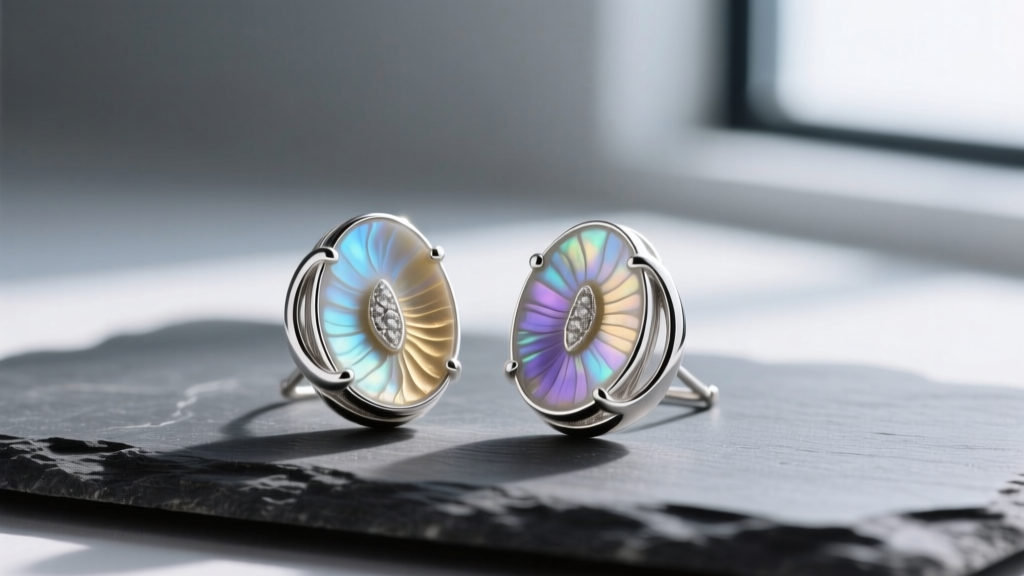
The landscape of organic jewelry has shifted dramatically as we move through 2026, with eco-conscious consumers and avant-garde designers alike turning their attention to the ocean's hidden treasures. Among the most captivating of these is the otolith. Once known only to marine biologists and fishermen, otoliths—commonly referred to as "ear stones"—have emerged as a premier alternative to traditional mined pearls and shell-based cameos. Their unique, nacre-like luster and organic origins make them a standout choice for statement earrings, studs, and dangles.
However, buying otolith earrings requires a distinctly different approach than purchasing standard gemstone or metal jewelry. Because otoliths are biological structures composed of calcium carbonate, they possess specific physical vulnerabilities, weight profiles, and care requirements. This comprehensive buying guide will walk you through the exact material grades, gauge specifications, and structural considerations you need to know before investing in a pair of genuine otolith earrings.
What Are Otoliths? The Biology Behind the Beauty
Before evaluating quality, it is essential to understand the material. According to Smithsonian Ocean, otoliths are calcium carbonate structures located in the inner ears of teleost (bony) fish. They aid in balance, orientation, and sound detection. The sagittal otoliths are the largest of the three pairs and are the ones primarily harvested and polished for jewelry.
Unlike nacre (mother-of-pearl), which is secreted in layers by mollusks, otoliths grow in concentric rings, much like the trunk of a tree. When cut and polished, this internal structure reveals a stunning, marbled iridescence that ranges from stark porcelain white to warm ivory, often with subtle hints of gold or gunmetal gray depending on the fish species and their diet. Red drum, snapper, and croaker are the most common sources for jewelry-grade stones due to their size and density.
The 4 Pillars of Buying Otolith Earrings
When shopping for otolith earrings, you must evaluate the piece across four critical dimensions: stone polish, metal pairing, gauge sizing, and structural support. Ignoring any of these can lead to premature damage or uncomfortable wear.
1. Stone Grading and Surface Polish
Otoliths rank between 3.5 and 4.0 on the Mohs hardness scale, making them relatively soft and porous compared to quartz or beryl. When inspecting a pair of earrings, look for a "glass finish" polish. High-quality lapidaries will use progressively finer grits, finishing with a cerium oxide or diamond paste to seal the microscopic pores of the calcium carbonate.
- Grade A (Jewelry Grade): Flawless surface, high-gloss mirror finish, no visible pitting or chalky spots. Edges are smoothly beveled to prevent chipping.
- Grade B (Commercial Grade): Slight surface porosity, duller luster, often coated in a clear epoxy resin to simulate a polish. Avoid these, as the resin will yellow and peel over time.
2. Metal Alloys and Hypoallergenic Pairings
Because otoliths are porous, they can absorb trace metals and chemicals from low-quality alloy settings, leading to permanent discoloration of the stone. Furthermore, the weight of the stone demands strong metal prongs or bezels.
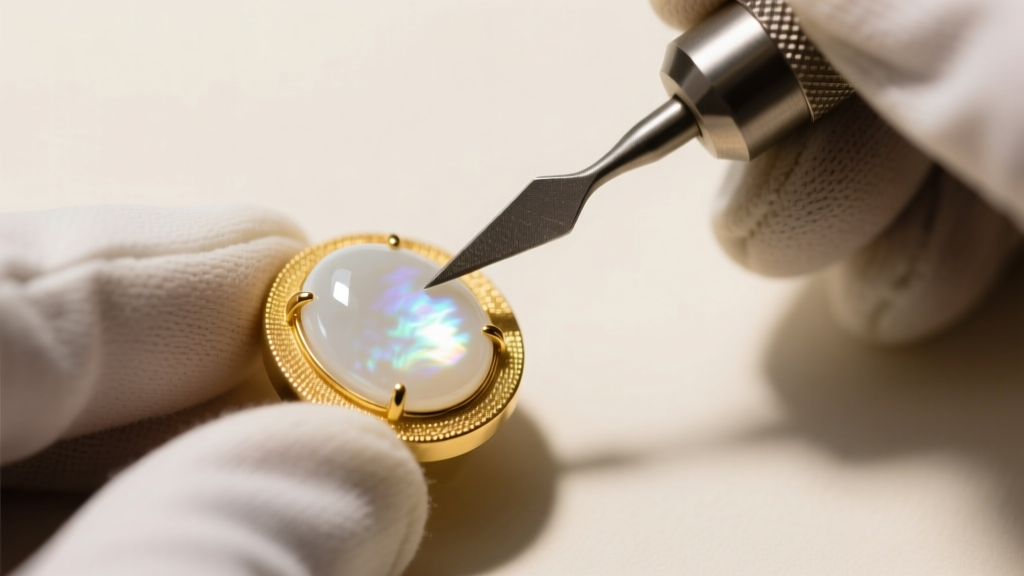
Best Metals for Otoliths:
- Implant-Grade Titanium (ASTM F136): The absolute best choice for the earring post. Titanium is lightweight, completely hypoallergenic, and possesses the tensile strength required to support a heavy stone without bending.
- 14k or 18k Solid Gold: Ideal for bezels and ear wires. Gold does not tarnish, meaning you won't need harsh chemical dips that could etch the otolith.
- Sterling Silver (925): Acceptable for settings, but requires maintenance. Silver tarnishes, and the polishing cloths used to clean silver can sometimes contain mild abrasives that will scratch the otolith's surface.
3. Gauge Sizing and Weight Distribution (Crucial)
The most common failure mode in organic stone earrings is "post droop." Otoliths have a specific gravity of roughly 2.7 to 2.9, meaning they are surprisingly dense. A large, 15mm teardrop otolith can easily weigh 4 to 6 grams.
If this weight is placed on a standard 20-gauge (0.8mm) or 22-gauge (0.6mm) earring post, gravity will pull the heavy stone downward, bending the wire and causing the earring to face the floor. Worse, the constant leverage can irritate and stretch the piercing fistula.
Expert Sizing Rule: For otolith studs weighing over 3 grams, demand a minimum of an 18-gauge (1.0mm) post. For heavy dangles or drops, look for 16-gauge (1.2mm) or 14-gauge (1.6mm) French wires or reinforced lever-backs to ensure the earring sits flush and upright on the earlobe.
Otolith Earring Styles: Comparison Matrix
Different earring styles interact with the otolith's weight and visual profile in unique ways. Use this matrix to determine which style best fits your anatomy and lifestyle.
| Style | Weight Profile | Recommended Gauge | Price Range (2026) | Best For |
|---|---|---|---|---|
| Bezel Studs | Light to Medium (1-3g) | 18g or 16g Post | $45 - $90 | Everyday wear, minimalists, active lifestyles |
| French Wire Dangles | Heavy (4-8g) | 16g or 14g Wire | $110 - $220 | Statement looks, evening wear, stretched lobes |
| Ear Jackets / Climbers | Medium (3-5g) | 16g Post + Silicone O-ring | $85 - $150 | Adding structural support to heavy front-facing stones |
| Clip-Ons (Omega Back) | Heavy (5-10g) | N/A (Tension Pad) | $130 - $250 | Non-pierced ears requiring wide weight distribution |
The Acid Etching Problem: Care and Maintenance
The Gemological Institute of America (GIA) notes that calcium carbonate gems are highly susceptible to acid etching. This is the single most important factor in otolith care. Human sweat contains lactic acid, and everyday products like perfumes, hairsprays, and citrus-based lotions contain volatile acids that will literally dissolve the polished surface of an otolith, leaving it dull, chalky, and permanently ruined.
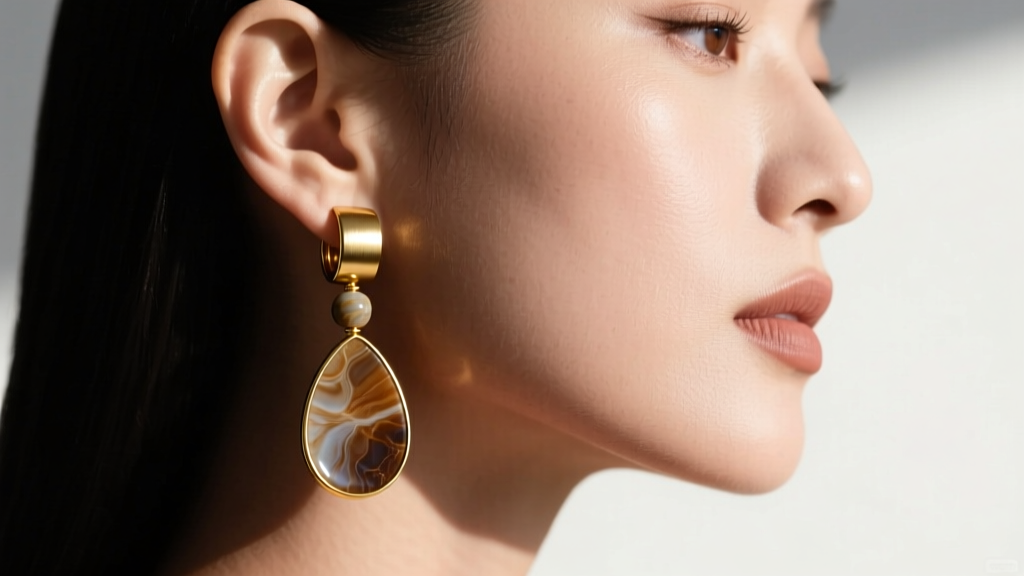
The Golden Rules of Otolith Care:
- Never Use Ultrasonic or Steam Cleaners: The high-frequency vibrations can shatter the concentric rings of the stone, and thermal shock from steam will cause micro-fractures.
- The "Last On, First Off" Rule: Always apply your perfumes, hairsprays, and skincare routines at least 15 minutes before putting on your otolith earrings. Remove them immediately upon returning home.
- Proper Wiping: After every wear, gently wipe the stones with a clean, dry, untreated microfiber cloth to remove skin oils and microscopic sweat residue.
- Storage: Store them in a soft velvet pouch away from harder gemstones (like diamonds or sapphires) which will easily scratch the 3.5 Mohs surface.
How to Spot Fakes: Otolith vs. Ceramic and Resin
As the trend for organic jewelry grows, so does the market for imitations. Unscrupulous sellers may pass off molded ceramic, bone, or opaque resin as polished otolith. Here is how to verify authenticity:
- The Temperature Test: Like genuine pearls and glass, real otoliths will feel distinctly cool to the touch when first picked up, and will slowly warm to your body temperature. Resin and plastic fakes will feel room-temperature or warm immediately.
- The Grain Inspection: Under a jeweler's loupe (10x magnification), genuine otoliths will show subtle, organic growth rings or a faint, marbled grain structure. Ceramics will look perfectly uniform, and molded plastics will often reveal tiny air bubbles or seam lines.
- The Weight Test: Calcium carbonate is dense. A fake resin earring of the same size will feel suspiciously light and "hollow" compared to the satisfying, heavy drape of a genuine otolith.
Sourcing and Sustainability in 2026
One of the primary drivers behind the otolith jewelry movement is sustainability. Unlike deep-sea pearl diving or coral harvesting, otoliths used in jewelry are almost exclusively a byproduct of the commercial food fishing industry. Fishermen and processing plants that would otherwise discard the heads and frames of fish like the red drum or Atlantic croaker now harvest the sagittal otoliths, upcycling biological waste into high-end adornment.
When purchasing, look for jewelers who are transparent about their supply chain. Reputable artisans will specify the species of fish and the region where it was sustainably caught, ensuring that your jewelry purchase supports a circular, zero-waste marine economy rather than contributing to ecological depletion.
Final Thoughts on Investing in Otoliths
Otolith earrings represent a perfect intersection of marine biology, sustainable fashion, and artisanal lapidary work. They are not merely accessories; they are conversation pieces that carry the ancient, rhythmic history of the ocean within their concentric rings. By prioritizing proper gauge sizing to support their unique density, selecting hypoallergenic and non-tarnishing metal settings, and strictly adhering to an acid-free care regimen, your otolith earrings will maintain their breathtaking, nacre-like luster for a lifetime.


