Clip Earring for Men: The Ultimate Budget & Value Guide
Discover the best clip earring for men across all budgets. We assess materials, tension mechanisms, and true value to help you avoid cheap pitfalls.


The market for men's non-pierced jewelry has expanded dramatically, but finding a high-quality clip earring for men that balances comfort, security, and price remains a challenge. Unlike pierced earrings that rely on gravity and a secure backing, clip-ons must battle the physics of tension, friction, and earlobe anatomy. For men navigating this space on a budget, the cheapest option is rarely the most economical in the long run. Cheap mechanisms fail, base metals cause contact dermatitis, and poor weight distribution leads to a painful wearing experience.
In this comprehensive value assessment, we break down the true cost of men's clip-on earrings. We will evaluate material grades, mechanical failure points, and pricing tiers to help you determine exactly where your money is best spent in 2026.
The Hidden Economics of Non-Pierced Men's Jewelry
When assessing the budget for a clip earring for men, the initial price tag is only one variable. The hidden economics involve replacement costs due to mechanical failure and the potential medical costs of treating allergic contact dermatitis. According to the American Academy of Dermatology, nickel is the most common cause of allergic contact dermatitis, a condition frequently triggered by cheap, unregulated alloy jewelry.
A $12 pair of brass clip-ons might seem like a steal until the copper oxidizes against your skin's natural pH, leaving a green residue, or the weak tension spring snaps after three uses. True value in non-pierced jewelry is defined by the intersection of biocompatibility, mechanical longevity, and cost-per-wear (CPW).
Material Tiers: What You Actually Get for Your Money
The foundation of any earring's value is its base metal. Here is how the market segments materials and what you can realistically expect at each price point.
Budget Tier ($10 - $25): Brass and Plated Alloys
In the sub-$25 category, manufacturers predominantly use brass or zinc alloys plated with a micro-thin layer of silver or gold (often less than 0.1 microns). While visually appealing on day one, these earrings are highly susceptible to sweat-induced corrosion. The plating wears off quickly, exposing the base metal. Furthermore, the nickel content in cheap alloys is rarely disclosed, making this tier a high-risk gamble for men with sensitive skin.
Mid-Tier ($25 - $60): 316L Surgical Steel
This is the sweet spot for budget-conscious buyers seeking reliability. 316L stainless steel contains molybdenum, which increases resistance to corrosion from chlorides (like sweat). While it does contain trace amounts of nickel, the alloy's crystalline structure traps it, resulting in a very low nickel release rate that is safe for the vast majority of wearers. A solid 316L clip earring for men will easily last years without tarnishing.
Premium Tier ($60 - $150+): Titanium and Solid Gold
For those willing to invest, ASTM F136 (Grade 23) Titanium is the gold standard for biocompatibility. It is entirely nickel-free, 45% lighter than steel, and impervious to bodily fluids. Alternatively, solid 14k or 18k gold offers intrinsic material value, though it is significantly heavier, which can complicate the tension mechanics required for a secure clip-on fit.
| Material Grade | Price Range | Hypoallergenic Rating | Corrosion Resistance | Weight Profile |
|---|---|---|---|---|
| Brass/Zinc Alloy | $10 - $25 | Poor (High Nickel Risk) | Low (Oxidizes quickly) | Heavy |
| 316L Surgical Steel | $25 - $60 | Good (Low Nickel Release) | High | Moderate |
| ASTM F136 Titanium | $60 - $120 | Excellent (100% Nickel-Free) | Exceptional | Ultra-Light |
| Solid 14k Gold | $150+ | Excellent | Exceptional | Heavy |
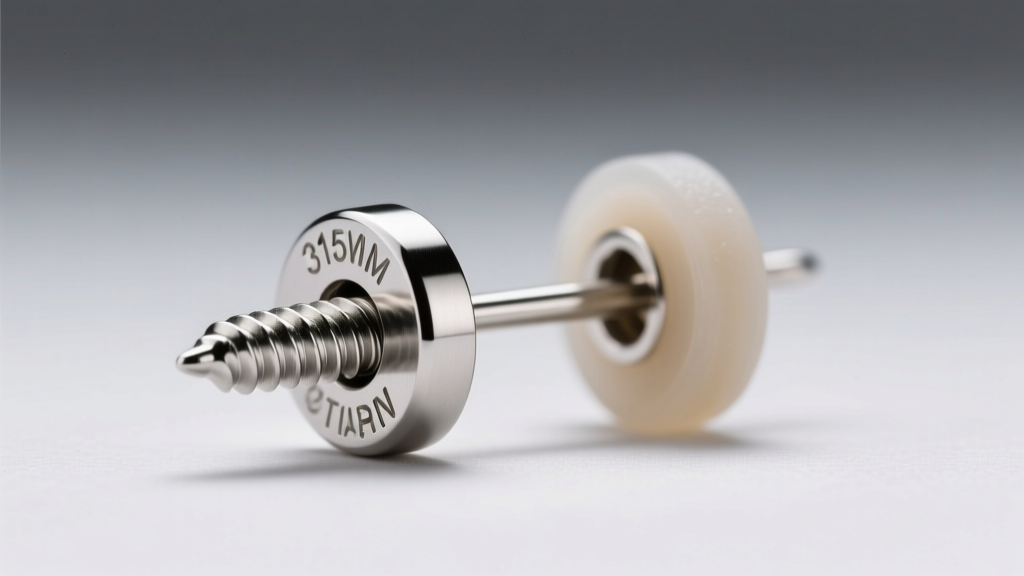
The Mechanics of Comfort: Tension vs. Magnetic vs. Screw-Back
A premium material is useless if the earring falls off or causes ischemic pain (tissue damage from restricted blood flow). The clipping mechanism dictates the functional value of the piece. As noted by jewelry fabrication experts at The Spruce Crafts, the structural integrity of jewelry findings is just as critical as the primary metal.
1. The Omega Clip (Tension Spring)
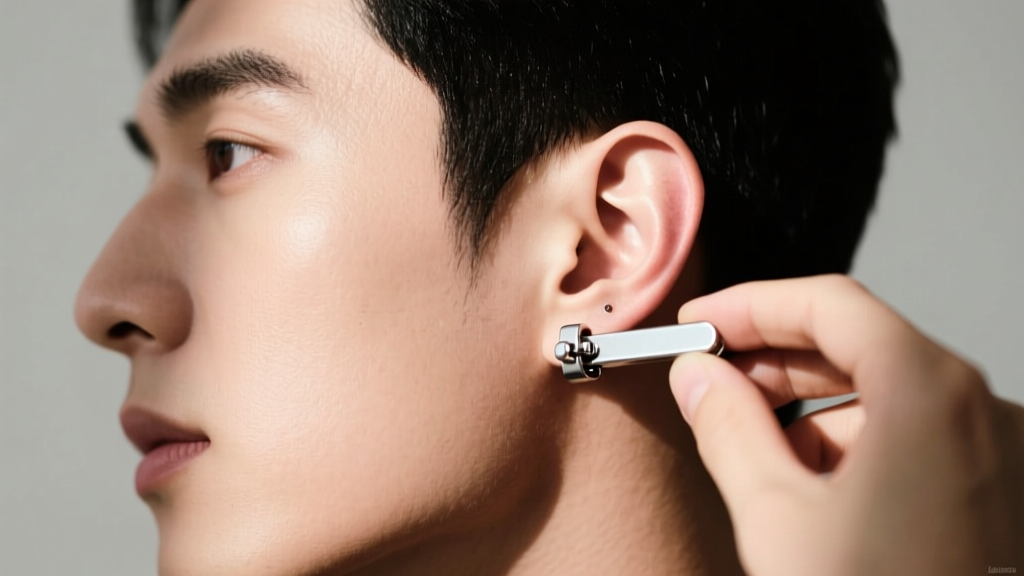
The omega clip uses a hinged, spring-loaded paddle that presses against the front of the earlobe. Value Assessment: Highly secure and adjustable. However, budget omega clips use weak springs that lose tension (metal fatigue) within months. A high-value omega clip will feature a replaceable silicone comfort pad to distribute pressure evenly across the lobe.
2. The Screw-Back Mechanism
This design features a threaded post that clamps down via a rotating backing. Value Assessment: The most secure option for heavy designs. The primary failure mode in budget tiers is thread stripping. If the post is made of soft brass and the backing is steel, the threads will grind away after repeated use. Always look for precision-machined steel-on-steel threading.
3. Magnetic Clip-Ons
These rely on two neodymium magnets sandwiching the earlobe. Value Assessment: Generally poor value for active men. While easy to put on, magnets are highly susceptible to shear force. A simple bump or the friction of pulling off a hoodie can easily break the magnetic hold, resulting in a lost earring. Furthermore, the concentrated point-pressure of a small magnet can cause severe lobe tenderness after just a few hours.
Expert Troubleshooting Tip: If your tension-based clip earring for men is causing pain, do not bend the metal paddle yourself, as this can snap the hinge pin. Instead, apply a tiny drop of liquid silicone or a micro-dab of clear hot glue to the contact point to create a custom, shock-absorbing pad.
Calculating True Cost-Per-Wear (CPW)
To truly assess budget versus value, adopt the Cost-Per-Wear formula: Total Price ÷ Estimated Number of Wears = CPW.
- The Budget Trap: A $15 plated brass magnetic earring worn 5 times before the magnet detaches and it is lost yields a CPW of $3.00 per wear, plus the frustration of replacement.
- The Value Investment: A $45 pair of 316L surgical steel screw-back clips worn 150 times a year for three years yields a CPW of $0.10 per wear, with zero skin irritation and zero mechanical failures.
When you reframe the purchase through the CPW lens, spending an extra $20 to $30 upfront for surgical steel or titanium with a robust mechanical finding is mathematically the superior financial decision.
Final Verdict: Where to Allocate Your Budget
For men seeking a reliable clip earring without the commitment of a piercing, the mid-tier market ($30 - $60) offers the highest return on investment. At this price point, you can reliably source 316L surgical steel with precision screw-back or padded omega mechanisms. Avoid the sub-$20 market entirely, as the hidden costs of skin irritation and rapid mechanical degradation negate any initial savings. If your budget allows for a $70+ investment, ASTM F136 titanium provides an unmatched, featherlight experience that completely eliminates the heavy, dragging sensation often associated with non-pierced men's jewelry.


