Kate Middleton Wore Princess Diana's Sapphire and Diamond Earrings Guide
Discover how to buy sapphire and diamond drop earrings inspired by Princess Diana's royal suite. Expert guide on Ceylon stones, halos, and pricing.

The Enduring Allure of the Royal Sapphire Suite
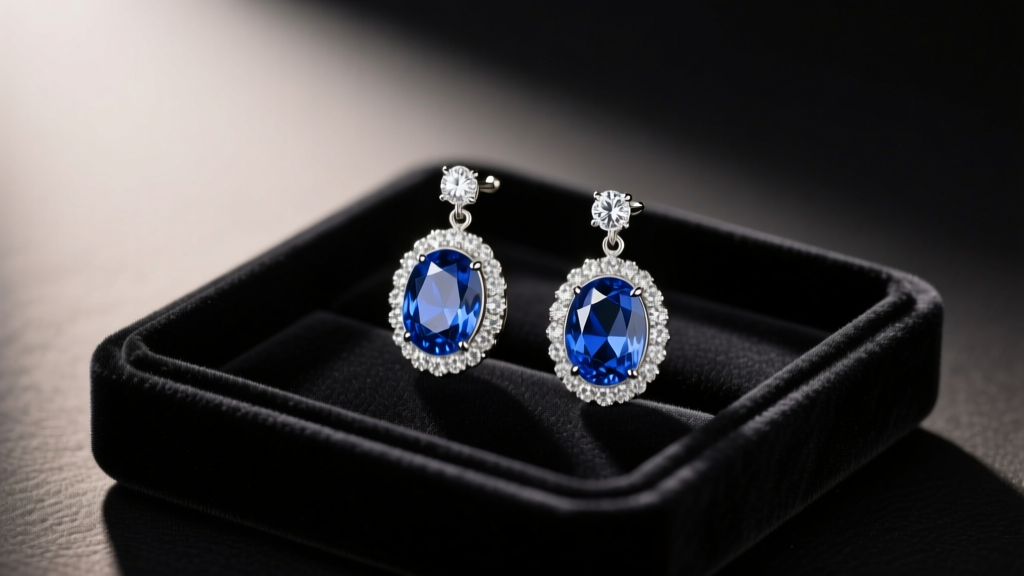
The royal jewelry vault holds some of the most iconic pieces in history, but few capture the public imagination quite like the Asprey sapphire suite. When Kate Middleton wore Princess Diana's sapphire and diamond earrings to a recent high-profile state banquet, it sparked a massive global resurgence in demand for oval sapphire and diamond halo drops. As a jewelry appraiser and style historian, I get asked daily how to source, authenticate, and buy earrings that capture this exact regal aesthetic without compromising on structural integrity or gemstone quality.
This comprehensive buying guide breaks down the exact anatomy of these royal earrings. From Ceylon sapphire color grading and diamond melee specifications to the structural engineering required to keep heavy drops secure on the earlobe, here is everything you need to know before investing in this timeless silhouette.
Anatomy of the Royal Sapphire Drop Earring
To replicate the look authentically, you must understand the original architecture. The earrings from the suite feature a distinct three-part drop mechanism that allows for fluid movement and optimal light return. Unlike rigid stud earrings, a well-crafted drop earring consists of:
- The Stud Motif: Often a smaller diamond cluster or a solitary diamond that sits directly on the earlobe, acting as the anchor point.
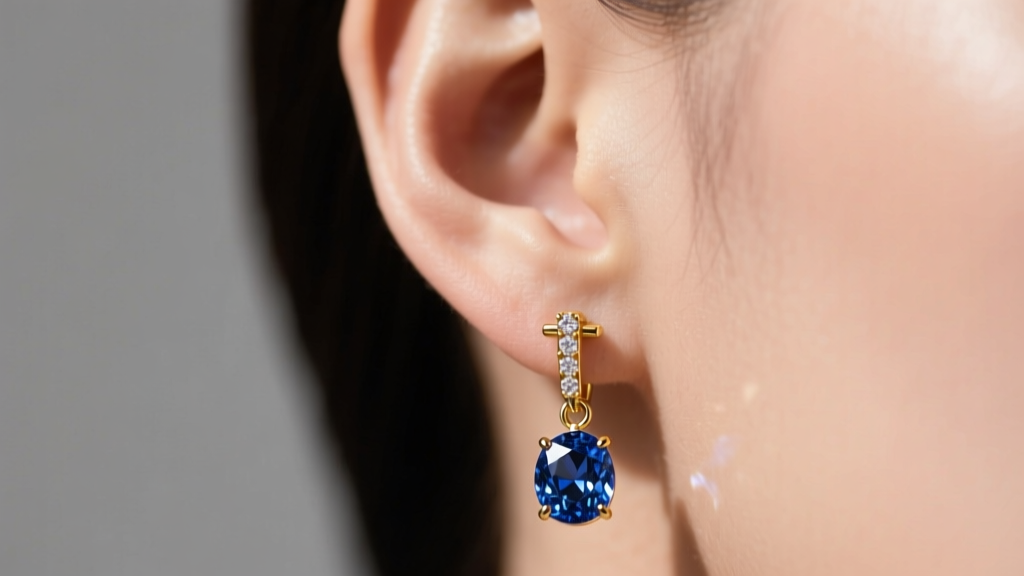
- The Articulated Link: A delicate but secure chain or rigid diamond-set connector that provides a 2mm to 5mm drop, allowing the main stone to swing and catch the light.
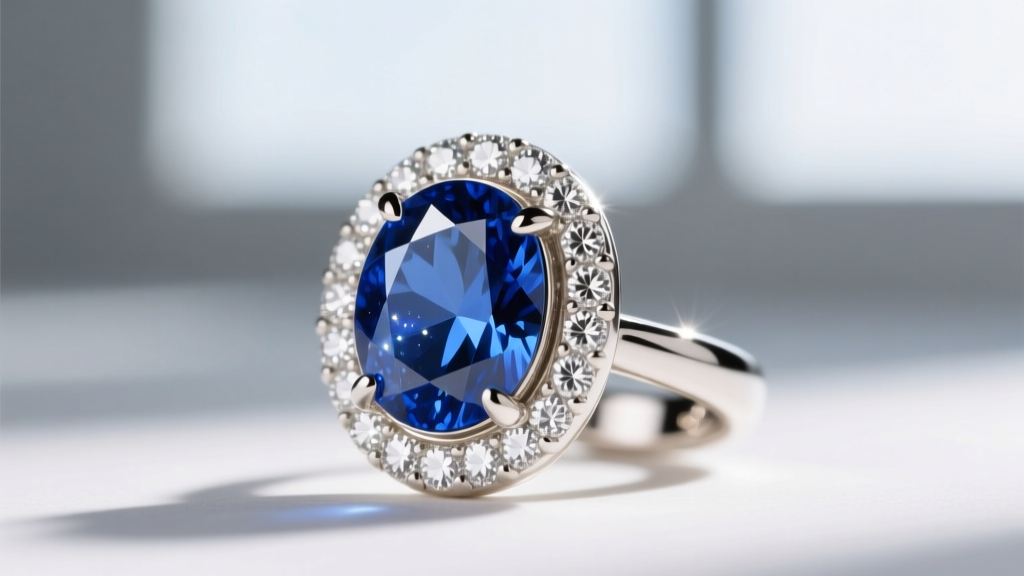
- The Focal Drop: An oval or pear-shaped sapphire encircled by a brilliant diamond halo, mirroring the design language of the iconic 12-carat engagement ring.
Sourcing the Center Stone: Natural vs. Lab-Grown Sapphires
The centerpiece of this design is, unequivocally, the sapphire. According to the Gemological Institute of America (GIA), color is the most critical quality factor for blue sapphires. The royal suite utilizes stones that closely resemble 'Ceylon' sapphires, prized for their vivid, highly saturated 'Royal Blue' or bright 'Cornflower' hues without the inky darkness seen in some Australian or Thai stones.
Understanding Sapphire Treatments
When shopping for natural sapphires, you must ask about treatments. Heat treatment is an industry-standard practice that enhances color and clarity; over 90% of natural sapphires on the market are heated. However, you must avoid lattice diffusion (where beryllium is introduced during heating to artificially create blue color in originally pale stones) and fracture filling (using lead-glass to hide cracks). Always demand a report from a reputable lab like GIA, AGL, or SSEF that explicitly states 'No indications of heating' if you are paying the unheated premium, or confirms standard heat treatment without diffusion.
| Sapphire Type | Origin / Method | Color Profile | Est. Price Per Carat (2026) |
|---|---|---|---|
| Natural Unheated Ceylon | Sri Lanka (Mined) | Vivid Royal Blue | $8,000 - $15,000+ |
| Natural Heated Ceylon | Sri Lanka (Mined) | Bright Cornflower | $3,500 - $7,000 |
| Lab-Grown (Flux Melt) | Chatham / Created | Consistent Royal Blue | $300 - $600 |
| Lab-Grown (Verneuil) | Flame Fusion | Slightly Violet-Blue | $50 - $150 |
The Diamond Halo and Link: Melee Specifications
The halo is not merely an afterthought; it amplifies the sapphire's saturation by reflecting white light back into the viewer's eye. For a high-end homage, pay strict attention to the melee diamonds (small diamonds typically under 0.20 carats) used in the setting.
Cheap reproductions use 'single cut' melee diamonds, which only have 17 or 18 facets, resulting in a flat, glassy appearance. You must insist on full cut melee diamonds, which feature the standard 57 or 58 facets of a brilliant round diamond, scaled down to 1.5mm or 2.0mm. For color and clarity, aim for G-H color and VS2-SI1 clarity. Because the stones are so small, inclusions are invisible to the naked eye, but G-H color ensures the halo does not look yellowish against the white gold or platinum setting.
Structural Integrity: Posts, Backs, and Gauge Sizes
Heavy drop earrings are notorious for tearing earlobes or drooping forward, which completely ruins the visual profile of the jewelry. The standard 20-gauge (0.81mm) post is woefully insufficient for a 4-carat sapphire and diamond drop that can easily weigh over 5 grams per ear.
Upgrading Your Earring Hardware
- Post Gauge: Request an 18-gauge (1.02mm) or even a 16-gauge (1.29mm) post. This thicker metal prevents bending and provides a wider surface area to distribute weight across the piercing.
- La Pousette Backs: Also known as locking butterfly backs, these feature a mechanical click-lock system that prevents the earring from sliding off the post, offering unparalleled security for heavy royal drops.
- Omega or Clip-Backs with Posts: If the earrings exceed 8 grams, the post alone will cause lobe fatigue. An omega clip provides a hinged, spring-loaded band that hugs the back of the earlobe, distributing the weight across the entire lower ear rather than just the piercing hole.
2026 Buying Tiers: Where to Invest
Depending on your budget, you can achieve the royal aesthetic through several different avenues. Here is how the market breaks down for high-quality sapphire and diamond drop earrings:
Tier 1: The Heirloom Investment ($8,000 - $25,000+)
This tier features natural, earth-mined Ceylon sapphires (2.00 to 4.00 carats per ear) set in platinum or 18k white gold, surrounded by full-cut, natural earth-mined diamonds. These are sourced from elite estate jewelers or bespoke high-jewelry houses. They hold intrinsic value and can be passed down as genuine family heirlooms.
Tier 2: The Premium Lab-Grown Route ($1,500 - $4,000)
For buyers who want flawless clarity and perfect color without the mined premium, lab-grown sapphires (created via the flux-melt method) paired with lab-grown diamond halos offer incredible value. Set in 14k or 18k recycled white gold, these earrings look identical to the naked eye compared to Tier 1, but cost a fraction of the price.
Tier 3: Accessible Luxury & Homages ($300 - $900)
At this price point, you will encounter natural white sapphires dyed blue, or simulated sapphires (synthetic spinel) paired with moissanite or cubic zirconia halos. While beautiful for occasional wear, be aware that moissanite can sometimes exhibit a 'disco-ball' rainbow effect that differs from the crisp white scintillation of real diamonds.
Care and Maintenance for Sapphire Drops
While sapphires rank an impressive 9 on the Mohs scale of mineral hardness (second only to diamonds), they are not indestructible. Sapphires possess distinct cleavage planes and can chip if struck against a hard surface at the wrong angle.
- Cleaning: Use a soft-bristled baby toothbrush, warm water, and a drop of mild dish soap. Avoid harsh chemicals.
- Ultrasonic Warnings: Never put fracture-filled or heavily included natural sapphires in an ultrasonic cleaner; the high-frequency vibrations can shatter the stone. Lab-grown and pristine natural stones are generally safe, but manual cleaning is always the safest bet for antique-style settings.
- Storage: Store sapphire drops in a dedicated velvet pouch. Because sapphire is harder than gold and silver, it will easily scratch the metal settings of other jewelry if tossed loosely into a jewelry box.
By focusing on the precise color grading of the sapphire, the facet structure of the diamond halo, and the heavy-duty hardware required to support the drop, you can curate a pair of earrings that captures the exact majesty of the royal suite, built to last for generations.


