The Ultimate Guide to Choosing Blue Wedding Earrings
Discover how to choose the perfect blue wedding earrings for your something blue. Compare sapphires, aquamarines, metals, and secure bridal backings.

The Evolution of the 'Something Blue' Tradition
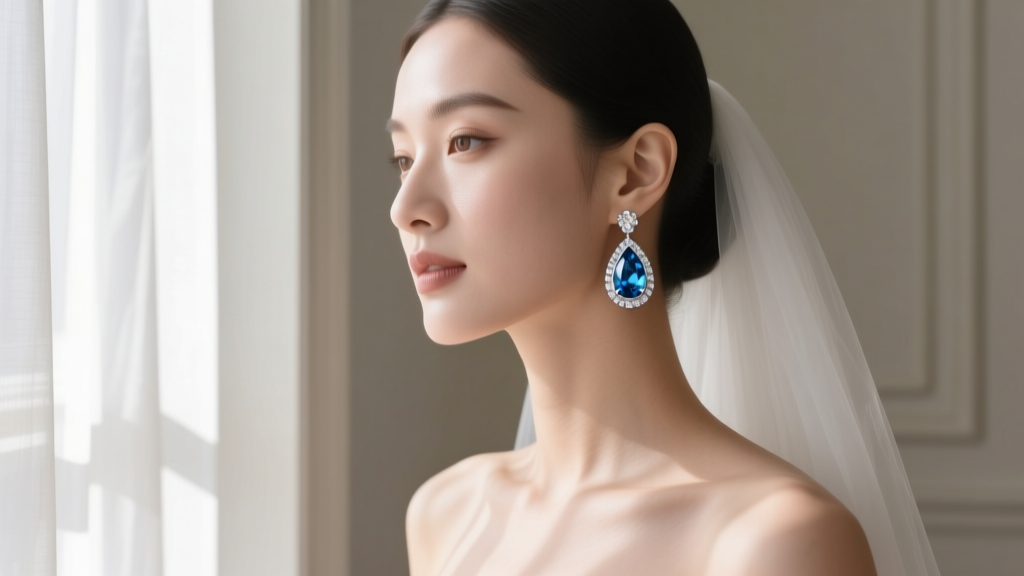
The Victorian rhyme dictating that a bride must wear 'something blue' to symbolize fidelity, purity, and love has evolved significantly by 2026. While hidden blue garters or dyed shoe soles were once the norm, modern brides are increasingly turning to fine jewelry to fulfill this tradition. Blue wedding earrings offer a sophisticated, highly visible way to incorporate this historic hue without disrupting the pristine silhouette of a white or ivory bridal gown. However, selecting the right pair requires navigating a complex matrix of gemological durability, metal alloys, and structural mechanics to ensure the earrings survive a 12-hour wedding day intact.
Gemological Breakdown: Choosing Your Blue Stone
Not all blue gemstones are created equal, especially when subjected to the rigors of a wedding day—hugs, dancing, and hair styling can all pose risks to softer stones. When evaluating blue wedding earrings, you must consider the Mohs scale of mineral hardness and the stone's cleavage planes.
| Gemstone | Mohs Hardness | Durability Rating | Typical Treatment | Price Range (per ct) |
|---|---|---|---|---|
| Blue Sapphire | 9 | Excellent | Heat | $800 - $5,000+ |
| Aquamarine | 7.5 - 8 | Very Good | Heat | $150 - $600 |
| London Blue Topaz | 8 | Good | Irradiation/Heat | $20 - $80 |
| Tanzanite | 6.5 - 7 | Fair (Perfect Cleavage) | Heat | $300 - $1,200 |
According to the Gemological Institute of America (GIA), corundum (sapphire) is the premier choice for everyday and high-impact wear due to its lack of cleavage planes, meaning it is highly resistant to chipping. Conversely, Tanzanite possesses perfect gem cleavage; a single accidental strike against a champagne flute could cause the stone to split. If you opt for Tanzanite drops, ensure they are set in protective bezel or halo settings rather than exposed prongs.
Lab-Grown vs. Natural Sapphires in 2026
Flux-grown lab-created blue sapphires have achieved near-perfect color saturation and clarity, offering the exact same chemical and physical properties as mined stones at roughly 30% to 40% of the cost. For brides prioritizing sustainability and budget, lab-grown sapphires in 14k white gold settings provide exceptional value without compromising on the Mohs 9 durability required for active wedding receptions.
Metal Alloys and Skin Chemistry on Your Wedding Day
The metal framing your blue gemstones dictates both the aesthetic contrast and the dermatological safety of your earrings. Wedding days are high-stress, high-sweat environments, which can trigger reactions to certain alloy mixtures.
- Platinum 950: The ultimate choice for hypoallergenic security. Its naturally white sheen enhances the icy tones of aquamarine and London blue topaz. Unlike white gold, it does not require rhodium plating, eliminating the risk of the plating wearing off and exposing nickel alloys to your skin.
- 18k vs. 14k White Gold: 18k white gold contains more pure gold but relies heavily on rhodium plating to achieve a white color. If you have acidic skin chemistry, the plating may degrade during a long summer wedding, leading to contact dermatitis. Always verify the alloy is nickel-free.
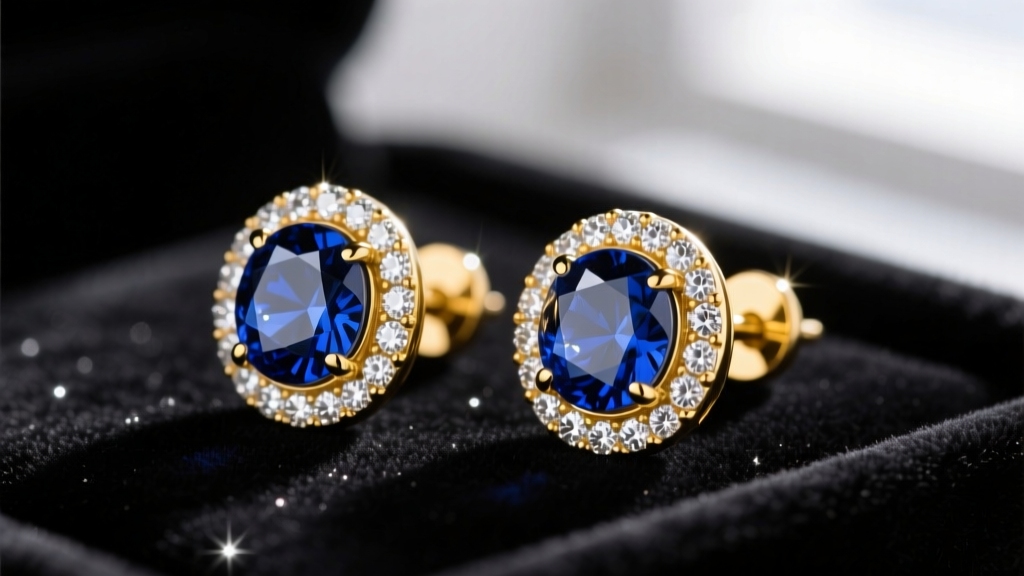
- 18k Yellow Gold: Creates a striking, high-contrast complement to deep, velvety blues like Ceylon or Kashmir sapphires. The warmth of the gold prevents the blue from looking too stark against warm skin undertones.
Silhouette Mechanics: Matching Drops to Necklines
The architecture of your wedding dress neckline should directly inform the drop length and volume of your blue wedding earrings. The goal is to create a balanced negative space between the earlobe and the collarbone.
Proportional Rule of Thumb: For strapless or sweetheart necklines, opt for chandelier or dramatic Y-drops (2 to 3.5 inches in length) to fill the exposed décolletage. For halter or high-neck illusion gowns, restrict your choice to cluster studs or 12mm huggies to prevent visual clutter and fabric snagging.
Securing Heavy Bridal Earrings: Beyond the Friction Back
The most common failure mode for bridal jewelry is the loss of a heavy drop earring due to inadequate backings. Standard 'butterfly' friction backs rely purely on tension, which degrades as the metal warms against the skin and is easily dislodged by stray hairs or veil tulle.
Upgrade to La Pousette or Screw Backs
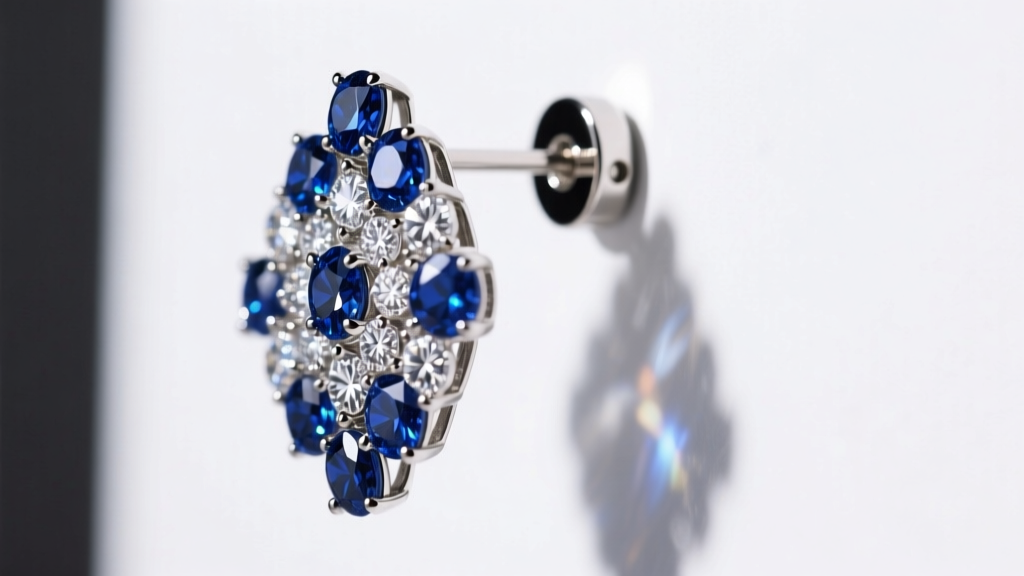
For any blue wedding earring exceeding 4.0 grams, you must upgrade the backing mechanism. The La Pousette back features a dual-spring locking mechanism that clicks securely into a grooved post, making it virtually impossible to pull off without pinching the levers. For heavy sapphire studs, screw-backs with an 18-gauge or 16-gauge threaded post are mandatory. Standard 20-gauge posts are too thin for heavy stones and will cause the 'cheese-cutter effect,' where the weight of the gem slowly slices through the earlobe tissue over the course of the evening.
Final Sourcing and Authenticity Checklist
When investing in fine bridal jewelry, documentation is as critical as the aesthetic. As highlighted by The Knot's comprehensive bridal style guides, modern brides must demand transparency from their jewelers. Before purchasing your blue wedding earrings, verify the following:
- Origin Disclosure: Ensure the jeweler explicitly states whether the sapphires are natural, lab-grown, or simulants (like blue spinel or glass).
- Treatment Reports: Request an AGL or GIA report for stones over 1.0 carat to confirm if the blue color is natural or the result of beryllium diffusion (a treatment that drastically lowers the stone's value).
- Post Thickness: Physically measure or ask the jeweler to confirm the post gauge. Anything lighter than 18-gauge is unsuitable for drops heavier than 3 grams.
- Prong Integrity: Inspect the prongs under a 10x loupe. Bridal earrings should feature V-prongs on pear-cut stones to protect the fragile tips from snapping off during hugs.
By prioritizing gemological durability, secure mechanical backings, and skin-safe metal alloys, your blue wedding earrings will not only fulfill a centuries-old tradition but will remain a secure, wearable heirloom long after the reception ends.


