2026 Budget Guide: Buying Diamond Earrings 8mm Studs
Discover if 8mm diamond earrings are worth the investment in 2026. We break down carat weights, lab-grown vs natural pricing, and setting security.

The Reality of 8mm Diamond Studs: Sizing and Carat Weight
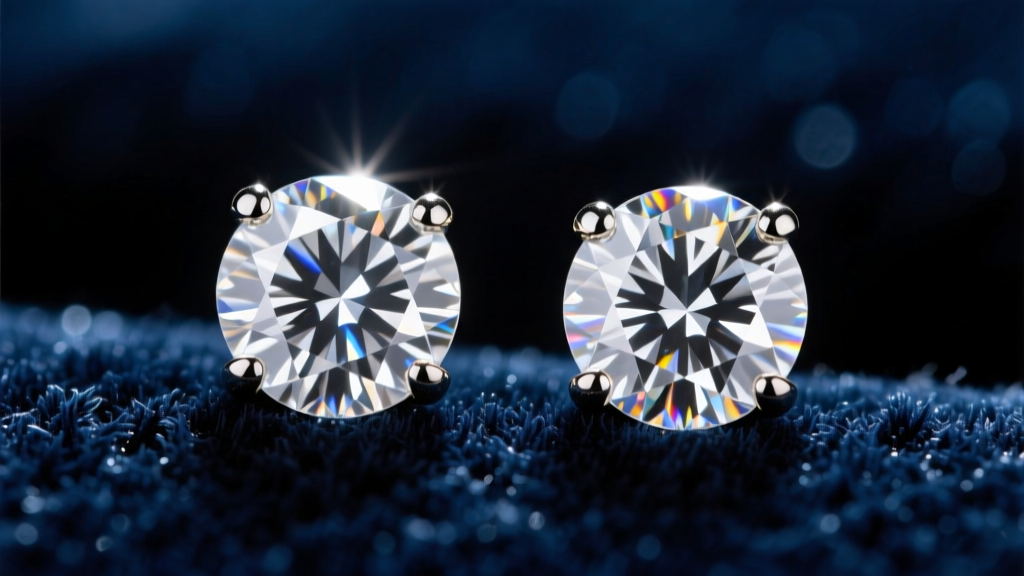
When shopping for high-impact jewelry, consumers often search by millimeter spread rather than carat weight. If you are specifically looking for diamond earrings 8mm in diameter, you are stepping into the realm of ultra-premium, red-carpet-caliber jewelry. In the gemological world, an 8.0mm round brilliant diamond equates to approximately 2.00 carats per ear. This means a matched pair will boast a staggering 4.00 carats total weight (CTW).
Understanding this millimeter-to-carat translation is the first critical step in your budget and value assessment. The 2.00-carat mark is what the diamond industry refers to as a 'magic size.' Prices do not scale linearly; they jump exponentially at these thresholds due to rarity and market demand. According to the Gemological Institute of America (GIA), the physical dimensions of a diamond are directly tied to its depth and cut proportions. An 8mm spread on a 2.00-carat stone represents an ideal cut. However, budget shoppers must beware of 'spready' diamonds—stones cut too shallow to achieve an 8mm face-up spread while only weighing 1.70 carats. These stones suffer from severe light leakage, creating a dull, glassy 'fish-eye' effect that destroys the stone's brilliance.
Natural vs. Lab-Grown: The 2026 Price Breakdown
Assessing the true value of an 8mm pair requires a hard look at the 2026 market landscape. The proliferation of high-quality lab-grown diamonds has completely disrupted the pricing model for large-carat studs. Both natural and lab-grown diamonds are pure carbon crystallized in a cubic system, meaning they share identical optical, physical, and chemical properties. The International Gemological Institute (IGI) grades lab diamonds using the exact same 4Cs scale as earth-mined stones.
Below is a realistic 2026 pricing matrix for a matched pair of 8mm (4.00 CTW) round brilliant studs, assuming a baseline of G Color and VS2 Clarity:
| Material Type | Estimated 2026 Retail Price (Pair) | Value Retention / Resale Reality |
|---|---|---|
| Natural Earth-Mined | $32,000 - $55,000+ | Poor (Expect 20-30% of retail upon resale) |
| Lab-Grown Diamond | $1,800 - $3,500 | Negligible (Treated as a luxury consumable) |
| Moissanite (8mm) | $500 - $900 | Negligible (High fire, but double refraction) |
| High-Grade CZ (8mm) | $30 - $120 | None (Scratches and clouds over time) |
From a pure budget perspective, natural 4.00 CTW studs represent a massive capital outlay with immediate depreciation. Lab-grown diamonds offer the exact same visual footprint and durability (a 10 on the Mohs scale) for roughly 90% less, making them the undisputed champion of value for 8mm earrings.
Crucial Value Factors: Cut, Color, and Clarity at 2 Carats
When evaluating diamond earrings 8mm in size, you cannot apply the same grading compromises you would use for smaller stones. The large table facet of an 8mm diamond acts like a massive window directly into the stone's interior.
The 'Cut is King' Rule for 8mm Spread
For stones of this magnitude, cut quality dictates 90% of the visual value. An 8mm stone with 'Excellent' or 'Ideal' cut grades will reflect light so intensely that it can mask slight deficiencies in color and clarity. Never compromise on cut to save money; a poorly cut 8mm diamond will look smaller and darker than a well-cut 7.5mm stone.
Color and Clarity Thresholds
In a 0.50-carat diamond, an SI1 (Slightly Included) clarity grade is generally eye-clean. In a 2.00-carat (8mm) diamond, SI1 inclusions are frequently visible to the naked eye because the table is so expansive. VS2 is the absolute minimum clarity grade recommended for 8mm studs to guarantee an eye-clean appearance. Similarly, color tints become much more apparent in larger face-up areas. Stick to G or H color grades for white gold and platinum settings to ensure the stones face up icy white. If you prefer yellow gold, you can safely drop to an I or J color, as the warm metal will mask the faint yellow body tint of the diamond.
Structural Integrity: Settings and Backings for Heavy Stones
An often-overlooked aspect of budgeting for large diamond studs is the necessary hardware. A 2.00-carat diamond, combined with a heavy gold or platinum setting, can weigh between 1.2 and 1.8 grams per ear. While this sounds light, it is more than enough to cause severe 'earlobe droop,' where the weight of the stone pulls the earring downward, causing it to point at the floor rather than facing forward.
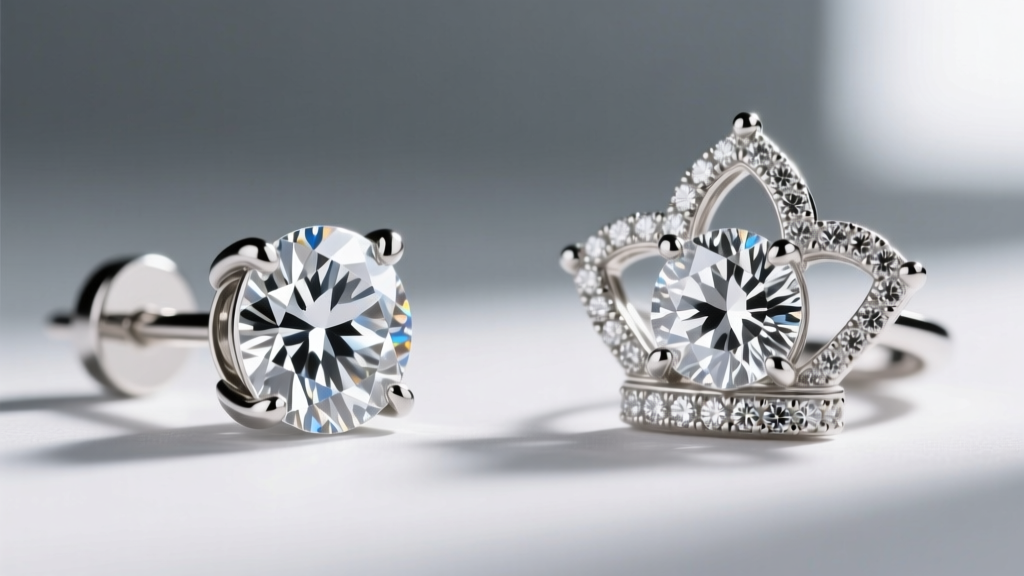
- The Setting: Avoid 3-prong Martini settings for 8mm stones. The high center of gravity and minimal metal make them prone to bending and snagging. Opt for a 4-prong Crown basket setting, which offers a wider, more secure base. Alternatively, a full Bezel setting provides maximum security for active lifestyles, though it will reduce the visible spread by about 0.2mm.
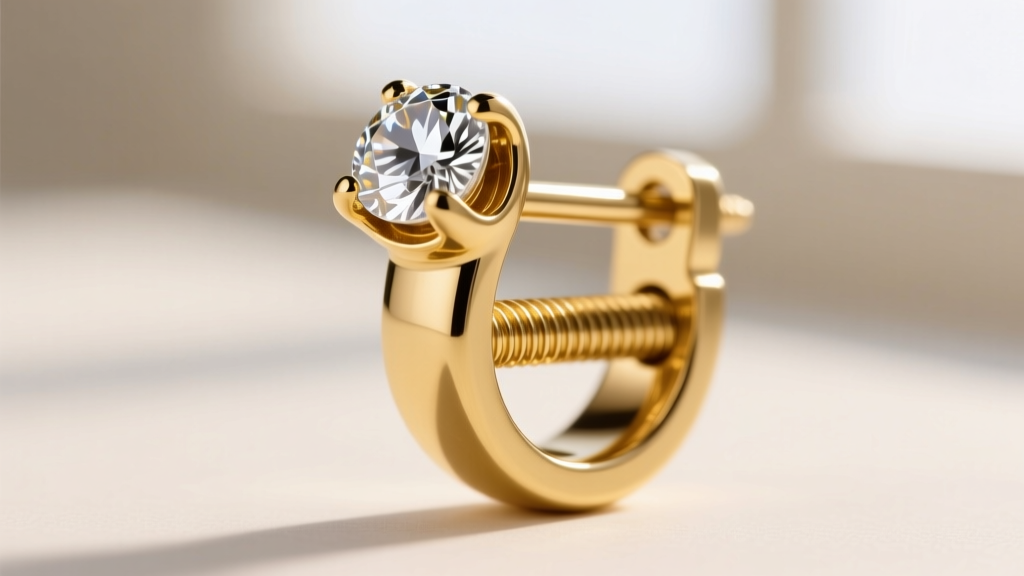
- The Backings: Standard friction push-backs are entirely insufficient for 4.00 CTW studs. You must budget for threaded screw-backs or La Pousette (locking clutch) backs. Furthermore, ensure the backings feature a wide, flat disc design to distribute the weight evenly across the back of the earlobe, preventing tearing and minimizing droop.
The FTC Disclosure and Resale Reality
If you opt for the lab-grown route to maximize your budget, be aware of the legal landscape. The Federal Trade Commission (FTC) Jewelry Guides strictly mandate that lab-grown diamonds must be clearly disclosed as such at the point of sale. Ensure your receipt and grading report explicitly state 'laboratory-grown' to protect your consumer rights.
Regarding resale value, buyers must accept that diamond earrings—whether natural or lab-grown—are not financial investments. They are luxury goods. You will not recoup your initial retail investment if you decide to sell them on the secondary market. Therefore, the true 'value' of an 8mm pair is derived entirely from the joy, confidence, and aesthetic pleasure they bring to the wearer.
Final Verdict: Is an 8mm Pair a Smart Purchase?
If your goal is to own a breathtaking, head-turning pair of diamond earrings 8mm in diameter, the 2026 market offers unprecedented opportunities. By choosing lab-grown diamonds, prioritizing an Ideal cut, insisting on VS2 clarity, and investing in proper crown settings with locking screw-backs, you can secure a pair of flawless-looking, red-carpet-sized studs for under $3,500. This represents a triumph of modern gemology and smart budget allocation, allowing you to achieve maximum visual impact without compromising your financial security.


